














Infant Oral Care Before Teeth Arrive: Gum Wiping, First Toothbrush, and Preventing Bottle Decay
How to clean your baby's gums before teeth arrive, start first toothbrush habits, and prevent bottle tooth decay, with AU, UK, US and Canada guidance.
On this page
- Key points
- Why baby mouth care starts before the first tooth
- How to clean your baby's gums step by step
- Gum wiping tools compared: cloth, silicone finger brush, and baby too…
- When and how to start using a first toothbrush
- Oral care by age: birth to 18 months
- What bottle tooth decay is and how to prevent it
- Cleaning bottles, teats, and dummies safely
- Drinks, dummies, and teething: what helps and what harms
- Official guidance in Australia, the UK, the US, and Canada
- Common mistakes parents make (and easy fixes)
- When to book your baby's first dental visit
- Frequently asked questions
- Sources
Short answer: Start cleaning your baby's mouth before the first tooth appears. Wipe their gums gently once or twice a day with a clean, damp cloth. As soon as the first tooth pokes through, switch to a small, soft baby toothbrush. Never put your baby to bed with a bottle of milk or juice. Book their first dental check by age one, or within six months of the first tooth.
Health groups in Australia (NHMRC and the Australian Dental Association), the UK (NHS), the US (American Academy of Pediatrics and CDC), and Canada (Canadian Paediatric Society) all agree on early mouth care. Some details, like when to add fluoride toothpaste, differ slightly by country. We explain each one below.
Key points
- Start early: Wipe gums from birth or the first few weeks. Clean gums help baby teeth grow into a healthy mouth.
- Keep it gentle: Use a soft, clean washcloth or gauze wrapped around a clean finger.
- First tooth means first brush: Switch to a soft, baby-sized toothbrush as soon as you see the first white tip.
- No bedtime bottles: Milk or juice pooling on teeth during sleep causes fast tooth decay.
- Water and milk only: Babies under 12 months do not need fruit juice, cordial, or sweet drinks.
- First dental visit: Take your baby to a dentist by their first birthday.
Why baby mouth care starts before the first tooth
It can feel strange to clean a mouth that has no teeth yet. Many parents wait until a tooth appears. Starting earlier is much better for your baby.
Every feed leaves a thin layer of milk on your baby's gums and tongue. Bacteria live in every mouth, even a newborn's mouth. Those bacteria feed on the natural sugars in breastmilk and formula. Over time, bacteria and food bits build up into a sticky film called plaque.
Wiping your baby's gums clears away leftover milk. It also keeps the gums clean while new teeth are forming just under the surface.
There is another big benefit too. Babies who get used to having their mouth gently wiped often accept a toothbrush much more easily later. You turn mouth care into a normal part of the day, like a bath or a nappy change.
Checking the mouth while you clean
Daily gum wiping lets you spot small changes early. Sometimes you will see a white coating on your baby's tongue after a milk feed. If it wipes away easily with a damp cloth, it is just milk residue.
If you see white patches on the tongue, cheeks, or gums that do not wipe off, it may be oral thrush. Thrush is a common yeast infection in babies. It can make feeding sore. Ask your doctor, midwife, or child health nurse to take a look.
How to clean your baby's gums step by step
You do not need special wipes or pricey gadgets to clean your baby's gums. A clean cloth and water work well.
- Wash your hands first. Use soap and warm water, then dry your hands on a clean towel.
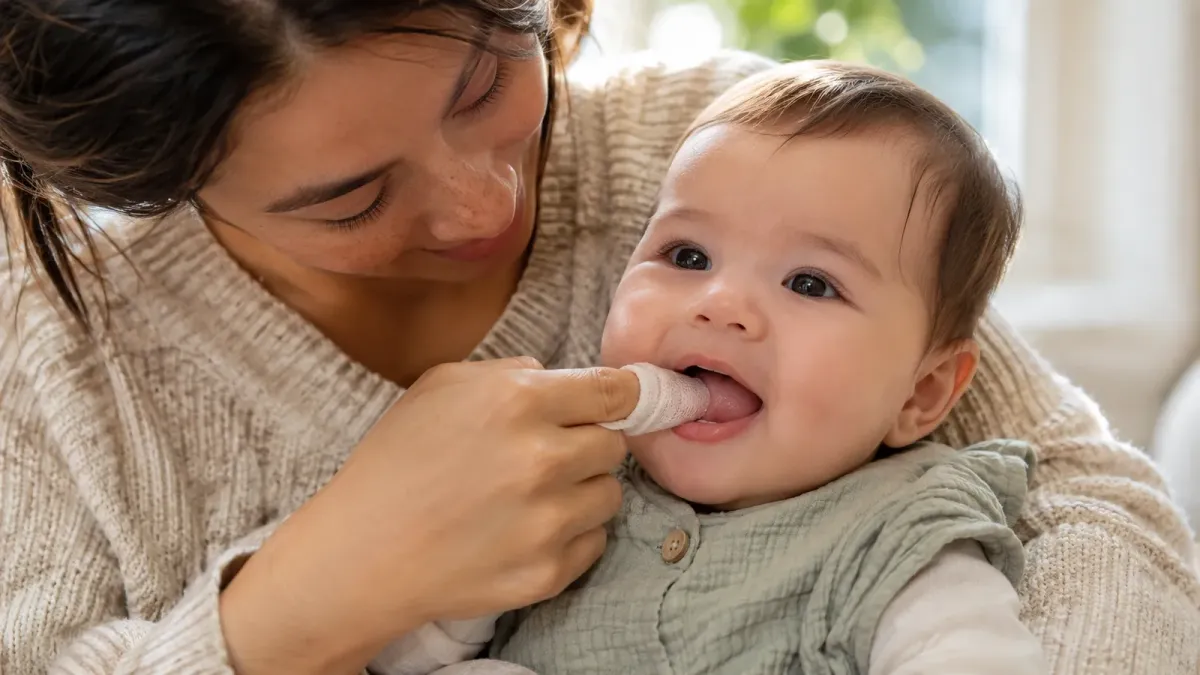
- Pick a soft cloth. Use a clean baby washcloth, a soft muslin square, or sterile gauze. Make sure it is used only for your baby's mouth.
- Wet the cloth with clean water. For babies under six months, use cooled boiled water or safe drinking water. Squeeze out extra water so the cloth is damp, not dripping.
- Hold your baby comfortably. Cradle your baby in your arm or lay them on your lap. Make sure you can see inside their mouth.
- Wrap the cloth around one finger. Use your index finger or little finger, whichever feels gentler.
- Wipe the gums gently. Sweep along the top gum pad and then the bottom gum pad. Wipe the inside of the cheeks and gently brush over the tongue too.
- Rinse the cloth well. Wash the cloth in hot soapy water after use, or put it straight in the wash. Use a fresh cloth next time.
Try to wipe your baby's gums at least once a day, and ideally twice a day. After the morning feed and after the last feed before bed are easy times to remember. Do not worry if your baby clamps down or turns away at first. Keep it brief, smile, and talk softly.
Gum wiping tools compared: cloth, silicone finger brush, and baby toothbrush
Shops sell many baby mouth tools. You only need simple items, and each tool suits a different stage. Here is how the three main options compare.
| Feature | Soft cloth or gauze | Silicone finger brush | Soft baby toothbrush |
|---|---|---|---|
| Best stage | Birth until first tooth arrives | Teething gums and very first tooth | From the first tooth onwards |
| How it cleans | Wipes milk film off gums and tongue | Massages sore gums and wipes gently | Cleans around teeth and gum lines |
| Safety note | Always hold the cloth; never leave loose in mouth | Check for tears; keep out of baby's reach | Parent must hold and brush; do not let baby walk with it |
| Cleaning care | Wash with hot soapy water after each use | Wash in warm soapy water and air dry | Rinse well after use and stand upright to dry |
| Cost and waste | Very low cost; reusable cotton cloths | Low cost; replace if chewed or worn | Low cost; replace every three months or when frayed |
Be careful with shop-bought "gum wipes" that come in packets. Some contain sweeteners or flavourings your baby does not need. Plain water and a clean cotton cloth are safer and cheaper.
When and how to start using a first toothbrush
Baby teeth usually start to arrive around six months of age. Some babies get their first tooth at four months. Others do not get one until after their first birthday. Both are normal.
As soon as you see the first tiny white edge poking through the gum, it is time to start brushing. A cloth cannot clean properly around the base of a tooth, where plaque hides.
How to pick a first toothbrush
- Small head: Choose a brush made for babies. The head should fit easily inside a tiny mouth.
- Extra-soft bristles: Hard bristles can hurt tender gums. Look for "extra-soft" or "0 to 2 years" on the pack.
- Easy-grip handle: A chunky handle is easier for you to hold while your baby wriggles.
You do not need an electric toothbrush for a baby. A plain manual baby brush is gentle and gives you full control.
Water or toothpaste? Check your country's rule
Fluoride is a natural mineral added to many toothpastes and tap water supplies. It strengthens tooth enamel, which is the hard outer shell of the tooth. Strong enamel fights off decay.
Too much fluoride at a young age can cause faint white marks on adult teeth as they form. Because babies cannot spit well, health bodies give slightly different advice on when to start fluoride toothpaste:
- Australia: The NHMRC and Healthdirect advise brushing with water only from the first tooth until 18 months old, unless a dentist tells you otherwise. From 18 months, use a pea-sized amount of low-fluoride children's toothpaste.
- UK: The NHS advises brushing as soon as the first tooth appears with a tiny smear of fluoride toothpaste. Ask your dentist or health visitor if you are unsure which strength to pick.
- US: The American Academy of Pediatrics and the CDC advise using a tiny smear of fluoride toothpaste, about the size of a grain of rice, as soon as the first tooth appears.
- Canada: The Canadian Paediatric Society and Canadian Dental Association advise brushing from the first tooth. Use water or a rice-grain smear of fluoride toothpaste based on your child's decay risk, and ask a dentist or doctor what fits your area.
Whichever rule you follow, always store toothpaste out of reach. Babies love the sweet taste and may try to eat it straight from the tube.
How to brush a baby's first teeth
- Sit your baby on your lap facing away from you, or lay them down with their head resting on your knees.
- Lift their top lip gently with one finger so you can see the front teeth clearly.
- Brush all sides of every tooth using tiny, gentle circles. Brush along the gum line too.
- Brush twice a day: once in the morning and once last thing at night before sleep.
- If you use toothpaste, encourage your baby to spit out the extra foam if they can, or wipe it away with a clean cloth. Do not rinse with water right away, as rinsing washes away the helpful fluoride.
Many babies want to hold the brush and chew on it. That is fine for practice. Just make sure an adult always does the real brushing afterwards, and never let a baby crawl or walk around with a toothbrush in their mouth.
Oral care by age: birth to 18 months
Your baby's mouth changes fast in the first year and a half. Use this simple timeline to match your routine to your baby's stage.
| Age (roughly) | What is happening in the mouth | What to do each day |
|---|---|---|
| Birth to 4 months | No teeth yet. Gums are smooth and pink. | Wipe gums gently once or twice a day with a damp, clean cloth. |
| 4 to 6 months | Extra drooling and chewing. Bottom front teeth may start moving under the gum. | Keep wiping gums. Offer a clean, cool teething ring for sore gums. |
| 6 to 12 months | First front teeth usually poke through. Starting solid foods and sips from a cup. | Brush twice a day with a soft baby brush. Offer cooled boiled water or tap water in an open cup with meals. |
| 12 to 18 months | More front teeth and first back molars arrive. Moving away from bottles. | Brush morning and night. Use an open cup or free-flow cup instead of bottles. Book first dental check if not done yet. |
Every child grows on their own clock. If your baby has no teeth at 12 months, keep wiping their gums and mention it at your next child health check or dental visit.
What bottle tooth decay is and how to prevent it
Bottle tooth decay is also called early childhood caries. It happens when sweet liquids stay on a baby's teeth for long stretches of time. It most often hits the upper front teeth first, though it can affect any tooth.
Here is how it happens. When your baby is awake, they swallow often and make plenty of saliva. Saliva washes away sugars and acids in the mouth. When your baby falls asleep, saliva flow slows way down.
If a baby falls asleep with a bottle in their mouth, milk or juice pools around the front teeth. Mouth bacteria turn those sugars into acid. That acid attacks the thin enamel on baby teeth for hours. Over weeks and months, white chalky spots appear near the gum line. Those spots can turn yellow or brown and form holes.
Baby teeth matter even though they fall out later. Healthy baby teeth help your child chew solid food, speak clearly, and hold space for adult teeth underneath. Painful decay can also disturb sleep and eating.
Simple rules to prevent bottle decay
- Never put your baby to bed with a bottle. Finish the feed while your baby is awake, then wipe the gums or brush the teeth before sleep.
- Do not use a bottle as a comforter. Avoid letting a baby walk around or sit for hours sipping from a bottle of milk or juice.
- Keep bottles for milk and water only. Never put fruit juice, cordial, soft drink, or flavoured milk in a bottle.
- Feed, then clean. If your baby falls asleep during a bedtime feed, gently remove the bottle or breast and wipe their teeth or gums with a damp cloth.
- Move to a cup from six months. The NHS, NHMRC, AAP, and Canadian Paediatric Society all suggest introducing an open cup or free-flow sippy cup from around six months. Aim to stop using bottles by about 12 months of age.
What about breastmilk and night feeds?
Breastmilk is the best first food for babies, and breastfeeding does not cause decay on its own in the early months. Once teeth arrive, especially after 12 months, frequent overnight feeds without brushing can raise the risk if your child also eats solid foods during the day.
You do not have to stop night feeding before you and your baby are ready. Just brush your baby's teeth well with a soft brush before bed and again in the morning. Keep daytime snacks and drinks tooth-friendly, with plain water between meals.
Cleaning bottles, teats, and dummies safely
Dirty bottles and teats can pass germs into your baby's mouth and tummy. Until your baby is 12 months old, wash and sterilise all bottles and teats after each use. The NHS advises washing in hot soapy water with a clean bottle brush, rinsing well, and then sterilising by boiling, steam, or cold-water sterilising solution.
Check bottle teats and dummies often for cracks, splits, or sticky spots. Damaged silicone or rubber traps bacteria and can also become a choking hazard. Throw away any teat or dummy that looks worn or chewed.
Never "clean" a dropped dummy or spoon by putting it in your own mouth first. Adults carry decay-causing bacteria in their saliva. Passing your saliva to your baby can pass those bacteria into their mouth early.
Drinks, dummies, and teething: what helps and what harms
What goes into your baby's mouth between feeds makes a big difference to their teeth and gums.
Best and worst drinks for baby teeth
- Birth to 6 months: Breastmilk or infant formula only. Babies do not need plain water unless a doctor advises it in hot weather or for formula mixing.
- 6 to 12 months: Breastmilk or formula, plus small sips of plain water in an open cup. In Australia, the NHMRC advises cooled boiled water until 12 months; check your local health advice for tap water safety.
- 12 months and up: Plain whole cow's milk (or a safe fortified alternative) and plain tap water. Tap water with fluoride helps protect teeth every time your child drinks.
- Drinks to avoid: Fruit juice (even 100% juice), cordial, sports drinks, flavoured milk, tea, and soft drinks. They bathe teeth in sugar and acid.
Dummy habits and sweet dips
A clean dummy (pacifier) can soothe a baby and may even help lower the risk of sudden infant death during sleep. Just follow two strict safety rules:
- Never dip a dummy in honey, sugar, syrup, or jam. Sweet dips cause rapid decay on baby teeth.
- Never give honey to a baby under 12 months. Honey can carry spores that cause infant botulism, a serious illness in babies under one year old.
Safe ways to soothe teething gums
Sore, swollen gums can make babies fussy when teeth push through. Try safe, simple relief first:
- Rub the gums gently with a clean, cool finger.
- Offer a clean, chilled (not frozen hard) solid teething ring. Frozen rings can be too hard and bruise tender gums.
- Wipe drool off the chin often with a soft cloth to stop skin rash.
Avoid amber teething necklaces or bracelets. Health bodies in Australia, the UK, the US, and Canada warn that beaded necklaces are a choking and strangulation hazard. Also check with a pharmacist or doctor before using teething gels, as some products contain numbing drugs or salicylates that are not safe for babies.
Official guidance in Australia, the UK, the US, and Canada
Parents often read mixed advice online because rules vary slightly between countries. Here is what the main health bodies in all four countries say side by side.
| Topic | Australia (NHMRC / Healthdirect / ADA) | UK (NHS) | US (AAP / CDC) | Canada (CPS / CDA) |
|---|---|---|---|---|
| Before teeth arrive | Wipe gums gently with a clean damp cloth | Get baby used to mouth cleaning early | Wipe gums twice a day with a clean soft cloth | Wipe gums with a clean damp cloth after feeds |
| First toothbrush | Start as soon as first tooth appears | Start as soon as first tooth appears | Start as soon as first tooth appears | Start as soon as first tooth appears |
| Toothpaste under 18 months | Water only until 18 months (unless dentist advises) | Tiny smear of fluoride toothpaste from first tooth | Rice-grain smear of fluoride toothpaste from first tooth | Water or rice-grain smear based on decay risk |
| Bedtime bottles | Never put baby to bed with a bottle | Do not leave baby to sleep with a bottle | Never put baby to sleep with a bottle | Never put baby to bed with a bottle |
| Cup transition | Introduce cup from around 6 months; stop bottles by 12 months | Free-flow cup from 6 months; stop bottles by 1 year | Introduce open cup around 6 months; wean bottle by 12 to 18 months | Open cup from 6 months; stop bottles around 12 months |
| First dental visit | By age 1, or when first tooth appears | When first baby teeth appear, or by age 1 | By age 1, or within 6 months of first tooth | Within 6 months of first tooth, or by age 1 |
If your home uses tank water, well water, or unfluoridated tap water, tell your dentist or child health nurse. They can give you tailored advice on protecting your baby's enamel.
Common mistakes parents make (and easy fixes)
Even careful parents fall into a few common traps. Here are the ones dentists see most often and how to fix them.
- Mistake: Waiting until a full set of teeth arrives to start brushing.
Easy fix: Start wiping gums in the newborn months and grab a soft baby brush the day you spot the first tooth. - Mistake: Letting a baby fall asleep with a bottle of milk.
Easy fix: Give the bottle before the bedtime story or cuddle, then brush or wipe teeth before laying your baby down. - Mistake: Giving watered-down juice in a bottle or sippy cup.
Easy fix: Skip juice completely in the first year. Serve plain water in an open cup with meals. - Mistake: Cleaning a dropped dummy in your own mouth.
Easy fix: Carry a spare clean dummy in a closed case, or wash the dropped one with clean water. - Mistake: Letting a toddler brush alone.
Easy fix: Let your child have a turn for fun, then an adult finishes the job. Children usually need adult help with brushing until about age seven or eight. - Mistake: Using adult toothpaste.
Easy fix: Adult pastes often have stronger mint flavour and higher fluoride. Stick to water or the right children's toothpaste for your baby's age and country.
When to book your baby's first dental visit
Health groups across Australia, the UK, the US, and Canada agree on the timing. Book your baby's first dental check by their first birthday, or within six months of their first tooth coming through.
That first visit is short and gentle. The dentist will usually let your baby sit on your lap. They will count the teeth, check the gums and jaw, and talk with you about feeding, brushing, and fluoride. Starting early helps your child feel calm at the dental clinic before any problems ever happen.
Signs to see a dentist or doctor sooner
Do not wait for the first birthday if you notice any of these signs:
- Chalky white, yellow, or brown spots on the teeth near the gum line (an early sign of decay).
- White patches on the tongue or inside the cheeks that do not wipe away (possible thrush).
- Swollen, bleeding, or very red gums that look painful.
- A bump or blister on the gum near a tooth.
- Any knock or fall that chips, loosens, or pushes a baby tooth into the gum.
Frequently asked questions
Do I really need to wipe my newborn's gums if they only drink breastmilk?
Yes, it is a great habit. Breastmilk still leaves a thin film in the mouth, and wiping keeps the gums clean. It also helps your baby get used to having a finger and cloth inside their mouth, which makes toothbrushing much easier later.
What if my baby cries or bites my finger when I wipe their gums?
Keep the wipe short, gentle, and calm. Try singing a short song or wiping during bath time when your baby is relaxed. Use a soft cloth wrapped snugly around your finger, and stop if your baby is very upset, then try again at the next feed.
Can I use bottled water instead of tap water to clean gums or mix formula?
Check the label and your local health rules. In Australia, the NHMRC advises using cooled boiled tap water for babies under 12 months. Some bottled mineral waters have too much salt or minerals for young babies, and many bottled waters do not contain fluoride.
When should I switch my baby from a bottle to a cup?
Start offering small sips of water from an open cup or a free-flow cup around six months, when your baby starts solid foods. Health groups in Australia, the UK, the US, and Canada recommend stopping bottles around 12 months of age to protect teeth and support healthy eating.
Are baby teeth really important if they are going to fall out anyway?
Yes. Baby teeth hold the space open for adult teeth growing underneath. They also help your baby chew food properly and learn to speak clearly. Decay in a baby tooth can cause pain, infection, and trouble eating or sleeping.
Is it safe to use a silicone finger brush for teething?
A clean silicone finger brush can feel soothing on sore gums, as long as an adult uses it gently. Always wash it in warm soapy water after use, check it for splits or tears, and never leave it with your baby to chew on unsupervised.
Sources
- NHMRC – Infant Feeding Guidelines
- Pregnancy, Birth and Baby – Feeding your baby with formula
- NHS – Drinks and cups for babies and young children
- NHS – Sterilising baby bottles
- AAP HealthyChildren.org – Recommended drinks for children age 5 and younger
- CDC – Community water fluoridation FAQs
- Caring for Kids (Canadian Paediatric Society) – Feeding your baby in the first year
Related guides
More Parental Tips →
Umbilical Cord Care and Your Baby’s First Baths: A Simple Guide

First Dental Visit by Age 1: How to Brush Baby and Toddler Teeth Safely

Baby Teething Relief: Safe Teethers, Gum Massage, and Caring for First Teeth
