














How to Introduce Peanut, Egg, Dairy and Other Allergens to Your Baby Safely
How to safely give your baby peanut, egg and dairy from around 6 months, with simple serving ideas, key safety steps and reaction signs to watch for.

On this page
- Key points
- Why early allergen foods help
- When your baby is ready to start
- Official advice in Australia, the UK, the US and Canada
- The nine common food allergens
- How to serve peanut, egg, dairy and other allergens safely
- A simple step-by-step plan for the first few weeks
- What to do if your baby has a reaction
- Common mistakes to avoid
- Frequently asked questions
- Sources
Short answer: Start common allergy foods when your baby is ready for solids, around 6 months old. Do not wait past 12 months. Offer cooked egg, smooth thinned peanut butter, dairy and other allergens one at a time. Keep giving each safe food regularly, such as twice a week. Always serve soft, smooth textures so your baby does not choke.
Health bodies in Australia (ASCIA and NHMRC), the UK (NHS), the US (American Academy of Pediatrics) and Canada (Canadian Paediatric Society) all give this same core advice.
Key points
- When to start: around 6 months, when your baby shows signs of readiness. Never before 4 months.
- Do not delay: waiting past 12 months does not stop allergies. Giving peanut and egg in the first year helps lower the risk.
- One at a time: introduce one new common allergen per day or every few days.
- Safe texture: thin smooth nut pastes with warm water, milk or puree. Cook eggs well. Never give whole nuts.
- Keep it going: once your baby tolerates a food, keep it in their diet regularly.
- High-risk babies: if your baby has severe eczema or an existing food allergy, ask your doctor before starting.
Why early allergen foods help
A food allergy happens when the body's immune system overreacts to a harmless food. The immune system treats that food protein like a germ. This can cause hives, swelling, tummy upset or trouble breathing.
Years ago, parents were told to wait until age 2 or 3 to give peanut, egg or fish. Doctors now know that waiting did not prevent allergies. In fact, allergy rates rose when families waited.
Today, major health groups agree on a better way. Introducing common allergen foods in the first year helps train your baby's immune system. Your baby's gut learns that these foods are safe. This is especially true for cooked egg and smooth peanut.
If you are breastfeeding, keep breastfeeding while you start solids. Breast milk supports your baby's gut and immune system as new foods arrive. If your baby drinks infant formula, keep giving formula as their main milk drink until 12 months.
When your baby is ready to start
Most babies are ready for solid food at around 6 months of age. Every baby grows at their own pace. Watch your baby's skills, not just the calendar.
Signs your baby is ready for solids:
- They can hold their head and neck steady.
- They can sit upright with a little support in a highchair.
- They watch you eat and reach out for food.
- They open their mouth when a spoon comes close.
- They no longer push all food straight back out with their tongue.
Do not start solid foods before 4 months. A younger baby's gut and swallowing muscles are not ready. When your baby is ready, start with iron-rich foods like pureed meat, lentils, cooked beans or iron-fortified baby cereal. You can also offer soft mashed vegetables and fruit.
Once your baby has tried a few simple first foods, you can begin adding common allergens. You do not need to wait weeks or months between first foods and allergens.
Official advice in Australia, the UK, the US and Canada
Parents often see mixed advice online because rules used to be different. Today, peak health groups in all four countries give very similar guidance.
| Topic | Australia (ASCIA / NHMRC) | UK (NHS) | US (AAP) | Canada (CPS) |
|---|---|---|---|---|
| When to start solids | Around 6 months, not before 4 months | Around 6 months | Around 6 months | Around 6 months |
| When to give peanut and egg | In the first year, around 6 months | From around 6 months | Around 6 months, earlier if high risk | Around 6 months, or 4–6 months if high risk |
| One new allergen at a time? | Yes, so you know what caused a reaction | Yes, one at a time | Yes, one at a time | Yes, one at a time |
| High-risk babies (severe eczema) | Give peanut and egg in first year; ask doctor if unsure | Talk to GP or health visitor if baby has eczema or allergy | Talk to doctor before peanut; may start around 4–6 months | Give peanut around 4–6 months; ask doctor if severe eczema |
| Cow's milk as main drink | Wait until 12 months | Wait until 12 months | Wait until 12 months | Wait until 12 months |
| Honey | Wait until 12 months | Wait until 12 months | Wait until 12 months | Wait until 12 months |
All four countries agree on the main rule. Do not delay common allergens past the first year. For babies with severe eczema or an egg allergy, talk to your doctor or paediatrician first. They can help you plan a safe start.
The nine common food allergens
Almost any food can cause an allergic reaction. However, nine foods cause most food allergies in babies and young children.
- Peanut: a legume that grows underground, often served as smooth peanut butter.
- Egg: chicken egg, including both egg white and egg yolk.
- Cow's milk (dairy): milk, yoghurt, cheese, butter and foods made with milk.
- Tree nuts: almonds, cashews, walnuts, hazelnuts, pecans, pistachios, macadamias and Brazil nuts.
- Sesame: sesame seeds and tahini (sesame seed paste).
- Wheat: bread, pasta, wheat cereal, couscous and baked goods.
- Soy: tofu, soy milk used in cooking, edamame and soy flour.
- Fish: salmon, cod, tuna and other finned fish.
- Shellfish: prawns, shrimp, crab, lobster, mussels and clams.
Check each tree nut separately over time if you eat them at home. Being fine with almond does not automatically mean your baby is fine with cashew. The same goes for fish and shellfish.
How to serve peanut, egg, dairy and other allergens safely
Babies have small airways and are still learning to chew and swallow. Choking is a real risk with nuts, thick pastes and firm chunks. You must change the texture of allergen foods so a baby can eat them safely.
Peanut
Never give whole peanuts or chunky peanut butter to a baby or toddler. Thick blobs of peanut butter can stick to the roof of the mouth and block the airway.
- Mix 1/2 to 1 teaspoon of smooth peanut butter with 1 to 2 tablespoons of warm water, breast milk or formula. Stir until it is runny and smooth.
- You can also stir smooth peanut butter into warm baby cereal, mashed banana or pureed apple.
- Another option is peanut powder mixed into puree or yoghurt.
- Use unsalted, unsweetened peanut butter when you can.
Egg
Always cook egg all the way through for a baby. Both the white and the yolk should be firm, not runny. Raw or lightly cooked egg can carry harmful bacteria like salmonella. Well-cooked egg is also gentler for a baby to tolerate.
- Mash a hard-boiled egg with a little breast milk, formula or warm water.
- Cook soft scrambled eggs until there is no runny liquid left.
- Make a thin, plain omelette and cut it into soft strips for finger feeding.
- Do not offer raw cake batter, homemade mayonnaise or runny poached eggs.
Cow's milk (dairy)
Cow's milk should not replace breast milk or formula as a main drink before 12 months. Babies under 1 year cannot digest large amounts of cow's milk easily, and it lacks enough iron. However, small amounts of dairy foods are safe from around 6 months.
- Offer plain, full-fat Greek yoghurt or natural yoghurt with no added sugar.
- Serve finely grated mild cheese, or melt a little cheese into warm mashed vegetables.
- Use a splash of cow's milk in porridge, mashed potato or scrambled egg.
- Choose pasteurised dairy products only. Avoid unpasteurised (raw) milk and soft mould-ripened cheeses.
Tree nuts
Tree nuts follow the same choking rules as peanuts. Never give whole nuts or chopped pieces to children under 4 or 5 years old.
- Thin smooth almond, cashew or walnut butter with warm water or milk.
- Stir finely ground nut meal (like almond meal) into porridge or fruit puree.
- Introduce one kind of nut at a time so you can spot any reaction.
Sesame
Sesame is easy to serve as tahini, which is a smooth sesame seed paste.
- Stir 1/2 teaspoon of smooth tahini into mashed sweet potato, hummus or plain yoghurt.
- Spread a very thin layer of tahini onto a soft finger of lightly toasted bread once your baby handles soft finger foods.
Wheat, soy, fish and shellfish
- Wheat: offer iron-fortified wheat infant cereal, soft well-cooked pasta shapes or thin strips of soft toast.
- Soy: mash soft silken tofu into vegetable puree, or cut firm tofu into soft bite-sized strips.
- Fish: cook white fish or salmon well. Flake it with your fingers and check carefully for any tiny bones. Mash with potato or avocado.
- Shellfish: cook prawns or crab completely. Chop them very finely or blend them into a smooth fish cake or puree.
Comparison table: safe vs unsafe allergen textures
| Allergen | Safe way to serve (from ~6 months) | What to avoid |
|---|---|---|
| Peanut | Smooth peanut butter thinned with water, milk or puree | Whole peanuts, chopped nuts, thick spoonfuls |
| Egg | Hard-boiled mashed egg, well-cooked scrambled egg | Raw egg, runny yolks, raw batter |
| Dairy | Plain full-fat yoghurt, melted cheese, milk in cooking | Cow's milk as main drink before 12 months, raw milk |
| Tree nuts | Thinned smooth nut butter, ground nut meal in food | Whole or chopped nuts, thick nut paste |
| Sesame | Tahini thinned in puree, hummus or yoghurt | Dry clumps of sesame paste |
| Wheat | Wheat baby cereal, soft cooked pasta, soft toast fingers | Hard crackers, crusty bread for young babies |
| Soy | Mashed silken tofu, soft cooked tofu strips | Soy milk as a main drink before 12 months |
| Fish | Well-cooked, flaked boneless fish | Fish with bones, raw fish or sushi |
| Shellfish | Well-cooked, finely minced or pureed prawns | Large chewy chunks, raw or undercooked shellfish |
Safe eating posture
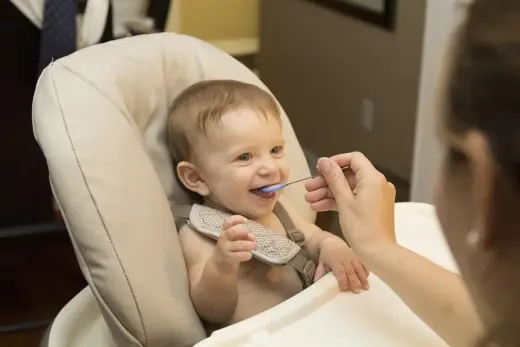
Always feed your baby sitting upright in a highchair with straps fastened. Stay right beside them while they eat. Never feed solids while your baby is lying back, crawling, walking or strapped in a moving car seat.
A simple step-by-step plan for the first few weeks
You do not need a complicated chart to introduce allergens. A calm, steady routine works best.
- Pick a quiet morning or lunchtime. Offer a new allergen earlier in the day. That way, your baby is awake for a few hours after eating, and you can watch them easily.
- Start with a tiny taste. Mix about 1/4 teaspoon of the allergen food into a food your baby already likes. Offer a small spoonful first.
- Watch for 10 to 15 minutes. If your baby looks fine, offer the rest of the serving at their normal pace.
- Wait before the next new allergen. Leave 2 to 3 days between new common allergens. You can still give non-allergen foods like pear, pumpkin or oats during those days.
- Keep the food in your weekly menu. Once your baby eats an allergen with no trouble, serve it about twice a week. Giving a food once and then stopping for months does not protect your baby.
- Do not rub food on the skin. Some parents wonder if rubbing peanut butter on a baby's cheek is a good test. Doctors warn against this. Food touching broken or dry skin, especially in babies with eczema, can actually raise the chance of an allergy. Food should go in the mouth, not on the skin.
If your baby has mild eczema, you can put a thin layer of plain barrier cream or petroleum jelly around their mouth before meals. This protects the skin from food irritation and dribble.
What to do if your baby has a reaction
Most babies try new allergens with no problems at all. Still, knowing what to look for helps you stay calm and act fast if a reaction happens.
Allergic reactions usually show up within minutes to 2 hours after eating the food. Sometimes a milder gut reaction can appear later.
| Type of reaction | Signs to watch for | What to do |
|---|---|---|
| Mild to moderate | Hives or welts on the skin, swelling of the lips, face or eyes, tummy pain or vomiting, tingling mouth | Stop feeding that food right away. Stay calm and watch your baby closely. Call your doctor or local health advice line. |
| Severe (anaphylaxis) | Trouble breathing or noisy breathing, swelling of the tongue or throat, hoarse voice or persistent cough, pale and floppy baby, sudden extreme sleepiness or collapse | Call emergency services immediately (000 in Australia, 999 in the UK, 911 in the US and Canada). Lay your baby flat. Use an adrenaline autoinjector if you have one prescribed. |
Important posture rule in an emergency: if your baby is having a severe allergic reaction, do not sit them upright or hold them upright over your shoulder. Lay them flat on their back. If they are vomiting, lay them on their side. Keeping them flat helps blood flow to the heart and brain.
If you see mild signs, take a clear photo of the rash or swelling on your phone. This helps your doctor see what happened, because hives often fade before your appointment.
Keep offering all the other foods your baby already tolerates. Only pause the specific food that caused the reaction until your doctor checks your baby.
Common mistakes to avoid
- Waiting too long out of fear: delaying peanut or egg past 12 months makes allergies more likely, not less likely.
- Giving whole nuts or thick nut butter: both are serious choking hazards for babies and toddlers.
- Serving raw or runny egg: undercooked egg increases the risk of food poisoning.
- Testing food on the skin: smearing food on the face or arm does not test for allergy and may sensitise a baby with eczema.
- Giving a food once and stopping: regular meals (about twice a week) are needed to keep tolerance strong.
- Mixing several new allergens at once: if a reaction happens, you will not know which food caused it.
- Cutting out whole food groups without medical advice: removing dairy, wheat or egg unnecessarily can leave your baby short on key nutrients.
- Confusing acid rash with an allergy: acidic foods like tomato, berries or citrus can leave temporary red patches around the mouth. That is skin irritation, not a true allergy.
- Giving honey before 12 months: honey is not a top allergen, but it can contain bacteria that cause infant botulism. Never give honey to a baby under 1 year.
Frequently asked questions
Should I wait until 12 months to give peanut or egg?
No. Health groups in Australia, the UK, the US and Canada all advise against waiting. Offer smooth peanut and well-cooked egg when your baby starts solids around 6 months, and within the first year.
What if my baby has severe eczema?
Babies with severe eczema have a higher chance of developing food allergies. Talk to your doctor, child health nurse or paediatrician before starting solids. In some cases, they may suggest starting smooth peanut and cooked egg between 4 and 6 months, once your baby can hold their head up and show interest in food.
Can I give two new allergens on the same day?
It is better to introduce one new common allergen at a time. That way, if your baby gets hives or vomits, you know exactly which food caused it. You can give a new allergen alongside fruits, vegetables or meats your baby has already eaten safely.
How often should my baby eat peanut and egg once they tolerate them?
Try to offer each tolerated allergen about twice a week. A small amount—such as half a teaspoon of thinned peanut butter or a few bites of scrambled egg—is enough to keep the immune system used to it.
Does skin redness around the mouth always mean a food allergy?
Not always. Acidic foods like tomato sauce, strawberries and oranges often cause mild redness where the food touches the skin. A barrier cream around the mouth helps prevent this. A true allergy usually causes raised hives, swelling, vomiting or hives spreading beyond the mouth.
If a parent or sibling has a food allergy, should my baby avoid that food?
No, not automatically. Having a family member with a food allergy does not mean your baby is allergic to it. Still, if you feel worried or your baby has eczema, talk to your doctor for a safe plan. Keep the family member's food safely separated when preparing your baby's meal.
Can my baby have cow's milk before 12 months?
Yes in food, no as a main drink. You can offer plain full-fat yoghurt, grated cheese and cow's milk mixed into porridge or mash from around 6 months. Keep breast milk or infant formula as your baby's main milk drink until their first birthday.
Sources
- ASCIA – How to introduce solid foods to babies for allergy prevention
- NHMRC – Infant Feeding Guidelines
- Pregnancy, Birth and Baby – Introducing solid food
- NHS (UK) – Food allergies in babies and young children
- NHS – Your baby's first solid foods
- American Academy of Pediatrics (US) – Starting solid foods
- Caring for Kids, Canadian Paediatric Society – Feeding your baby in the first year
Related guides
More Parental Tips →
Moving Out of the Swaddle Safely: When to Stop Wrapping and How to Switch Your Rolling Baby to a Sleeping Bag

Baby Sound Soothers and White Noise: How to Use Them Safely in Your Baby's Sleep Routine
Baby-Led Weaning vs Spoon-Feeding Purées: How to Start Solids Safely at About 6 Months
