














Baby-Led Weaning vs Spoon-Feeding Purées: How to Start Solids Safely at About 6 Months
Baby-led weaning or purées? Learn the signs your baby is ready, how each way works, how to cut food safely, and what health bodies in four countries say.

On this page
- Key points
- What each method means
- Is your baby ready? The signs to look for
- Baby-led weaning in detail
- Spoon-feeding purées in detail
- Baby-led weaning and purées side by side
- Gagging and choking: know the difference
- Setting up for safe eating
- Food shapes and foods to avoid
- Iron: the nutrient to plan for
- Food allergies: what the health bodies say
- What official bodies say in four countries
- Stages from 6 to 12 months
- How much will my baby eat?
- Common mistakes to avoid
- Food safety and storage at home
- A simple first-week plan
- Tips for fussy days
- When to talk to a health professional
- Frequently asked questions
- Final thoughts
- Sources
Short answer: Both baby-led weaning and spoon-feeding purées can work well. Neither one is the single right way. What matters most is that your baby is ready, the food is the right shape and soft enough, and your baby is sitting upright with you watching. Start at about 6 months, not before 4 months. Offer iron-rich foods early. Keep breastmilk or formula as the main drink until 12 months.
The main advice is the same in Australia (NHMRC and ASCIA), the UK (NHS), the US (American Academy of Pediatrics) and Canada (the Canadian Paediatric Society, through Caring for Kids). This guide explains each method in plain words. It also shows how to cut food safely and what to do if your baby gags.
Key points
- Timing: start solids at about 6 months, when your baby shows the signs of being ready. Do not start before 4 months.
- Milk first: breastmilk or formula is still the main food for most of the first year. Solids are extra at the start.
- Two main ways: baby-led weaning (your baby feeds themselves soft finger foods) and spoon-feeding purées (you feed smooth or mashed food from a spoon). Many families mix the two.
- Iron: babies need iron-rich foods from about 6 months. Offer meat, fish, eggs, tofu, beans, lentils or iron-added baby cereal.
- Allergy foods: offer foods like egg and peanut in a safe form in the first year. Do not hold them back.
- Safety: always sit your baby upright. Never leave them alone with food. Cut round or hard foods the safe way.
- Gagging is not choking. Gagging is noisy and normal. Choking is quiet and an emergency. Learn the difference before you start.
What each method means
Baby-led weaning
Baby-led weaning, or BLW, means your baby picks up food and feeds themselves from the first day. You do not spoon-feed. You offer soft foods cut into sticks or wedges. Your baby holds them, explores them and decides how much to eat.
The word weaning can confuse people. In the UK and Australia it means moving a baby from milk onto family food. It does not mean stopping breastfeeding. With BLW, milk feeds carry on as normal.
Spoon-feeding purées
With spoon-feeding, you feed your baby smooth food from a spoon. A purée is food cooked soft and blended until smooth. You start with very smooth food. Then, over weeks, you make it thicker and lumpier. Later your baby moves on to mashed food and finger foods.
A mixed approach
Many parents do both. A baby might have a spoon of mashed lentils and then a soft stick of avocado to hold. Health bodies do not say you must pick one. The NHS says you can offer both spoon-fed food and finger foods. Pregnancy, Birth and Baby, an Australian government health site, gives similar advice.
Is your baby ready? The signs to look for
Age is only a guide. Readiness matters more. Most babies are ready at about 6 months. Look for all of these signs together.
- Sits up well. Your baby can sit with little help and hold their head steady.
- Shows interest. They watch you eat and reach for your food.
- Brings things to the mouth. They can pick up an object and put it in their mouth.
- Can move food around the mouth. They do not just push everything out with the tongue.
The tongue push, where a baby pushes food back out, is a reflex in young babies. It fades with time. If your baby still pushes all food out, try again in a week or two.
Signs that are not signs of readiness
The NHS says some things can look like readiness but are not. These include waking more at night, chewing fists, and wanting extra milk feeds. These are common in babies and do not mean your baby needs solid food. A growth spurt can also cause extra hunger. A bit more milk is the answer.
If your baby was born early
Babies born early may be ready at a different time. Ask your child health nurse, GP or paediatrician when to start. They can look at your baby's own growth and skills.
Baby-led weaning in detail
How it works
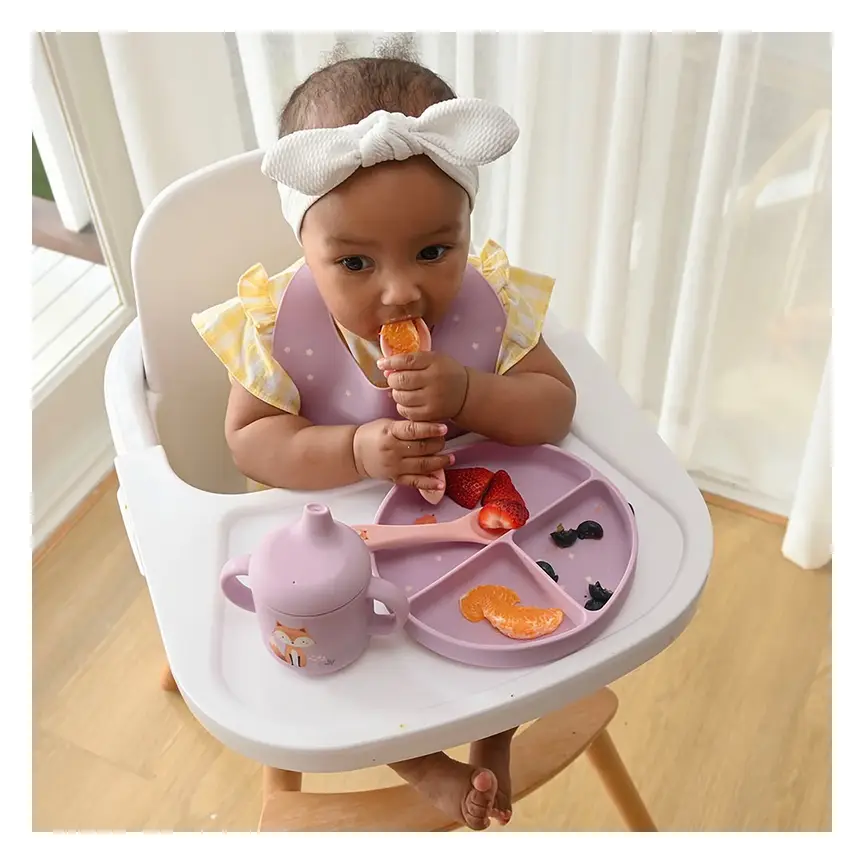
You sit your baby in a highchair. You put a few soft foods on the tray, or on a plate. Your baby grabs, squeezes, licks and bites. At first, much of the food will end up on the floor. That is normal. In the first weeks, play and learning matter more than how much is swallowed.
The good points
- Your baby learns to control food in the mouth at their own pace.
- They get to feel different textures and shapes early.
- You do not need to make separate baby meals. Baby can often eat a soft version of what the family eats.
- Meals can feel more relaxed, because your baby sets the pace.
- It saves time on blending and freezing.
The tricky points
- It is messy. Plan for mess on the floor, the tray and your baby.
- Gagging is common, and it can scare parents. You need to know what is normal.
- It is easy to get too little iron if you offer only fruit and soft veg. You must plan iron-rich foods on purpose.
- Some babies eat very little at first, which can worry parents. Milk still covers their needs while they learn.
- Safe cutting takes practice. Wrong shapes can be a choking risk.
What the research says about choking
Many parents ask if BLW causes more choking. A trial in New Zealand, known as the BLISS study from the University of Otago, tested a modified form of BLW. In it, parents got advice on safe foods and on iron. The researchers reported that this modified BLW did not raise the risk of choking compared with spoon-feeding. The key word is modified. The families were taught safe food shapes and which foods to avoid. Good teaching and good set-up are what keep babies safe, whichever method you pick.
Best first finger foods
Foods should be soft enough to squash between your finger and thumb. Cut them into sticks about the size of an adult finger, so your baby can hold one in a fist with a bit poking out. Good choices:
- Soft cooked sweet potato, pumpkin, carrot or broccoli florets.
- Ripe avocado, banana or soft pear, cut into thick pieces.
- Omelette or scrambled egg strips (egg must be well cooked).
- Soft cooked chicken or lamb in strips, or soft meatballs.
- Fish with all the bones taken out, flaked in soft pieces.
- Tofu strips or soft cooked lentil patties.
- Toast fingers with a thin spread, such as smooth nut butter spread very thin.
Spoon-feeding purées in detail
How it works
You sit your baby upright. You offer a small amount of smooth food on a soft spoon. You wait for your baby to open their mouth. You do not push the spoon in. When they turn away or close their mouth, the meal is over.
The good points
- It is easy to know how much your baby ate.
- It is simple to add iron-rich foods like meat or lentils into a purée.
- It is less messy for many families.
- Many parents feel calmer, because very smooth food feels lower risk at first.
- It suits babies who need more help, for example babies with some feeding delays.
The tricky points
- You must move on to lumps in time. If food stays smooth for too long, some babies find lumps harder later. Move to mashed and lumpy food over the first weeks and months.
- It is easy to be tempted to coax one more spoonful. Pushing food can teach a baby to ignore their own fullness signals.
- Blending and freezing takes time.
- Shop-bought pouches can be squeezed straight into the mouth. Spoon the food out onto a spoon instead, so your baby learns to eat from a spoon.
Making purée the simple way
- Wash your hands and clean the bowl, spoon and board.
- Cook the food until very soft. Steaming or boiling works well. Do not add salt or sugar.
- Mash or blend. Add some cooled boiled water, or your baby's usual milk, to get a smooth texture.
- Cool it. Test a little on the inside of your wrist. It should feel lukewarm or cool.
- Offer a small amount. Start with one or two teaspoons.
- Store the rest quickly. Cool it fast. Keep it covered in the fridge or freezer. Do not reheat the same food more than once.
Baby Food Makers & Steamers worth a look
Real products from our catalogue. We don't show star ratings or review counts; check the current price, stock and reviews on Amazon before you buy.

Annabel Karmel Silicone Weaning Plate
A silicone plate for starting solids.
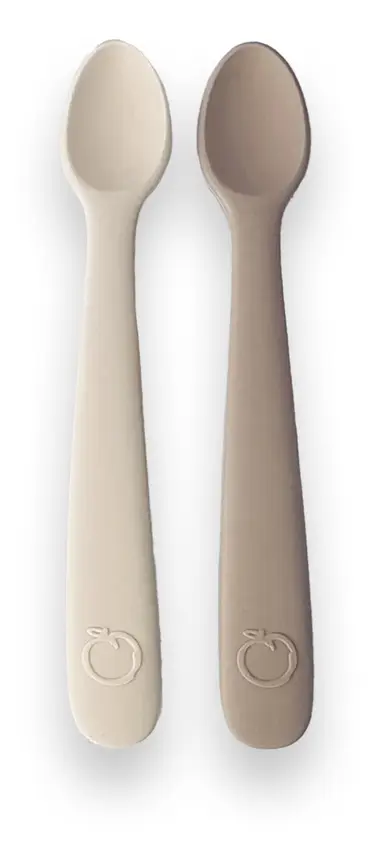
Plum First Feeding Spoons (2 pack)
Two first spoons sized for small mouths.
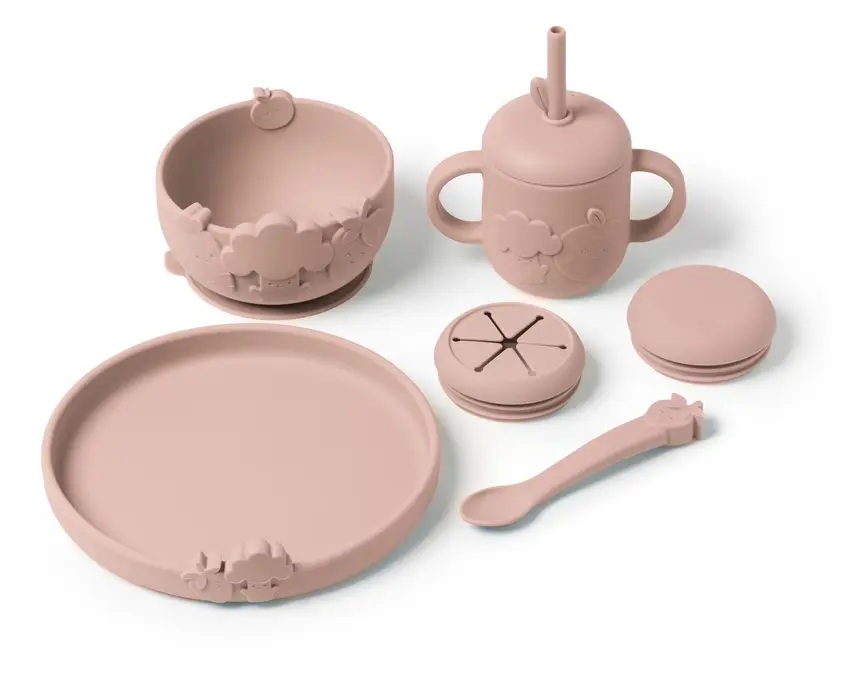
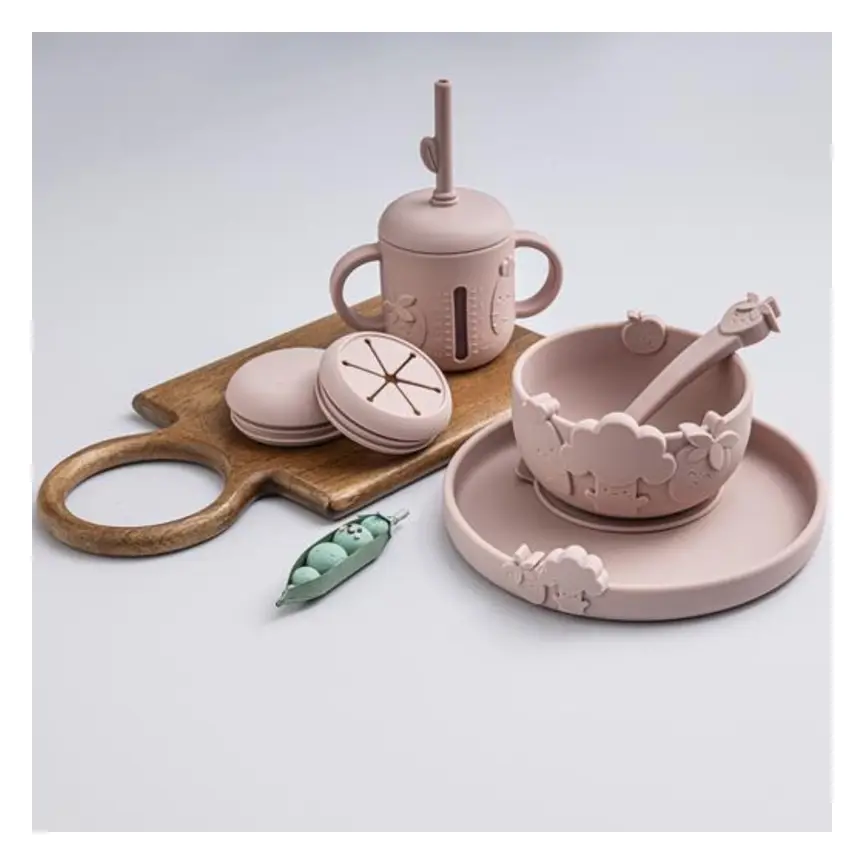
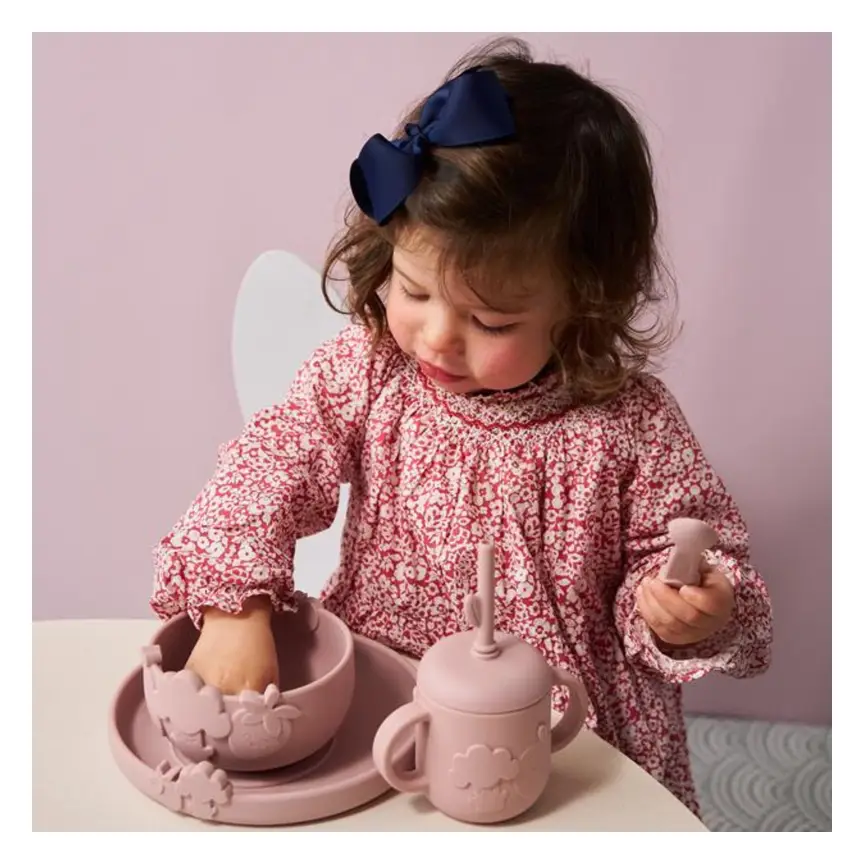
Annabel Karmel Silicone Feeding Set
A silicone set of plate, suction bowl and spoon. It is safe in the microwave, oven, freezer and dishwasher.
Read our full review →
Cherub Baby Food Pouch Spoons (2 pack)
Spoon tops that screw onto food pouches, so you can spoon-feed on the go.
Baby-led weaning and purées side by side
| Baby-led weaning | Spoon-feeding purées | Mixed approach | |
|---|---|---|---|
| Who feeds? | Baby feeds themselves | Parent feeds with a spoon | Some of each |
| Starting food | Soft sticks and wedges | Smooth purée | Both |
| Mess level | High | Lower | Medium |
| Gagging | Often seen | Seen when lumps begin | Seen sometimes |
| Iron planning | Must offer iron foods on purpose | Easy to mix in meat or lentils | Offer iron foods in either form |
| Knowing how much was eaten | Hard to tell | Easy to see | Medium |
| Prep time | Low | Higher | Medium |
| Family meals | Baby shares your food, made soft and unsalted | Often a separate meal | Some shared |
| Main safety job | Cut foods the safe way | Make sure texture moves on over time | Both |
No method has been proven to be better for every baby. Pick the way that fits your baby and your family. You can change your mind.
Gagging and choking: know the difference
This is the most important part of this guide. Read it twice. Many parents worry about gagging. It helps to know what each looks like.
| Gagging | Choking | |
|---|---|---|
| Sound | Noisy. Coughing, spluttering, retching. | Quiet, or a high squeaky sound. Little or no air moves. |
| Face | May go red. Eyes may water. | May go pale or blue. Looks scared. |
| Breathing | Baby is breathing, and coughing | Baby cannot cough, cry or breathe |
| What it is | A reflex that pushes food forward and out | Food is blocking the airway |
| What to do | Stay calm. Let your baby cough it out. Do not put fingers in the mouth. | Act at once. Call emergency services and give first aid. |
Why babies gag
Young babies gag more easily. The gag reflex sits further forward on the tongue. It moves back as your baby grows. Gagging protects the airway. It is a sign the system is working. Stay calm. If you panic, your baby may feel scared of food.
What to do if your baby chokes
Official first aid groups teach how to help a choking baby. These include the Australian and New Zealand Committee on Resuscitation (ANZCOR), the British Red Cross, and the American Red Cross. The steps differ a little between groups, so learn from an up-to-date source. In general, for a baby who cannot cough, cry or breathe:
- Call emergency services (000 in Australia, 999 in the UK, 911 in the US and Canada). Get someone to call while you help.
- Lay your baby face down along your forearm, with the head lower than the chest. Support the head and jaw.
- Give firm back blows between the shoulder blades.
- If the food does not come out, the groups teach a second step, such as chest thrusts. Follow the steps from your first aid course.
Please take a baby first aid course before you start solids. Many are short and some are free or low cost. Reading is not the same as practising.
Setting up for safe eating
- Sit upright. Use a highchair with a harness. Your baby's back should be straight and their feet supported if possible. Never feed a baby who is lying back, in a car seat, or on the move.
- Stay with your baby. Watch the whole meal. Never leave a baby alone with food, even for a moment.
- Keep meals calm. No distractions like screens. No running or play while eating.
- Do not put food in your baby's mouth when they are upset or laughing. Wait until they are calm.
- Use a safe highchair. Look for a stable one with a harness that fits. Product Safety Australia has a highchair guide, and other countries have rules for highchairs too.
- Let your baby lead. Do not pop food into the mouth for them in BLW. They should put it in themselves.
Food shapes and foods to avoid
Some foods are choking risks for young children. Shape and hardness matter as much as the food itself.
Cut or change these
- Grapes, cherry tomatoes and other small round foods. Cut them into quarters, lengthways.
- Raw hard fruit and veg, like apple and carrot. Cook until soft, or grate fine.
- Sausages and hot dogs. Cut lengthways and then into small pieces. Check labels, as some are very salty.
- Meat and fish. Remove skin, gristle and bones.
- Peanut butter and other nut butters. Spread thinly, or thin with water. A thick spoonful can stick in the throat.
- Cooked rice and pasta. They can clump. Serve them in sauce or in a soft shape your baby can hold.
Do not give these
- Whole nuts and large seeds. They are a choking risk for young children. Ground nuts and smooth nut butters are fine.
- Popcorn, hard lollies, and raw hard chunks. These can block the airway.
- Honey before 12 months. It can carry germs that cause a rare but serious illness in babies.
- Added salt and sugar. A baby's kidneys cannot handle much salt. Skip salty snacks and stock cubes.
- Cow's milk as the main drink before 12 months. A little can be used in cooking. It is not a replacement for breastmilk or formula.
- Raw or lightly cooked egg, and raw shellfish. Cook food well to lower the risk of food poisoning.
- Foods like rice cakes with hard bits. They can break off and stick. Choose with care and stay close.
Fruit juice and sugary drinks are not needed. Offer small sips of water from an open cup or a cup with a straw from about 6 months. Breastmilk or formula are the other drinks.
Iron: the nutrient to plan for
Babies are born with a store of iron. By about 6 months, it runs low. Iron helps the brain and body grow. This is one reason to start solids at about 6 months. The NHMRC and the other health bodies in this guide all say iron-rich foods should be an early part of the diet.
Good iron foods to offer often:
- Red meat, such as beef or lamb, as soft strips, mince or purée.
- Chicken, especially darker meat.
- Fish, with the bones removed.
- Well cooked egg.
- Tofu, lentils, chickpeas and other beans, mashed or soft.
- Baby cereal with added iron, mixed with your baby's usual milk.
Vitamin C, from fruit and veg, helps the body take in iron from plant foods. Try lentils with a little tomato, or tofu with soft cooked capsicum.
If you follow a vegetarian or vegan diet, speak with your child health nurse, GP or a dietitian. A plan with enough iron and other nutrients needs thought.
An iron tip for baby-led weaning
Fruit and soft veg are easy finger foods. But they are low in iron. At each meal, try to include one iron-rich food. A strip of meat, or a soft lentil patty, is easy to hold. Some parents blend meat into a soft meatball or mix it into a mash. It still counts as BLW if your baby feeds themselves.
Food allergies: what the health bodies say
Years ago, parents were told to wait on foods like egg and peanut. That advice has changed. Today the Australasian Society of Clinical Immunology and Allergy (ASCIA) says to introduce common allergy foods in the first year of life. This includes cooked egg and peanut in a safe form. The NHS in the UK also says to offer these foods from about 6 months, and not to delay them. The American Academy of Pediatrics and the Canadian Paediatric Society give similar advice.
How to offer an allergy food
- Start when your baby is well. Do not try a new allergy food when your baby is sick.
- Offer a tiny amount first, such as a thin smear of smooth peanut butter or well cooked egg mixed into a purée.
- Do it in the morning and early in the week, if you can. You can then watch for signs during the day.
- Stay with your baby. Wait and watch for a while.
- If there is no reaction, offer the food again over the next days. Keep it in the diet a few times a week.
Signs of an allergic reaction
Watch for hives, a rash, swelling of the lips or face, vomiting, or tummy pain soon after eating. These can appear within minutes or up to a couple of hours later. If your baby has trouble breathing, goes floppy, or is very pale, call emergency services right away.
Some babies have a higher chance of allergy. This includes babies with bad eczema, or a food allergy already. Talk to your GP or paediatrician before you try common allergy foods. They may suggest a plan for your baby.
What official bodies say in four countries
| Topic | Australia | UK | US | Canada |
|---|---|---|---|---|
| Main bodies | NHMRC, ASCIA, Pregnancy, Birth and Baby | NHS, NHS Start for Life | American Academy of Pediatrics | Canadian Paediatric Society (Caring for Kids) |
| When to start | About 6 months, not before 4 months | About 6 months | About 6 months, when baby is ready | About 6 months |
| Method | Spoon-fed or finger foods, parents can choose | Either, or both | Either, as long as food is safe | Either, with attention to iron and safe texture |
| Iron foods | Offer early and often | Offer iron-rich foods | Offer iron-rich foods | Iron-rich foods first |
| Allergy foods | Offer in the first year, do not delay | Offer from about 6 months | Do not delay common allergy foods | Offer common allergy foods early |
| Honey | None before 12 months | None before 12 months | None before 12 months | None before 12 months |
| Emergency number | 000 | 999 | 911 | 911 |
If your own doctor gives you different advice for your baby, follow your doctor. They know your baby's health and growth.
Side by side: more baby food makers & steamers to compare
Real products from our catalogue. We don't show star ratings or review counts; check the current price, stock and reviews on Amazon before you buy.
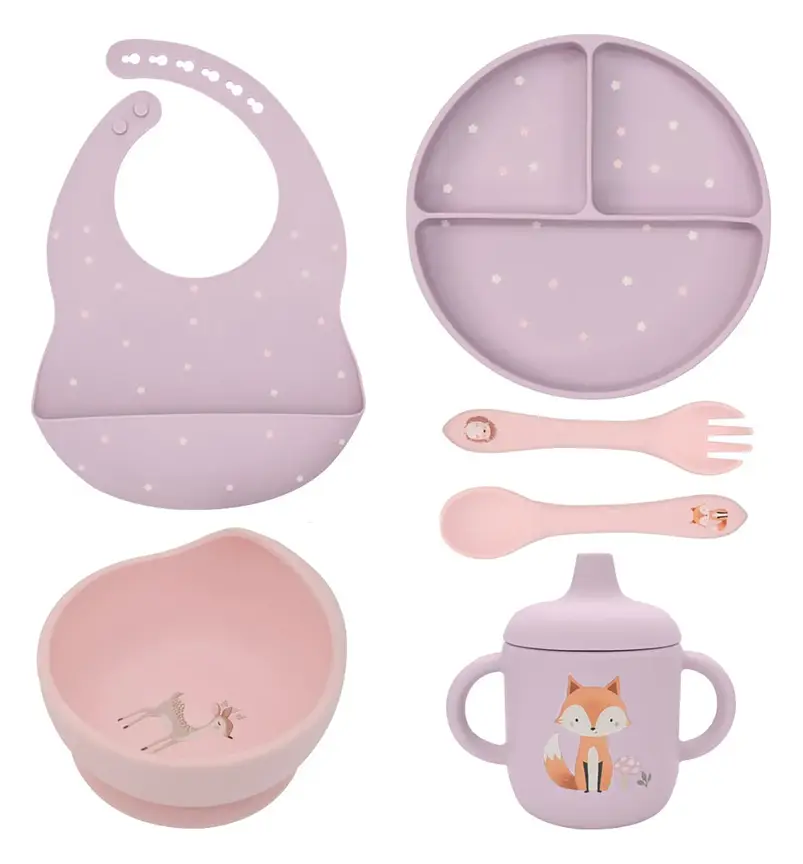

Little Rawr My First Feeding Set (6 piece)
A 6-piece starter feeding set for babies.
Read our full review →


Munchkin Soft Tip Infant Spoons (6 pack)
Six soft-tipped spoons for first foods.
Read our full review →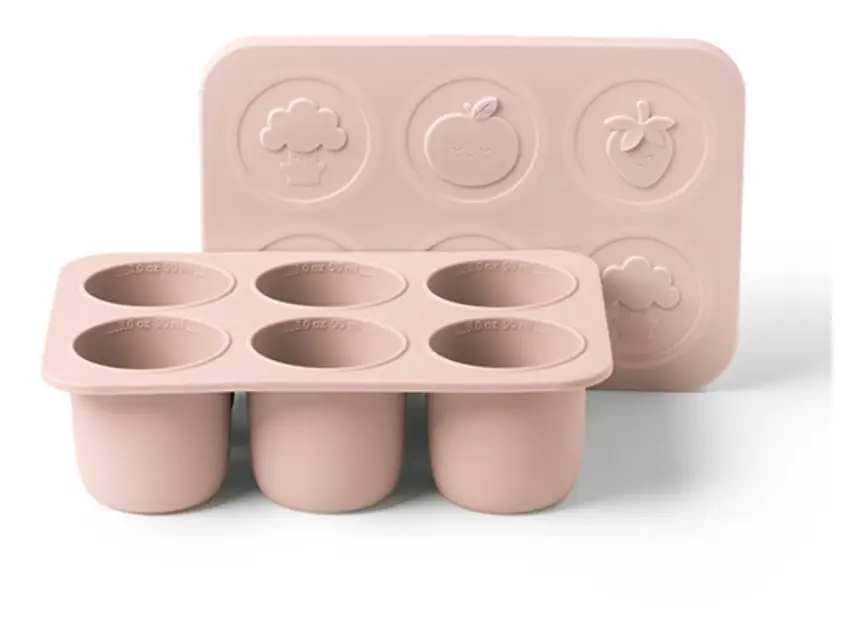
Annabel Karmel Silicone Freezer Food Tray
A silicone tray for freezing small portions of home-made baby food.

Baby Brezza One Step Baby Food Maker Deluxe
Steam-and-blend baby food maker
Stages from 6 to 12 months
About 6 months: the first tastes
Start with one meal a day, at a time when your baby is awake and happy. Not when they are very hungry or very tired. Offer a few teaspoons of purée, or a few soft sticks. Offer milk feeds as usual. Your baby is learning. Do not worry about amounts.
6 to 8 months: more variety
Offer a wider range of foods and flavours. Move towards two or three small meals a day over this time. Move purée to mashed and lumpy. Offer finger foods too. Offer iron foods daily. Try a cup of water with meals.
8 to 10 months: more texture
Babies at this age often get better at the pincer grip, where thumb and finger pick up small pieces. Offer soft small pieces, like peas squashed flat, or soft cooked pasta. Meals can be three a day, plus milk feeds and maybe a snack.
10 to 12 months: joining the family table
Many babies now eat a wide mix of family foods, cut up soft and with no added salt. Your baby may feed themselves with a spoon, with mess. Milk is still important until 12 months. After 12 months, cow's milk can be given as a drink and breastfeeding can continue as long as you both wish.
Every baby moves at their own pace. Some are fast. Some take their time. Both are fine.
How much will my baby eat?
In the first few weeks, very little. A few mouthfuls is a good meal. Your baby is learning how to move food around, how it tastes, and how it feels. Milk gives most of the energy early on.
Over the months, solid food will grow into a bigger part of the day. Follow your baby's cues. A baby who is hungry opens their mouth for the spoon, or leans in towards the food. A baby who is full turns away, closes their mouth, pushes food away, or loses interest. Stop when your baby shows these signs. Do not use tricks to get another spoonful in.
Common mistakes to avoid
- Starting too early. Before 4 months, a baby's body is not ready. Do not start earlier because a friend did.
- Dropping milk too fast. Solids are extra at first. Keep up the milk feeds.
- Offering only fruit and veg. Add iron foods early.
- Adding salt, sugar or honey. Cook without them.
- Using the wrong shapes. Cut round and hard foods the safe way.
- Feeding in a car seat, bouncer or lying back. Upright in a proper seat is the only safe way.
- Panicking at gagging. Stay calm. Learn the signs of choking.
- Giving up after one try. Babies can need many tries with a new food. A face of disgust does not always mean dislike.
- Pressure and bribes. Do not force, trick or bribe. Eating should feel safe and fun.
- Using squeeze pouches for every meal. Pouches are handy for trips. If you use them, spoon the food out so your baby practises eating from a spoon.
- Comparing babies. Your baby is not behind. Every child eats at their own speed.
Food safety and storage at home
- Wash your hands, your baby's hands and the tray before meals.
- Cook meat, chicken, fish and egg all the way through.
- Cool leftovers fast. Cover and chill them within an hour or so. Use them within a day or two.
- Freeze purée in small portions, such as in an ice cube tray. Label it with the date.
- Thaw in the fridge. Do not thaw on the bench.
- Heat until steaming hot, then cool it right down before serving. Stir well and check the temperature.
- Never reheat the same food more than once.
- Throw away food your baby has started eating from. Saliva from the spoon can add germs.
- Do not use a microwave for baby food without stirring well, as hot spots can burn the mouth.
The Food Safety Information Council in Australia, the NHS in the UK, and FoodSafety.gov in the US all have simple rules for safe handling of food for young children.
A simple first-week plan
This is only an example. Change it to suit your baby.
| Day | Baby-led weaning idea | Spoon-feeding idea |
|---|---|---|
| 1 | Soft sweet potato stick | Smooth sweet potato, 1 to 2 teaspoons |
| 2 | Ripe avocado wedge | Mashed avocado |
| 3 | Strip of soft cooked lamb | Smooth lamb and veg purée |
| 4 | Broccoli floret, steamed soft | Broccoli and pear purée |
| 5 | Well cooked egg strip | Smooth egg mixed with a little milk |
| 6 | Soft lentil patty | Mashed lentils with tomato |
| 7 | Choose a favourite from the week | Choose a favourite from the week |
If you try an egg or peanut food in that week, follow the allergy steps above.
Tips for fussy days
- Eat with your baby. Babies learn by watching you.
- Offer a food many times. Some foods may need more than ten tries.
- Offer a new food next to one your baby likes.
- Keep portions tiny. A big pile can feel like too much.
- Let your baby touch and squish the food. Mess is part of learning.
- Skip a meal if your baby is sick or tired. Try again next time.
- Stay relaxed. Your baby can feel your mood.
When to talk to a health professional
Speak to your GP, child health nurse or paediatrician if:
- your baby gags or coughs a lot at every meal, even on smooth food;
- your baby is not gaining weight well;
- your baby refuses all solids for a long time;
- your baby has bad eczema or has had an allergic reaction;
- your baby was born early, or has a health problem that affects feeding;
- you feel unsure and want a plan.
In an emergency, such as choking, trouble breathing, or a severe allergic reaction, call emergency services at once.
More options, from budget to premium
Real products from our catalogue. We don't show star ratings or review counts; check the current price, stock and reviews on Amazon before you buy.

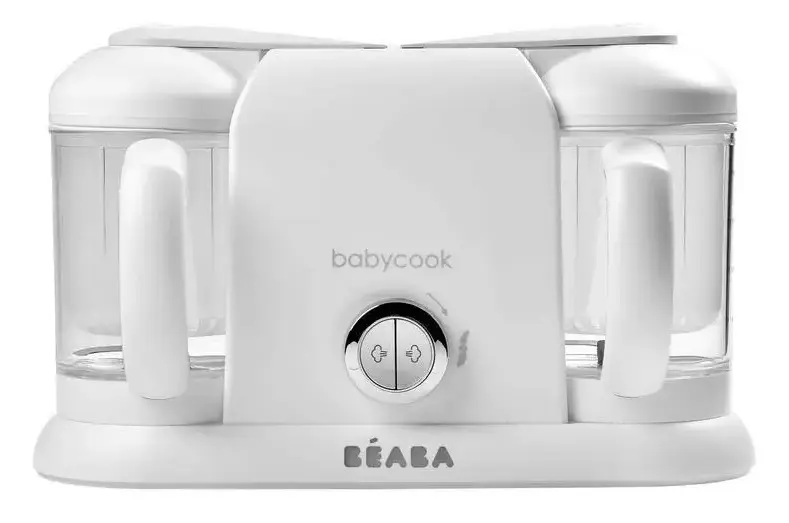
Babymoov Nutribaby(+) 6-in-1 Baby Food Processor
Steamer blender
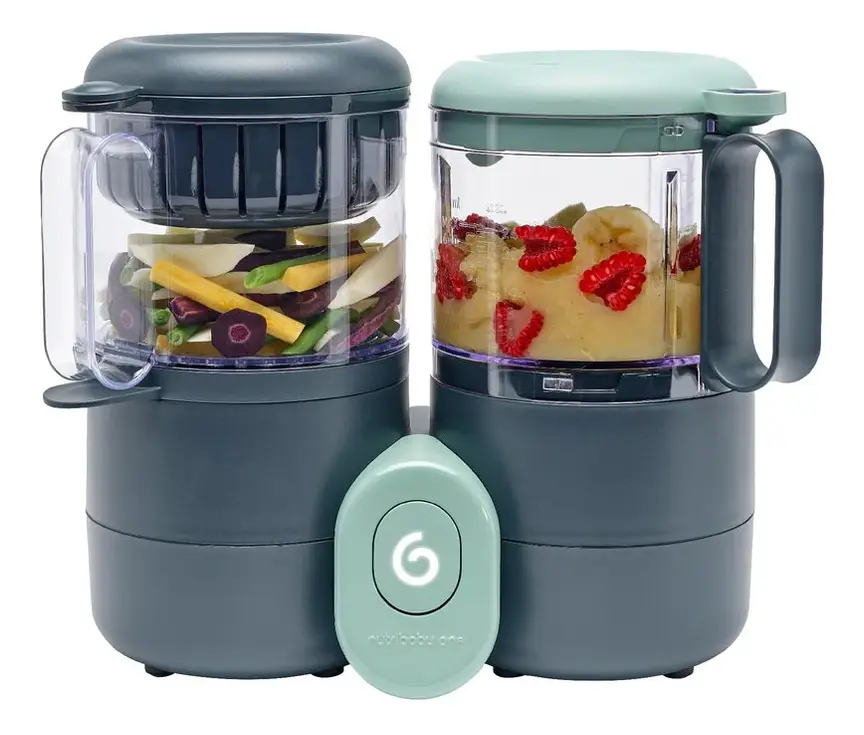
Babymoov Nutribaby One 4-in-1 Baby Food Maker
Steamer blender
Frequently asked questions
Is baby-led weaning safe?
It can be safe when done well. Your baby needs to be ready and sit upright. You need to cut food the right way and stay close. A study from the University of Otago found a modified BLW approach, with safety teaching, did not raise choking risk. Learn first aid so you feel prepared.
Can I do both baby-led weaning and purées?
Yes. The NHS and other health bodies say you can mix them. You might offer a spoon of mash and a soft stick together. Pick what works for your baby and your day.
What if my baby gags a lot?
Some gagging is normal, especially in the first weeks. It is noisy and your baby is breathing. Stay calm and let them cough. If gagging is constant, or you are worried, see your doctor or child health nurse. They can check how your baby is feeding.
What should my baby eat first?
There is no fixed first food. Many parents begin with iron-rich foods or soft veg. The key is to add iron-rich foods early, such as meat, egg, tofu, lentils or iron-added baby cereal. Offer a mix of flavours and textures over time.
Do I still need to give milk?
Yes. Breastmilk or formula remains the main drink in the first year. Solids start as small tastes and grow over months. Offer milk feeds as usual, and do not swap them for water or other drinks.
When should I introduce peanut and egg?
Health bodies in Australia, the UK, the US and Canada say not to delay them. Offer well cooked egg and smooth peanut butter in the first year, when your baby is well. Start with a tiny amount. If your baby has bad eczema or a known food allergy, talk to your doctor first.
Can I use shop-bought baby food?
Yes. Shop-bought food is fine and handy. Check the label for added salt or sugar. Spoon food out of pouches rather than letting your baby suck straight from the spout. Home-made food is also fine and can cost less.
My baby is 6 months but does not seem interested. What now?
That is common. Keep offering a few tastes with no pressure, and eat in front of your baby. Try again after a few days. If your baby still shows no interest after weeks, or you are worried, ask your child health nurse.
Is it OK to wait longer than 6 months?
A short wait is fine if your baby is not ready. But do not wait too long. After 6 months, babies need extra iron and other nutrients from food. Talk to your health professional if you are unsure.
What is the best highchair set-up?
Choose a stable highchair with a harness. Your baby should sit upright, with their back and bottom supported. A footrest helps. Check your national product safety site, such as Product Safety Australia, for the rules where you live.
Final thoughts
Whether you pick baby-led weaning, purées, or a mix, the goals are the same. Start when your baby is ready. Offer iron-rich foods. Do not delay allergy foods. Cut food safely. Keep your baby upright, and stay close. Be patient. Food is new and your baby is learning. Enjoy the mess, and trust your baby to show you what they need.
This article is general information. It is not medical advice. If you have concerns about your baby's feeding, speak with your GP, child health nurse or paediatrician.
Sources
- NHMRC – Infant Feeding Guidelines
- ASCIA – How to introduce solid foods to babies for allergy prevention
- Pregnancy, Birth and Baby – Introducing solid food
- NHS Start for Life – Weaning
- American Academy of Pediatrics (US) – Starting solid foods
- Caring for Kids, Canadian Paediatric Society – Feeding your baby in the first year
- University of Otago – Modified baby-led weaning does not increase choking risk (BLISS trial)
- American Academy of Pediatrics (US) – Choking prevention
Related guides
More Parental Tips →
Baby-Led Weaning vs Purées: Gag Reflex, Choking Risk and Iron-Rich First Solids

From Breast Milk to Solids: A Simple Guide to Feeding Your Baby

How to Introduce Peanut, Egg, Dairy and Other Allergens to Your Baby Safely
