3-Day Potty Training vs Child-Led Readiness: How to Avoid Stool Withholding
Compare 3-day potty training and child-led readiness. Learn how to spot readiness signs, prevent stool withholding, and ease toddler poo fear.

On this page
- Key points
- What the two methods are
- Side-by-side comparison: 3-day method vs child-led readiness
- Why toddlers withhold poo and fear the potty
- Signs your toddler is really ready
- Age stages: what to expect from 18 months to 4 years
- How to help a child who is scared to poo
- Official guidance in Australia, the UK, the US and Canada
- Common mistakes that cause setbacks
- When to see a doctor
- Frequently asked questions
- Sources
Short answer: Child-led readiness is safer for most toddlers than the strict 3-day potty training method. Waiting for clear readiness signs lowers stress and helps prevent stool withholding. Stool withholding happens when a child holds poo inside because they feel scared, rushed, or sore. Keep poo soft, support your child's feet, and go at their pace.
Health groups in Australia (Pregnancy, Birth and Baby; Healthdirect), the UK (NHS), the US (American Academy of Pediatrics) and Canada (Canadian Paediatric Society) all give the same core advice. Wait until your child is ready, stay calm about accidents, and never force them to sit on the potty.
Key points
- Two methods: The 3-day method tries to train a child over one intense weekend. Child-led training waits for readiness signs and moves slowly.
- Main risk: Pushing too fast or too early can make a toddler scared to poo.
- Withholding hurts: Holding poo in makes it dry and hard. Hard poo hurts to pass, which makes the fear worse.
- Readiness matters: Most children are ready between 18 months and 3 years, not at a fixed birthday.
- Foot support helps: A small step stool under the feet helps tummy muscles relax so poo comes out easily.
- Night dryness takes longer: Staying dry overnight often takes months or years after daytime training.
What the two methods are
Parents often hear about two very different ways to ditch nappies (diapers). One is fast and strict. The other is slow and gentle. Knowing how each one works helps you pick the safest path for your child.
How the 3-day potty training method works
The 3-day method is an intensive weekend plan. You clear your schedule and stay home for three days. On day one, you take off the nappy and leave your child bare-bottomed or in loose pants.
You watch your child closely all day. You offer lots of drinks so they need to wee often. Every time they start to wee or poo, you rush them to the potty. By day three, the plan aims for the child to use the potty on their own.
Some confident, older toddlers do well with this quick start. They already understand what their body is doing. They just need focused practice without a nappy.
For many toddlers, though, three days feels like too much pressure. Being watched every minute can make them tense. Being rushed to a potty mid-wee or mid-poo can shock them. That shock often triggers fear around pooing.
How child-led readiness works
Child-led readiness starts with watching your child, not the calendar. You wait until your child shows physical, mental, and emotional signs that they are ready to learn.
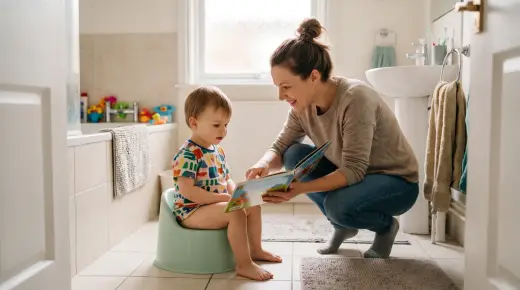
Before training starts, you talk about wees and poos in simple words. You let your child see family members use the toilet. You place a potty in the bathroom so it feels normal and safe.
When readiness signs appear, you invite your child to sit on the potty at calm times. Examples are after meals or before a bath. You keep nappies or pull-ups on until your child feels comfy, or you try underwear for short spells at home.
If your child cries, refuses, or gets upset, you pause. You try again in a few weeks. There is no rush and no deadline.
Side-by-side comparison: 3-day method vs child-led readiness
This table compares both methods across the things parents care about most.
| Feature | 3-day method | Child-led readiness |
|---|---|---|
| Main idea | Fast, intense practice over one long weekend | Slow steps guided by your child's cues |
| When to start | Often picked by parent schedule or age | When child shows clear readiness signs |
| Parent effort | Very high focus for three straight days | Steady, low-key guidance over weeks or months |
| Clothing | Bare bottom or loose pants from day one | Gradual shift from nappies to underwear |
| Risk of stool withholding | Higher if child feels watched, rushed, or pressured | Lower because child moves at a safe pace |
| Mess and accidents | Many accidents packed into a few days | Spread out and often fewer if child is ready |
| Response to pushback | Often tells parents to push through | Pauses and steps back until child feels safe |
| Best suited for | Older toddlers who already show strong readiness | Most toddlers, especially cautious or sensitive kids |
You do not have to follow either plan blindly. Many families wait for readiness signs first, then take two or three quiet days at home without pressure. That mix gives you focus without fear.
Why toddlers withhold poo and fear the potty
Stool withholding is one of the biggest hurdles in potty training. It means a child tries to stop poo from coming out. It is not bad behaviour. It is a fear response.
How the pain-and-fear cycle starts
Most withholding starts with one bad experience. A toddler might pass one hard, painful poo. Or they might feel scared when a parent rushes them onto the potty.
Next time they feel poo coming, their brain remembers the pain or stress. They clench their bottom muscles tight to keep the poo inside. They might stand on tiptoes, cross their legs, or hide behind a couch.
When poo stays inside the bowel, the body keeps pulling water out of it. The poo gets bigger, drier, and harder. When it finally comes out, it hurts even more. It can even cause a tiny tear in the skin around the bottom, called an anal fissure.
That extra pain proves to the toddler that pooing is scary. So they hold on even harder next time. Without help, this cycle can last for months.
Common triggers for poo anxiety
- Feeling rushed: Intense potty weekends can make a child feel like they are failing a test.
- Losing control: In a nappy, a toddler knows what to expect. Letting poo drop into an open bowl feels strange.
- Fear of the toilet: Big toilets feel high and wobbly. Loud flushes and cold water splashes can frighten small children.
- Hard stools from diet: Too little water or fibre, or too much milk, can make poo hard before training even begins.
- Life changes: A new baby, starting childcare, moving house, or family stress can make a child cling to old habits.
- Fear of losing part of themselves: Very young toddlers sometimes think poo is part of their body and feel scared watching it vanish.
Signs your child is withholding poo
Sometimes parents think a child is trying to push poo out, when they are actually trying to hold it in. Watch for these clues:
- Standing on tiptoes, rocking, or stiffening their legs.
- Crossing legs or squeezing their bottom cheeks together.
- Hiding in a corner or behind furniture when they look uncomfortable.
- Red face, sweating, or grunting while staying upright instead of squatting.
- Small, hard, rabbit-pellet poos in the nappy or potty.
- Going several days with no poo at all.
- Watery or smeary poo leaking into underwear. This can happen when soft new poo leaks around a hard lump stuck inside. Doctors call this overflow soiling, and it is easy to mistake for diarrhoea.
Signs your toddler is really ready
Every child develops bowel and bladder control at their own pace. A child cannot use a potty until their nerves, muscles, and brain all work together. Look for a cluster of these signs before you start.
Body and bladder signs
- Your child stays dry for at least two hours at a time during the day.
- They wake up from daytime naps with a dry nappy.
- Their poos are soft, regular, and easy to pass.
- They can walk steadily, sit down, and stand up on their own.
- They can pull loose pants up and down with a little help.
Awareness and language signs
- They notice when their nappy is wet or dirty and tell you or tug at it.
- They pause during play, squat, or go quiet right before they poo.
- They understand simple words like wee, poo, wet, dry, and potty.
- They can follow simple two-step directions, like walk to the bathroom and sit down.
Emotional signs
- They show curiosity about the toilet or want to watch you or older siblings.
- They do not like sitting in a wet or soiled nappy and ask to be changed.
- They seem happy to sit on a potty for a minute without crying or fighting.
- Life at home is fairly calm right now, with no big changes happening.
Your child does not need every single sign on this list. Seeing several from each group is a strong clue that they are ready to try.
Age stages: what to expect from 18 months to 4 years
Age alone does not tell you when to start. Still, knowing what is common at each stage helps you set fair goals.
18 to 24 months: getting familiar
Most children under two do not yet have full muscle control to hold and release on cue. Some show early interest, while many show none at all.
This is a great stage for low-pressure prep. Keep a small potty in the bathroom. Read picture books about using the potty. Let your child sit on it with clothes on if they want to. Avoid strict three-day plans at this age, because pushing too early often backfires.
2 to 3 years: the common window
Many toddlers show real readiness signs between two and three years old. They can tell you when they need to go. They want to copy grown-ups and feel proud when they learn a new skill.
Even in this window, some children are ready right at two, while others are not ready until almost three. Boys and girls both vary widely. Follow the child in front of you rather than comparing with friends at playgroup.
3 to 4 years: older toddlers and preschool pressure
Some healthy children are not ready until age three or a little later. By three, toddlers also have strong opinions. If a three-year-old feels forced, they may dig their heels in and refuse.
Sometimes childcare or preschool rules make parents feel rushed. If your child is approaching three and shows no interest, talk with their teacher or a child health nurse. Gentle, steady steps still work much better than a sudden weekend boot camp.
Night-time dryness comes later
Staying dry at night is different from daytime potty training. It depends on a hormone that slows urine down during sleep, and on deep sleep signals reaching the brain. A toddler cannot learn this by willpower.
Many children stay dry during the day long before they stay dry at night. Wearing a night nappy until age four, five, or even a bit older is very normal. Wait until your child wakes up with a dry nappy most mornings for a couple of weeks before dropping night nappies.
How to help a child who is scared to poo
If your toddler is already holding poo in or crying at the sight of the potty, stop pushing right away. Fixing poo fear takes two parts: making poos soft and making the bathroom feel safe.
Step 1: make poo soft and painless
No child will relax and poo if they expect it to hurt. Focus on soft stools first.
- Offer plenty of water: Give small sips of water throughout the day. Water keeps stools soft and easy to pass.
- Serve fibre-rich foods: Offer pears, prunes, plums, berries, peas, beans, oats, and wholegrain bread.
- Watch dairy intake: Too much cow's milk can bind some toddlers up and crowd out food and water. Keep milk within normal daily amounts for their age.
- Keep them moving: Running, climbing, and active play help the bowel move food along.
- Talk to your doctor early: If poo is already hard or stuck, food and water alone may not clear it. A doctor can check for constipation and suggest safe stool softeners if needed.
Step 2: fix their sitting posture
Sitting on a tall adult toilet with dangling legs makes it hard to poo. When feet hang in the air, the pelvic floor muscles stay tight. Pelvic floor muscles are the sling of muscles at the bottom of the hips that hold poo in.
Instead, put a sturdy step stool under your child's feet. Their knees should sit slightly higher than their hips. Have them lean forward a little with hands on their knees. This squatting shape relaxes the bowel angle so poo slides out with less pushing.
A small floor potty naturally puts most toddlers in this knees-up position. If your child prefers the big toilet, always use a snug child seat insert and a footstool.
Step 3: use a gentle step-by-step ladder
If your child refuses to poo on the potty, do not take away their nappy and force them. That often leads to days of painful withholding. Instead, move in tiny, safe steps. Stay on each step for as many days or weeks as your child needs.
- Poo in a nappy anywhere: Let your child wear a nappy to poo without shame or lectures.
- Poo in a nappy in the bathroom: Ask your child to go into the bathroom when they feel a poo coming, still wearing the nappy.
- Sit on the potty with the nappy on: Have them sit on the potty or toilet while still wearing their nappy to poo.
- Empty the nappy into the toilet together: Show them where poo goes and wave goodbye.
- Loosen the nappy tabs: Let them sit on the potty with the nappy undone underneath them.
- Sit bare-bottomed: When they feel ready, try sitting directly on the potty. Hold their hand or read a book if they like.
Step 4: take the fear out of the room
- Never flush the toilet while a scared child is still sitting on it. Let them stand up and step back, or wait until they leave the room.
- Place a square of toilet paper in the bowl to stop water from splashing up.
- Keep a basket of favourite books near the potty so sitting feels calm and relaxed.
- Keep sits short. Five minutes is plenty. If nothing happens, let them get up happily.
- Try sitting 15 to 20 minutes after meals. Eating wakes up a natural reflex in the gut that helps move poo along.
Official guidance in Australia, the UK, the US and Canada
Parents read advice from all over the world online. Luckily, major health bodies in all four countries agree on the big rules for potty training and avoiding withholding.
| Country | Official health bodies | Core guidance |
|---|---|---|
| Australia | Pregnancy, Birth and Baby; Healthdirect Australia | Start when your child shows readiness signs, often around 2 to 3 years. Stay calm, expect accidents, and never force or punish. Seek medical advice for constipation or ongoing withholding. |
| United Kingdom | NHS (National Health Service) | Most children are ready between 18 months and 3 years, with no rush. Praise effort, keep routines relaxed, and talk to a health visitor or GP if a child holds poo in or gets constipated. |
| United States | American Academy of Pediatrics (AAP / HealthyChildren.org) | Wait until the child shows physical and emotional readiness, not a set age. Avoid pressure or scolding. Treat painful constipation early so fear does not build. |
| Canada | Canadian Paediatric Society (CPS / Caring for Kids) | Let the child set the pace and watch for readiness cues. Keep things positive and stress-free. See a doctor if a child refuses to poo, has hard stools, or shows pain. |
Notice what none of these health bodies recommend. None of them say every child must be trained in three days. None of them say you should push through tears or fear.
Common mistakes that cause setbacks
Even loving, patient parents can fall into traps that slow things down. Watching out for these habits keeps training calm.
Starting because of outside pressure
Starting because a grandparent, friend, or preschool expects it often backfires. An unready child cannot learn faster just because adults want them to. Wait for your child's own signs.
Punishing or showing anger over accidents
Accidents are part of learning. Getting cross, sighing loudly, or making a child feel naughty creates shame. Toddlers who feel ashamed often hide to poo or hold it in so they do not get in trouble.
Keep your voice flat and kind. Say something simple like, "Wee goes in the potty. Let's clean up and try again later."
Making your child sit for too long
Making a toddler sit on a potty for 20 minutes turns it into a punishment. It also teaches them to tune out their body signals. Keep sits short and pleasant, around three to five minutes.
Using food or screens as bribes for poo
Small praise or a sticker for trying can feel fun. Big prizes, lollies, or endless screen time can add pressure. A child who cannot poo right away may feel stressed about missing the prize.
Flipping between nappies and underwear randomly
Putting underwear on in the morning, a nappy at lunch, and underwear again at dinner confuses toddlers. Once your child is ready for underwear during awake hours, keep nappies only for sleep times and long car trips if needed. If they are clearly not ready, go back to nappies calmly for a few weeks.
Ignoring hard poos
Some parents keep pushing potty sits even when their child's poos are hard and painful. Always treat constipation first. Pause training if pooing hurts, and get the stools soft again.
When to see a doctor
Most potty worries sort themselves out with patience, water, and fibre. Still, stool withholding can turn into chronic constipation if it goes on too long. Talk to a doctor, GP, paediatrician, or child health nurse if you notice any of these signs:
- Your child goes several days without passing a poo.
- Poos are large, hard, dry, or look like small pellets.
- Your child cries, screams, or bleeds a little when they poo.
- They have tummy pain, bloating, or lose their appetite.
- You see watery poo smears in their underwear between hard poos.
- Fear of pooing lasts for weeks even after you take off the pressure.
- Your child was trained for months and suddenly starts having many accidents, pain when weeing, or wet beds again.
A doctor can check your child's tummy and rule out medical causes. If a child has a backlog of hard poo, a doctor may suggest a gentle medicine to clear it safely. Clearing the backlog and keeping stools soft for a while lets the bowel heal and helps your child lose their fear.
Frequently asked questions
Can you do the 3-day method without causing withholding?
Yes, some toddlers do fine with a focused three-day weekend. This works best when the child is older, already shows strong readiness signs, has soft daily poos, and feels excited about underwear. Even then, keep it gentle. Never scold accidents, and stop if your child starts holding poo in or crying.
What if my child wees on the potty but only poos in a nappy?
This is very common. Pooing feels more intense and vulnerable than weeing for many toddlers. Never take the nappy away cold turkey if your child refuses to poo without it. Let them ask for a nappy to poo in the bathroom, then slowly work through the step-by-step ladder when they feel safe.
Should I use rewards or sticker charts?
Warm praise works best for most children. A simple "You listened to your body!" builds pride without pressure. If you use a sticker chart, reward sitting and trying rather than only rewarding poo. That way, a child does not feel punished if their body is not ready to go.
Is it normal for potty training to take months?
Yes. While a few children catch on in days, many take weeks or months to become fully reliable. Staying dry during busy play, remembering in new places, and pooing calmly all take practice. Slow progress is still real progress.
What if my child regresses after doing well?
Setbacks happen often. Illness, constipation, travel, a new sibling, or starting daycare can cause accidents to return. Stay calm and avoid making a big deal of it. Check that poos are still soft, go back to simple reminders, and give extra comfort.
When should I start night-time potty training?
Wait until your child stays dry during the day and starts waking up with dry nappies most mornings. For many children, this happens between ages three and five, and sometimes later. Use a waterproof mattress cover and keep a calm routine if wet beds happen.
Sources
- Pregnancy, Birth and Baby (Australia)
- Healthdirect Australia
- NHS – Baby and toddler safety
- NHS – Drinks and cups for babies and young children
- AAP HealthyChildren.org – Safety for your child: 2 to 4 years
- AAP HealthyChildren.org – Recommended drinks for children age 5 and younger
- Caring for Kids (Canadian Paediatric Society) – Diaper rash
Related guides
More Parental Tips →
Potty Training Readiness: 10 Signs Your Toddler May Be Ready
Potty Training Seat with Step Stool Ladder: How to Choose and Use One Safely
Potty Training Made Easier: How a Potty Chair Can Help Your Child