













Potty Training Toddlers: Readiness Signs, Gentle Steps, and Common Challenges
Learn how to spot potty training readiness, choose a gentle approach, handle accidents and constipation, and work with carers without pressure.
On this page
- What potty training means
- How to spot readiness
- Get ready before the first practice
- Choosing a potty or toilet seat
- A gentle first routine
- Choosing a training pace
- Accidents and setbacks
- Poo, constipation and holding
- Toilets away from home and care settings
- Common mistakes to avoid
- Health and safety basics
- Advice across Australia, the UK, the US and Canada
- Frequently asked questions
- Sources and further help
- Sources
Short answer: Potty training works best when your child is ready and feels safe. Readiness can include noticing a wet or dirty nappy, showing interest in the toilet, and telling you about a wee or poo. These signs may appear at different times. There is no single right age or fixed number of days. Offer simple chances to practise. Praise effort without pressure. If your child becomes upset, seems to hold in poo, or has painful bowel movements, pause and speak with a health professional.
Families in Australia can ask a GP, child health nurse or Pregnancy, Birth and Baby. In the UK, speak with a health visitor, GP or NHS service. In the US, a child's paediatrician can help. In Canada, ask a family doctor, nurse practitioner or public health nurse. These services can help if you are unsure about readiness or worried about pain, constipation or development.
What potty training means
Potty training means helping a child learn to wee and poo in a potty or toilet. Some families say toilet training. Both names describe the same learning process. A child must notice body signals, get to the potty, manage clothes and feel calm enough to sit. They also need time to learn what to do next.
These skills grow at different speeds. A child may be able to walk and pull down loose trousers but not notice a full bladder. Another child may tell you about a poo but dislike sitting on a toilet. Both can be normal parts of learning. One skill does not prove that every other skill is ready.
Potty training is not a test of intelligence or good behaviour. A child does not fail when they have an accident. They are learning a new body skill. Calm help gives them a better chance to practise. Shame, threats and punishment can make the toilet feel frightening.
Parents may hear that a child must finish training by a certain birthday or before a care setting starts. Ask the setting about its actual rules. Share what your child can do and what help they need. A deadline does not make a child ready. It may still be possible to plan a calm first step together.
How to spot readiness
Readiness is a mix of body skills, communication, interest and comfort. You do not need to see every sign at once. Look for a pattern across ordinary days. A single dry nappy or one successful potty visit is not enough to show that your child is ready for every step.
- Noticing: your child pauses, hides, squats or uses a word or gesture before or after weeing or pooing.
- Showing interest: your child wants to look at the potty, follow you to the bathroom or talk about using the toilet.
- Letting you know: your child can tell you in words, signs or gestures that a nappy is wet or that a wee or poo is coming.
- Managing clothes: your child can help pull loose trousers down and up. You can still help.
- Moving safely: your child can reach the potty with help or walk to the bathroom.
- Sitting briefly: your child can sit comfortably for a short time, with support if needed.
- Wanting to try: your child shows some willingness to sit or learn. They do not have to be excited.
Some families notice their child stays dry for longer stretches or has a more regular poo time. These patterns can help with timing. They are not rules or proof that training will be quick. A child can learn even if their bowel habits vary.
Do not require your child to follow a complex instruction before they can start. Simple routines and adult help may be enough. Children who communicate without speech can use a picture, gesture, sign or communication device. Ask their speech therapist or care team how to make toilet requests clear.
Readiness can change with illness, travel, a new baby, a move or a change in care. A child who was trying may need a break. That does not erase what they learned. Keep the potty available and return to practice when daily life feels calmer.
Get ready before the first practice
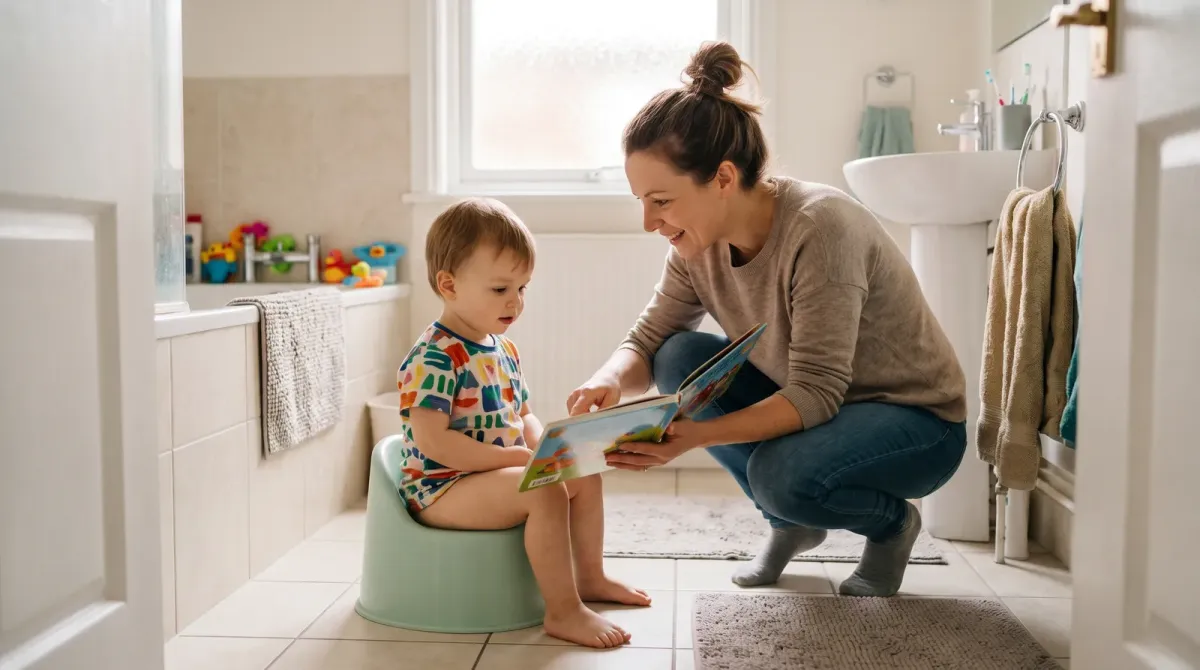
A little preparation can make the first tries easier. Choose a potty or toilet setup that feels steady. Keep it in a familiar place. Tell your child what it is for in plain words. A book or a simple explanation can help, but there is no need for a lesson or a special training course.
Let your child see the potty before asking them to use it. They can explore it, sit on it with clothes on, or help place it in the bathroom. Do not make them sit if they refuse. You can show how it works using a doll or by talking through your own bathroom routine, while still respecting privacy.
Pick clothes that are easy to move. Loose trousers, shorts or skirts can be simpler than tight outfits, belts or complicated fastenings. Keep spare clothes where you need them. A washable floor cover can help protect a favourite chair or car seat, but it is not a training requirement.
Choose a time without a major change if you can. Starting during illness, a house move or a very busy week can add strain. If you cannot choose the timing, keep the steps small. A child can learn in short, calm moments instead of spending a full day focused on the potty.
Talk with other adults who care for your child. Agree on the words you use for wee, poo and the potty. Share signs your child gives before needing to go. Ask carers to offer support without forcing a sit or shaming an accident. A steady response across home and care can make the routine easier to understand.
Choosing a potty or toilet seat
You do not need a set of special products. A simple potty or a child toilet seat can work. Choose a stable option that fits your bathroom and your child's comfort. The child should feel secure while sitting. If using the adult toilet, make sure they have a safe step or other support for their feet.
A potty sits low and can be moved to a convenient place. Your child may feel less worried because their feet touch the floor. It needs to be emptied and cleaned after use. Keep it somewhere clean and easy to reach. Empty it promptly and wash it as directed.
A child seat reducer sits on top of the adult toilet seat. It can help a child feel less likely to slip through the opening. A stable step gives their feet support. Do not leave a young child alone on a high toilet. Stay close enough to help them sit, get down and wash their hands.
A foot support matters because dangling legs can feel uncomfortable. Support may help your child sit steadily and relax. It does not guarantee an easy poo or prevent constipation. Let your child use the position that feels safe. If sitting causes pain or distress, stop and seek advice.
| Option | May suit | Things to consider |
|---|---|---|
| Floor potty | A child who wants a low, familiar seat | Needs emptying and cleaning. Keep it steady and within reach. |
| Toilet seat reducer | A child who wants to use the family toilet | Check that it sits securely. Stay close and provide a safe step. |
| Nappies or pull-on nappies | Sleep, travel, illness or a child who is not ready for underwear | They can still be part of a gradual plan. Explain when they are used. |
| Ordinary underwear | A child who wants to try and can manage clothing with help | Expect accidents and keep spare clothes available. |
| Absorbent training underwear | A family wanting a washable option for small leaks | It may not hold a full wee. Change it promptly when wet or soiled. |
Children differ in what feels comfortable. Let your child see the options and choose between two suitable ones when possible. There is no need to buy rewards, books, wipes or special underwear. Use what you already have if it is clean and safe.
A gentle first routine
Start with a short, predictable routine. You might offer the potty after waking, before a bath, or after a meal if that suits your child. These are invitations, not orders. Avoid asking every few minutes. Too many reminders can make the child feel watched or pressured.
- Use a clear invitation. Say, “The potty is here if you want to try.” Keep your voice calm.
- Help with clothes. Offer help, while letting your child do the parts they can manage.
- Let them sit briefly. Stay nearby. Stop if they want to get up or seem distressed.
- Respond simply. If they wee or poo, say what happened and help them clean up.
- Wash hands. Help your child wash with soap and water after using the potty or toilet.
- Return to play. Keep the bathroom visit short and ordinary.
Some children will not wee or poo when invited. That is fine. Do not keep them seated until something happens. A long sit can feel like a punishment and may make the child avoid the potty. Try another time if they remain comfortable.
As your child learns, offer the potty when they show a signal. You can also use natural points in the day. A routine might include getting up, before leaving home and before bed. It need not include an alarm or a strict hourly schedule.
Use words your child understands. Keep the same words across home and care when possible. Explain what you are doing before wiping or helping with clothes. This supports trust and helps your child learn each step.
Choosing a training pace
Families can use different approaches. Some offer the potty now and then while the child continues to wear nappies. Others move to underwear during some daytime activities when the child is ready. Neither approach suits every child. Choose a pace your child and family can manage.
A gradual approach may work well when a child wants to explore but is not ready for a full change. Keep the potty nearby. Let your child sit in clothes if they like. Talk about body signals. Try underwear for a short time at home only if your child agrees. Return to nappies when needed.
A more focused approach may suit a child who is already asking to use the toilet and can tell you when they need to go. Keep the first days calm. Stay near a bathroom and offer help. Do not promise that training will finish in a weekend. Accidents and pauses can still happen.
Going without a nappy during waking hours is one option, not a requirement. Some children find underwear easier to notice. Others feel safer in a nappy or pull-on nappy while learning. You can talk about when each is used. Avoid treating a nappy as a failure or taking it away against your child's wishes.
Daytime toilet learning and staying dry while asleep are separate skills. Many children need nappies or protective bedding at night for longer. A dry daytime can come well before dry nights. Do not withhold fluids to try to keep a bed dry. Ask a health professional if you have concerns about night-time wetting or your child's health.
Accidents and setbacks
Accidents are part of learning. A child may start to wee before reaching the toilet. They may become absorbed in play or not notice the signal in time. Stay calm. Help them change, clean the area and wash their hands. Keep your words brief and kind.
You can say, “Your clothes are wet. Let's get dry.” This states what happened without blame. Avoid calling the child naughty, lazy or a baby. Do not make them clean a mess as punishment. They can help with an age-appropriate task, such as putting wet clothes in a laundry basket, if they are willing.
Notice effort rather than only results. You can say, “You told me you needed the potty,” or, “You tried sitting.” Warm praise is enough. Stickers or treats are not needed. If you choose a reward, keep it small and do not remove it after accidents. Children should not have to earn kindness or help.
A child may have more accidents after a change in routine, during illness or when tired. Return to a familiar routine and offer help. If training becomes a daily struggle, take a break. A pause does not mean you have lost progress. You can leave the potty available without asking your child to use it.
If your child suddenly starts wetting after a long period of staying dry, consider what has changed. Stress can affect toileting. So can health problems. Seek medical advice if there is pain, fever, blood in urine, unusual thirst, frequent wee, or another worrying symptom. Do not assume every change is behaviour.
Poo, constipation and holding
Pooing in the potty can take longer than weeing. Some children feel afraid of the toilet, dislike the splash or worry that poo is part of their body. Others prefer to poo in a nappy. Stay calm and do not pull a nappy away as a test.
Look for signs that your child may be holding poo. They may hide, stiffen, cross their legs, rock, or avoid sitting. These signs can also mean something else. Ask gently what they feel. Offer privacy, a nappy if needed, or a chance to sit with their feet supported. Do not shame them.
Hard or painful poo can lead a child to hold it in. Holding can make poo harder to pass. This can become a difficult cycle. Do not use laxatives, suppositories or other treatment without advice from a health professional. A clinician can check what is happening and suggest safe care.
Ask for medical advice if your child has ongoing pain, hard poo, blood, a swollen tummy, or repeated soiling. Seek advice sooner if your child seems very unwell. A health professional can also help if your child has a long-standing bowel problem or needs support because of a disability.
Toilet sitting after a meal may suit some children, but do not force it. Let your child sit only while comfortable. Encourage ordinary drinks and meals for their age. Do not make food or drink a reward or punishment. Follow health advice if your child has a medical diet or feeding plan.
Toilets away from home and care settings
Public toilets can be loud, busy or unfamiliar. A child may worry about automatic flushes, hand dryers or a large toilet bowl. Tell them what to expect. Let them cover their ears if a flush is loud. You can wait until the bathroom is quiet, if possible.
For outings, bring spare clothes, wipes or tissues, and a bag for wet items. Plan a bathroom stop before a long trip. Ask your child if they need to try, but avoid repeated pressure. If the outing feels too difficult, nappies or pull-on nappies can be a practical choice.
Talk with your child's early learning centre or other carers. Ask how they support toilet learning, where the bathroom is, and whether they can help with clothes. Share your child's words and signs. Agree how they will respond to accidents. Ask them to avoid comparing your child with other children.
If a setting has a toilet training policy, ask for it in writing. Explain what your child can do and what support they need. If there is pressure to stop nappies before your child is ready, discuss a gradual plan. Rules and services vary by place. Ask the setting and your local health service about your options.
Children with a disability, sensory needs, or a health condition may need a different plan. A smaller seat, picture steps, a quiet toilet, extra time or help from a therapist may be useful. Ask your child's care team for advice that fits their needs. Do not compare their progress with another child's timeline.
Common mistakes to avoid
- Starting because of a birthday: age alone does not show readiness. Look at your child's signals and comfort.
- Expecting a quick finish: a few successful days do not mean every setting or night will be dry.
- Making the child sit for a long time: keep attempts brief and stop when they want to get up.
- Asking too often: repeated prompts can interrupt play and create tension. Use a simple routine and respond to signals.
- Punishing accidents: accidents are information, not bad behaviour. Help the child get clean and dry.
- Withholding drinks: do not limit fluids to reduce wees. Offer drinks as usual for your child.
- Forcing underwear: underwear can help some children, but it is not the only way to learn.
- Stopping nappies at night too soon: sleep dryness is a separate skill. Protect the bed and give it time.
- Ignoring painful poo: pain can make a child hold poo. Ask a health professional for help.
- Comparing children: siblings and classmates develop at different speeds. Focus on your own child's next step.
Health and safety basics
Potty training is usually a learning process, but new symptoms need care. Speak with a health professional if weeing hurts, your child has a fever, urine looks bloody, or your child is unusually thirsty. Also ask if your child wees very often or seems unwell. A clinician can decide whether a check is needed.
Keep cleaning products, medicines and disposable wipes away from children. Use cleaning products as their labels say. Wash your hands after cleaning a potty or helping with toileting. Teach your child to wash their hands with soap and water after using the toilet.
Stay with a young child when they use an adult toilet. Help them climb safely and get down. A loose step can slip, so check it is steady before use. Do not leave a child alone in a bathroom with water in a bath or basin. Potty training does not remove the need for close supervision.
Advice across Australia, the UK, the US and Canada
Health advice should fit your child and local services. There is no potty training product or legal standard that replaces a child's readiness. Ask a clinician if you have a health concern. The main bodies and services differ by country.
| Country | Useful official or peak body | How families can use it |
|---|---|---|
| Australia | Healthdirect Australia and Pregnancy, Birth and Baby | Find general health information and speak with a GP, child health nurse or helpline. |
| United Kingdom | NHS | Use NHS health information and ask a health visitor or GP for personal advice. |
| United States | American Academy of Pediatrics (AAP) | Ask your child's paediatrician about readiness, pain, constipation or other health concerns. |
| Canada | Canadian Paediatric Society (CPS) | Use parent health information and ask a family doctor, nurse practitioner or public health nurse. |
Local advice can vary because health services and care rules differ. If your child has a medical condition, follow the plan from their own clinician. Online guidance cannot assess your child's body or symptoms.
Frequently asked questions
What is the right age to start potty training?
There is no single right age. Children gain body awareness, movement and communication skills at different times. Look for signs that your child notices wee or poo, shows interest and can take part in the routine. Ask a health professional if you are worried about development.
Does my child need to stay dry for two hours first?
No fixed dry period is required. A longer dry stretch can help you notice a pattern, but it does not prove readiness. Look at several signs together. A child may be ready to practise even if wet nappies still happen.
Should I use a potty or the adult toilet?
Either can work. Choose what your child finds steady and comfortable. A potty is low and needs cleaning. An adult toilet needs a secure child seat and a safe foot support. Stay close to help your child.
Are pull-on nappies bad for training?
No. They can be useful for sleep, outings, illness or a child who is not ready for underwear. Explain when they are used. You can offer underwear at home later, if your child wants to try.
How often should I ask my child to sit?
There is no required schedule. Offer the potty at a few natural times and when your child shows a signal. Avoid asking every few minutes. Stop if your child refuses or becomes upset.
What should I do when my child has an accident?
Stay calm. Help them change, clean the area and wash their hands. Use simple words without blame. You can mention the potty for next time, then return to play.
What if my child will not poo on the potty?
Do not force them or remove a nappy as a test. Offer a calm place to poo and let them use the potty when ready. If poo is painful, hard or regularly held in, seek medical advice.
When should I stop and try again later?
Pause if your child is distressed, fighting every visit, or holding wee or poo. Keep the potty available without pressure. Return to practice when your child seems comfortable. Seek advice if pain or other symptoms are present.
When will my child stay dry at night?
Night-time dryness develops separately from daytime toilet learning. Some children need nappies at night for longer. Do not reduce drinks to try to make the bed dry. Ask a health professional if you are concerned.
Do rewards make potty training work faster?
Rewards are not needed. Warm attention and praise for effort can be enough. If you use a small reward, do not take it away after accidents. Avoid pressure or shame.
Sources and further help
- Pregnancy, Birth and Baby — Australian government pregnancy and child health information.
- Healthdirect Australia — Australian health information and advice.
- NHS baby and toddler safety — UK health guidance for families.
- American Academy of Pediatrics: safety for children aged two to four — US paediatric guidance.
- Caring for Kids — health information from the Canadian Paediatric Society.
This article is general information, not a substitute for advice from your child's health professional. If you have a medical concern, speak with a qualified clinician. Some links may be affiliate links. BabyGearFinder may earn a commission if you buy through them, at no extra cost to you.
Sources
Related guides
More Parental Tips →
Potty Training Readiness: 10 Signs Your Toddler May Be Ready
Potty Training: A Calm, Practical Guide for Toddlers
3-Day Potty Training vs Child-Led Readiness: How to Avoid Stool Withholding