














Baby-Proofing Your Home: Practical Steps for a Safer Space
Learn how to baby-proof rooms, choose safety gates and locks, reduce common hazards, and check official home-safety advice in four countries.

On this page
- What baby-proofing can and cannot do
- Start with a room-by-room safety check
- Safety gates, doors, and stairs
- Furniture, televisions, and heavy objects
- Windows, blinds, curtains, and cords
- Small objects, button batteries, and choking risks
- Medicines, cleaners, and other harmful products
- Kitchen, hot drinks, and burns
- Bathrooms, water, and pools
- Electrical outlets, cords, and appliances
- Furniture edges, doors, and everyday bumps
- Age stages: what to check as your child grows
- How to choose baby-proofing products
- Common baby-proofing mistakes
- Official guidance in Australia, the UK, the US, and Canada
- A simple weekly safety check
- Frequently asked questions
- Sources and further guidance
- Sources
Short answer: Baby-proofing means changing your home to reduce common risks. Start before your baby can crawl. Get down to their height and look for hazards. Secure furniture that could tip. Keep medicines, cleaners, cords, small objects, and hot items out of reach. Use safety gates where needed. Check every device after fitting it. These steps help, but they cannot make a home completely safe. Close supervision still matters.
There is no single kit that suits every home. A gate can help block a stairway. A cupboard latch can slow access to cleaning products. A furniture anchor can reduce the risk of a heavy unit tipping. Each product works only when it suits the hazard, is fitted well, and is checked often.
Official advice comes from different bodies in each country. In Australia, check Product Safety Australia, the ACCC, and Kidsafe Australia. In the UK, check the Office for Product Safety and Standards, the NHS, and RoSPA. In the US, check the Consumer Product Safety Commission and the American Academy of Pediatrics. In Canada, check Health Canada and the Canadian Paediatric Society. Local rules and products can differ, so use guidance for your own country.
What baby-proofing can and cannot do
Babies learn by moving, touching, and looking around. Their reach and movement change quickly. A hazard that seemed far away last week may soon be within reach. Baby-proofing helps reduce access to some hazards as these skills grow.
It does not replace an adult nearby. A child can climb over a gate, open a latch, or find an object that was missed. Products can break or loosen. Check the room and your child’s new skills often.
Think of baby-proofing as three simple actions: remove a hazard when you can, block access when removal is not possible, and stay close when a risk remains. For example, move a hot drink away from the edge of a table. Store cleaning products in a locked cupboard. Stay within arm’s reach during a bath.
Do not wait for crawling. A baby can roll, reach, or pull an object down before crawling. Start with the places where your baby sleeps, plays, and gets changed. Then check the rest of the home, including visits to family and friends.
Start with a room-by-room safety check
Choose a quiet time and inspect one room at a time. Get down close to floor level. Look at the room from your child’s likely point of view. Check what they could pull, reach, put in their mouth, climb, or knock over.
- Floor: Pick up coins, batteries, small toy parts, food, and other objects that could fit in a child’s mouth.
- Furniture: Check whether shelves, drawers, televisions, and lamps could tip or fall.
- Windows: Look for open windows, reachable cords, and furniture that could help a child climb.
- Doors and stairs: Check stairs, balconies, garages, and rooms with hazards.
- Storage: Find medicines, cleaning products, tools, sharp objects, and alcohol.
- Heat and water: Check hot drinks, cooking areas, heaters, baths, buckets, and pools.
- Power and batteries: Look for damaged cords, reachable outlets, and loose button batteries.
Do not assume that a product makes a hazard harmless. A child can get past a barrier, and some covers can be pulled off. Keep dangerous items stored safely even when a lock or gate is fitted.
Make a simple action list
Write down each hazard and the action it needs. Deal with serious hazards first. For instance, anchor a tall dresser before adding corner guards to a low table. Move dangerous items to secure storage before buying more devices.
Some fixes cost nothing. You can move a chair away from a window, shift a lamp cord behind furniture, or keep a handbag with medicines out of reach. Other changes may need a fitted gate or help from a qualified installer. If you rent, ask your landlord or property manager about changes that affect walls, doors, or windows.
After each change, check whether the fix created another risk. A gate must not leave a child able to climb nearby furniture. A storage box should not become a step to a window. Keep the whole area in view.
Safety gates, doors, and stairs
A safety gate can limit access to stairs or a room with hazards. Choose a gate made for the opening and follow its fitting instructions. A gate that is too short, loose, damaged, or poorly placed may not hold.
Stairs need special care. A fall on stairs can cause serious injury. Use gates at the top and bottom when suitable for your home and the child’s stage. Follow the gate maker’s instructions about where and how to fit it. Do not guess whether a pressure-fit or hardware-fitted gate is suitable for a stairway.
Check the gate each time you use it. Look for loose fittings, gaps, a latch that does not close, or damage. Keep the area beside the gate clear of furniture and objects that could help a child climb over it. A gate is a barrier, not a substitute for watching your child.
Keep doors to garages, workshops, and utility spaces closed. These areas may contain tools, chemicals, machines, or vehicle access. A simple door rule can be more useful than adding many small devices throughout the room.
Do not place a gate where it creates a trip hazard for adults. Make sure adults can open it safely while carrying a child only when the gate design allows this. Never climb over a gate while holding a baby. Use the latch.
Furniture, televisions, and heavy objects
Dressers, bookcases, cabinets, and televisions can tip. A child may pull on a drawer, climb shelves, or tug a screen. Secure furniture and televisions to a suitable wall or fitting point, following the product instructions. Use an anchor made for the item and the wall type.
Keep heavier items low when possible. Put tempting objects, such as toys, on lower shelves only if the unit is stable and secured. Do not leave drawers open. A child may use them as steps.
Do not rely on furniture being heavy. A child’s weight and movement can shift a unit. Check anchors after moving furniture or cleaning. If you are unsure about the wall, anchor, or fitting, ask a qualified person to help.
In Australia, Product Safety Australia provides advice about toppling furniture and televisions. In the US, the CPSC’s Anchor It! campaign gives furniture tip-over advice. Families elsewhere can check their national product-safety body. These sources explain the risk and ways to reduce it.
Keep lamps, speakers, and other heavy objects away from edges. Route cords where children cannot pull them. A falling lamp or object can hurt a child even if the furniture itself does not tip.
Windows, blinds, curtains, and cords
Blind and curtain cords can wrap around a child’s neck. Keep cords out of reach and follow local safety advice for window coverings. In Australia, Product Safety Australia and the ACCC publish guidance about blind and curtain cords. The US CPSC also has guidance on window coverings.
Do not tie cords into loops where a child can reach them. Keep beds, cots, and furniture away from cords and windows. A child may climb on furniture and reach farther than expected. Check cords again after moving a bed or chair.
Windows can also create a fall risk. Keep them closed or use suitable window locks where needed. A screen is not a fall barrier. Move chairs and furniture away from windows so children cannot climb up to them.
Rules and products vary by country and home. Use the instructions for your window fittings. If a window needs a safety change, choose a product that fits that window and does not block an emergency exit without a safe alternative.
Small objects, button batteries, and choking risks
Small objects can block a child’s airway. Button batteries are especially dangerous if swallowed. Keep batteries and battery-powered items out of reach. Store spare batteries in their packaging and dispose of used ones safely. Check that battery compartments are secure.
Look under furniture and along the floor after visitors or older children have played. Small toy parts, beads, coins, pen caps, and food pieces can be missed. Keep toys with small parts away from babies and young toddlers.
Choose toys for the child’s age and ability. Read the product label and inspect toys for loose or broken parts. A label cannot account for every child or every use. Remove damaged toys. Keep an eye on play, especially when children of different ages share a room.
Do not leave small objects on low tables, bedside tables, or in bags. Children may find medicines, coins, batteries, or small accessories in places adults use every day. Put those items away as soon as you finish with them.
If you think a child has swallowed a battery or another dangerous object, seek urgent medical advice. Do not wait for symptoms. Contact your local emergency service or poison advice service for instructions.
Medicines, cleaners, and other harmful products
Store medicines, cleaning products, laundry products, alcohol, and chemicals in their original containers. Keep them out of sight and reach. Use a locked cupboard when possible. Child-resistant packaging can slow access, but it is not child-proof.
Put products away straight after use. A bottle left on a bench can be reached when a child climbs or is lifted. Do not store cleaners in drink bottles or food containers. Someone may mistake them for something safe.
Keep medicines in a closed bag or locked storage when visiting another home. A handbag, bedside table, or open suitcase can contain medicine within a child’s reach. Ask visitors to store their belongings safely.
Keep household chemicals away from food and cooking areas. Follow the product label for safe use and storage. Do not mix cleaning products. If a child may have swallowed or touched a harmful product, contact your local poison advice service or emergency service at once.
Kitchen, hot drinks, and burns
Hot drinks, pans, ovens, kettles, and heaters can burn a child. Keep hot drinks away from table edges and never hold a hot drink while carrying a baby. Use the back burners when cooking and turn pan handles away from the edge.
Keep children out of the cooking area when you can. A gate or closed door may help. Never leave a child alone near a hot oven, stove, barbecue, or heater. Check that cords from kettles and other appliances cannot be pulled down.
Use the manufacturer’s instructions for heaters and other heat sources. Keep furniture, bedding, and toys away from them. Do not use a heater as a drying rack. Store matches and lighters where children cannot reach them.
Hot tap water can also cause burns. Check bath water before placing a child in it. Stay with the child throughout the bath. Do not leave a baby alone in a bath, even briefly, or with another young child in charge.
Bathrooms, water, and pools
Water can be dangerous even when it looks shallow. Stay within arm’s reach of a baby or toddler around baths, buckets, ponds, and pools. Empty buckets and tubs after use. Keep bathroom doors closed when the room is not in use.
Do not leave a child alone in a bath to answer a phone or door. Take the child with you if you must leave. A bath seat or bath ring does not prevent drowning. It does not replace an adult’s hands-on attention.
For pools, follow the rules where you live. Use suitable barriers and keep gates closed. Remove toys that might draw a child towards the water. Watch children closely whenever they are near water. A barrier reduces access, but it does not replace supervision.
In Australia, Kidsafe Australia and Royal Life Saving Australia provide water-safety information. In the US, the CDC and CPSC provide drowning-prevention advice. In Canada, the Canadian Paediatric Society and Lifesaving Society Canada offer guidance. In the UK, the Royal Life Saving Society UK shares water-safety advice.
Electrical outlets, cords, and appliances
Keep electrical cords and appliances away from children. Replace damaged cords and stop using damaged appliances. Keep chargers and small devices out of reach. A child may pull a device onto themselves or chew a cord.
Outlet covers may be used where local advice supports them, but they must fit the outlet and stay in place. Check them often. Do not use a cover that is loose, broken, or easy to pull out. Keep outlets behind furniture where practical, while still keeping furniture stable.
Keep hair tools, irons, and other hot appliances unplugged and stored safely after use. Their cords can be pulled, and the appliance may remain hot. Do not leave a device charging on a cot, bed, or soft surface.
Use extra care with products that have batteries. Keep battery compartments closed and loose batteries secured. If a device is damaged or a battery leaks, keep it away from children and follow the maker’s disposal advice.
Furniture edges, doors, and everyday bumps
Corner guards and edge covers may soften some bumps. They do not prevent a child from falling or remove every sharp edge. A guard can come loose and become a small object. Check it often and remove it if it is damaged or loose.
Focus first on the hazards that can cause serious harm. Securing a tall shelf matters more than covering every table corner. Clear walkways and keep floors dry. Move hard or sharp objects away from play areas.
Doors can trap fingers. Teach older children to close doors gently. Door stops or guards may help in some homes. Choose products that cannot detach and become a choking hazard. Check doors near stairs and outdoor spaces as well.
Do not overfill a play area with soft cushions or loose items. Keep the floor clear enough for safe movement. Use a safe cot for sleep, and follow the advice for that sleep space. A play mat does not make a room hazard-free.
Age stages: what to check as your child grows
Age ranges are only a rough guide. Children gain skills at different times. Watch what your child can do today. Repeat the safety check whenever a new skill appears.
| Stage | What may change | What to check |
|---|---|---|
| Newborn to around 3 months | Rolling, reaching, and looking around may begin. | Keep the sleep space clear. Move cords and small items away. Check the change area and never leave a baby alone on a raised surface. |
| Around 4 to 8 months | Many babies reach, roll, sit, and begin moving around. | Check floors, outlets, furniture, stairs, and low storage. Secure heavy furniture and block unsafe areas. |
| Around 9 to 18 months | Many children crawl, pull up, cruise, and walk. | Recheck gates, windows, drawers, hot areas, and objects that can be pulled down. Keep medicines and cleaners locked away. |
| Older toddlers | Children may climb, open simple latches, and explore further. | Review gates and locks. Keep water, roads, tools, and chemicals out of reach. Explain simple safety rules and stay close. |
A child who is not yet walking can still pull on a tablecloth or reach a low shelf. A child who walks may climb onto a chair. Make changes based on what your child can do, not just their birthday.
How to choose baby-proofing products
Start by naming the hazard. Then choose a product made for that job. A safety gate blocks an opening. A furniture anchor helps secure a heavy unit. A cupboard lock slows access to stored items. One product cannot solve every problem.
Before buying, check the instructions, age guidance, fitting needs, and condition of the product. Make sure it suits the surface or opening in your home. Look up recalls through the official body in your country. Avoid products with unclear instructions or missing parts.
Second-hand products need careful checks. Look for damage, missing fittings, and signs of a recall. Ask for the instructions and all parts. If you cannot confirm that the product is complete and suitable, do not use it.
Use this comparison as a starting point. The best choice depends on the hazard and your home.
| Product | What it may help with | What to check | What it cannot do |
|---|---|---|---|
| Safety gate | Blocking stairs, rooms, or unsafe areas | Correct fit, secure latch, firm installation, no damage | Replace supervision or stop every child from climbing |
| Furniture anchor | Reducing the chance of furniture tipping | Right anchor for the unit and wall, fitted as directed | Make unstable furniture safe if poorly fitted |
| Cabinet or drawer lock | Slowing access to stored items | Fit, wear, secure closure, and ongoing checks | Make harmful products safe to leave within reach |
| Window lock or restrictor | Limiting how far a window opens | Fit, instructions, and safe emergency access | Make a screen strong enough to prevent a fall |
| Outlet cover | Reducing access to some outlets | Correct fit, no cracks, stays in place | Replace safe storage of cords and appliances |
| Corner or edge guard | Softening contact with some edges | Secure fit, no loose pieces, no damage | Prevent falls or remove the hazard itself |
Follow the product instructions each time. Do not modify a product unless the maker says it is safe to do so. Do not join gates together or use a gate for a purpose it was not made for.
Common baby-proofing mistakes
- Waiting until crawling: reaching and rolling can happen first. Start early and keep checking.
- Relying on one product: a latch, gate, or cover can fail. Use safe storage and supervision too.
- Forgetting furniture anchors: a child may pull on a dresser or climb open drawers.
- Leaving cords in reach: blind cords and appliance cords can create serious risks.
- Using a screen as a barrier: window screens do not replace a suitable safety measure.
- Assuming child-resistant means child-proof: keep medicines and chemicals locked away.
- Skipping checks after installation: fittings can loosen, and children learn to open devices.
- Buying a large kit before checking the home: some items may not match the hazards or surfaces.
- Leaving small parts on the floor: check after play, visitors, and older children’s activities.
- Using damaged second-hand gear: missing parts or old instructions can make it unsafe.
- Leaving a child near water alone: bath seats and barriers do not replace close attention.
Official guidance in Australia, the UK, the US, and Canada
Product rules differ between countries. A product sold in one place may not meet the rules where you live. Check local guidance before buying or using safety equipment.
| Country | Official bodies to check | Useful focus |
|---|---|---|
| Australia | Product Safety Australia, the ACCC, and Kidsafe Australia | Recalls, mandatory product rules, furniture, cords, gates, falls, and water safety |
| United Kingdom | Office for Product Safety and Standards, NHS, and RoSPA | Consumer product safety and advice for preventing accidents at home |
| United States | Consumer Product Safety Commission and American Academy of Pediatrics | Product alerts, furniture tip-over prevention, and home safety advice |
| Canada | Health Canada and Canadian Paediatric Society | Product recalls and child injury prevention advice |
Check official recall pages before using older or second-hand products. If a product has been recalled, follow the official instructions. Do not rely on a seller’s claim that an item is safe.
Some product rules apply to makers and sellers. They do not mean every product fits every home. Read the instructions and check the item each time you use it.
A simple weekly safety check
Choose a regular time to walk through your home. Check the areas your child uses most. Look for new hazards and changes in your child’s reach or movement.
- Are gates closed, secure, and working?
- Are furniture anchors firm and still attached?
- Are medicines, batteries, and cleaners stored safely?
- Are blind cords, chargers, and appliance cords out of reach?
- Are floors clear of small objects and broken toy parts?
- Are hot items and sharp tools away from edges?
- Are windows and water areas protected as needed?
- Have you checked for recalls on older products?
Repeat the check after moving furniture, changing rooms, hosting visitors, or bringing home new gear. Ask other caregivers to follow the same storage and supervision rules.
Frequently asked questions
When should I start baby-proofing?
Start before your baby can move around. Babies may roll or reach before crawling. Check the sleep area, floor, furniture, windows, and storage first. Keep checking as new skills appear.
Which baby-proofing products should I buy first?
There is no fixed shopping list for every home. First remove hazards you can move. Then choose products for the risks that remain. Gates, furniture anchors, and cupboard locks may help in some homes. Check fit and instructions before buying.
Do safety gates stop every fall?
No. A gate can block access to an opening when fitted and used properly. A child may climb it, open it, or find another route. Keep watching your child and keep the gate in good condition.
Are outlet covers enough to keep a child safe?
No single cover makes a room safe. Keep cords and appliances out of reach. Use covers only when they fit and follow local advice. Check that they are not loose or damaged.
Do I need to anchor furniture to the wall?
Secure tall or heavy furniture that could tip, including bookcases and dressers. Follow the maker’s instructions and use an anchor suited to the wall and item. Ask a qualified person for help if you are unsure.
Are window screens safe for children?
A screen is not a fall barrier. Keep children away from open windows and move climbable furniture away. Use suitable locks or restrictors where needed, while keeping safe emergency access.
Can I use second-hand baby-proofing products?
Sometimes, but check carefully. Confirm that the product has every part and its instructions. Look for damage and check official recall information. Do not use it if you cannot confirm it is suitable.
How often should I check baby-proofing devices?
Check them often and whenever something changes. Look after moving furniture, cleaning, or a child learning to open a latch. Replace or repair damaged products according to the maker’s advice.
Is a bath seat safe if I need to step away?
No. A bath seat does not replace close adult attention. Take your child with you if you must leave the bathroom. Empty the bath after use and keep the door closed.
What should I do if I think my child swallowed a button battery?
Get urgent medical help straight away. Do not wait for symptoms. Contact your local emergency service or poison advice service and follow their instructions.
Does baby-proofing mean I can leave my child alone in a room?
No. Baby-proofing reduces some risks, but it cannot remove every hazard. Stay close, especially near stairs, cooking areas, windows, and water. Keep checking as your child grows.
Sources and further guidance
- Product Safety Australia – Safety gate guide
- Product Safety Australia – Toppling furniture and televisions guide
- Product Safety Australia – Blinds, curtains and window fittings guide
- Product Safety Australia – Button batteries guide
- RoSPA – Child safety at home
- American Academy of Pediatrics – Childproofing your home
- U.S. CPSC – Anchor It! furniture tip-over prevention
- Health Canada – Recalls and safety alerts
This article gives general information only. It does not replace advice from a health professional or your local safety authority. Check product instructions and local rules. BabyGearFinder may earn a commission from qualifying links. This does not change the price you pay.
Sources
- Product Safety Australia – Safety gate guide
- Product Safety Australia – Toppling furniture and televisions guide
- Product Safety Australia – Blinds, curtains and window fittings guide
- RoSPA – Child safety at home
- HealthyChildren.org (AAP) – Childproofing your home
- CPSC (US) – Anchor It! furniture tip-over prevention
- Health Canada – Recalls and safety alerts
Related guides
More Health & Safety Gear →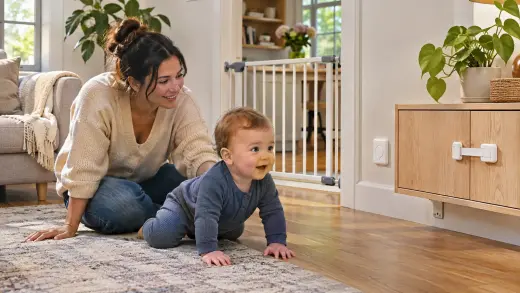
Baby-Proofing Your Home: Simple Steps to Keep Your Baby Safe

Baby Proofing Checklist: Simple Ways to Make Your Home Safer
Baby-Proofing Your Home: A Room-by-Room Safety Guide
