














Baby Proofing Checklist: Simple Ways to Make Your Home Safer
Room-by-room baby proofing tips for safer sleep, stairs, furniture, windows, kitchens and bathrooms, with guidance for Australia, the UK, US and Canada.

On this page
- Start with a simple home safety check
- Baby proofing by age and new skills
- Falls, stairs and windows
- Furniture, televisions and heavy objects
- Kitchen and dining areas
- Bathroom, water and hot surfaces
- Medicines, cleaners and other poisons
- Small objects, toys and batteries
- Bedrooms and safe sleep spaces
- Living areas, pets and visitors
- Choosing and checking safety products
- Official guidance in Australia, the UK, the US and Canada
- Common baby proofing mistakes
- Frequently asked questions
- Sources
Short answer: Baby proofing means finding hazards in your home and reducing the risks. Start with places your child can reach, climb or pull. Secure heavy furniture, block unsafe stairs, move medicines and cleaners out of reach, and keep small objects off the floor. Check your home again as your child grows. Safety products can help, but they do not replace close supervision.
There is no checklist that can remove every risk. Children learn new skills quickly, and each home is different. Walk through your home at your child’s height. Fix the most serious hazards first. Ask your local child safety service or health professional about risks you cannot solve yourself.
Start with a simple home safety check
Choose a quiet time to check each room. Get down to your hands and knees. Look for hazards at floor level, under furniture and near windows. Think about what your child can pull, open, climb or put in their mouth.
Check the home in two ways. First, look for hazards that could cause serious harm right away. These include water, open stairs, medicines, hot surfaces and heavy furniture that could fall. Then look for smaller risks, such as sharp corners or toys with loose parts.
Write each problem down. Add where it is and what you will do. You can use a phone note or a paper list. Give urgent jobs a clear place at the top. For example: move medicine to a locked cupboard, then fit a stair gate.
Do not buy a product until you know what problem it needs to solve. A lock or gate must fit the space and work as intended. Read the instructions and check the product often. A loose, broken or badly fitted item can create a new risk.
Ask these questions in every room
- Could my child fall from here or through this opening?
- Could furniture, a television or another heavy item tip over?
- Can they reach water, heat, medicines, chemicals or sharp tools?
- Are there cords, straps or loops near a cot, bed or play area?
- Are small objects or loose parts within reach?
- Can they open a door, cupboard, window or gate?
- What might change when they learn to crawl, stand or climb?
Check the home when your child is awake and moving. A room that looks safe while a baby is lying down may become different once they crawl or pull to stand.
Baby proofing by age and new skills
Age can offer a rough guide, but children do not all develop at the same pace. Use what your child can do today. Check again when they learn a new skill. Crawling, standing, walking and climbing each bring new hazards within reach.
| Stage | What may change | What to check |
|---|---|---|
| Newborn | Your baby mostly stays where you place them, but adults carry them through the home. | Set up a safe sleep space. Keep hot drinks, medicines and cords away from places where you feed or change your baby. |
| Rolling and reaching | Your baby may move on a bed or change surface without warning. | Keep one hand on your baby during changes. Use a safe floor space if you need both hands. |
| Crawling and sitting | Your child can reach low cupboards, sockets, cords and small objects. | Check floors, cupboards, windows and furniture. Block access to stairs and unsafe rooms. |
| Pulling to stand | Your child may use furniture, shelves or appliances for support. | Secure heavy furniture. Remove items that invite climbing. Check for cords they could pull. |
| Walking and climbing | Your child may open doors, climb onto furniture and reach higher places. | Check gates, windows, balconies, kitchen areas and outdoor access. Keep dangerous items locked away. |
| Older toddler | Your child may understand simple rules but still act quickly. | Keep using physical safety measures. Teach simple rules and stay close around water, roads and heat. |
Do not rely on a child remembering a rule every time. A toddler can know that a cupboard is unsafe and still open it. Use safe storage and barriers as well as simple reminders.
Falls, stairs and windows
Falls can happen from beds, change tables, stairs, windows, balconies and furniture. Keep close enough to reach your child when they are on a raised surface. If you need to step away, take your child with you or place them somewhere safe, such as a cot.
Stairs and gates
Use a suitable safety gate to block stairs or other areas that are unsafe for your child. Follow the gate instructions and fit it as directed. Check the latch and fixings often. A gate that is loose, damaged or left open cannot protect your child.
Choose the right gate for the space. Some gates fit between walls; others need to be fixed in place. The safest choice depends on the location and the manufacturer’s directions. Do not put a pressure gate where a fall could result if the gate comes loose.
Keep stairs clear of toys, shoes and bags. Teach your child to use stairs with an adult nearby. A gate does not make it safe to leave a child alone on steps or landings.
Windows, balconies and cords
Keep furniture away from windows. A chair, cot or low table can help a child climb. Use window locks or restrictors that adults can operate and that suit the window. Follow local rules and product directions. A screen may keep insects out, but it may not stop a child from falling.
Keep balcony doors closed and secured when adults are not using them. Do not leave a child alone on a balcony. Remove objects that could help a child climb over a railing. If a railing has wide gaps or seems unsafe, keep your child away and seek local advice.
Blind and curtain cords can strangle a child. Keep cords and loops well out of reach. Use cordless window coverings where possible. Secure cords using a device made for that purpose, following its instructions. Check cords again after moving furniture or changing window coverings.
Furniture, televisions and heavy objects
A child may pull on a drawer, shelf or television stand. Heavy furniture can tip and cause severe injury. Secure furniture and televisions to the wall using suitable fixings. Follow the furniture maker’s instructions and choose fixings that suit your wall.
Store heavy items on lower shelves. Keep tempting items, such as toys or remote controls, off high furniture. A child may climb to reach them. Do not leave drawers open, as they can act like steps.
Check furniture for loose parts, sharp edges and unstable legs. Move unstable items out of your child’s space. Corner guards may soften some bumps, but they do not make furniture safe to climb or lean on.
When you move house or rearrange a room, check the fixings again. A secure item can become unsafe if it is moved or attached to a different wall.
Kitchen and dining areas
Kitchens hold hot, sharp and poisonous items. Keep your child away from cooking when you can. Use a safe play area or a high chair that is set up correctly. Stay close while your child is in a high chair. A high chair is not a safe place to leave a child alone.
- Turn saucepan handles towards the back of the stove.
- Keep hot drinks and hot food away from table edges.
- Unplug appliances when they are not in use, if safe to do so.
- Keep knives, scissors and sharp tools out of reach.
- Lock away cleaners and other products that could poison a child.
- Keep plastic bags and small objects away from children.
- Use a suitable strap on a high chair, and follow its instructions.
Stove knob covers and cupboard locks may help in some homes. Check that they fit, stay secure and do not create another hazard. Keep your child away from the stove even when covers are fitted.
Choking prevention also matters at meals. Have your child sit upright and stay with them while they eat. Prepare food in a way that suits their age and ability to chew. Learn first aid from a recognised provider. If you are worried that your child has choked, seek emergency help.
Bathroom, water and hot surfaces
Small amounts of water can be dangerous to a young child. Stay within arm’s reach whenever your child is in or near water. This includes baths, buckets, paddling pools and other containers. Empty containers after use and store them where a child cannot reach them.
Never leave a child alone in a bath, even for a short time. If you need to answer the door or phone, take your child with you. A bath seat or bath aid does not replace an adult staying within reach.
Set up the bath before bringing your child into the room. Check the water with your hand or a bath thermometer. Keep medicines, razors, cleaning products and small items out of reach. Use a non-slip surface where it is suitable, and keep the floor clear of clutter.
Keep hair straighteners, heaters and hot appliances away from children. Unplug them after use and let them cool somewhere your child cannot reach. Use back burners where possible, and turn pan handles away from the edge.
Medicines, cleaners and other poisons
Store medicines, vitamins, cleaning products, garden chemicals and alcohol in a locked place. A high shelf alone may not be enough once your child can climb. Keep products in their original containers, with the label attached. Do not put chemicals in drink bottles or food containers.
Put medicines away after each use. Do not leave a dose on a table or in a handbag. Ask visitors to keep their medicines out of reach too. A child may find pills in a coat pocket or bag.
If you think your child has swallowed something unsafe, contact your local poison service or emergency service straight away. Keep the product container nearby, if you can do so safely. Do not make your child vomit unless a health professional tells you to.
Small objects, toys and batteries
Babies and toddlers often explore with their mouths. Check floors, low shelves and bags for small objects. Look for loose parts that could come off toys. Keep coins, buttons, jewellery, magnets and small batteries away from children.
Button batteries can cause serious harm if swallowed or placed in the nose or ear. Choose products with secure battery compartments. Keep spare batteries locked away. If a battery is missing or you think a child may have swallowed one, seek urgent medical help. Do not wait for symptoms.
Check toys for damage before play. Follow the age guidance on the toy. That guidance does not replace supervision. Keep older children’s small toys separate from a baby’s play space.
Bedrooms and safe sleep spaces
Use a cot or other sleep space that meets local safety guidance. Follow the maker’s instructions for assembly and use. Check that it is stable and in good repair. Keep the sleep space clear of loose items, including toys and soft bedding, according to your local safe sleep advice.
Keep the cot away from windows, blind cords, heaters and furniture that a child could climb. Do not hang bags or toys from the cot. When your child can pull up, check the cot setup and follow the maker’s advice about mattress height.
Keep baby monitors, chargers and other electrical cords out of reach. Place them well away from the cot and any area where a child can sleep or play. Do not use a corded monitor within a child’s reach.
A changing area also needs care. Keep one hand on your baby while they are on a raised surface. Keep supplies close before you begin. If you must step away, take your baby with you or place them in a safe space.
Living areas, pets and visitors
Keep play areas free from cords, small objects and heavy items that could fall. Check sofas and chairs for gaps where a child could become trapped. Keep lamps, hot drinks and breakable objects out of reach.
Teach visitors the same safety rules you use. Ask them to keep medicines, bags, hot drinks and small objects off the floor and away from your child. Check the room after a visit, especially if other children were playing there.
Always supervise a baby or toddler around a dog or other animal. Never leave them alone together, even if the pet is gentle. Give the animal a quiet place where the child cannot follow. Keep food bowls and toys separate, and teach children not to disturb a pet while it eats or sleeps.
Choosing and checking safety products
Baby gates, cupboard locks, furniture fixings and window locks can help. Their value depends on choosing the right item and fitting it properly. Read the label and instructions before buying. Check product recalls through your country’s official product safety service.
Use a safety product for its stated purpose. Do not alter it or combine parts from different products unless the maker permits it. Check fixings, hinges, straps and locks regularly. Replace damaged products and stop using anything that no longer works as intended.
Second-hand items need extra care. Check that all parts are present and that the product has not been recalled. Ask for the instructions if they are missing. Do not use an item if you cannot confirm it is safe and complete.
No product makes supervision unnecessary. Gates can be left open. Locks can fail. Children can learn to climb. Keep watching and update your safety plan as your child grows.
Official guidance in Australia, the UK, the US and Canada
Advice can vary by country. Product rules and emergency services also differ. Use local guidance for the home and products you have. The main sources below offer practical advice on common household risks.
| Country | Official or trusted body | Useful guidance |
|---|---|---|
| Australia | Product Safety Australia (ACCC) and Kidsafe Australia | Product Safety Australia covers furniture, windows, batteries and child products. Kidsafe offers advice on falls and home safety. |
| United Kingdom | Office for Product Safety and Standards, NHS and RoSPA | Check product alerts, baby and toddler safety advice, and home safety guidance. |
| United States | U.S. Consumer Product Safety Commission and American Academy of Pediatrics | Find product safety information and childproofing advice for the home. |
| Canada | Health Canada and the Canadian Paediatric Society | Check recalls and safety alerts, plus advice on water and other injury risks. |
Australia’s Product Safety Australia is part of the Australian Competition and Consumer Commission. It provides consumer advice and recall information. Kidsafe Australia shares child injury prevention advice. In the UK, the Office for Product Safety and Standards oversees product safety work. The NHS provides health advice, and RoSPA shares home safety guidance.
In the US, the Consumer Product Safety Commission provides product safety guidance and recalls. The American Academy of Pediatrics provides child health and home safety advice. In Canada, Health Canada shares product recalls and safety alerts. The Canadian Paediatric Society provides advice for families. Check the guidance that applies where you live.
Common baby proofing mistakes
- Waiting until crawling begins: Start earlier. A child may move sooner than expected.
- Checking only at adult height: Get low and look at the room from your child’s level.
- Trusting a screen or gate by itself: Check what it can and cannot prevent.
- Leaving a gate open: Close it every time, and check the latch.
- Using furniture as a barrier: A child may climb it, and it may tip.
- Putting cleaners on a high shelf: Children can climb. Use locked storage.
- Leaving a child on a change table: Keep one hand on them, or use a safe floor space.
- Relying on reminders alone: Young children cannot follow rules every time.
- Forgetting guests and bags: Visitors may bring medicines or small items into reach.
- Not checking after changes: Recheck after moving furniture or buying new equipment.
Frequently asked questions
When should I start baby proofing?
Start before your baby begins to move around. This gives you time to fix hazards without rushing. Keep checking as your baby learns to roll, crawl, stand and climb.
Do I need to baby proof every room?
Check every room your child may enter, including the garden and visits to other homes. Focus first on serious hazards, such as stairs, water, heat, medicines and heavy furniture.
Are outlet covers enough to make sockets safe?
No single item makes a room fully safe. Follow local electrical safety advice and use products that fit your home. Keep electrical items and cords away from children, and supervise them in rooms with sockets.
Can I leave my baby on a change table for a moment?
No. Babies can move suddenly, even before they can roll well. Keep one hand on your baby while they are raised. Take them with you if you need to step away.
Do baby gates replace supervision?
No. A gate is one layer of protection. Close it properly, check that it is secure and stay nearby. Do not leave a child alone near stairs or in a room with other hazards.
How often should I check my home?
Check often, and whenever your child gains a new skill. Recheck after you move furniture, change a room or bring home a new product. Fix loose or damaged safety items promptly.
What should I do if a safety product breaks?
Stop using it. Keep your child away from the hazard while you repair it or find a suitable replacement. Check the maker’s instructions and local recall notices before using another product.
What matters most if I cannot do everything at once?
Deal with immediate dangers first. Keep your child away from water, open stairs, hot surfaces, medicines and heavy items that could tip. Then make a short list and work through the remaining hazards.
Remember: Baby proofing is an ongoing job. Check the home at your child’s height, fix serious risks first and review the setup as your child grows. For a hazard you cannot manage, ask a qualified local child safety or health professional.
Sources
Related guides
More Health & Safety Gear →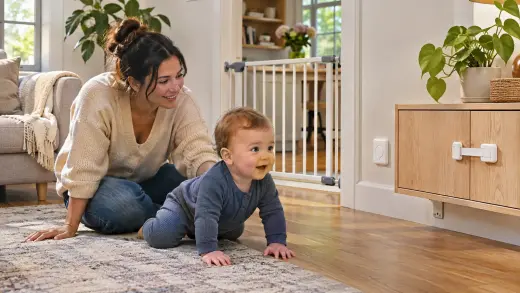
Baby-Proofing Your Home: Simple Steps to Keep Your Baby Safe

Baby-Proofing Your Home: Practical Steps for a Safer Space

Baby-Proofing Gear: A Room-by-Room Guide to a Safer Home
