














Foldable Baby Bathtubs vs Sink Bath Inserts: Drain Plugs, Mould and Storage
Compare foldable baby bathtubs and sink bath inserts. Learn how drain plug colour indicators work, how to stop mould, and how to store your bath safely.
On this page
- Key points
- What foldable baby bathtubs and sink inserts are
- Foldable bathtub vs sink insert: side-by-side comparison
- How to choose the right one for your home
- Drain plug thermometers: how they work and their limits
- Mould prevention and daily cleaning
- Storage ideas for small bathrooms and laundries
- Bath gear by baby age and stage
- Safety rules and official advice in Australia, the UK, the US and Can…
- Common mistakes parents make
- Frequently asked questions
- Sources
Short answer: Choose a foldable baby bathtub if you want one tub that lasts from birth to toddler age. Choose a sink bath insert if you have a big kitchen sink and want to bathe a newborn standing up. Both work well when you dry them after every bath and keep one hand on your baby at all times. Never trust a drain plug colour change on its own. Always test the water with your wrist or elbow first.
This guide follows safe bathing and water safety advice from Australia (Kidsafe Australia, Royal Life Saving Australia, ACCC), the UK (NHS, RLSS UK, OPSS), the US (American Academy of Pediatrics, CDC, CPSC) and Canada (Canadian Paediatric Society, Health Canada, Lifesaving Society Canada).
Key points
- Foldable tubs: hard plastic rim with soft silicone sides that fold flat. Good from birth up to about 12 to 18 months.
- Sink inserts: soft foam cushions or mesh slings made to sit inside a kitchen or laundry sink. Best for newborns and tiny babies up to about 4 to 6 months.
- Drain plugs: colour-changing plugs only give a rough warning for very hot water. Use a bath thermometer or your wrist to check warmth.
- Mould: silicone folds and thick foam hold water. Air-dry them in a dry spot after every single bath.
- Supervision: stay within arm's reach for the whole bath. Never leave a baby alone in water, even for one second.
- Water heat: aim for warm water around body temperature, about 37°C to 38°C. Mix the water well before your baby goes in.
What foldable baby bathtubs and sink inserts are
Both products hold your baby in a small space so you do not have to fill a giant family bath. They save water and help you hold a slippery newborn. Still, they work in very different ways.
Foldable baby bathtubs
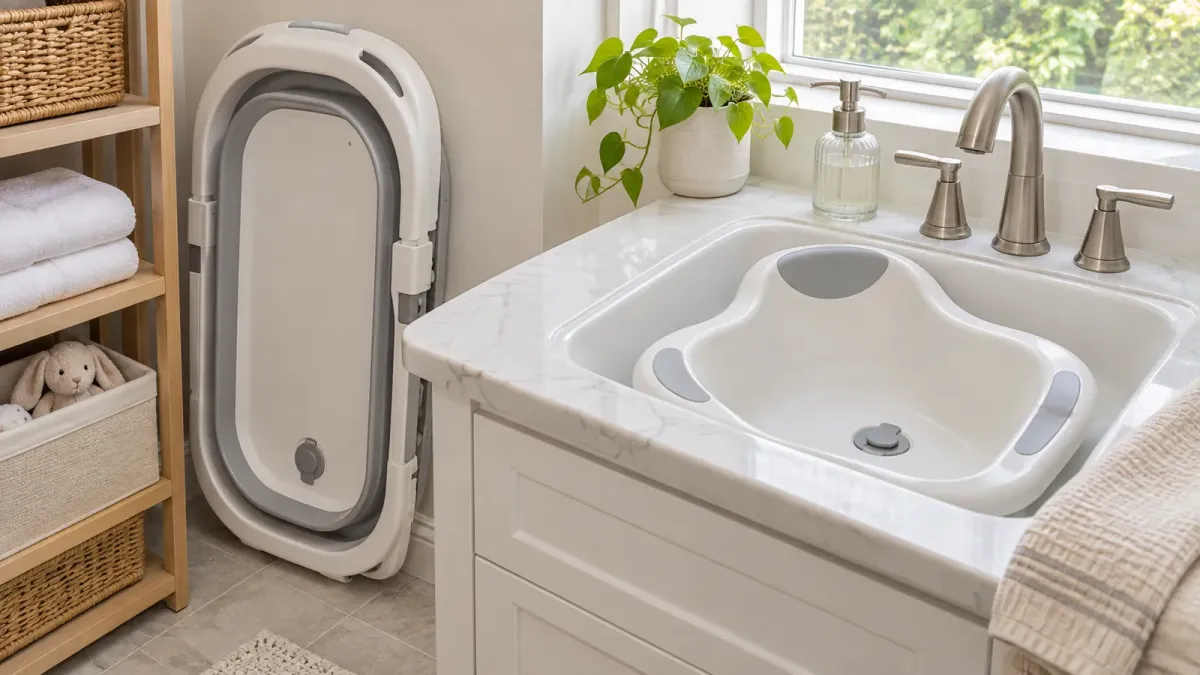
A foldable baby bathtub looks like a small, shallow plastic tub. The rim and base are usually made of hard plastic. The side walls are made of soft, bendy silicone or rubber-like material. When bath time is over, you push the sides down so the tub goes flat.
Most foldable tubs have folding legs with non-slip feet. You can set the tub inside an adult bathtub, inside a walk-in shower, or on a flat bathroom floor. Some tubs come with a soft clip-on sling or cushion for newborns. Once your baby grows, you take the sling off and use the tub on its own.
Sink bath inserts
A sink bath insert is a soft pad or cradle that fits inside a kitchen or laundry sink. There are three common styles:
- Foam flower or petal pads: soft foam shapes that cup your baby's back and head inside the sink bowl.
- Mesh or fabric slings: a lightweight frame with taut mesh that keeps your baby slightly above the sink bottom.
- Moulded plastic sink seats: a small curved cradle with drainage holes and soft backing.
Sink inserts do not hold water by themselves. You plug the sink drain, place the insert in the basin, and fill the sink with a little warm water. Because you stand at the counter, you do not have to kneel on a hard floor.
Foldable bathtub vs sink insert: side-by-side comparison
This table shows how the two styles compare in daily life.
| Feature | Foldable baby bathtub | Sink bath insert |
|---|---|---|
| Best age range | Birth to about 12–18 months | Birth to about 4–6 months |
| Where you use it | Bathroom floor, shower base or big tub | Large kitchen or laundry sink |
| Parent posture | Kneeling or sitting next to the tub | Standing upright at the bench |
| Water use | Needs a moderate amount of water | Needs very little water |
| Drying time | Fast if wiped and hung open | Slow for thick foam; fast for mesh |
| Mould risk | Medium (in silicone creases and plug seams) | High for foam pads; low for mesh |
| Storage shape | Folds flat like a large tray | Hangs up, or rolls and stuffs in a cupboard |
| Travel friendly | Fits flat in a car boot | Very light and easy to pack |
How to choose the right one for your home
The best choice depends on your house, your body and how long you want the gear to last. Think through these four points before you buy.
Space and storage
If you live in a small flat with no big bathtub, a foldable tub is a smart pick. You can use it on the shower floor and hang it on a hook afterwards. A sink insert also saves space, because it fits inside a cupboard or hangs from a laundry hook. Just make sure you have a dry, airy spot where it can drip dry first.
Your back and knees
After giving birth, bending over a big bath can hurt your back, stitches or caesarean wound. A sink insert lets you stand straight at the counter. If you pick a foldable tub instead, you can sit on a low stool next to the shower or floor. Never place a foldable baby tub on a high table, kitchen bench or bed. A wriggling baby can tip it right off the edge.
How long you want to use it
Babies outgrow sink inserts fast. Once your baby starts pushing up, rolling or kicking hard against the tap, the sink is no longer safe. A foldable tub lasts much longer. Many babies can sit and play in a foldable tub well past their first birthday.
Sink shape and tap clearance
A sink insert only works if your sink is wide and deep enough. Double-bowl kitchen sinks are often too narrow for a baby's legs. A swivelling tap helps a lot too. If your tap sticks straight out over the middle of the sink, your baby's head could bump it. Check your sink size before you buy a sink pad.
Drain plug thermometers: how they work and their limits
Many foldable baby tubs come with a heat-sensitive drain plug. Some parents see this feature and think it replaces a real thermometer. It does not.
Colour-changing drain plugs
A heat-sensitive drain plug uses special dye in the rubber or plastic. When the water gets too hot, the plug changes colour. For example, a blue plug may turn white or pale grey when the water feels hot.
Here is the catch. These plugs are only a rough safety clue. They usually react around 38°C to 40°C, and different brands trigger at different levels. Over time, soap scum, mineral build-up and warm air can wear out the dye. A worn plug might stay blue even when the water is too hot for baby skin.
Digital drain or spout sensors
Some tubs and tap attachments have a small digital screen powered by a tiny battery. They show a number in degrees Celsius or Fahrenheit. These screens are handier than colour-changing plugs, yet they still have limits:
- Water at the bottom near the plug can be cooler than water near the top.
- Sensors need time to adjust if you add more water.
- Batteries can run flat or corrode if water leaks into the seal.
Note for safety: if a digital thermometer uses a small round button battery, check that the battery door is locked with a screw. Button batteries are deadly if a child swallows one. Product safety agencies in Australia, the UK, the US and Canada all warn parents to keep button batteries locked away.
Why you still need the wrist or elbow test
Health services like the NHS, the American Academy of Pediatrics and Pregnancy, Birth and Baby all recommend testing bath water with your skin. Your hands are used to hot dishes and warm water, so fingers can fool you. Use the inside of your wrist or your elbow instead.
Stir the water with your hand first so there are no hot spots. Dip your wrist or elbow in for a few seconds. The water should feel comfortably warm, not hot and not cool. If it feels hot to your wrist, add cold water and stir again.
Checking water temperature before and during the bath
Always run cold water first, then add warm or hot water, or run warm mixed water from a single mixer tap. Turn the taps off completely before you put your baby in. Never run the tap while your baby is sitting in the tub or sink. A sudden rush of hot water from another tap or toilet flush in the house can scald a baby in seconds.
If you use a separate floating bath thermometer, aim for 37°C to 38°C. That is close to normal body temperature. Check it before your baby goes in, and still do the wrist check every single time.
Mould prevention and daily cleaning
Warm bathrooms and wet baby gear are the top place for black mould to grow. Mould spores can irritate a baby's airways and delicate skin. Stopping mould is much easier than scrubbing it off later.
Why foldable baths and foam inserts grow mould
Foldable tubs have ribbed silicone walls that bend inward. When you fold a damp tub, water gets trapped inside those tight creases. Soap residue and baby skin oils sit in the creases and feed mould.
Foam sink inserts are even trickier. Thick sponge-like foam soaks up dirty bath water deep inside the core. Even when the outside fabric feels dry, the middle of the pad can stay damp for days.
Daily drying routine for foldable tubs
Do these four quick steps after every bath:
- Pull the drain plug and let every drop run out.
- Rinse the inside of the tub with clean tap water to wash off soap film.
- Wipe the tub and the silicone creases with a clean dry towel.
- Leave the tub open until it is completely dry before you fold it flat.
If your tub has a hanging loop, hang it up in a breezy spot. Leaving it open for an hour or two stops damp air from sitting in the folds.
Daily drying routine for sink inserts
How you dry a sink insert depends on what it is made of:
- Foam pads: press the water out gently with both hands. Never wring foam too hard or it will tear. Hang it by its strap in a sunny or airy room, or put it through a gentle spin cycle in the washing machine if the care label allows it.
- Mesh slings: rinse with clean water, shake off the drops, and hang on a hook. Mesh dries fast because air flows through both sides.
- Plastic cradles: rinse, wipe with a towel, and stand upright so water drains off the holes.
Deep cleaning without harsh chemicals
Once a week, give your bath gear a simple clean. Use warm water and mild dish soap or baby-safe wash with a soft cloth. Avoid strong bleach or harsh sprays, because chemical residues can stay on the surface and irritate your baby's skin.
For light soap scum on plastic or silicone, a paste of baking soda and warm water works well. Scrub gently with an old toothbrush around the drain plug rim and fold lines. Rinse well with clean water and dry in the air. If you wash a fabric or foam insert in the machine, follow the care tag and skip fabric softeners.
When to throw a bath or insert away
If black mould spots soak deep into foam or stain the silicone so they will not wash off, replace the item. Do not try to hide mould under a towel. Also replace a foldable tub if the silicone starts to split, peel or tear, or if the leg locks stop clicking firmly into place.
Storage ideas for small bathrooms and laundries
A wet baby bath takes up space if you have nowhere to put it. Here are simple ways to store it neatly while keeping air moving around it:
- Over-the-door hooks: hang a foldable tub or mesh insert on the back of the bathroom door. Air flows around it, and it stays off the floor.
- Wall suction or adhesive hooks: stick a heavy-duty hook inside the shower wall. Hang the tub by its built-in loop once it is wiped down.
- Beside the vanity or washing machine: slide a dry, folded tub into the narrow gap next to a cabinet or laundry tub.
- Under a cot or change table: if your bathroom is tiny, keep the dry folded tub in the bedroom under furniture.
- Outside in the shade: on dry days, air out a foam sink pad on a clothesline out of harsh direct sun, which can fade or crack plastics over time.
Keep one rule in mind: dry first, store second. Never put a damp tub or wet pad inside a closed cupboard or under a bed.
Bath gear by baby age and stage
Your baby's bath setup changes quickly during the first year. This table shows what works at each stage.
| Baby stage | What your baby can do | Best bath setup | Key safety focus |
|---|---|---|---|
| First 1–2 weeks (cord stump still on) | Very floppy head. Umbilical cord stump drying out. | Warm sponge bath on a towel, or shallow water keeping the stump dry. | Keep baby warm; support head and neck; check water heat. |
| 2 weeks to 4 months | Cord stump has fallen off. Still needs full head support. | Sink insert or foldable tub with a newborn sling. | One hand supports baby at all times; shallow water. |
| 4 to 8 months | Kicking, splashing, starting to roll or sit with help. | Foldable tub without sling, or big tub with non-slip mat. | Move out of the sink before baby kicks taps or rolls out. |
| 8 to 18 months | Sitting well, pulling up to stand, grabbing toys. | Foldable tub on shower floor, or standard family bath. | Use a non-slip mat; stay within arm's reach; empty right away. |
Every baby grows at their own pace. Move to the next stage based on what your baby can do, not just their age in months.
Safety rules and official advice in Australia, the UK, the US and Canada
Drowning is silent and fast. A baby can drown in just a few centimetres of water in less than a minute. Health and safety agencies across Australia, the UK, the US and Canada all share the same core bathing rules.
| Safety topic | Australia | UK | US | Canada |
|---|---|---|---|---|
| Supervision | Keep baby within arm's reach at all times (Kidsafe, Royal Life Saving). | Never leave baby alone in water, even for a second (NHS, RLSS UK). | Keep within arm's reach, touch supervision (AAP, CDC). | Stay within arm's reach for the whole bath (CPS, Lifesaving Society). |
| Bath seats and rings | Do not rely on them as safety devices; never leave baby alone (ACCC). | Do not use bath seats as a substitute for supervision (NHS, RoSPA). | Bath seats can tip over; never leave baby unattended (CPSC, AAP). | Never leave a baby alone in a bath seat or ring (Health Canada, CPS). |
| Water heat | Warm, about 37°C to 38°C; test with wrist or elbow. | Warm, not hot; mix well and test with wrist or elbow (NHS). | Warm, not hot; check with wrist or inside of forearm (AAP). | Warm, comfortable to the wrist or elbow (CPS). |
| Product recalls and rules | ACCC / Product Safety Australia. | Office for Product Safety and Standards (OPSS). | Consumer Product Safety Commission (CPSC). | Health Canada Recalls and Safety Alerts. |
Keep your baby within arm's reach
Before you run the water, gather everything you need. Put the towel, clean nappy, fresh clothes and washcloth right beside you. Ignore your phone and let the doorbell ring. If you have to leave the room for any reason, wrap your baby in a towel and take them with you.
Never rely on older siblings
An older child cannot supervise a baby in the bath. Even a kind, helpful five-year-old or eight-year-old does not have the judgment or strength to keep a baby safe in water. An adult must stay right there.
Check product safety and recalls
Baby bathtubs and bath seats must meet strict safety rules in many countries. When you shop, look for:
- A wide, stable base that will not wobble or tip.
- Strong leg locks that click cleanly and cannot fold by mistake while baby is inside.
- A non-slip surface on the inside bottom and on the feet.
- A clear water-level mark and a drowning warning label on the tub.
Before buying a used tub or accepting a hand-me-down, check your national recall website. Check Product Safety Australia, the UK Office for Product Safety and Standards, the US Consumer Product Safety Commission, or Health Canada. Empty the tub and pull the plug as soon as the bath is over so toddlers cannot climb back in later.
Common mistakes parents make
Most bath accidents happen during normal, busy evenings. Watch out for these common traps.
1. Trusting a colour-changing drain plug alone
A plug can fade or react slowly. Always swirl the water with your hand and test it with your wrist or elbow before your baby's toes touch the water.
2. Running the tap while baby is in the sink
It feels handy to top up warm water from the kitchen tap. Do not do it. Water temperature can spike in a second, and a baby can grab or kick the tap.
3. Using a sink insert on a hard floor or counter
Foam sink pads are soft and curved, not flat. They are made to sit snugly inside a sink basin. Put one on a counter and your baby can roll right off. Put a foldable tub on a high counter and the whole tub can slide off.
4. Folding a wet tub straight after bath time
Folding a wet tub traps puddles inside the silicone creases. Within days, black spots can appear. Wipe it dry and leave it open until the air finishes the job.
5. Leaving a dirty bath full while drying your baby
It is easy to lift your baby out, wrap them in a towel, and walk to the bedroom. If you have a toddler or pet at home, an open tub full of water is a drowning hazard. Pull the plug right away before you leave the bathroom.
6. Using too much water
Babies do not need a deep bath. Just a few centimetres of water is plenty to wash them and keep them cosy. Shallow water lowers risk and makes it easier to hold your baby steady.
Frequently asked questions
Are foldable baby bathtubs safe for newborns?
Yes, a foldable baby bathtub is safe for a newborn if you use it on a flat, low surface like the floor or inside an empty big bath. Keep one hand on your baby at all times, use shallow warm water, and check that the folding legs are locked before you put water in.
Can a sink bath insert be used on the floor or in a big tub?
Foam sink pads are best inside a sink or inside a big dry tub where the walls keep them from sliding. Do not place a sink insert on a kitchen bench, table or bed. Check the maker's instructions, because some mesh or plastic cradles are built for the big bath as well as the sink.
How accurate are drain plug thermometers?
Colour-changing drain plugs only give a rough warning when water is too hot. They are not accurate enough to replace your own check. Digital bath thermometers are better, though you should still stir the water and test it with your wrist or elbow every time.
How do I stop mould in the silicone folds of a baby bath?
Rinse off soap film with clean water after every bath. Wipe the inside and the creases with a towel. Leave the tub unfolded and hanging or propped open until it is bone dry. Once a week, scrub the folds gently with warm soapy water or a baking soda paste.
What water temperature is safe for a baby bath?
Health agencies recommend warm water close to body temperature, about 37°C to 38°C. The room should also feel warm so your baby does not get chilled when you lift them out. Always stir the water well and test it on the inside of your wrist or elbow.
How long can a baby use a sink insert or foldable tub?
Most babies outgrow a sink insert by about 4 to 6 months, or as soon as they start kicking the taps or trying to roll. A foldable baby bathtub usually lasts much longer, often up to 12 to 18 months, until your child sits steady and is ready for a non-slip mat in the family bath or shower.
Is it safe to buy a second-hand foldable baby bath?
Only if it is in great shape and has not been recalled. Check the leg locks to be sure they click tight and do not slip. Look closely at the silicone creases for tears, splits or deep mould stains that will not clean off. Check your country's official product recall list before using any used baby gear.
Sources
- NHS – Washing and bathing your baby
- HealthyChildren.org (American Academy of Pediatrics) – Bathing your newborn
- Kidsafe Australia – Water safety
- Royal Life Saving – Water safety at home
- Caring for Kids (Canadian Paediatric Society) – Water safety
- Royal Life Saving Society UK – Water safety
- Health Canada – Recalls and safety alerts
Related guides
More Health & Safety Gear →
Baby Bath Towels and Washcloths: Choosing Soft, Practical Options

Baby Bath Tubs with Thermometers and Newborn Slings: A Safe Bath Time Guide

Hardware-Mounted vs Pressure-Mounted Baby Gates: Which to Use Where
