Framed Hiking Baby Backpack Carriers: Fit, Kickstands and Sun Shade
How to choose and fit a framed hiking baby carrier: torso adjustment, kickstand stability, sun canopies, child harness safety, and official advice.

On this page
- Key points
- What a framed hiking baby backpack carrier is
- When your child is ready to ride
- Suspension and torso adjustment
- Kickstand stability and safe loading
- Child seat, harness, and hip support
- Sun canopies, airflow, and weather care
- Comparing your outdoor carrying options
- Official guidance in Australia, the UK, the US and Canada
- Common mistakes to avoid and pre-hike checks
- Frequently asked questions
- Sources
Short answer: A framed hiking baby backpack carrier lets you carry an older baby or toddler on longer walks. It uses a light metal frame, a padded hip belt, and a built-in child seat. Only use one when your child can sit up well on their own, usually from about 6 months old. Adjust the torso length so most of the weight sits on your hips, not your shoulders. Always lock the kickstand before setting the pack down, and never leave your child alone in it.
Official babywearing advice is similar across Australia (Product Safety Australia and Raising Children Network), the UK (Office for Product Safety and Standards, NHS, and The Lullaby Trust), the US (Consumer Product Safety Commission and American Academy of Pediatrics), and Canada (Health Canada and the Canadian Paediatric Society). Keep your child's airway open, protect their hips, and check straps before every walk.
Key points
- Age limit: wait until your child has strong head control and sits unaided. Never put a newborn in a framed backpack.
- Weight transfer: a good hip belt takes most of the load off your shoulders and lower back.
- Torso fit: slide the back panel to match your back length, especially if two adults share the pack.
- Kickstand safety: a folding leg holds the pack upright for loading. Always hold the frame while your child is inside.
- Airway and hips: keep your child's chin off their chest and support their thighs in a wide, bent-knee position.
- Sun shade: a removable canopy blocks direct sun, but still use shade hats, light clothes, and regular breaks.
What a framed hiking baby backpack carrier is
A framed hiking carrier is a structured backpack built around a light metal frame, usually aluminium. Inside the top half sits a suspended child seat with a five-point harness. Underneath the seat, there is often a storage pocket for water, nappies, snacks, and spare clothes.
Unlike a soft fabric carrier, a framed pack holds its own shape. It keeps a small gap between your back and your child. That gap lets air flow through, so both of you stay cooler on warm trails.
How it differs from a soft carrier
A soft structured carrier hugs your child close to your chest or back. It folds up small and works well for young babies, errands, and short walks. A framed hiking carrier is bulkier and heavier on its own, yet it feels much lighter once loaded.
The rigid frame and wide hip belt spread a heavy toddler's weight onto your pelvis. On steep hills or long bushwalks, this stops your shoulders from aching. Most framed packs also have a kickstand so the carrier can stand upright on flat ground while you buckle your child in.
Baby Carriers & Wraps worth a look
Real products from our catalogue. We don't show star ratings or review counts; check the current price, stock and reviews on Amazon before you buy.
 Reviewed
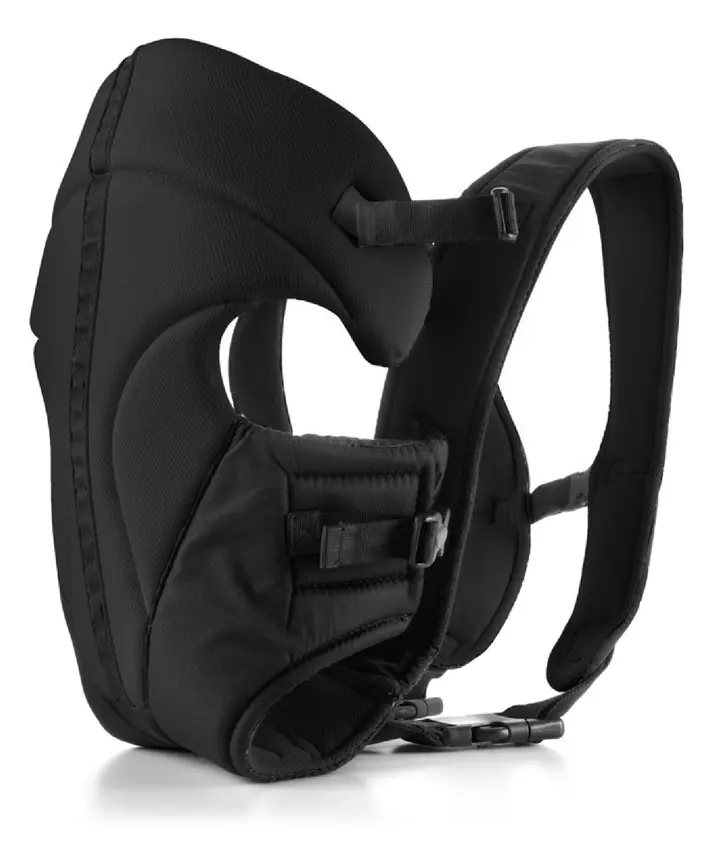
4baby 3 Way Baby Carrier
A very low-cost carrier with 3 positions, for babies 3.6 to 9 kg.
Read our full review →
BabyBjörn Baby Carrier Mini 3D Jersey
Newborn baby carrier

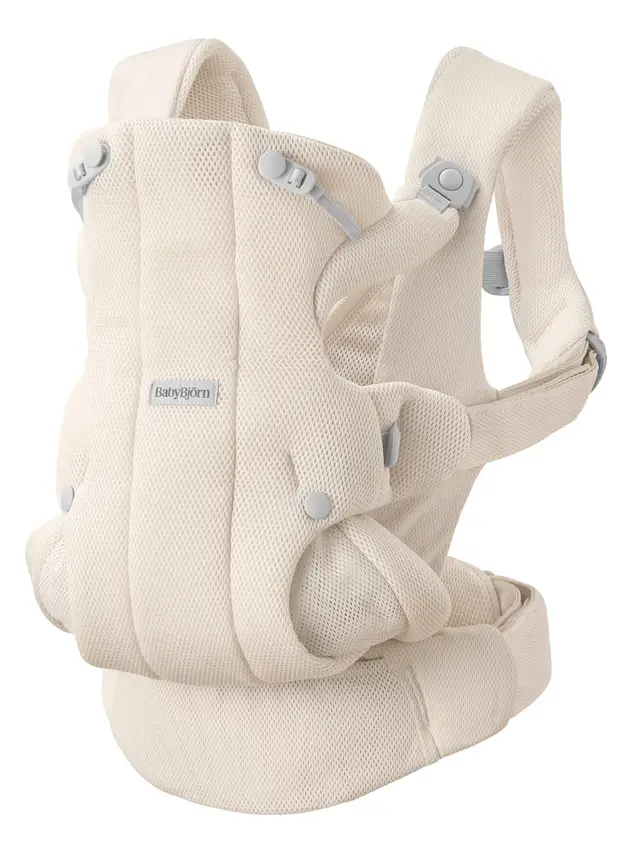
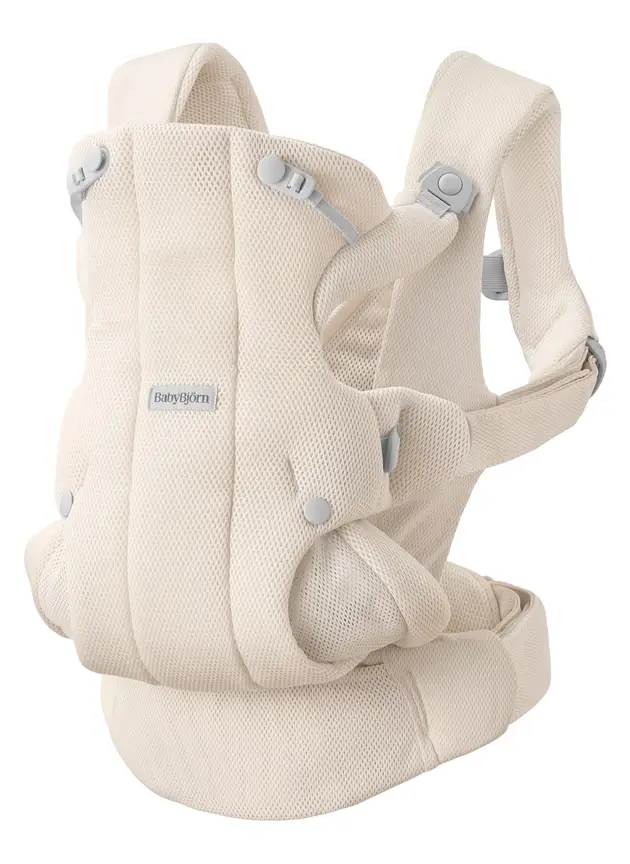
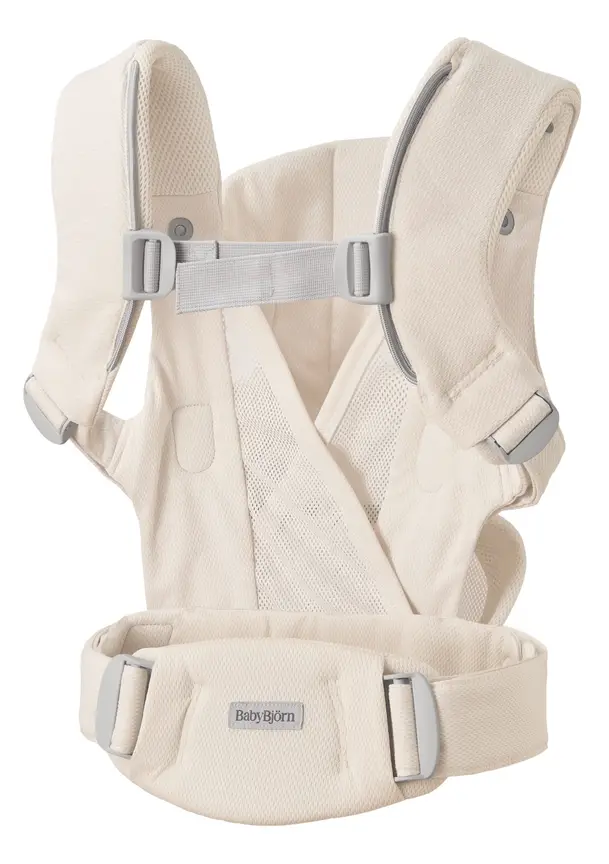
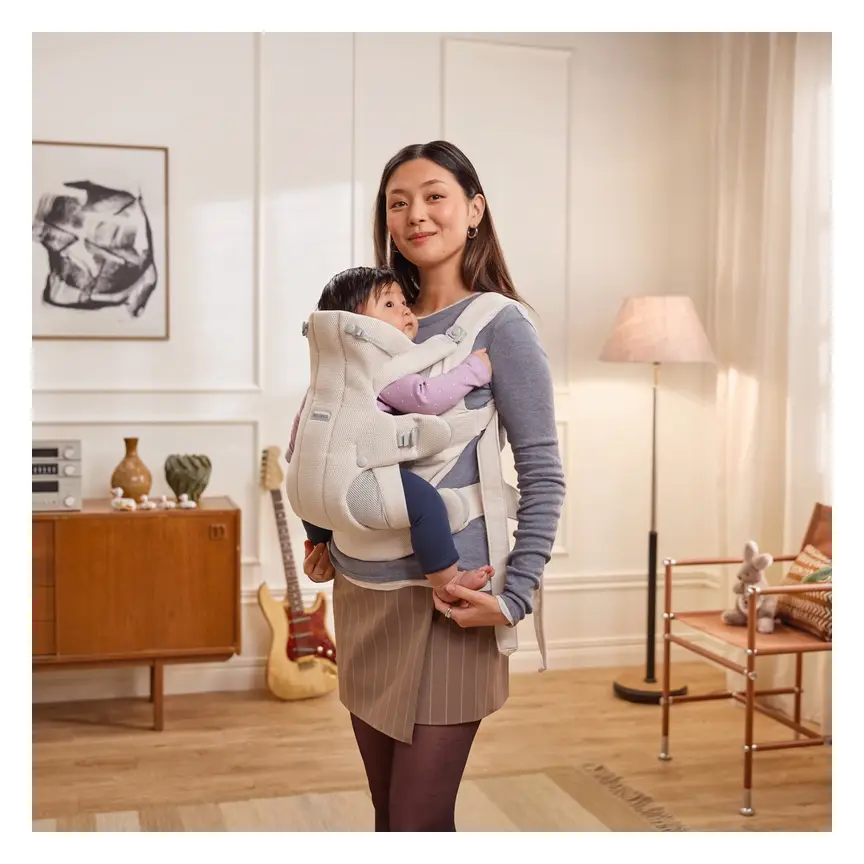

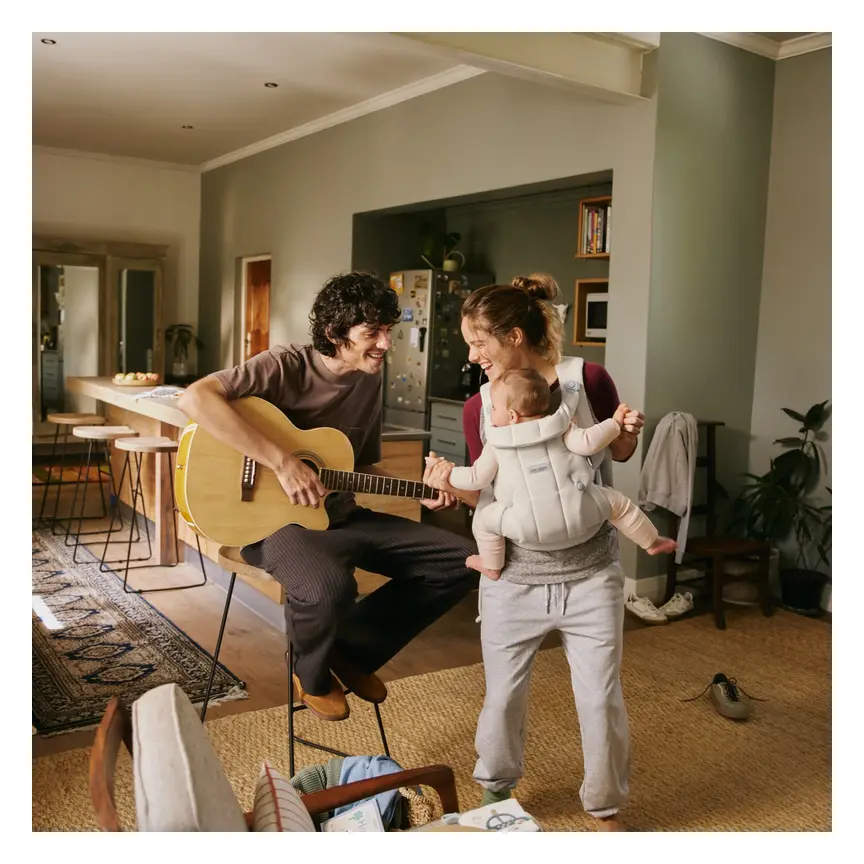
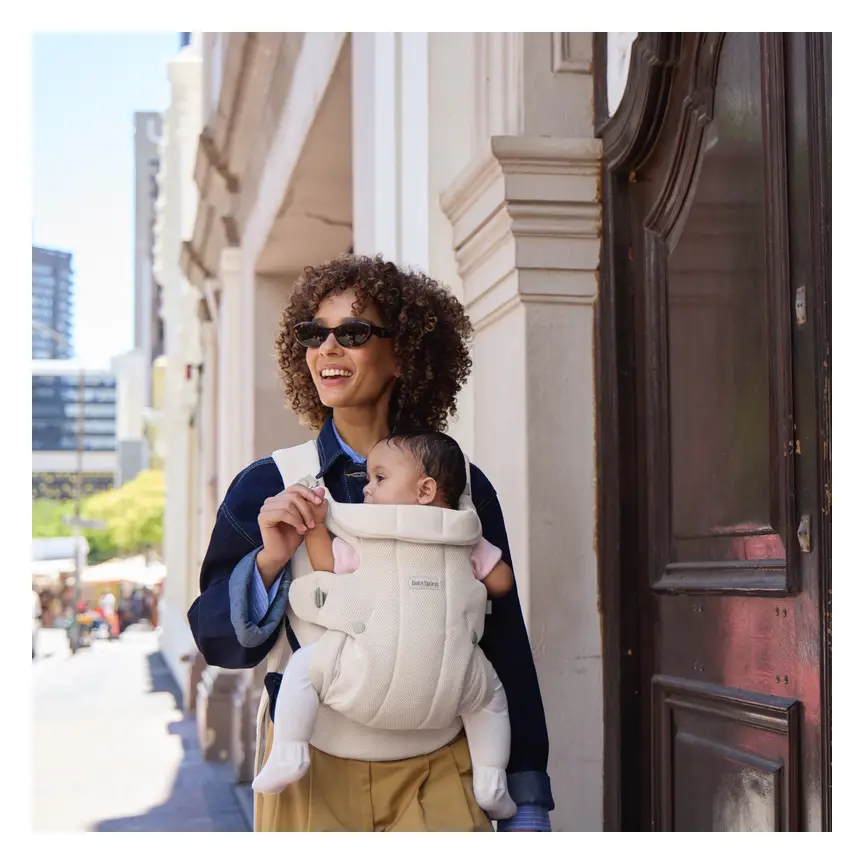
BabyBjörn Baby Carrier Hold
A soft front carrier from newborn to 18 months that fits XS to XXL parents.
Read our full review →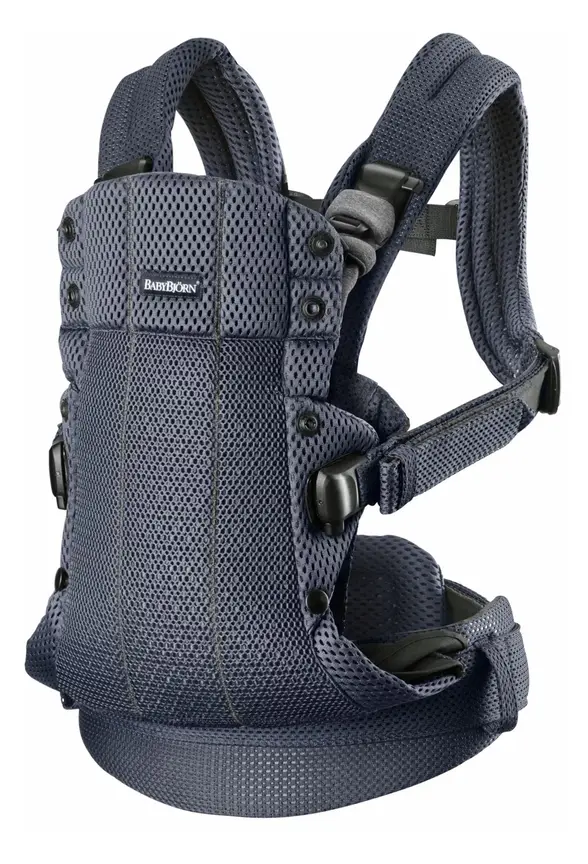 Reviewed
BabyBjörn Baby Carrier Harmony
A premium carrier with four positions, from 3.2 kg newborns to about 3 years.
Read our full review →When your child is ready to ride
Framed hiking carriers are not for newborns or young babies. A baby in a framed pack sits upright, high behind your shoulders, where you cannot easily see their face. Their neck and back muscles must be strong enough to hold their head steady over bumpy ground.
Most makers and health groups advise waiting until your child can sit up by themselves without help. For most babies, this happens around 6 months of age. Some babies need a little longer, so watch your child's skills rather than the calendar.
Signs your baby is ready
- They hold their head up steady, even when you gently bounce or walk.
- They can sit upright on the floor without tipping over.
- They fit snugly inside the carrier's seat and harness with no big gaps.
- Their head clears the side pads so they can look around and breathe freely.
Before 6 months, use a soft front carrier or wrap instead. Raising Children Network in Australia and the Lullaby Trust in the UK both stress keeping young babies upright, close enough to kiss, and with their face clear at all times. You cannot check those things easily when a tiny baby sits behind your head in a framed pack.
Upper weight and height limits
Every framed carrier has a maximum weight limit printed on its label. Check whether that limit covers only the child, or the child plus all the gear in the storage pocket. Once a toddler reaches the limit, or becomes too tall for the shoulder straps to sit right, stop using the pack.
Suspension and torso adjustment
The suspension system is the part of the carrier that touches your body. It includes the hip belt, the back panel, the shoulder straps, the chest strap, and the load-lifter straps. A good suspension system makes a heavy toddler feel manageable.
If the torso length is wrong, the pack will pull backward on your shoulders. That strains your neck and makes you lean forward on the trail. Taking five minutes to set the suspension properly before your first walk saves hours of soreness later.
1. Adjusting the torso length
Torso length is the distance from the base of your neck down to the top of your hip bones. It has nothing to do with how tall your legs are. Two people of the same height can have very different torso lengths.
Most framed carriers have a sliding harness on a ladder track, pin-lock system, or hook-and-loop panel. To set it:
- Loosen all the straps before you put the pack on.
- Place a small weight inside the seat, like a bag of rice or rolled towels, so the pack hangs naturally.
- Put the pack on and fasten the hip belt right over the top of your hip bones.
- Check where the shoulder straps attach to the back panel. They should sit level with the tops of your shoulders, or just slightly below.
- If the attachment point sits too high, shorten the torso setting. If the straps dig into the tops of your shoulders, lengthen the torso setting.
If two parents or carers share the same pack, pick a carrier with a quick-adjust torso track. Some packs let you slide the harness up and down in seconds without unthreading buckles. That makes switching carriers halfway through a hike easy.
2. Fitting the hip belt
The hip belt does the hardest work. About two-thirds to three-quarters of the pack's weight should rest on your hips and pelvis, not your shoulders. Fasten the belt so the middle of the padded wings wraps right over the top edge of your hip bones.
Do not wear the hip belt down low around your bum or up high on your soft belly. Pull the webbing snug so the pack stays firm against your body when you lean side to side. Look for a belt with forward-pull straps, because they are much easier to tighten when you are carrying weight.
3. Setting the shoulder, chest, and load-lifter straps
Once the hip belt is tight, pull the shoulder straps down until they touch your shoulders gently without lifting the hip belt up. Next, clip the chest strap across your breastbone, a few fingers below your collarbone. This stops the shoulder straps from slipping off your arms, but do not pull it so tight that it squeezes your breathing.
Finally, tug the load-lifter straps. These are the short angled straps at the top of each shoulder that connect to the upper frame. Pulling them gently brings the top of the pack closer to your back, which stops your child's weight from leaning away from you.
Kickstand stability and safe loading
A kickstand is a metal leg hinged to the back or bottom of the carrier. When you pull it out, the pack stands upright on the ground like a little chair. This lets you buckle your child in before lifting the pack onto your back.
However, a standing carrier is top-heavy once a child is inside. Even a wide kickstand can tip over if a toddler leans sideways, kicks, or grabs at a branch. Treat the kickstand as a temporary loading aid, never as a freestanding baby seat.
Checking the kickstand lock
Before you buy or borrow a framed carrier, test the kickstand mechanism several times. Look for a design that snaps firmly into both the open and closed positions. Some packs have a spring-loaded hinge or a manual locking pin.
- Open check: push down gently on the seat while the kickstand is out. The leg should not fold back under light weight.
- Close check: make sure the kickstand tucks flat against the frame when you walk. Some carriers let you fold it in while wearing the pack; others need to be folded before lifting, or folded by a partner.
- Foot grip: rubber feet or wide base bars grip smooth rock or wooden boardwalks better than bare metal tubes.
How to load and lift safely
Loading a wriggling toddler into a tall backpack takes calm steps. Follow the same order every time:
- Pick a flat, level spot away from drop-offs, steep slopes, rocks, or water.
- Open the kickstand fully until you hear or feel it click into place.
- Keep one hand firmly on the top grab handle of the frame at all times.
- Lower your child into the seat, thread their legs through the leg openings, and fasten every harness buckle.
- Put your arms through the shoulder straps while squatting down beside the pack, or have a second adult lift the pack onto your back.
- Stand up using your leg muscles, not your back, and fasten the hip belt and chest strap right away.
- Fold the kickstand in if needed before you start walking.
Never leave your child unattended in the carrier while it rests on the kickstand, even for a few seconds to tie your shoe. Never place the carrier on a picnic table, car bonnet, bench, or raised rock. Falls from high surfaces are a major cause of serious head injuries in young children.
Child seat, harness, and hip support
Your child spends the whole hike inside the cockpit. A good seat keeps them safe, upright, and comfortable without pinching their legs or letting them slump.
The five-point harness and leg loops
Look for a five-point harness that clips over both shoulders, around the waist, and between the legs. Every strap should adjust smoothly so you can tighten it over a thin summer shirt or loosen it over a bulky winter jacket. Check that the main buckle is easy for an adult to open in a hurry, yet hard for a curious toddler to unclip.
Many framed carriers also include side compression straps or height-adjustable seat slings. As your child grows, lower the seat slightly so their chest stays tucked safely inside the frame cockpit. Their shoulders should never sit above the side rails where they could lean out.
Supporting healthy hips
The International Hip Dysplasia Institute advises supporting a baby's thighs out to the knee, rather than letting their legs dangle straight down. In a healthy sitting position, the thighs spread out and the knees bend up slightly higher than the bum, forming an M-shape.
Older framed carriers often had narrow slings that let a child's legs hang straight down, which can make feet go numb and put pressure on the groin. Newer packs often come with padded seat wings or adjustable foot stirrups. Foot stirrups let a toddler rest their feet, which lifts their knees, keeps their hips in a healthy position, and boosts blood flow in their legs.
Airway safety and sleeping on the trail
Many toddlers fall asleep to the rhythm of walking. When a child sleeps, their neck relaxes and their head can flop forward or sideways. If their chin presses tightly onto their chest, it can narrow their airway.
- Use the carrier's soft, removable chin pad at the front of the cockpit so your child has a gentle place to rest their face.
- If your child falls asleep, ask a walking partner to check their face, or use a small pocket mirror to look back.
- Make sure their nose and mouth are clear of fabric, collars, and hat brims.
- Take regular breaks and lift your child out if they look slumped or uncomfortable.
Side by side: more baby carriers & wraps to compare
Real products from our catalogue. We don't show star ratings or review counts; check the current price, stock and reviews on Amazon before you buy.
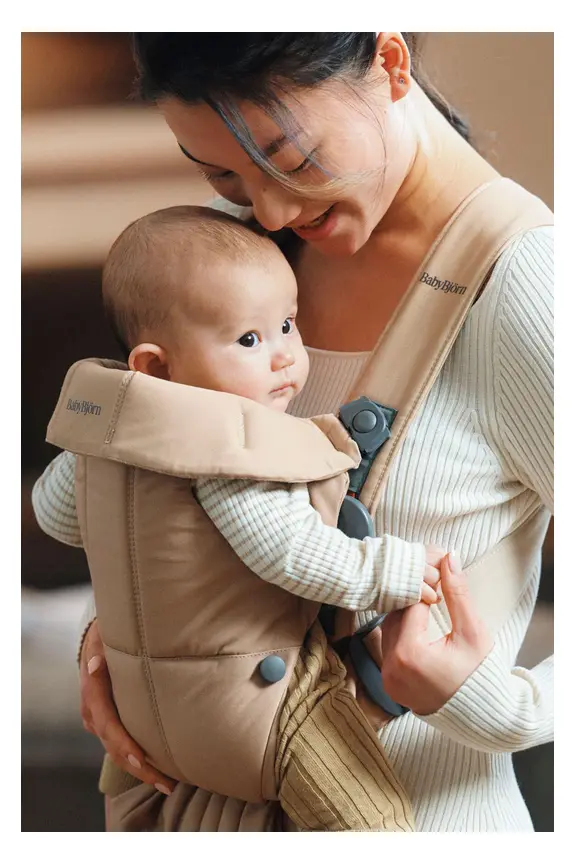


BabyBjörn Baby Carrier Mini
Simple, soft newborn carrier for roughly 0–12 months, with three carrying positions and an easy front opening.
Read our full review →
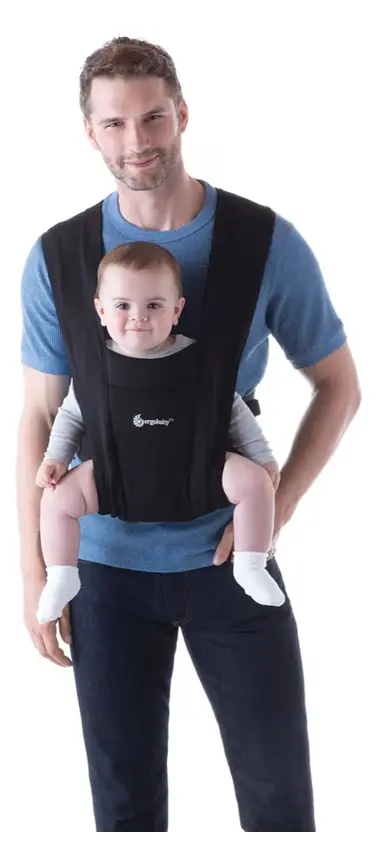


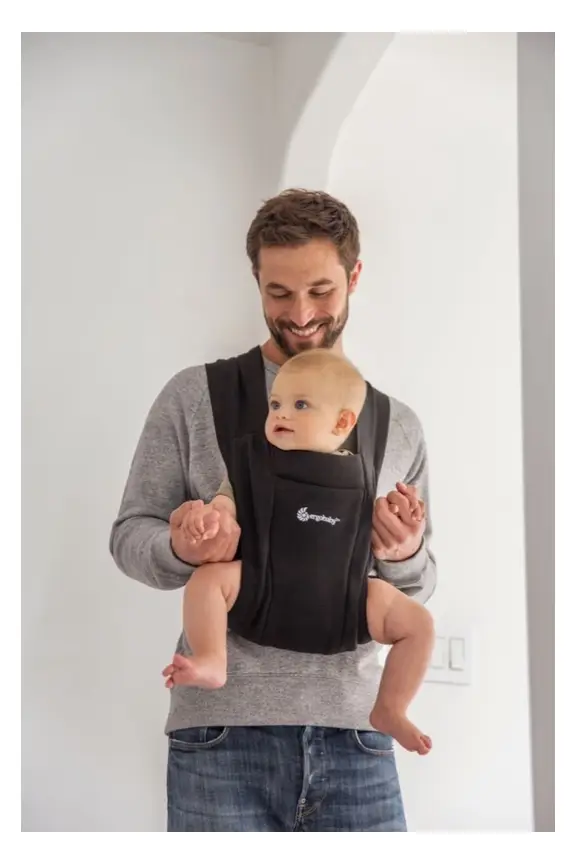


Ergobaby Embrace
A soft knit newborn carrier that buckles on, with no long wrapping.
Read our full review →
Ergobaby Omni 360 Cool Air Mesh Baby Carrier
All-position carrier
Sun canopies, airflow, and weather care
Because your child sits high up in a framed carrier, they are closer to the sun, wind, and low branches than you are. They also sit still while you are moving, which changes how fast they warm up or cool down.
What a sun canopy does and does not do
A built-in or clip-on sun canopy stretches over the top frame to shade your child's head and shoulders. Check how it attaches. Good canopies lock firmly into sockets on the frame so a gust of wind will not blow them off or fold them onto your child's face.
Keep in mind that a sun canopy only blocks overhead sun. Early in the morning or late in the afternoon, sunlight comes in from the sides. Reflected glare from water, sand, or snow also reaches your child from below.
Layering and sun protection
The Canadian Paediatric Society, Cancer Council Australia, NHS, and the American Academy of Pediatrics all recommend combining shade with protective clothing. Dress your child in:
- A broad-brimmed sun hat with a soft chin strap that stays on in the breeze.
- Lightweight, long-sleeved tops and long pants made from tightly woven fabric.
- Wrap-around sunglasses for bright trails, snow, or open beaches.
- Broad-spectrum sunscreen on any skin not covered by clothes (for babies 6 months and older).
In cold or windy weather, remember that your child is not walking to generate body heat. Dress them one layer warmer than you wear, and watch their fingers, toes, and ears. A clip-on rain cover shields them from wind and showers, but always leave a gap for fresh air so condensation and heat do not build up inside.
Airflow and hydration
Mesh side panels around the child seat let warm air escape. On hot days, hike early in the morning, stick to shaded trails, and offer water or breastmilk/formula often. Babies and toddlers lose fluids faster than adults when they get warm.
Comparing your outdoor carrying options
A framed hiking backpack is not the only way to bring a child outdoors. The table below compares a framed hiking carrier, a soft structured carrier, and an all-terrain stroller across everyday needs.
| Feature | Framed hiking backpack | Soft structured carrier | All-terrain stroller |
|---|---|---|---|
| Minimum age | Around 6 months (when sitting unaided) | Newborn (with right fit or insert) | Newborn (in flat bassinet or reclined seat) |
| Rough, steep trails | Handles rocks, stairs, and narrow tracks | Handles narrow tracks, but warmer | Needs wide, smooth paths; hard on steps |
| Parent comfort on long walks | Best weight transfer to hips | Good, though shoulders tire sooner | No weight on your body on flat paths |
| Airflow and heat | Air gap keeps backs cooler | Body-to-body contact feels warm | Open seat gives good airflow |
| Storage space | Built-in pockets under seat | Almost none; need extra bag | Large basket underneath |
| Storage and travel size | Bulky; needs boot space | Folds small into a daypack | Heavy and wide in a car boot |
If you mostly walk on paved park paths or firm gravel, an all-terrain stroller gives you effortless storage and a flat nap space. If you hike steep hills, rocky trails, or narrow boardwalks with stairs, a framed hiking backpack wins easily. For short walks or babies under 6 months, a soft carrier is safer and simpler.
Official guidance in Australia, the UK, the US and Canada
Safety rules for baby carriers differ slightly by country, yet the core advice from health and product regulators is remarkably consistent. Before you buy a new or second-hand framed carrier, check the official guidance and recall lists in your country.
| Country | Main safety bodies | Key official advice and checks |
|---|---|---|
| Australia | Product Safety Australia (ACCC), Raising Children Network, Red Nose | Check product recalls before buying. Follow the TICKS safety rule: keep the baby upright, face visible, and chin off the chest. Stop if stitching or buckles are worn. |
| United Kingdom | Office for Product Safety and Standards (OPSS), NHS, The Lullaby Trust | Buy from trusted sellers and check UK safety recall alerts. Use the TICKS checklist so your child's airway stays open and their back is well supported. |
| United States | Consumer Product Safety Commission (CPSC), American Academy of Pediatrics (AAP) | US framed child carriers follow voluntary safety tests for leg openings, frame strength, and warning labels. Register your product for recall alerts and check every buckle before use. |
| Canada | Health Canada, Canadian Paediatric Society (Caring for Kids) | Search Health Canada's recall database before using second-hand gear. Follow sun safety rules, protect your child's hips, and never leave a child unsupervised in a carrier. |
In the UK, NHS and Lullaby Trust guidance often points parents to the TICKS rule for safe babywearing: Tight, In view at all times, Close enough to kiss, Keep chin off the chest, Supported back. While TICKS was written mainly for front slings and soft carriers, the airway and back-support principles still guide safe backpack use. Because you cannot see your child in a back carrier, you must rely on regular stops, a partner's eyes, or a small mirror to check their breathing and posture.
Always register a new carrier with the maker so they can email you if a buckle or frame hinge is recalled. If you buy a second-hand framed carrier, search your national recall site first. Look closely for cracked plastic buckles, bent aluminium tubes, frayed webbing, and loose rivets.
Common mistakes to avoid and pre-hike checks
Even experienced hikers make small mistakes when switching from a normal daypack to a baby carrier. Watching out for these traps keeps both you and your child safe.
- Starting too young: putting a 3- or 4-month-old baby in a framed pack before they can sit unaided risks slumping and airway trouble.
- Overpacking the storage pocket: stuffing heavy water bottles and camera gear into the bottom pocket makes the pack sway and pushes your weight over the limit. Share heavy gear with another hiker if you can.
- Wearing the hip belt too loose: if the hip belt slides down, the shoulder straps carry everything, leading to sore traps and neck pain within twenty minutes.
- Forgetting low branches and doorways: your child's head sits higher than yours. Duck extra low under tree branches, trail signs, and door frames.
- Trusting the kickstand on uneven ground: a gentle slope or soft mud can tip a standing pack in a split second. Always keep one hand on the frame.
- Using hiking poles carelessly: trekking poles help your balance on slippery trails, which is great when carrying a child. Just keep the sharp tips away from nearby hikers and store poles safely when lifting the pack.
Quick 30-second pre-hike check
- Inspect the frame welds, hinges, and kickstand locks for cracks or looseness.
- Tug every child harness strap and adult hip belt buckle to confirm it holds tight.
- Check that the sun canopy poles sit deep in their sockets.
- Pack a small mirror, water, snacks, sun hat, and a warm layer where you can reach them without taking the pack off.
More options, from budget to premium
Real products from our catalogue. We don't show star ratings or review counts; check the current price, stock and reviews on Amazon before you buy.
 Reviewed
Ergobaby Omni Classic Mesh
An all-position mesh carrier from newborn to toddler with no insert needed.
Read our full review → Reviewed
Ergobaby Omni Deluxe Mesh
The top Omni carrier, with 6 storage spots and strap markers that make it easy to swap between parents.
Read our full review →


Ergobaby Omni Lite Mesh
A light mesh carrier from newborn to 24 months with cross-back straps.
Read our full review →Frequently asked questions
What age can my baby go in a framed hiking backpack carrier?
Wait until your baby can hold their head steady and sit up on their own without support. For most babies, this is around 6 months old. Never put a newborn or a baby without strong neck control into a framed backpack.
How long can a child stay in a hiking carrier at one time?
Plan to stop for a break every 45 to 60 minutes. Taking your child out lets them stretch their legs, change position, drink fluids, and have their nappy checked. Short, frequent breaks also give your shoulders and hips a rest.
Can I use a framed hiking carrier if I am short or tall?
Yes, as long as the carrier's torso adjustment range fits your back length. Measure your torso from the bony bump at the base of your neck to the top of your hip bones, then compare that with the maker's fit chart. Try the pack on in a shop with weight inside before you buy.
Is it safe for my baby to sleep in a hiking backpack?
Short naps on the trail happen often, yet you need to watch your child's posture closely. Make sure their head is not pressed forward with their chin on their chest, and keep their nose and mouth clear. Have a walking partner check them regularly, or stop and lift them out if they slump sideways.
Should I buy a second-hand framed hiking carrier?
Second-hand carriers can save money, provided you inspect them carefully. Check national recall lists in Australia, the UK, the US, or Canada first. Look for sun-faded or brittle plastic buckles, frayed harness straps, bent frame tubes, and missing safety parts, and walk away if anything looks worn.
Do I need a sun canopy if my child wears a hat?
Yes, using both gives much better protection. A canopy creates overhead shade and lowers the heat right around your child's head, while a broad-brimmed hat blocks angled morning and afternoon sun from the sides.
Sources
- Raising Children Network – Baby carrier, sling and backpack safety
- Product Safety Australia – Baby carriers, wraps and slings guide
- The Lullaby Trust (UK) – Baby slings and carriers
- NHS Cheshire and Wirral Partnership – TICKS rule for safe babywearing (PDF)
- U.S. CPSC – Safe babywearing and sling suffocation warning
- International Hip Dysplasia Institute – Baby wearing
- Caring for Kids (Canadian Paediatric Society) – Sun safety
- Health Canada – Recalls and safety alerts
Related guides
More Health & Safety Gear →
Foldable Baby Bathtubs vs Sink Bath Inserts: Drain Plugs, Mould and Storage

Hardware-Mounted vs Pressure-Mounted Baby Gates: Which to Use Where

Pop-Up UV Beach Tents for Babies: UPF 50+ Fabric, Airflow, and Safe Shade