All-in-One Baby Food Steamers and Blenders: Even Cooking, Keeping Nutrients and Safe Use
How all-in-one baby food steamer blenders work, if steaming keeps more nutrients, how to cook evenly, store food safely and choose a safe machine.

On this page
- What is an all-in-one baby food steamer blender?
- Does steaming keep more nutrients?
- Getting even cooking: why it matters
- When to start solids: advice from four countries
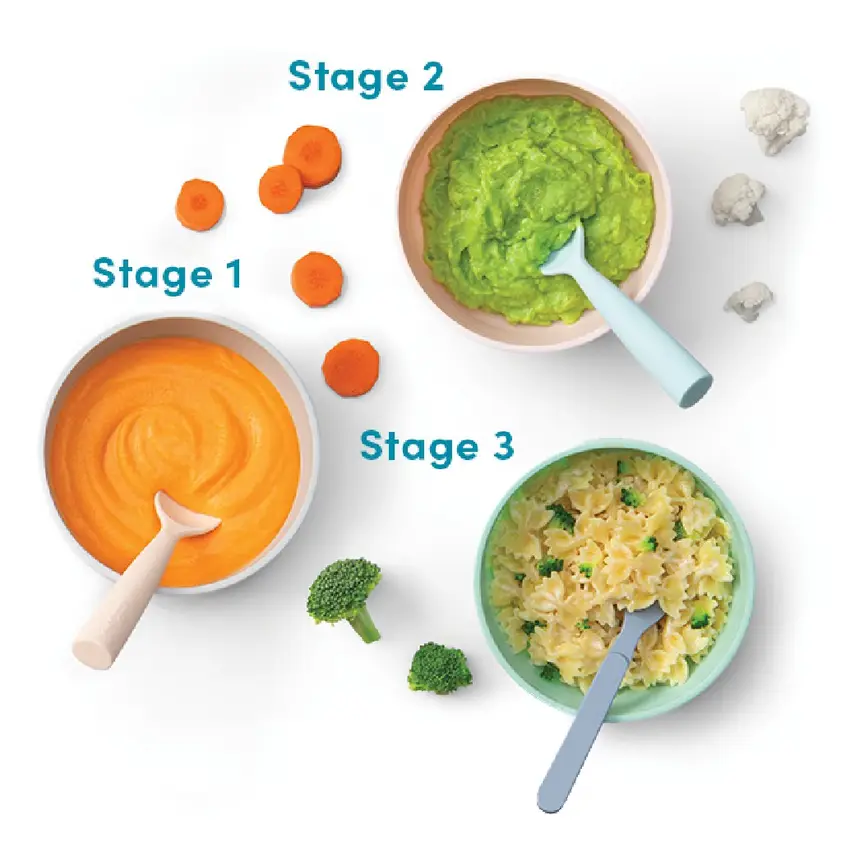
- Textures by age
- Safe storage: fridge, freezer and reheating
- How to choose a steamer blender
- Steamer blender vs other options
- Cleaning and care
- A simple batch-cooking routine
- Common mistakes
- FAQ
- Sources
Short answer: An all-in-one baby food maker steams food and then blends it in the same jug. It saves time and washing up. Steaming usually keeps more of some vitamins, like vitamin C, than boiling, because fewer vitamins wash out into the water. But the machine is only a helper. What matters most is cooking food until it is soft all the way through, keeping it clean and cold, and giving your baby the right foods at the right age.
This guide explains how these machines work, what "nutrient retention" really means, how to get even cooking, how to store food safely, and what to look for when you buy one.
What is an all-in-one baby food steamer blender?
It is a small kitchen machine with three main parts:
- A water tank. You pour in water. A heater turns it into steam.
- A basket or jug. You put chopped food in it. Steam flows up and around the food to cook it.
- A blade. When the food is soft, you flip or turn the jug and blend it into a purée or a lumpy mash.
Some models also defrost, reheat or warm bottles. Most have a timer and turn off when the water runs out.
How it is different from cooking on the stove
On the stove you might boil food in a pot, drain it, then put it in a blender. That is three or four dishes. A steamer blender does it in one jug. The food sits above the water, not in it, so less goodness is lost in water you pour away.
You can get the same result with a cheap steamer basket on a pot and a stick blender. The machine is about saving time and effort, not about making food that is better for your baby.
Does steaming keep more nutrients?
"Nutrient retention" just means how much of the vitamins and minerals stay in the food after cooking.
Some vitamins, like vitamin C and some B vitamins, dissolve in water and are damaged by heat. When you boil vegetables, some of these vitamins move into the water. If you pour the water away, you pour some vitamins away too.
Research backs this up. A 2018 study in the journal Food Science and Biotechnology compared boiling, blanching, steaming and microwaving for a range of vegetables. Boiling generally kept the least vitamin C. Steaming and microwaving generally kept more. The study also found that the result changed a lot from one vegetable to the next.
What this means for your baby
- Steaming is a good way to cook vegetables and fruit for babies.
- The difference between methods is real but not huge in a baby's whole diet. Offering a wide variety of foods matters far more.
- Iron is the key nutrient for babies starting solids. Iron is a mineral, and steaming or boiling doesn't destroy it. What matters is that you offer iron-rich foods.
- If you do boil food, you can use a little of the cooking water to thin the purée, so you keep some of what came out.
Getting even cooking: why it matters
"Steam heating uniformity" just means: does every piece cook the same? This matters for two reasons.
- Safety. Hard pieces of raw carrot or apple can be a choking risk for babies. Meat and chicken must be cooked all the way through to kill germs.
- Texture. If some pieces are soft and some are firm, the purée will be lumpy in the wrong way.
Tips for even cooking
- Cut pieces the same size. Small cubes about 1–2 cm cook more evenly than big chunks.
- Don't overfill the basket. Steam needs room to move. Packed food cooks unevenly.
- Put harder foods at the bottom. Food closer to the steam source usually cooks faster.
- Cook foods that take a long time separately. Sweet potato and pumpkin take longer than zucchini or pear.
- Stir or shake halfway if the instructions allow it.
- Check before blending. A fork or knife should slide through every piece easily.
- Use enough water. If the tank runs dry early, the food may be only half cooked.
Meat, chicken and fish
Many machines say they can steam meat. Cut it small and check the middle is cooked through, with no pink and with juices running clear. If you are unsure, cook meat on the stove and use the machine just to blend. Meat and fish are great first foods because they are rich in iron.
Baby Food Makers & Steamers worth a look
Real products from our catalogue. We don't show star ratings or review counts; check the current price, stock and reviews on Amazon before you buy.

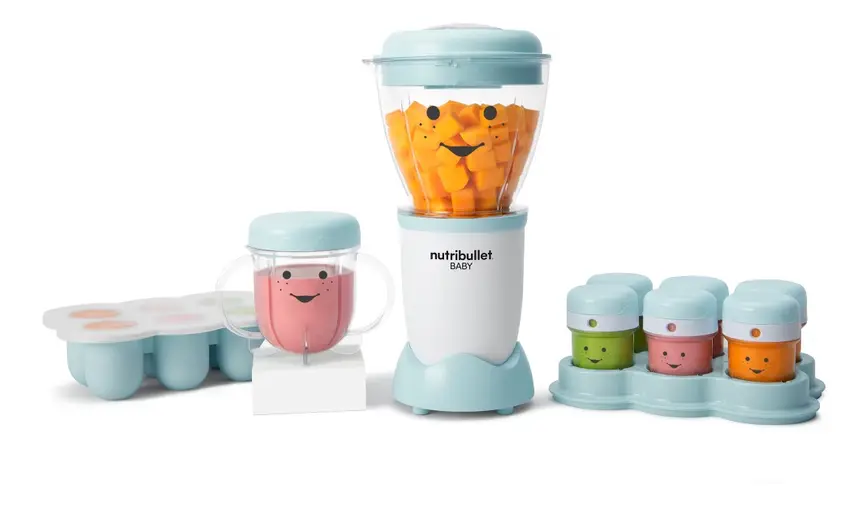
NutriBullet Baby Bullet
A small 200 W blender kit with date-dial cups and a freezer tray for batch cooking.
Read our full review →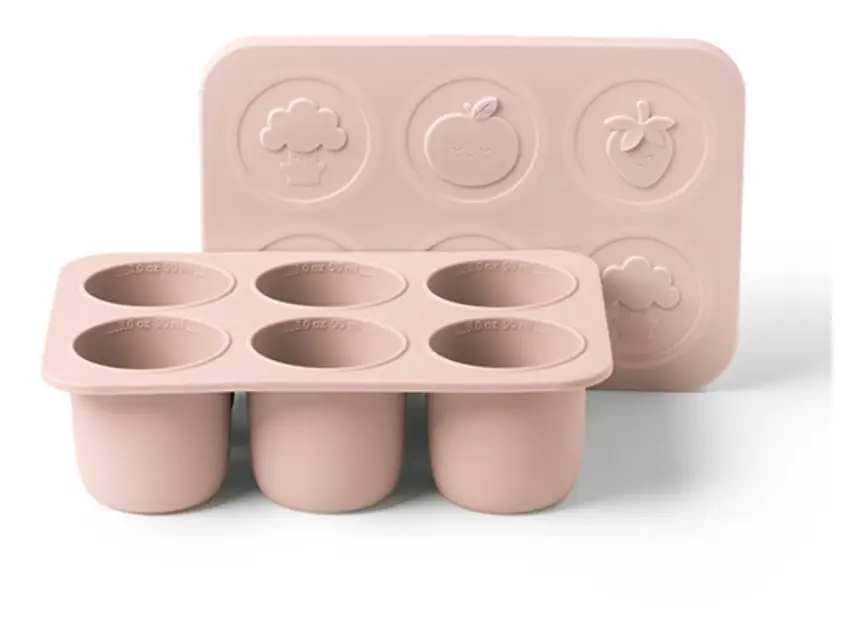
Annabel Karmel Silicone Freezer Food Tray
A silicone tray for freezing small portions of home-made baby food.

Baby Brezza One Step Baby Food Maker Deluxe
Steam-and-blend baby food maker

Babymoov Nutribaby(+) 6-in-1 Baby Food Processor
Steamer blender
When to start solids: advice from four countries
Health groups in Australia, the UK, the US and Canada agree on the main points.
| Country | When to start | First foods | Main sources |
|---|---|---|---|
| Australia | Around 6 months, when baby shows signs of being ready, not before 4 months | Iron-rich foods first; include common allergy foods in the first year | NHMRC Infant Feeding Guidelines, Pregnancy Birth and Baby, ASCIA |
| United Kingdom | Around 6 months | A wide range of foods, including iron-rich foods | NHS Best Start in Life |
| United States | About 6 months, when baby is ready | Iron-rich foods like meat or iron-fortified infant cereal | American Academy of Pediatrics (HealthyChildren.org) |
| Canada | Around 6 months | Iron-rich foods first: meat, meat alternatives, iron-fortified infant cereal | Health Canada and partners |
Signs your baby is ready
- They can hold their head up and sit with support.
- They show interest in food, open their mouth and reach for it.
- They no longer push all food straight back out with their tongue.
Until about 6 months, breast milk or infant formula is all your baby needs.
Allergy foods
The Australasian Society of Clinical Immunology and Allergy (ASCIA) says to give common allergy foods, like smooth peanut butter, cooked egg, dairy and wheat, in the first year of life, once your baby has started solids. Don't delay them. Once a food is in, keep giving it regularly. If your baby already has bad eczema or a known food allergy, talk to your doctor first.
Textures by age
Around 6 months
Start with smooth or mashed food. A steamer blender is very handy here. Thin purées with breast milk, formula or a little cooled boiled water.
7 to 9 months
Move on to lumpier mashes and soft finger foods. Blend for a shorter time, or mash with a fork. Babies need to learn to chew lumps. Staying on smooth purées for too long can make it harder for them to accept textures later.
9 to 12 months
Offer chopped and minced family foods. You may use the machine more for steaming soft finger foods than for blending.
12 months and up
Most toddlers eat the family's meals, cut into safe sizes. Many parents stop using the blender by now, though the steamer can still be handy for quick vegetables.
Choking safety at every stage
- Cook hard vegetables and fruit until soft. Raw apple and carrot are hard to chew.
- Avoid whole nuts, whole grapes, popcorn and hard lollies for young children. Cut round foods like grapes into quarters.
- Always sit your baby upright and stay with them while they eat.
- Learn the difference between gagging (noisy, a normal part of learning) and choking (silent or struggling to breathe, an emergency).
Safe storage: fridge, freezer and reheating
Homemade baby food has no preservatives. It spoils faster than jars or pouches. The NHS gives clear rules that are a good guide in any country.
- Cool it fast. Cool food within 1 to 2 hours, then put it in the fridge or freezer. To speed it up, put it in an airtight container and run cold water over the outside, stirring so it cools evenly.
- Fridge: use within 2 days. Cooked rice is different: eat it within 24 hours.
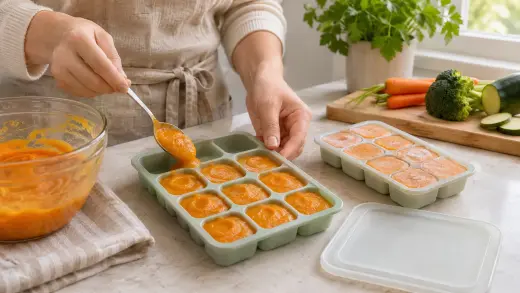
- Freezer: freeze in small portions, such as ice cube trays, then move the cubes to a labelled, dated bag or container.
- Defrost safely: in the fridge or with the microwave's defrost setting, never on the bench. Eat within 24 hours of defrosting.
- Reheat once only. Heat until steaming hot all the way through, then let it cool before feeding. Never reheat rice more than once.
- Stir and test. Microwaves make hot spots. Stir well and check the temperature before feeding.
- Throw away leftovers from a bowl your baby has eaten from. Saliva and spoons bring in germs.
- Out and about: keep packed food cold in a cool bag with ice packs. Food not kept cold should be eaten within 4 hours, then thrown away.
A note on nitrates
Some vegetables, like spinach, beetroot and carrots, naturally contain nitrates. Very young babies (under about 3 months) are more sensitive to them. Since solids start around 6 months, this is rarely a problem with homemade food. Store cooked vegetable purées in the fridge or freezer, not on the bench, and use them in time. If you use bore or well water for making formula or food, have it tested, because high-nitrate water is the bigger risk.
How to choose a steamer blender
Safety first
- Electrical approval mark. Buy from a trusted shop and check for your country's mark: the RCM tick in Australia and New Zealand, UKCA or CE in the UK, and a UL, ETL or CSA listing in the US and Canada. Be careful with cheap imports from online marketplaces that may not meet local rules.
- Auto shut-off when the water runs low.
- Safety lock so the blade can't spin unless the jug is locked on.
- Cool-touch outside and a lid that doesn't puff steam at your hand.
- Stable base that won't tip over.
Food-contact materials
- Look for "BPA-free" plastic, glass, or stainless steel for the parts that touch food. BPA is a chemical once used in some hard plastics. Canada, the US, the UK and Europe have banned it from baby bottles, and many makers have dropped it from baby food gear too.
- Glass jugs don't stain or hold smells but are heavier and can break.
- Replace scratched or cloudy plastic parts.
Easy cleaning
- Fewer parts and wide openings are easier to clean.
- Check which parts are dishwasher safe.
- Ask if replacement blades, seals and baskets are sold.
- Find out how to descale the water tank. Hard water leaves a chalky layer (scale) that slows heating.
Size and use
- A bigger jug suits batch cooking for the freezer.
- A smaller jug suits fresh daily portions and small kitchens.
- Think about how long you will use it. Most families use one for 6 to 12 months.
Side by side: more baby food makers & steamers to compare
Real products from our catalogue. We don't show star ratings or review counts; check the current price, stock and reviews on Amazon before you buy.
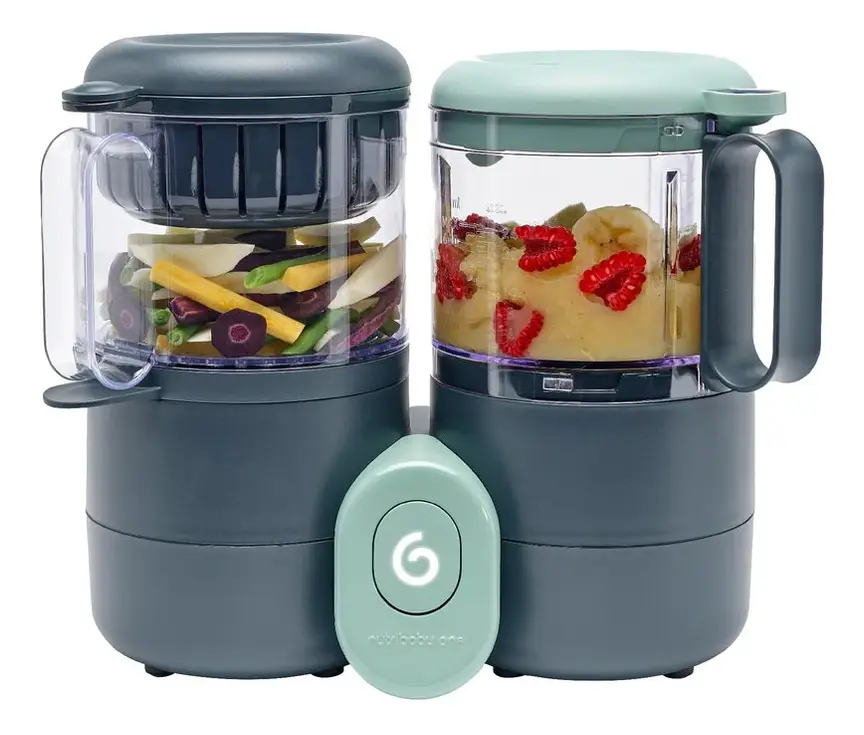
Babymoov Nutribaby One 4-in-1 Baby Food Maker
Steamer blender
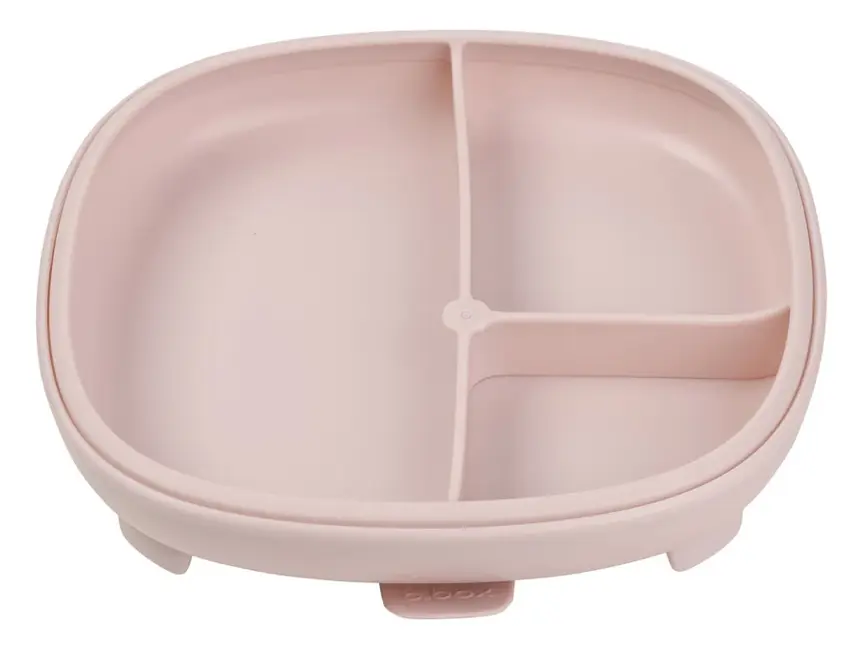
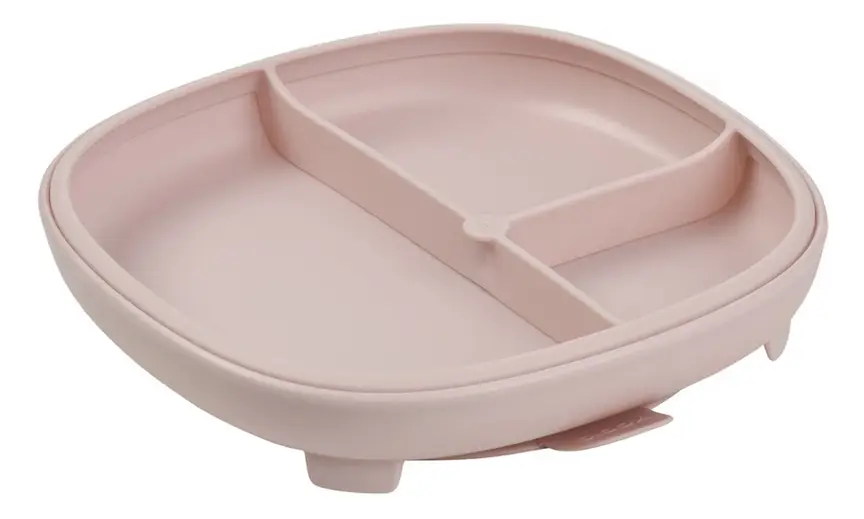
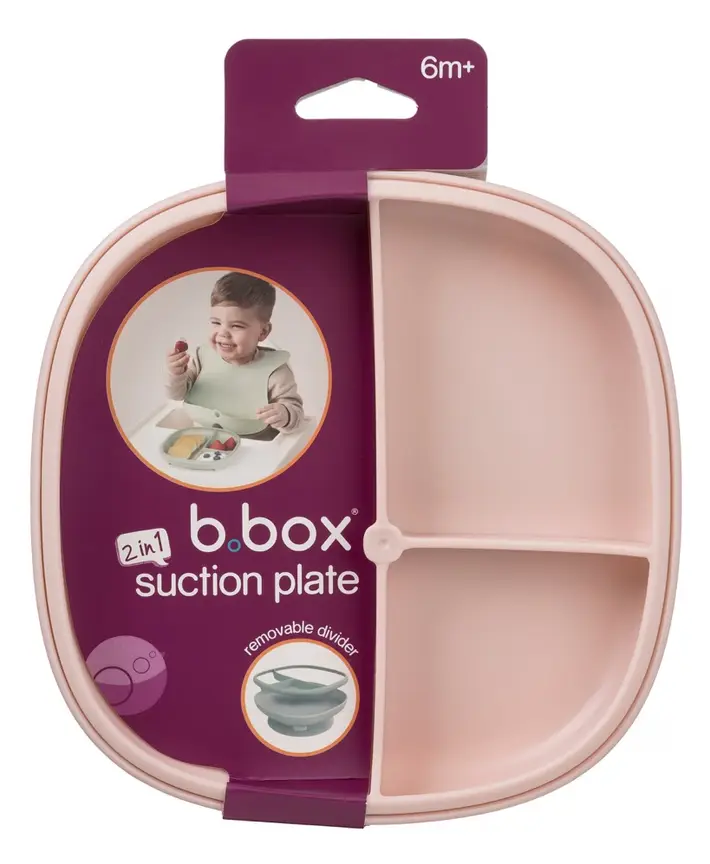
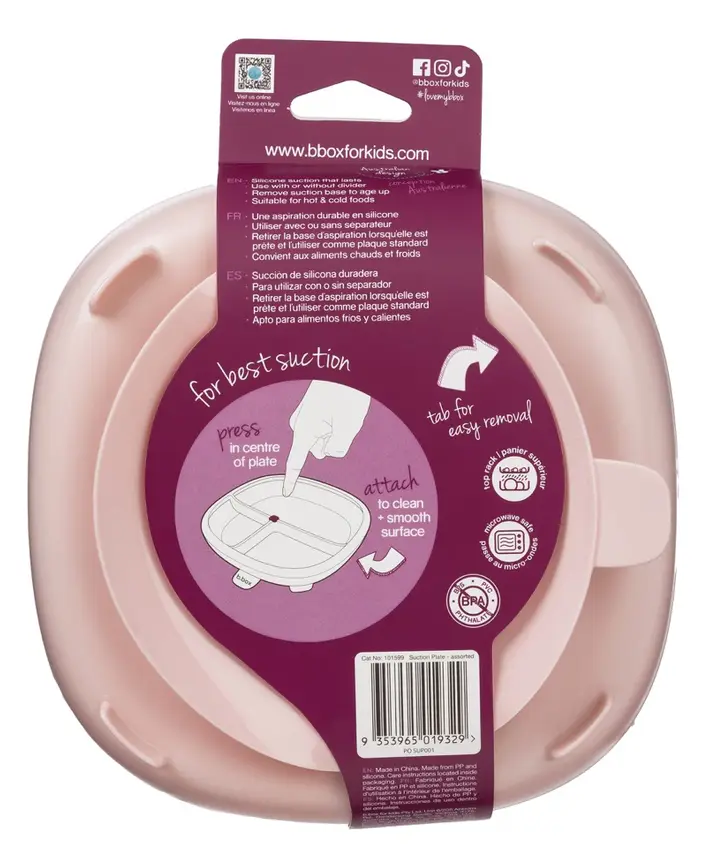
b.box 2-in-1 Divider Suction Plate
A divided suction plate for keeping foods apart.
Read our full review →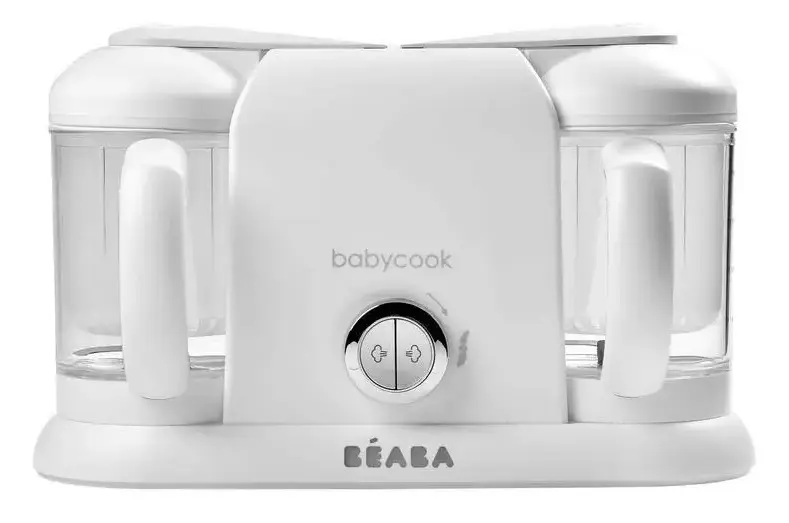

Beaba Babycook Neo
Steam-and-blend baby food maker with a glass bowl and stainless steel steam basket.
Steamer blender vs other options
| Option | Good points | Weak points | Best for |
|---|---|---|---|
| All-in-one steamer blender | One jug, less washing up, timer, auto shut-off | Costs more, takes bench space, small batches, mainly useful for a year | Busy parents who make purées often |
| Pot with steamer basket and stick blender | Cheap, you may already own them, big batches | More dishes, needs watching on the stove | Batch cooking, tight budgets |
| Microwave steaming | Fast, keeps nutrients well | Hot spots, needs microwave-safe dishes | Quick single portions |
| Fork or potato masher | No cost, good for lumpy textures | Not for smooth purées | 7 months and up, soft foods |
| Shop-bought jars and pouches | Handy, long shelf life before opening | Costs more per serve, less control over texture | Travel and backup |
Cleaning and care
- Unplug the machine and let it cool.
- Rinse the jug and blade straight after use. Dried purée is much harder to clean.
- Wash with hot soapy water and a bottle brush. Watch your fingers on the blade.
- Take apart the seals and lids so food can't hide in the grooves.
- Let all parts air dry fully before putting back together, to stop mould.
- Empty the water tank after each use. Don't leave water sitting in it.
- Descale the tank as the instructions say, often with white vinegar or citric acid. Rinse well afterwards.
A simple batch-cooking routine
Many parents find it easier to cook once or twice a week and freeze small portions. Here is one simple way to do it.
- Plan three or four foods. For example: one iron-rich food (like beef, chicken, lentils or fish), one orange vegetable (pumpkin or sweet potato), one green vegetable (broccoli or peas) and one fruit (pear or apple).
- Wash your hands and the bench. Use a clean chopping board. Keep raw meat away from fruit and vegetables.
- Peel, chop and steam each food on its own. Cooking them separately lets your baby learn each taste. It also helps you spot a reaction if your baby is allergic to something.
- Blend or mash to the right texture for your baby's age. Leave some batches lumpier as your baby grows.
- Cool quickly, then spoon into ice cube trays.
- Freeze, then pop the cubes into a bag. Write the food and the date on it.
- Mix and match at mealtime. Defrost two or three cubes in the fridge overnight, for example beef plus pumpkin plus pear. This gives your baby a balanced meal without cooking every day.
Over a few weeks, try lots of different foods. Babies often need to try a new food many times before they like it. Keep offering it calmly, without pressure.
Common mistakes
- Starting too early. Wait until around 6 months and signs of readiness.
- Sticking with smooth purée too long. Move to lumpier textures from about 7 to 8 months.
- Forgetting iron. Fruit and vegetable purées alone are not enough. Add meat, fish, egg, legumes or iron-fortified cereal.
- Adding salt, sugar or honey. Babies don't need salt or sugar. Never give honey before 12 months because of the risk of infant botulism, a rare but serious illness.
- Leaving purée on the bench. Cool and store it quickly.
- Reheating more than once. Only reheat once, and toss bowl leftovers.
- Uneven chopping. Big and small pieces cook at different speeds.
- Skipping descaling. Scale slows heating, which can leave food undercooked.
- Buying an uncertified cheap model. Electrical faults and burns are a real risk with unsafe appliances.
More options, from budget to premium
Real products from our catalogue. We don't show star ratings or review counts; check the current price, stock and reviews on Amazon before you buy.
 Reviewed
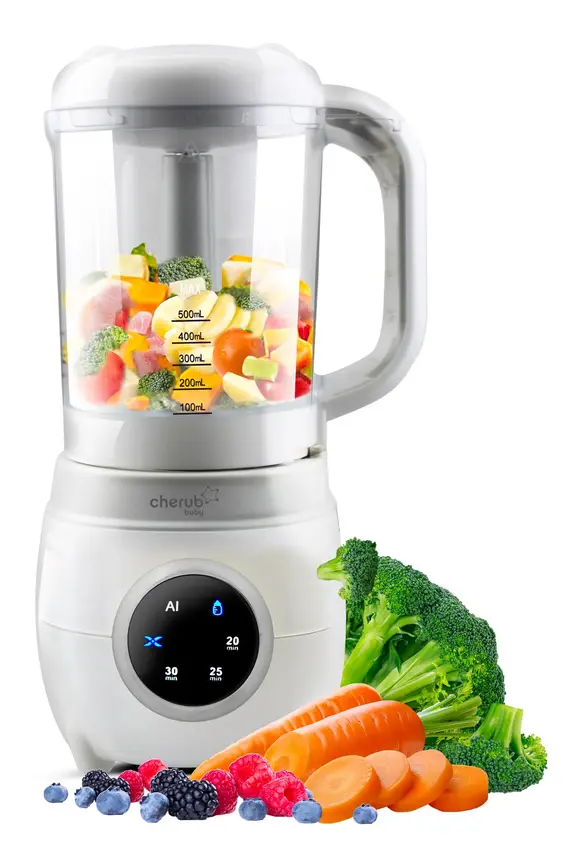
Cherub Baby Food Maker & Steriliser
Steams then blends food. It can also defrost, warm bottles and sterilise.
Read our full review →
Cherub Baby Food Pouch Spoons (2 pack)
Spoon tops that screw onto food pouches, so you can spoon-feed on the go.
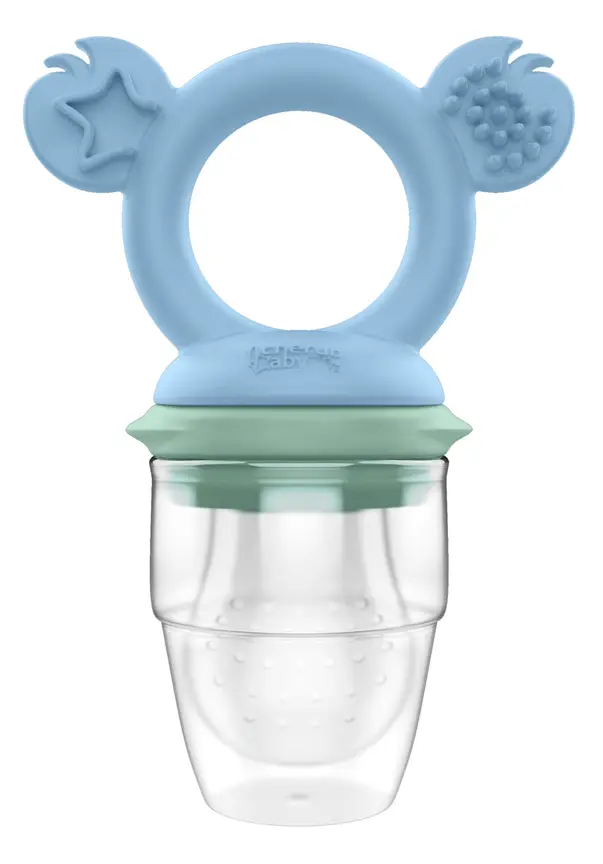


Cherub Baby Silicone Fresh Food Feeder
A silicone teat-style feeder. Babies can chew soft fruit or frozen breast milk through it.
Read our full review →FAQ
Is a baby food maker worth it?
It depends on how often you will use it. If you plan to make most of your baby's food for several months, it can save time. If you will make food only now and then, a steamer basket and stick blender do the same job for less money.
Does steaming really keep more vitamins than boiling?
For water-soluble vitamins like vitamin C, studies generally show steaming keeps more than boiling. Results vary by vegetable. A varied diet matters more than the cooking method.
Can I steam frozen vegetables?
Yes. Frozen vegetables are a handy, nutritious choice. They may need a little longer to cook. Check every piece is soft before blending.
How long can I keep homemade baby food?
Following NHS advice: up to 2 days in the fridge (24 hours for rice). Frozen portions should be defrosted in the fridge and eaten within 24 hours of thawing.
Can I use the machine for meat?
Many can. Cut meat small and make sure it is cooked all the way through. If you can't tell, cook it on the stove first, then blend.
What water should I use in the tank?
Use clean tap water, or filtered water if your water is very hard. Follow the maker's advice. Never put anything but water in the tank.
Can I make purée for a baby under 6 months?
Health groups in all four countries say breast milk or formula is enough until around 6 months. Talk to your child health nurse, health visitor or doctor before starting solids early.
How do I know when to stop blending?
Watch your baby. From around 7 months, most babies are ready for thicker, lumpier food. Blend less, mash more, and add soft finger foods.
Sources
- Pregnancy, Birth and Baby (Australia) – Introducing solid food
- NHS Best Start in Life (UK) – Storing and reheating food
- HealthyChildren.org (American Academy of Pediatrics) – Starting solid foods
- Health Canada – Nutrition for healthy term infants: birth to six months
- ASCIA – How to introduce solid foods to babies for allergy prevention
- Lee et al. (2018), Food Science and Biotechnology – Effect of cooking methods on vitamin retention in vegetables (PubMed)
- NHMRC / Eat for Health – Infant Feeding Guidelines summary
Related guides
More Feeding & Baby Food →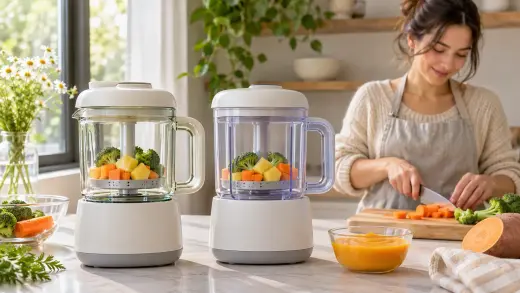
Glass-Bowl vs. Tritan Baby Food Steamer-Blenders: How to Avoid Heated Plastic

Glass vs Stainless Steel Baby Food Jars: Freezing, Lids and Safe Storage
Homemade Baby Food Recipes with a Baby Food Maker: Safe, Simple Meals by Age