Manual Breast Pumps vs Silicone Milk Collectors: How to Choose and Use Them
Compare manual breast pumps and silicone milk collectors. Learn how they work, when to use each, how to clean them, and store expressed milk safely.
On this page
- What each device does
- Manual pump and silicone collector compared
- Choose by your reason for expressing
- Fit, comfort and gentle use
- Age and feeding stages
- Cleaning and storing expressed milk
- Using a collector without spills
- Common mistakes to avoid
- Official guidance across four countries
- How to make a simple choice
- Frequently asked questions
- Sources and further guidance
- Sources
Short answer: A manual breast pump draws milk out when you squeeze its handle. A silicone milk collector catches milk that flows from the other breast during feeding or let-down. Some collectors can also draw milk with gentle suction. They are quiet and need no power. Neither tool is right for every parent or every feed. Choose based on why you want to express, how often you expect to do it, and what feels comfortable. Follow the maker's cleaning and use instructions. Ask a midwife, nurse, doctor or lactation consultant for help if expressing hurts, your baby is not feeding well, or you have concerns about milk supply.
In Australia, the Australian Breastfeeding Association and Pregnancy, Birth and Baby offer feeding support. In the UK, the NHS provides breastfeeding and milk storage advice. In the US, the Centers for Disease Control and Prevention (CDC) gives milk handling guidance. In Canada, the Canadian Paediatric Society shares infant feeding advice through Caring for Kids. These groups support families; the right local service can help with personal feeding questions.
What each device does
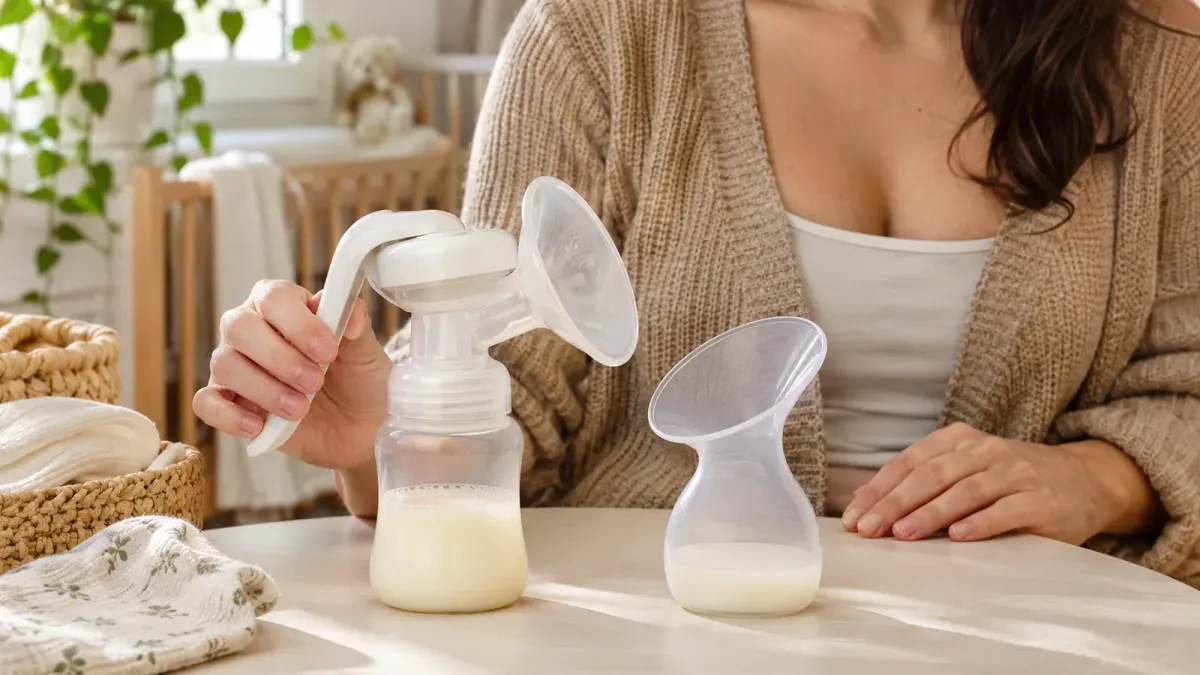
A manual pump has a breast shield, a milk collection container and a hand operated mechanism. The shield sits over the nipple and surrounding area. Squeezing a lever or handle creates suction and releases it. Milk then flows into the container. You control the rhythm and strength with your hand.
A silicone collector is a soft, usually cup shaped container. It sits over the breast and stays in place through a seal. A basic collector may catch milk that would otherwise drip during a feed. Some models also use suction when pressed onto the breast. The shape and instructions differ between products. Read the label, because “collector” does not always mean the same thing.
Neither device can promise a set amount of milk. Output changes between people, feeds and times of day. It can also change with comfort, baby’s latch, recent feeding and how the device fits. A small amount does not by itself show that your baby is getting too little at the breast.
Milk flow and let-down
Let-down is the release of milk from the breast. A baby’s sucking can trigger it. A pump may also trigger it. Some parents notice milk begins to drip from the other breast during feeding. A collector can catch that flow. It may collect little or nothing at other times.
Milk collected this way is still expressed breast milk. Handle it with clean hands and clean equipment. Follow trusted storage guidance for your country and the advice of your care team. If your baby was born early or has health needs, ask their clinician about handling and storage.
Manual pump and silicone collector compared
| Feature | Manual breast pump | Silicone milk collector |
|---|---|---|
| Main use | Express milk by hand controlled suction | Catch leaking milk; some models also use suction |
| Power | No battery or mains power | No battery or mains power |
| Control | You control the handle rhythm and pressure | Flow depends on let-down; suction depends on design and fit |
| Hands needed | Usually one hand works the handle; the other may steady the device | Often hands free after placement, but it can need support |
| Sound | Quiet, with possible soft clicks or squeaks | Usually quiet |
| Portability | Often compact; parts may need assembly | Often compact; check that it has a lid or cover for transport |
| Cleaning | Several parts may need washing | One main piece may be simpler, but inspect its shape and instructions |
| Best fit for | Occasional or planned expression when you want control | Catching milk during a feed or natural leakage |
| Limits | Can tire the hand; poor fit or strong suction can hurt | May collect little milk; can spill or pull if it falls |
This table describes common designs. Product parts and instructions vary. Check the exact item before buying or using it.
Choose by your reason for expressing
Start with the job you need the device to do. A collector is useful when your main aim is to catch milk already flowing. A manual pump is more suited to actively expressing milk. It lets you pause, change the rhythm, or stop. Some parents keep both, but you do not need both just because they are sold together.
To catch milk during a breastfeed
If milk drips from the other breast while your baby feeds, a collector may catch it. Place it only as its instructions show. Make sure it sits securely and does not press painfully. A loose seal can lead to a spill. When your baby moves, check that the collector remains stable.
Do not assume the amount caught is a measure of your milk supply. A collector may capture milk that would otherwise soak into a breast pad. It may also draw out extra milk if it uses suction. If you are collecting often and feel overly full, sore or uncomfortable, ask a qualified feeding adviser what approach suits you.
To express milk for another feed
A manual pump gives more direct control over expressing. It may suit a parent who needs milk for a planned feed, wants a quiet option, or cannot charge a powered pump. It can also be a backup. Hand pumping takes effort, and some people find it tiring. Try it when you have time to learn the parts and find a comfortable rhythm.
If you need to express often, are returning to work, or need to maintain supply while apart from your baby, ask a lactation professional about a plan. They can help you choose equipment and check how it fits. A hand pump may not suit every schedule or need.
For travel or time away from home
Both devices are quiet and portable compared with many powered pumps. A manual pump has moving parts and may need a clean container. A collector can be simple to carry, but an open or full collector can spill. A lid helps with transport, but it does not replace safe milk storage.
Pack a clean container with a secure lid, a clean bag for used parts, and a way to keep milk at a safe temperature if you will not use it soon. Follow local guidance for storing breast milk. For air travel, check the airport and airline rules where you are travelling. Rules for liquids and expressed milk can differ between places.
Fit, comfort and gentle use
Comfort matters. The device should not cause sharp pain, pinching, skin damage or a lasting sore mark. A breast shield that is too small or too large may make pumping uncomfortable or less effective. Instructions from the maker may explain sizing, but a lactation consultant can check fit and technique.
With a manual pump, begin with a gentle squeeze. Build a steady rhythm that feels comfortable. Do not squeeze harder to chase a larger amount. Stop if it hurts. Recheck the position and fit. A painful session is a reason to get help, not a sign that you need to push through.
With a collector, use only the suction level and placement described by its maker. Some are designed to sit in place without active suction. Others ask you to press the cup to create suction. Do not pull the device off quickly. Break the seal gently as the instructions describe. This helps avoid a sudden tug on the breast.
When to seek feeding help
Ask a midwife, nurse, doctor or lactation consultant for advice if expressing hurts, you notice a cracked or bleeding nipple, or your breast becomes hot, red or very painful. Also seek help if you are worried about your baby’s feeding, weight gain, nappies or alertness. Urgent symptoms need prompt medical care.
For a baby who has trouble feeding, a device alone may not solve the cause. A clinician can observe a feed, check the baby’s latch and discuss your needs. Do not delay care because a pump or collector gives some milk.
Age and feeding stages
These devices are used by the breastfeeding parent, not by the baby. A baby’s age does not set a fixed time to start pumping or collecting. The reason for expression, health needs and feeding plan matter more. Newborns may feed often, while older babies can have different routines. A clinician can give advice that fits your situation.
| Stage | What may matter | Practical approach |
|---|---|---|
| Early days after birth | Feeding is being established; a parent may need help with latch or milk transfer | Ask your care team before starting a regular expression plan. Hand expression may also be discussed. |
| First weeks and months | Feeding patterns can change; some parents express for comfort or another feed | Choose the tool for the job. Get support if expression is painful or frequent. |
| Returning to work or study | Time apart may call for a planned way to express and store milk | Practise at home. Plan clean parts, containers and safe storage. |
| Older baby or changing feeds | Milk needs and routines may change as feeding changes | Review your plan with a health professional if you are unsure. |
This is a guide, not a feeding schedule. Follow your baby’s cues and the advice of your health team. Do not use a collector or pump to replace medical advice about feeding a newborn or an unwell baby.
Cleaning and storing expressed milk
Clean hands before handling pump parts, collectors, milk or storage containers. Wash each part that touches milk after use, following the maker’s instructions. Check whether parts can be boiled, steamed or placed in a dishwasher. Do not assume every silicone or plastic part can take heat. Let clean parts air dry on a clean surface.
Inspect parts for cracks, clouding, tears, sticky areas or damage. Replace worn parts as the maker directs. Keep clean parts away from dirty dishes, sinks and used pump pieces. A closed clean container or bag can help during travel.
Transfer milk into a clean, food safe container with a lid if the collection device is not meant for storage. Label it with the date and time if you are storing it. Use the storage advice from a trusted health service in your country. Storage time depends on conditions such as room temperature, refrigeration and freezing. Do not guess or mix advice from different charts.
For Australia, the Australian Breastfeeding Association explains how to prepare expressed breast milk. The NHS gives UK storage guidance. The CDC provides US advice on breast milk handling. If your baby is premature or has a medical condition, ask their care team for specific instructions.
Keep milk separate from dirty parts
A pump or collector should not sit on a dirty bench or in a wet sink. If you are away from home, use a clean container or bag for used parts. Wash them as soon as practical under the maker’s directions. Follow local health advice for cleaning between uses, especially if your baby has special health needs.
Using a collector without spills
A collector can be easy to forget because it may sit quietly during a feed. Check that it is placed securely. Avoid leaning over, changing position quickly or moving the baby in a way that knocks it. Keep one hand free to support your baby safely. Never let the collector distract you from holding or feeding your baby.
Do not leave a full collector attached while you walk around or bend down. The weight of milk can loosen the seal. Empty it into a clean container when needed. Do not attach cords, clips or straps around the baby or parent to hold it in place. Follow the product instructions and keep the feeding area calm and safe.
If your collector has a suction base, use only the maker’s stated method. Suction that feels too strong can be uncomfortable. A collector is not a treatment for oversupply or blocked ducts. Ask a health professional before using suction to manage a feeding problem.
Common mistakes to avoid
- Expecting the same amount every time. Milk flow varies. A small collection does not prove low supply.
- Using more suction to get more milk. Stronger is not always better. Pain means stop and check the fit.
- Leaving a collector attached for too long. It may become heavy, loosen or spill.
- Storing milk in any container. Use a clean container made for food and follow local storage advice.
- Skipping cleaning. Milk residue can remain in valves, seams or narrow openings.
- Ignoring damage. Cracked or worn parts can be harder to clean and may not work as intended.
- Buying a device before knowing the need. Decide whether you want to catch leakage or actively express milk.
- Using output as a supply test. Pumped or collected volume does not show exactly what a baby takes at the breast.
- Continuing through pain. Pain deserves a pause and, if it continues, support from a qualified person.
- Assuming a collector can replace a pump. A passive collector may not provide the planned expression you need.
Official guidance across four countries
Breast pump advice is mainly about fit, cleaning, feeding support and safe milk handling. The sources below cover these areas. They do not set one universal pump model or schedule.
| Country | Relevant body or service | Useful guidance |
|---|---|---|
| Australia | Australian Breastfeeding Association; Pregnancy, Birth and Baby; NHMRC | Support with expressing and preparing breast milk, plus infant feeding guidance. |
| United Kingdom | NHS | Advice on expressing, storing breast milk and feeding support. |
| United States | Centers for Disease Control and Prevention | Guidance on cleaning pump parts and storing expressed milk. |
| Canada | Canadian Paediatric Society, through Caring for Kids | General guidance on feeding a baby in the first year. |
Product rules and labels can vary by country. Check the device instructions, recall notices and local consumer safety advice. None of the sources listed here says that one of these two device types is best for everyone.
How to make a simple choice
Ask yourself three questions. First, do you want to catch milk that is already flowing, or actively express milk? Second, how often will you use the device? Third, can you clean and store it safely where you plan to use it?
- If milk drips during a feed and you want to catch it, consider a collector.
- If you need to draw milk into a container at a chosen time, consider a manual pump.
- If your hand tires easily, test the handle before relying on it for long sessions.
- If you need a device for regular expression, ask a lactation professional about fit and options.
- If you travel, plan for a clean container, safe storage and a way to wash parts.
- If feeding is painful or worrying, get support before changing your routine.
You can also ask a health professional to show you how to assemble and clean a device. Keep the instructions. Check for product recalls in your country. Use the product only for its stated purpose.
Frequently asked questions
Is a silicone milk collector the same as a breast pump?
No. A basic collector catches milk that flows from the breast. Some models create suction, but they may not work like a manual pump. Read the product instructions to learn what yours is designed to do.
Can a collector increase my milk supply?
Do not rely on a collector to increase supply. Some suction models may remove milk, but the effect depends on how they are used and your body. Ask a lactation professional for a plan if you want to change supply.
Does a small amount of pumped milk mean my baby is not getting enough?
No. Pump output is not a direct measure of what your baby can take during a feed. If you are worried about feeding, growth or nappies, contact your health care team.
Can I use a manual pump while travelling?
Often, yes. It needs no power and is usually quiet. Pack clean parts and a clean container. Plan safe storage for the milk, and check local airport rules if flying.
How often should I clean the pump or collector?
Clean all parts that touch milk after use, following the maker’s directions and local health advice. Check whether parts can be sterilised or washed in a dishwasher. Do not guess about heat safe parts.
Can I store breast milk in the collector?
Only if the maker says the device is made for storage and can be closed safely. Otherwise, move the milk into a clean container with a lid. Follow trusted local storage guidance.
Should pumping hurt?
No. Mild pulling can happen, but sharp pain, pinching or skin damage is a reason to stop. Check fit and placement. Seek help if discomfort continues.
Which option is better for a first time parent?
There is no single best choice. A collector may suit catching leakage. A manual pump may suit planned expression. Your reason, comfort and feeding plan should guide the choice.
Can I use both devices?
Yes, if each is comfortable and used as directed. Some parents use a collector during a feed and a pump at another time. Keep parts clean and ask for advice if you are collecting often or feel uncomfortable.
Who can help if I am unsure?
Contact a midwife, nurse, doctor or lactation consultant. In Australia, the Australian Breastfeeding Association can also offer feeding support. Seek urgent care for severe pain, fever or a baby who seems unwell.
Sources and further guidance
- Australian Breastfeeding Association – Preparing expressed breastmilk
- NHS Start for Life – Storing breast milk
- CDC – Infant formula preparation and storage
- Caring for Kids, Canadian Paediatric Society – Feeding your baby in the first year
- NHMRC – Infant Feeding Guidelines
This article gives general information. It does not replace advice from your doctor, midwife or lactation consultant. BabyGearFinder may earn a commission from some links, at no extra cost to you.
Sources
Related guides
More Car Seats & Travel →
Travel Potty Seats and Disposable Liners: How to Choose and Use Them

Toddler Safety Backpacks and Wrist Tethers: How to Choose and Use Them

Inflatable Toddler Travel Beds vs Ultralight Travel Cribs: Safety, Setup, and Which to Choose