Convertible Car Seat vs Infant Capsule: Safety, Cost Per Year and Your Baby's Back
Convertible car seat vs infant capsule: how each protects a newborn in a crash, how to work out cost per year of use, and what the AU, UK, US and Canada…

On this page
- What each seat is
- Crash protection: how rear facing protects a newborn
- Your baby's back and breathing ("spinal ergonomics")
- Cost per year: how to compare fairly
- Side by side
- The rules in each country
- Which suits your family?
- Questions to ask in the shop
- Fitting each type: the basics
- Using a capsule on a pram
- Second-hand seat checklist
- Common mistakes
- FAQ
- Sources
Short answer: Both an infant capsule and a convertible car seat protect a newborn well when they are rear facing, approved for your country and fitted correctly. The big differences are practical. A capsule clicks in and out of the car, so you can carry a sleeping baby inside, but babies outgrow it in about 6 to 12 months. A convertible seat stays in the car and can be used rear facing, then forward facing, for several years, so it usually costs less per year of use. Whichever you choose, the safety basics are the same: rear facing for as long as your baby fits, snug harness, and the seat used only for travel, not for long sleeps.
Key points
- Kidsafe says rear-facing seats are very good at preventing injuries because they support a baby's head and neck in a crash.
- In Australia, capsules are "Type A1" (up to about 70 cm tall, roughly 6 to 9 months) or "Type A2" (up to about 80 cm, roughly 12 months). Many convertibles go rear facing to about 2 to 3 years.
- A capsule is easier to carry, but babies should not sleep in it for long. Red Nose and the Lullaby Trust both say take your baby out when you arrive.
- To compare cost, divide the price by the years your child will realistically use the seat.
- Second-hand seats must have a known history. Product Safety Australia says don't use one that has been in a crash or is over 10 years old.
What each seat is
Infant capsule (infant carrier)
A capsule is a small, rear-facing seat with a carry handle. In most designs, a base stays fitted in the car, and the capsule clicks onto it. Some can also be fitted with just the car's seat belt. Many clip onto a pram frame to make a "travel system".
In Australia, Kidsafe explains capsules are Type A1 (for babies up to about 70 cm tall, about 6 to 9 months) or Type A2 (up to about 80 cm, about 12 months). In the UK, capsules are R44 Group 0+ (up to 13 kg, birth to about 12–15 months) or R129 i-Size infant seats sized by height. In the US and Canada, rear-facing-only seats have height and weight limits set by each model.
Convertible car seat
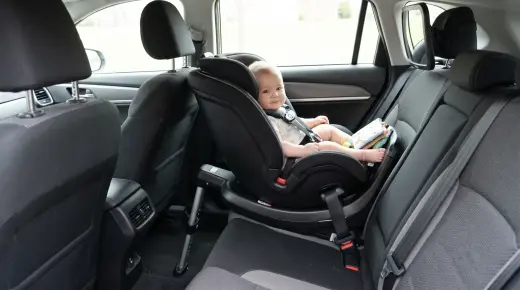
A convertible seat is bigger and stays in the car. It can be used rear facing for babies and then turned to face forward when your child is big enough. Some later become a booster too. In Australia, Kidsafe says convertibles cover birth to about 4 years (Type A and B), and some also extend rear facing to about 2–3 years (Type A4). In the UK they are R44 Group 0+/1 seats or R129 seats that cover a long height range.
Crash protection: how rear facing protects a newborn
A newborn's head is large and heavy compared with their body, and their neck is weak. In a front-on crash, everything in the car is thrown forward. In a rear-facing seat, the baby's whole back, neck and head are pushed into the seat shell, which spreads the force out. Kidsafe says rear-facing restraints are highly effective when used correctly, because they fully support the head and neck.
Both capsules and convertibles do this when rear facing. Neither type is "safer" just because of its type. What matters is:
- The fit to your baby. The harness should come out of the slots at or just below your baby's shoulders when rear facing. Transport Canada says the same. A very small newborn needs a seat with low enough slots and, if the maker supplies one, a newborn insert.
- The fit to your car. The seat must be fitted tightly with the tether, belt or clips the manual says.
- The recline angle. Newborns need a reclined angle so their head doesn't fall forward. Use the angle marker on the seat.
- Using it right every time. Kidsafe says incorrect fitting or harnessing raises the risk of life-threatening injury four to six times.
Independent ratings can tell you how specific models did in extra crash tests. In Australia, the Child Car Seats website publishes these. Compare models rated under the same method.
Your baby's back and breathing ("spinal ergonomics")
Parents often worry about babies being curled up in a seat. A rear-facing seat holds a baby in a semi-reclined position, which is fine for travel. The concern is time.
The Lullaby Trust says research has found young babies may be at risk of breathing difficulties if they sleep upright in a seated position for too long. Red Nose says to take your sleeping baby out of the car seat when you get home and put them in a safe sleep space. Product Safety Australia says if your baby falls asleep on a long trip, check them often, ideally take a break every hour, and watch that they haven't slumped into a chin-to-chest position.
This matters more for capsules, because it is so easy to carry a sleeping baby inside and leave them there. A convertible seat stays in the car, so you have to lift your baby out, which naturally ends the time in the seat.
Simple rules for both types:
- Use the seat for travel only.
- Take your baby out when you arrive, even if they're asleep.
- Take regular breaks on long drives.
- Have an adult sit next to young babies on long trips if you can.
- Don't add padding, head huggers or inserts that didn't come with the seat.
Car Seats & Capsules worth a look
Real products from our catalogue. We don't show star ratings or review counts; check the current price, stock and reviews on Amazon before you buy.
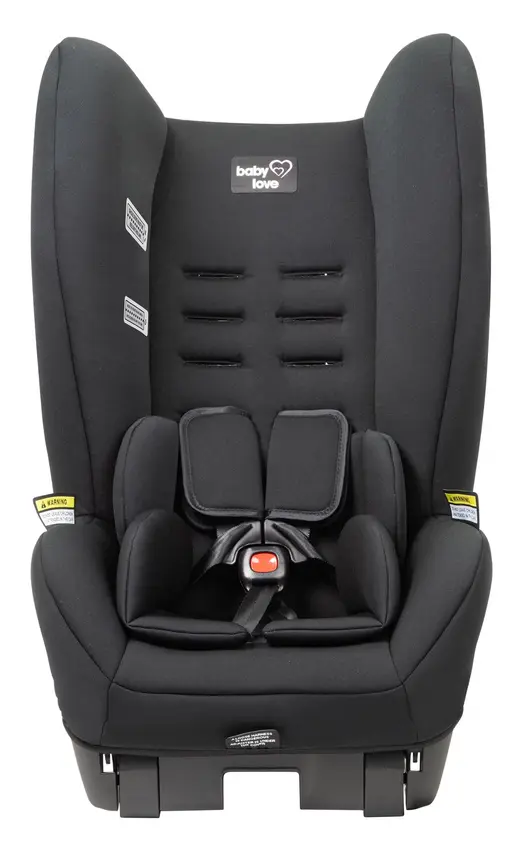
Babylove ezyone2
A very low-cost convertible seat. Rear-facing to about 12 months, then forward-facing to about 4 years.

Babylove ezymove Booster
A very light, low-cost booster for about 4 to 8 years. It folds flat for storage.
 Reviewed
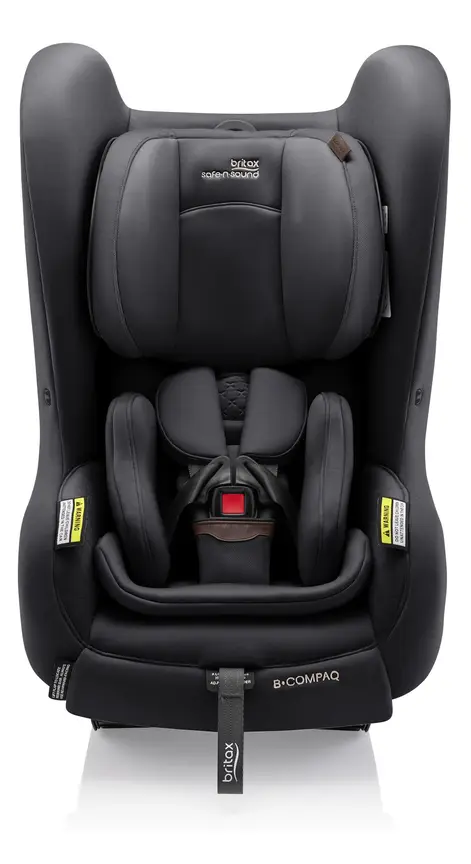
Britax Safe-n-Sound B-Compaq Lux
A convertible seat made for small cars with little room in the back.
Read our full review →
Cost per year: how to compare fairly
A capsule often looks cheaper on the shelf than a convertible seat. But it's used for a much shorter time. Here's a simple way to compare, using your own prices:
- Write down the price of each seat.
- Write down how long your child will probably use it. A capsule: about 6 to 12 months. A convertible: often from birth to about 4 years, sometimes longer.
- Divide price by years. That's your cost per year.
- If you choose a capsule, add the cost of the convertible you'll need afterwards.
- Think about younger siblings. A seat in good condition, within its use-by date, may be used again for another child.
Example only (not real prices): a capsule that costs $X and lasts 1 year costs $X per year. A convertible that costs $2X and lasts 4 years costs $X ÷ 2 per year. So even though it costs more up front, the convertible is cheaper per year. Always check real prices and the actual use-by date on the label.
Hiring a capsule
In Australia, some councils, Kidsafe branches and businesses hire capsules for the first months. This can lower your costs if you choose a capsule. Check the hire seat is approved, in good condition, comes with instructions, and is fitted by a trained fitter.
Side by side
| What to compare | Infant capsule | Convertible seat |
|---|---|---|
| Direction | Rear facing only | Rear facing, then forward facing |
| How long it lasts | About 6 to 12 months | Usually birth to about 4 years; some longer |
| Carry baby in and out | Yes, clicks out of the base | No, stays in the car |
| Pram compatible | Often, with adaptors | No |
| Newborn fit | Usually very good | Check low harness slots and the newborn insert |
| Space in the car | Smaller | Bigger, especially rear facing |
| Risk of long sleeps in the seat | Higher, because it's easy to leave baby in | Lower |
| Cost per year | Usually higher | Usually lower |
| Weight to carry | Heavy with a baby in it; hard after a caesarean | Not carried |
The rules in each country
| Country | Rear-facing rule | What to look for on the seat |
|---|---|---|
| Australia | By law, babies must be rear facing until at least 6 months. Child Car Seats Australia recommends rear facing up to 30 months where the seat allows. | Australian standard AS/NZS 1754 label; shoulder height markers |
| United Kingdom | Height-based (R129) seats must be rear facing until your child is over 15 months. | "E" mark with R129 or R44 |
| United States | The AAP says keep children rear facing as long as possible, until they reach the seat's rear-facing limits. | FMVSS 213 label; height and weight limits |
| Canada | Provincial laws set minimums; Transport Canada says keep your child in each stage as long as they fit it. | CMVSS 213 label (National Safety Mark) |
Only use a seat approved for the country you drive in.
Which suits your family?
A capsule may suit you if
- you'll often move a sleeping newborn between car and house for short stops (and will move them to a flat bed on arrival);
- you want a travel system with your pram;
- you have a small car and a convertible won't fit rear facing behind the front seat;
- you can hire or borrow a capsule with a known history.
A convertible may suit you if
- you want one seat for several years;
- you want to keep your child rear facing for longer;
- someone in the house will find carrying a heavy capsule hard, such as after a caesarean or with back pain;
- you'd rather not be tempted to leave your baby asleep in a seat.
Some families use both: a hired capsule for the first months, then a convertible.
Side by side: more car seats & capsules to compare
Real products from our catalogue. We don't show star ratings or review counts; check the current price, stock and reviews on Amazon before you buy.
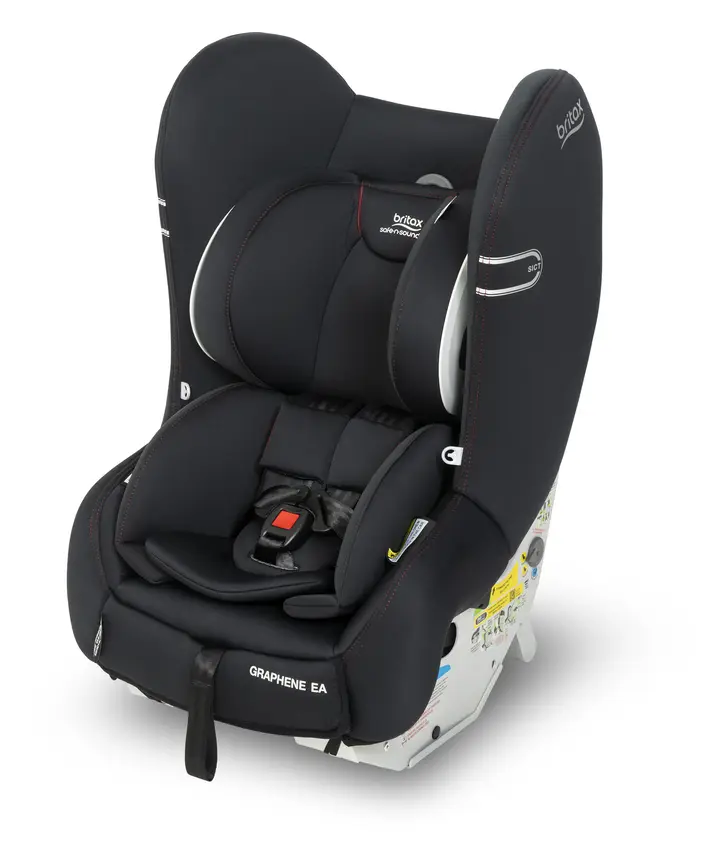
Britax Safe-n-Sound Graphene EA
Britax's Australian convertible seat with SICT side-impact technology, designed to reduce crash energy reaching your child's chest.

Britax Safe-n-Sound Hi Liner SG
A high-back booster for about 4 to 8 years. A clip keeps the seatbelt in the right place.


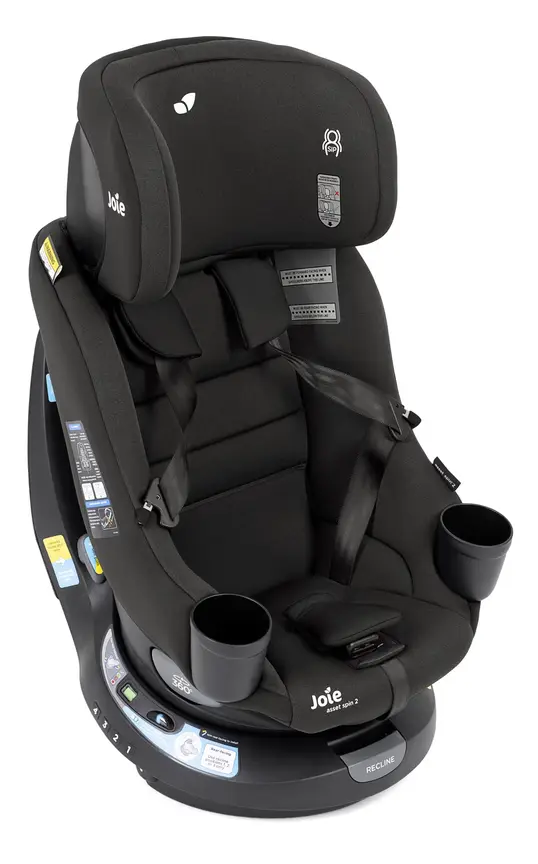

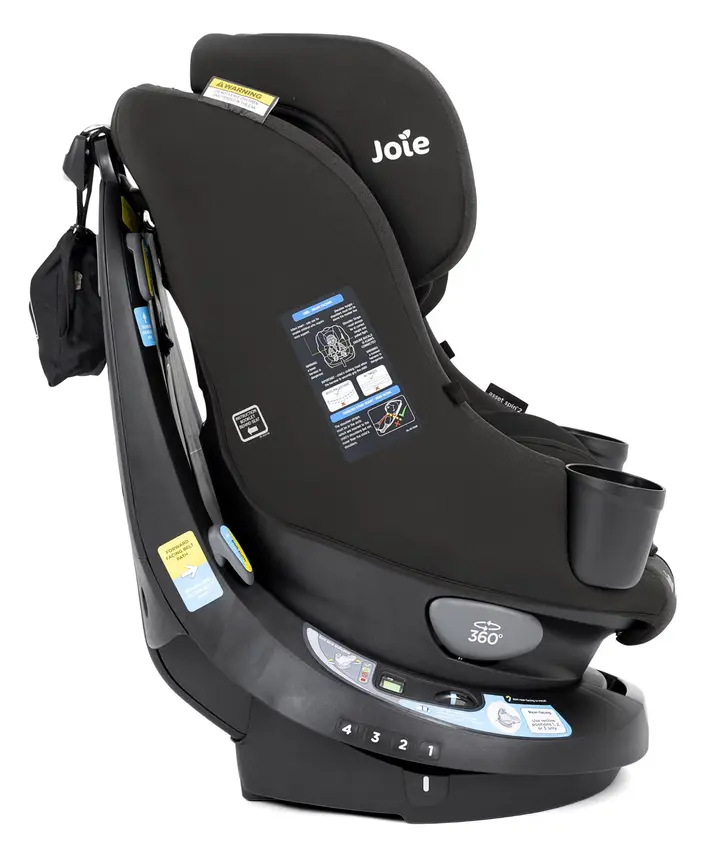
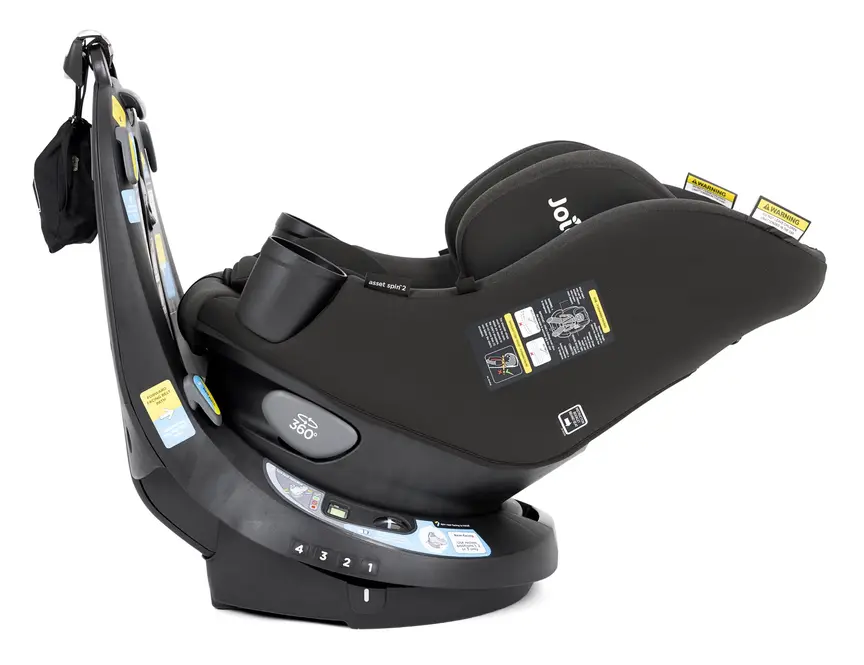
Joie Asset Spin 2
A spinning seat from birth to about 4 years. It has a belt tensioner to hold the seat firmly.
Read our full review →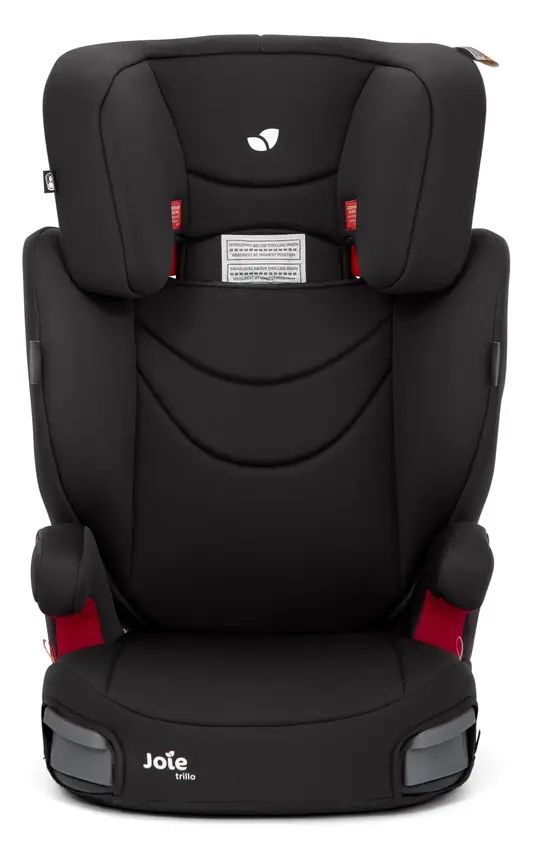
Joie Trillo
A high-back booster with a 7-position headrest that grows with your child.
Questions to ask in the shop
- Can I try this seat in my car before I buy, or return it if it doesn't fit?
- What are the rear-facing height and weight limits?
- Does it come with a newborn insert, and when should it be removed?
- What is the use-by date, and where is it printed?
- For a capsule: does the base need a tether or load leg in my car? Which prams does it clip onto?
- For a convertible: how much room does it need behind the front seat when rear facing?
- Can I buy spare parts, such as a new base, buckle or cover, for this model?
- Is there an independent crash rating for this exact model in my country?
Write the answers down and compare. A seat that fits your car, your baby and your daily routine is the one you'll use correctly every time.
Fitting each type: the basics
Capsule with a base
- Read the capsule manual and the car seat section of your car handbook.
- Fit the base with the method the manual allows: ISOFIX or UAS/LATCH clips, or the seat belt, plus the top tether or load leg if your seat has one. In Australia, Kidsafe says always use the top tether where the seat has one.
- Push down on the base while tightening, so it doesn't move more than the manual allows.
- Check the angle indicator shows the right recline for a newborn.
- Click the capsule onto the base and pull up on the handle to make sure it is locked.
- Put the handle in the position the manual says for driving. Some must be up, some down.
Convertible seat, rear facing
- Set the seat to rear-facing mode and the newborn recline.
- Use the rear-facing belt path (often marked in blue) or the clips, plus the tether as the manual says.
- Tighten so the seat barely moves at the belt path.
- Set the harness slots at or just below your baby's shoulders, and fit any newborn insert that came with the seat.
- Check the front passenger seat isn't pushing the car seat out of its correct angle.
Kidsafe recommends having any restraint checked by an accredited fitter, and checking it yourself regularly.
Using a capsule on a pram
Travel systems are handy for short trips: car to shop and back. A few safety points:
- Only use the adaptors made for your capsule and pram. Product Safety Australia has listed recalls of car seat adaptors, so check yours isn't one of them.
- Click it in and check it's locked every time.
- Keep outings in the capsule short. For long walks, move your baby into a flat pram bassinet or a carrier.
- Never put a capsule on a table, bench or soft surface like a bed or sofa. It can tip or fall.
- Always do up the harness, even for a short time.
Second-hand seat checklist
Product Safety Australia lists what to check before you use a second-hand car seat. Use the same checklist wherever you live:
- The seat hasn't been recalled. Search your national recall site.
- It meets your country's current mandatory standard.
- It suits your child's size and your car.
- It comes with the instructions.
- It's in good condition: no cracks, broken buckles or frayed straps.
- All parts work and the buckle clicks in and doesn't jam.
- It has never been in a car crash.
- It's not over 10 years old, and not past the maker's use-by date if that is shorter.
If you don't know the seat's history, don't use it.
Common mistakes
- Carrying the capsule on your forearm for long walks. It's heavy and awkward. Use a pram frame or a carrier for long outings.
- Leaving a sleeping baby in the capsule at home. Move them to their cot or bassinet.
- Puffy clothing or blankets under the harness. Product Safety Australia says don't put your child in blankets, swaddling or puffy jackets in the seat. Put a blanket over the buckled harness if needed.
- Moving to forward facing too early. Use the rear-facing mode as long as your child fits.
- Using a capsule outside its height limit. Kidsafe says to watch the shoulder height markers.
- Not using the tether or base correctly. Follow the manual exactly, and get it checked.
- Adding after-market padding or head supports. Product Safety Australia warns against this.
- Buying second-hand without a history. Don't use a seat that has been in a crash or is too old.
More options, from budget to premium
Real products from our catalogue. We don't show star ratings or review counts; check the current price, stock and reviews on Amazon before you buy.
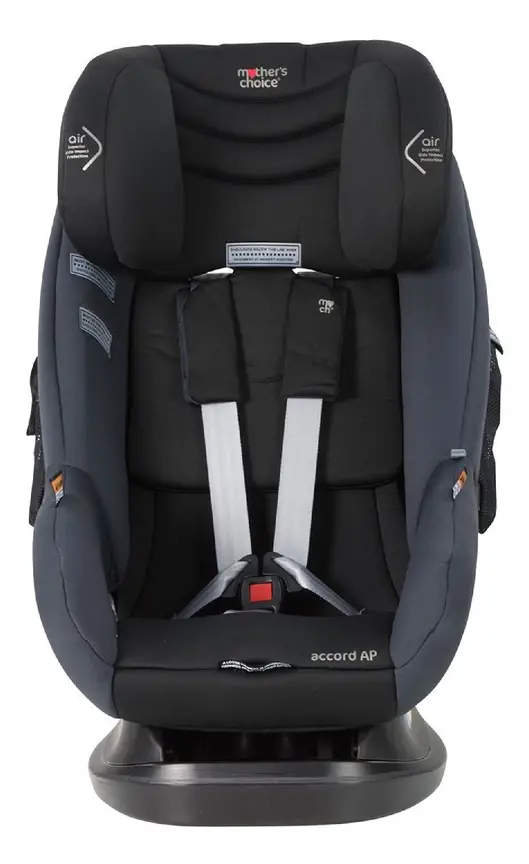
Mother's Choice Accord AP
A lower-cost convertible seat. It stays rear-facing to about 30 months and has ISOFIX connectors.

 Reviewed
Nuna REVE
A convertible seat from birth to about 4 years, rear-facing to about 30 months, with a no-rethread harness.
Read our full review →FAQ
Is a capsule safer than a convertible for a newborn?
Not by type alone. Both protect newborns well when rear facing, approved, fitted correctly and with the harness at the right height. Check the newborn fit of any convertible you choose.
How long can my baby stay in a capsule?
For travel, as long as needed with regular breaks. Babies shouldn't sleep in it for long periods. Red Nose and the Lullaby Trust say take your baby out when you arrive and move them to a flat, safe sleep space.
When does my baby outgrow the capsule?
When they reach the height limit, usually shown by the shoulder height marker, or the weight limit. In Australia that's often around 6 to 12 months, depending on the type.
Can I skip the capsule and use a convertible from birth?
Yes, if the convertible is made for use from birth and fits your newborn well. Many families do this.
Does a convertible seat need a professional fit?
It's a good idea for any car seat. Kidsafe says trained fitting stations have been shown to halve incorrect use.
Can I use a capsule on a plane?
Some seats are approved for aircraft use. The AAP says many car seats can be used on planes, but booster seats can't. Check the seat's label and your airline's rules.
My baby hates the capsule. Will a convertible help?
Sometimes. Some babies settle better in a roomier seat, and some don't like car travel at all at first. Check the harness isn't too tight or twisted, the baby isn't too hot, and the recline is right. Never loosen the harness or add padding to make them comfier; that makes the seat less safe.
Can I reuse my seat for a second child?
Yes, if it's in good condition, hasn't been in a crash, is still within its use-by date, has all its parts and instructions, and hasn't been recalled.
Sources
- Kidsafe Australia / NeuRA – National best practice guidelines for the safety of children in motor vehicles
- Product Safety Australia (ACCC) – Car seats guide
- Child Car Seats Australia – Legal requirements
- Red Nose Australia – Take your sleeping baby out of the car seat
- The Lullaby Trust (UK) – Car seats and sleeping upright
- GOV.UK – Child car seats: the law
- Child Car Seats (UK) – Types of seat
- AAP HealthyChildren.org – Car seats: information for families
- Transport Canada – Stage 1: rear-facing seats
Related guides
More Car Seats & Travel →
How to Keep Your Baby Safe and Cosy with an Infant Car Seat Insert

Infant Seat, Convertible Seat or Booster? Choosing the Right Car Seat for Each Stage
Anti-Rebound Bar vs Load Leg in Car Seats: What Each One Does for Your Baby