Compact Overhead Cabin Strollers for Flights: Size, Weight and Safety
How to pick a compact cabin stroller that fits overhead lockers. Compare fold types, age stages, airline rules, and safety standards for AU, UK, US and…

On this page
- Key points
- What a compact overhead cabin stroller is
- Why a cabin stroller helps when flying
- How to choose a cabin stroller for your trip
- Comparing compact cabin strollers and other travel options
- Age stages: from newborn to toddler
- Airline rules, airport security and gate checking
- Safety standards in Australia, the UK, the US and Canada
- Common mistakes parents make with cabin strollers
- Frequently asked questions
- Sources
Short answer: A compact overhead cabin stroller folds small enough to fit inside a plane's overhead locker. It lets you push your child right up to the plane door and wheel them off as soon as you land. Before you buy or fly, check your airline's carry-on size and weight rules. Measure your folded stroller with the wheels on. Pick a model with a five-point harness, strong brakes, and a flat or deep recline if you have a young baby.
This guide covers flights and safety rules for families in Australia, the UK, the US and Canada.
Key points
- No single airline rule: Each airline and plane type has its own overhead locker size and weight limit.
- Measure the real size: Check the folded length, width, and height with the wheels and canopy attached.
- Newborn safety: Babies under 6 months need a flat, firm surface or an approved newborn kit. Never let a young baby sleep slumped forward.
- Safety marks matter: Look for AS/NZS 2088 in Australia, BS EN 1888 in the UK, or ASTM F833 in the US.
- Pack a protective bag: Crew may still ask you to put the stroller in the cargo hold if lockers fill up.
- Watch the weight on the handle: Light travel strollers tip over easily if you hang bags on the handlebar.
What a compact overhead cabin stroller is
A compact overhead cabin stroller is a very small, light pushchair. Unlike a standard pram, it folds into a neat, boxy shape. Many models fit inside the overhead bin above your seat on a plane.
Standard prams are too bulky for the plane cabin. You must check them in at the luggage desk or leave them at the boarding gate. A cabin stroller stays with you inside the plane.
Not every "travel stroller" fits in an overhead locker. Some umbrella strollers fold long and thin, like a golf bag. They are too long for most cabin bins. True cabin strollers fold in two or three steps into a small rectangle.
Why the label "cabin-approved" can mislead you
Many shops put "cabin-approved" or "airline-friendly" on stroller boxes. No single rule covers every airline in the world. A stroller that fits a large international jet may not fit a small regional plane.
Even on the same airline, rules can change by ticket type. Some budget fares only allow one small personal item under the seat. You may have to pay extra to use the overhead locker.
Prams & Strollers worth a look
Real products from our catalogue. We don't show star ratings or review counts; check the current price, stock and reviews on Amazon before you buy.




UPPAbaby Minu V3
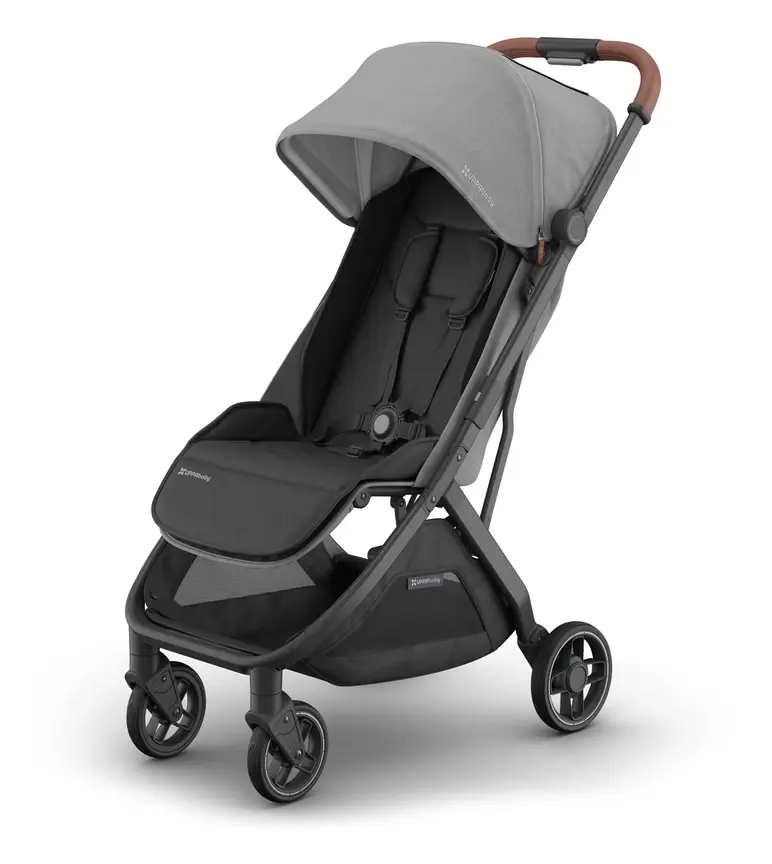
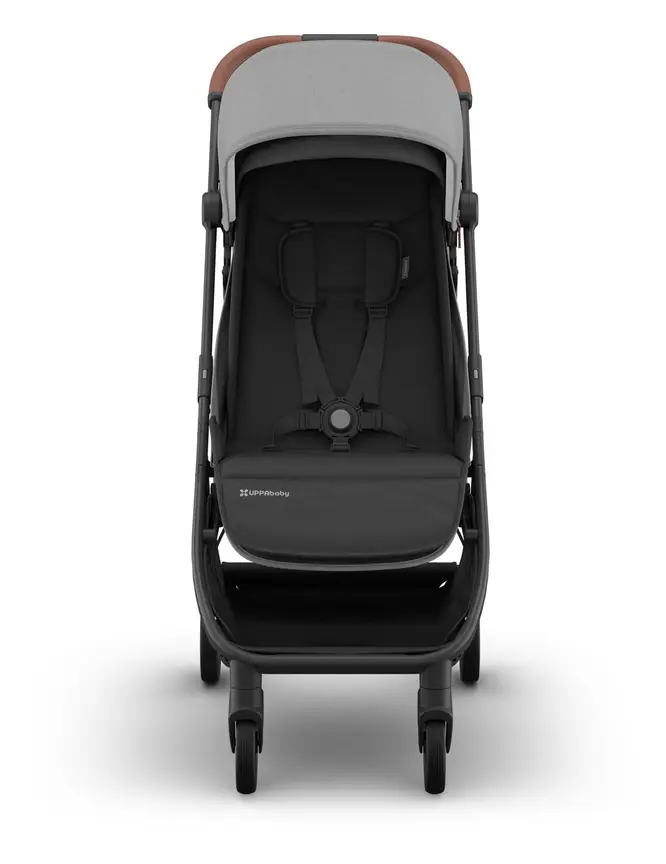
A slim travel stroller that folds with one hand, stands on its own and is sized for plane overhead lockers.
Read our full review →
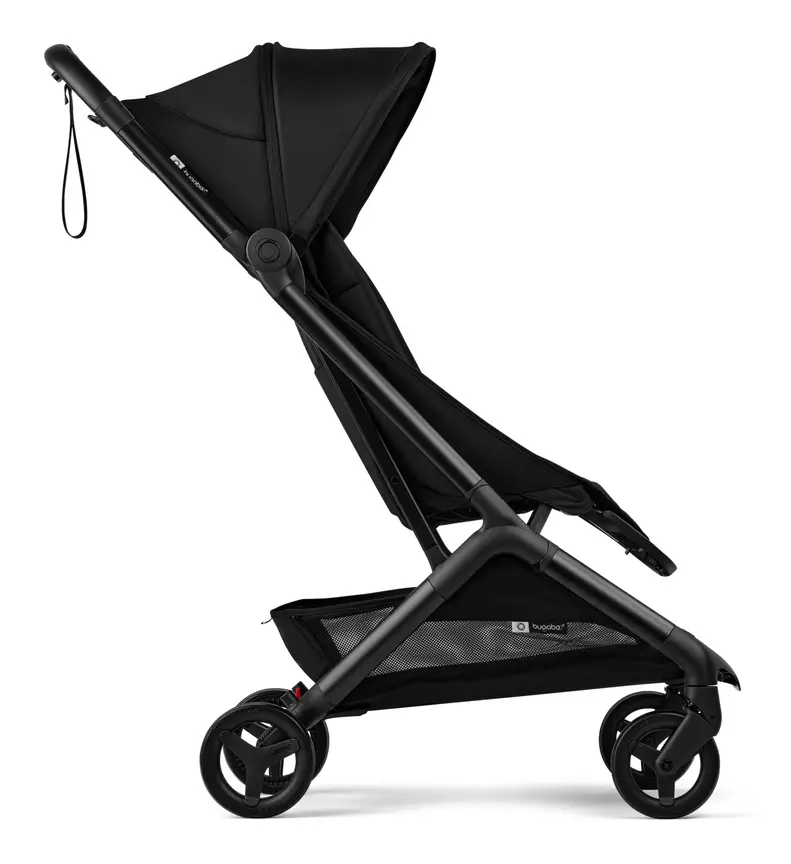


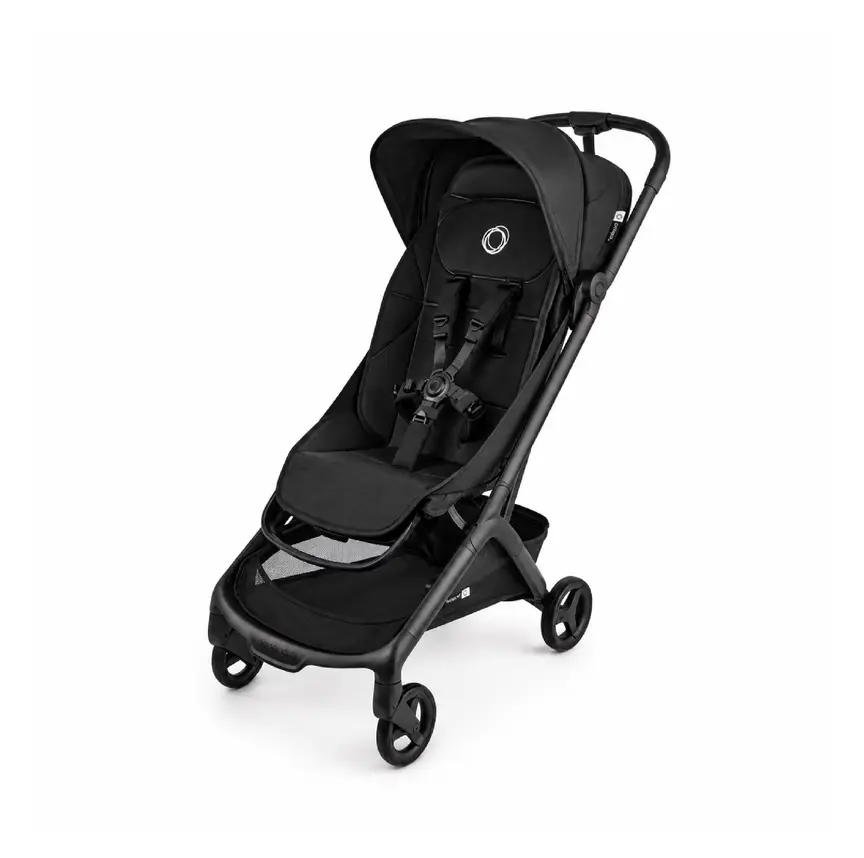
Bugaboo Butterfly
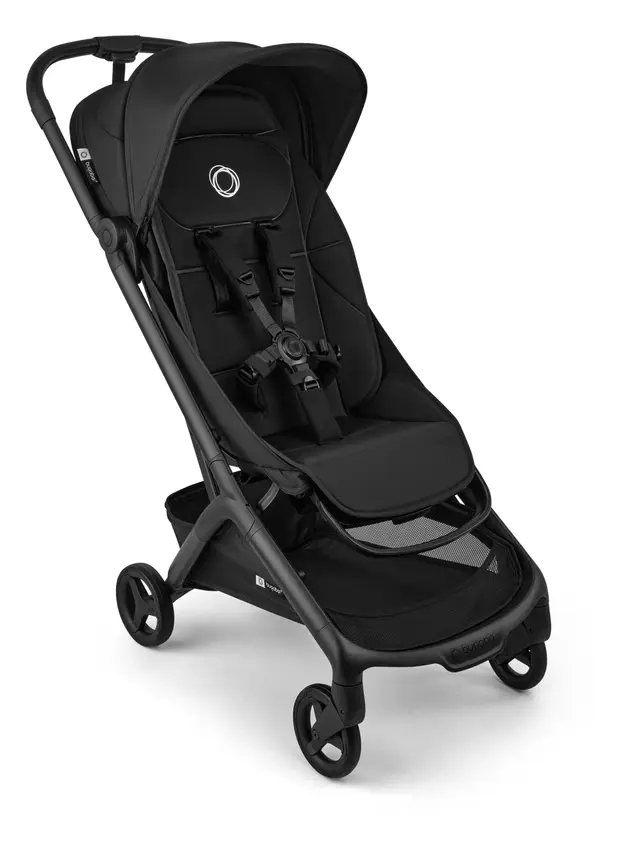
Bugaboo's cabin-friendly compact stroller with a one-second fold — the travel partner to a Fox, not a replacement for it.
 Reviewed
Baby Jogger City Tour 2
A 6.5 kg stroller with a near-flat recline. It folds small and comes with a carry bag.
Read our full review →
Why a cabin stroller helps when flying
Airports involve a lot of walking. Terminals can be huge, and security lines move slowly. Carrying a tired baby or toddler on your hip while pulling luggage is hard work.
A cabin stroller solves three big travel problems:
- Less damage risk: Baggage handlers throw and stack heavy suitcases in the cargo hold. Loose straps, canopies, and frames can snap in transit. Keeping your stroller in the cabin protects it.
- Help during layovers: If you have a connecting flight, you have your stroller right away. You do not have to wait at the baggage carousel for a checked pram.
- Faster exits: When you land, you simply unfold your stroller in the terminal. You can strap your child in and walk straight to customs.
When gate-checking is still a good choice
Sometimes a cabin stroller is not the best fit for your trip. If you are travelling with a tiny newborn and need a full bassinet, a larger pram may be better. You can check a full-size pram at the oversize baggage desk or at the gate.
Many airlines let families check one stroller for free. Always check your airline's family baggage rules before you pack.
How to choose a cabin stroller for your trip
Light weight is nice, but safety and comfort come first. A stroller that breaks on day two of your holiday is no help at all. Look closely at these features before you choose.
Folded size and carry weight
Look at the folded measurements on the spec sheet. Compare them to the carry-on limits of the airlines you fly most. Check the length, width, and depth.
Think about how you will carry the folded stroller. Most cabin strollers come with a shoulder strap or a storage bag. A stroller that feels light in a shop feels much heavier after walking a kilometre through a terminal.
One-hand fold vs two-hand fold
You often have to fold the stroller while holding your baby. A one-hand fold lets you collapse the frame while your other arm stays free. Some strollers need two hands to press buttons on both sides.
Test the fold in the shop if you can. Make sure it locks shut automatically. A stroller that pops open while you lift it into an overhead locker is awkward and unsafe.
Seat recline and newborn support
Check how far the seat leans back. Many ultra-light cabin strollers only recline halfway. That works fine for toddlers who sit up well. It is not safe for newborns or very young babies.
If your baby cannot hold their head up yet, they need a flat or near-flat surface. Some cabin strollers take a newborn bassinet pack or clip-in infant car seat. Always check the minimum age and weight on the maker's label.
Harness, brakes and tether strap
A five-point harness straps over both shoulders, around the waist, and between the legs. It stops a wriggling child from sliding out or standing up. Check that the buckle is easy for you to click, but hard for a toddler to open.
Check the foot brake. It should lock both rear wheels firmly with one press. Make sure it does not slip on smooth airport tiles. In Australia, strollers must also have a wrist tether strap. You slip this loop around your wrist so the stroller cannot roll away on a slope.
Sun canopy and airflow
Holidays often mean bright sun and warm weather. Look for a canopy that pulls down low to shade your child's legs and face. Mesh peek-a-boo windows let fresh air flow through the seat.
Check that the seat fabric is breathable. Thick, dark plastic-feeling padding can trap heat quickly.
Wheels and steering
Cabin strollers have small wheels so they can fold tiny. Small wheels roll smoothly on airport floors and shopping centres. They struggle on cobblestones, grass, gravel, and broken footpaths.
If your trip includes rough streets or parks, look for front-wheel suspension. Larger back wheels also help you pop the front up over kerbs. Try pushing the stroller with one hand to see if it steers straight.
Under-seat basket
Storage baskets on cabin strollers are usually small. Make sure the basket fits your nappy bag or a small backpack. Check how easy it is to reach the basket when the seat is reclined.
Comparing compact cabin strollers and other travel options
You do not have to buy a cabin stroller for every flight. Here is how the four main options compare for families.
| Feature | Overhead cabin stroller | Umbrella stroller (gate check) | Full-size everyday pram (checked) | Baby carrier or sling |
|---|---|---|---|---|
| Folded size | Small boxy rectangle | Long and thin | Large and bulky | Folds into a small bag |
| Weight | Light to carry on one shoulder | Light to medium | Heavy | Very light |
| Where it goes on the plane | Overhead cabin locker | Cargo hold via boarding gate | Cargo hold via check-in desk | Worn on your body or in a bag |
| Newborn use | Only with flat seat or newborn kit | Usually 6 months and up | Yes, with bassinet or flat seat | Yes, if worn safely |
| Airport ease | High, stays with you everywhere | High until the plane door | Low, checked in early | Very high, hands stay free |
| Rough ground handling | Basic, best on smooth paths | Basic, small twin wheels | Strong, big wheels and suspension | Works on any ground |
| Best for | Frequent flyers and layovers | Short trips with toddlers | Long stays with rough terrain | Newborns and short airport walks |
Many parents combine a baby carrier and a cabin stroller. You can wear your baby through security and boarding, and use the stroller for bags or naps on the ground.
Age stages: from newborn to toddler
Your child's age changes what you need from a travel stroller. Safety rules around head control and sleep matter at every stage.
Birth to 6 months
Newborns have very weak neck muscles and heavy heads. If they sit in a curved or upright seat, their chin can drop onto their chest. This bends their airway and makes it hard to breathe.
Red Nose Australia, the Lullaby Trust in the UK, the American Academy of Pediatrics (AAP), and Health Canada all warn against letting babies sleep in upright or sitting gear. Babies should sleep flat on their back on a firm surface.
If you fly with a baby under 6 months:
- Use a stroller with a flat-recline mode or an approved newborn bassinet attachment.
- Watch your baby closely if they fall asleep in the stroller.
- Never leave a baby sleeping in a car seat capsule clicked onto a stroller frame for long stretches.
- Take your baby out of the seat as soon as you reach your room and lay them on a flat, safe sleep space.
6 months to 12 months
Around 6 months, most babies can sit up with support. Their neck strength is much better. You can now use a wider range of upright or semi-reclined cabin strollers.
At this stage, babies start grabbing everything. Keep the five-point harness buckled every time. Make sure the straps sit snugly over the shoulders and hips. Keep loose cords, bag tags, and long toys away from the seat.
1 year to 3 years and up
Toddlers love to climb in and out on their own. Always lock the brake before letting your child step in or out. Check the maximum weight limit on your stroller frame.
Some light travel strollers hold toddlers well. Others feel cramped if your child is tall. Check the seat height and footrest so your toddler's knees are not pushed up high.
| Age stage | Physical ability | What to look for in a cabin stroller | Key safety rule |
|---|---|---|---|
| Birth to 6 months | Weak neck, cannot sit up alone | Flat lie-back seat or approved newborn kit | Keep airway straight and never leave unattended |
| 6 to 12 months | Sitting up, grabbing objects | Five-point harness, deep sun hood, good airflow | Buckle harness every time, lock brakes when stopped |
| 1 to 3+ years | Walking, climbing, heavier weight | High weight limit, sturdy footrest, strong frame | Check weight limit, never hang bags on handle |
Side by side: more prams & strollers to compare
Real products from our catalogue. We don't show star ratings or review counts; check the current price, stock and reviews on Amazon before you buy.
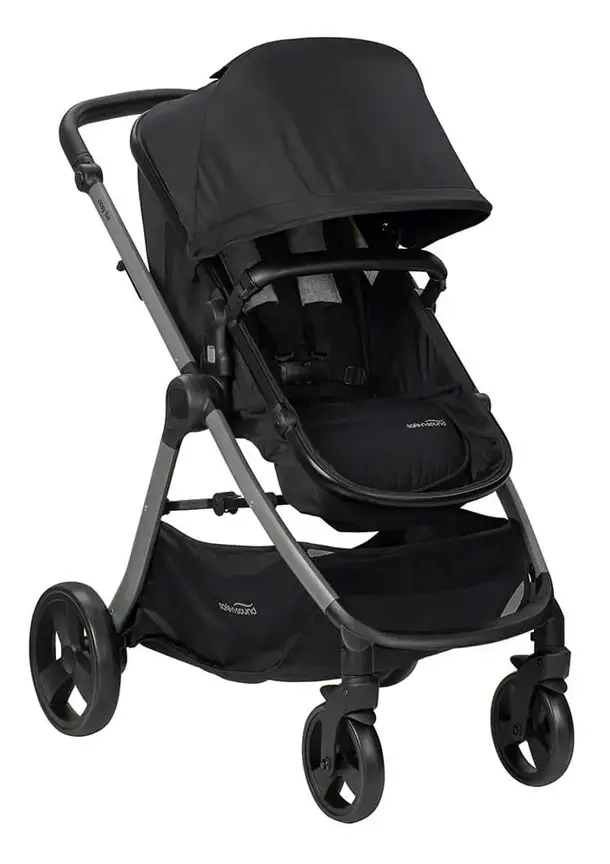
Bugaboo Butterfly 2
The newer Butterfly. It folds in about one second, has a lay-flat seat and a bigger basket with a back pocket.
Read our full review →
Bugaboo Dragonfly
Bugaboo's city pram: smaller footprint and lighter than the Fox, built for footpaths, lifts and car boots rather than bush tracks.
 Reviewed
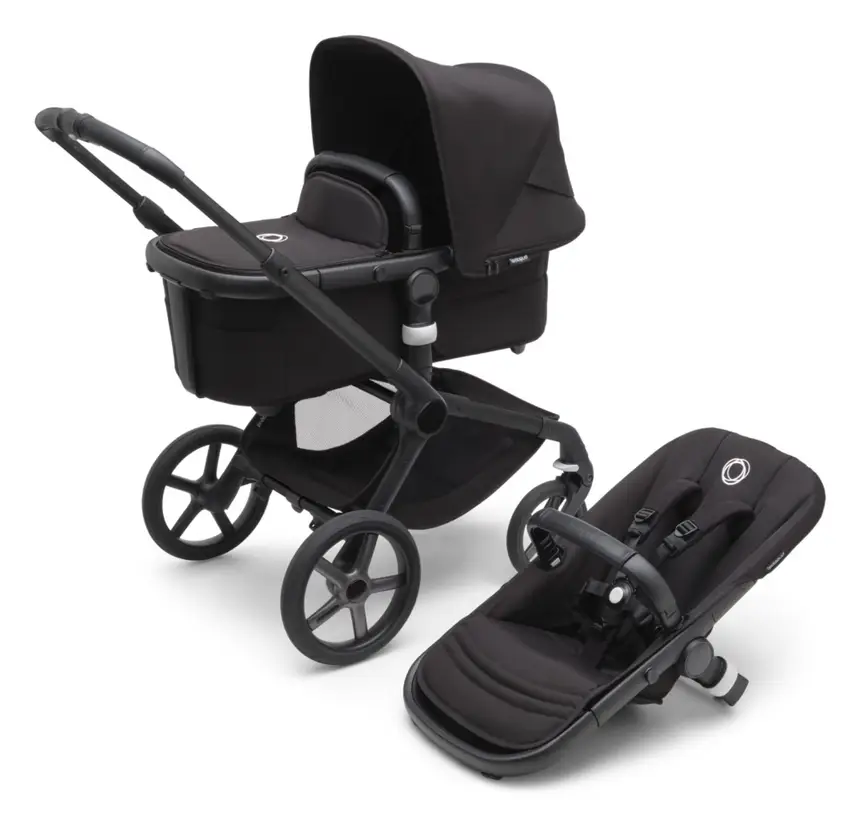
Bugaboo Fox 5
Bugaboo's flagship all-terrain pram: big-wheel suspension ride, one-piece fold, bassinet from birth and a seat rated to 22 kg.
Read our full review →Airline rules, airport security and gate checking
Even the smallest stroller will not help if airline staff stop you at the gate. Knowing how airports handle strollers saves a lot of stress.
Checking airline size and weight rules
Different airlines set different cabin baggage limits. Full-service airlines like Qantas, British Airways, Air Canada, and major US carriers often have wider limits than budget airlines like Jetstar or Ryanair. Some airlines treat a folded cabin stroller as your main carry-on bag. Others let you bring it in addition to your bag.
Check three things on your airline's website at least a week before you fly:
- Maximum cabin bag dimensions: Check length, width, and depth.
- Maximum cabin bag weight: Weigh your stroller on bathroom scales at home.
- Small aircraft limits: Regional turboprop planes and small jets have tiny overhead bins. Your stroller will almost always go in the hold on those flights.
Always ask politely at check-in if you can take your folded stroller to the gate. Put it inside its carry bag before you step onto the plane. This stops dirty wheels from rubbing on other people's coats and bags.
Going through airport security
Airport security rules are similar in Australia, the UK, the US and Canada, with small local steps. The Australian Department of Home Affairs, UK Government, US Transportation Security Administration (TSA), and Canadian Air Transport Security Authority (CATSA) all give clear advice for families.
At security, you usually need to:
- Take your baby or toddler out of the stroller.
- Empty the stroller basket and pockets.
- Fold the stroller so it fits through the X-ray machine belt.
- Walk through the metal detector holding your baby.
If your stroller is too wide or thick for the X-ray tunnel, security officers will check it by hand. Leave extra time so you do not feel rushed while folding and unfolding.
What to do if you must gate-check
Overhead bins fill up fast on busy flights. Even if your stroller meets the size rules, crew may ask you to check it at the plane door. Be ready for this so nothing gets damaged.
- Take out any valuables, passports, medicines, and snacks before handing it over.
- Clip off cup holders, fans, and phone mounts so they do not snap off.
- Lock the fold latch and put the stroller into a padded travel bag.
- Ask the crew where you will pick it up: at the plane door on arrival, or at the baggage carousel.
Safety standards in Australia, the UK, the US and Canada
Strollers sold in Australia, the UK, the US and Canada must meet strict safety rules. Buying from a trusted local seller is the best way to make sure your stroller is tested and safe. Be careful with cheap unbranded strollers bought online from overseas sellers. They may skip basic safety checks.
| Country | Main safety bodies | Stroller standard | Key things checked |
|---|---|---|---|
| Australia | ACCC (Product Safety Australia), Standards Australia, Red Nose | AS/NZS 2088 | Five-point harness, parking brakes, wrist tether strap, dual-action fold locks, gap and pinch safety |
| UK | Office for Product Safety and Standards (OPSS), Lullaby Trust, NHS | BS EN 1888 | Frame strength, tip-over stability, brakes, harness strength, finger traps, small parts |
| US | U.S. CPSC, American Academy of Pediatrics (AAP), FAA | ASTM F833 | Latch locks, wheel brakes, harness fit, leg opening gaps, stability on slopes |
| Canada | Health Canada, Transport Canada, Canadian Paediatric Society, CATSA | Canadian stroller rules (aligned with ASTM F833 and local safety laws) | Structural strength, restraints, brakes, warning labels, pinch and choking hazards |
Important safety rules from all four regions
Official health and safety groups across all four countries share the same core advice for using any stroller:
- Check for recalls: Before buying a new or second-hand stroller, check the recall list in your country. You can search Product Safety Australia, the UK OPSS, the US CPSC, or Health Canada's recall site.
- Watch for pinch points: Keep your child's fingers well away from hinges when you fold or unfold the frame. Wait until the frame clicks firmly into place before putting your child in.
- Never cover the stroller in hot weather: Draping a muslin wrap, blanket, or thick cover over the hood blocks airflow. Even a thin cloth can make the inside of a stroller dangerously hot. Use the built-in shade hood and stay in cool areas instead.
- Follow safe sleep rules: Red Nose, the Lullaby Trust, the AAP, and Caring for Kids all remind parents that a stroller is for moving your baby, not for long unsupervised sleep. Check your baby often while they nap on the move.
Common mistakes parents make with cabin strollers
Even experienced travellers get caught out by small details. Watch out for these common traps.
Hanging heavy bags on the handlebar
Cabin strollers are very light. If you hang a heavy nappy bag or duty-free shopping bag on the handle, the stroller can tip backwards. This can happen the moment you lift your child out, or even while they are sitting inside. Put heavy items in the under-seat basket or wear a backpack.
Measuring without the wheels or bag
Some shops list the folded size with the wheels removed. Taking dirty wheels off at the plane door is messy and slow. Always check the folded size with all wheels on and inside the carry bag.
Waiting until the airport to practise the fold
Trying to work out a tricky three-step fold while a security line waits behind you is stressful. Practise folding and unfolding your stroller with one hand at home before your trip. Check that you know where the release buttons and safety lock sit.
Buying a seat that is too upright for a young baby
Parents sometimes buy a compact stroller just for its tiny fold, without checking the recline. If your baby is under 6 months and the seat stays upright, their head can slump forward. Always match the seat style to your baby's neck strength.
Forgetting the wrist tether strap or brake
Airports have sloped ramps and moving walkways. A light stroller rolls away very fast if you let go to check your boarding pass. Always slip the tether strap onto your wrist and click the brake on whenever you stop.
More options, from budget to premium
Real products from our catalogue. We don't show star ratings or review counts; check the current price, stock and reviews on Amazon before you buy.
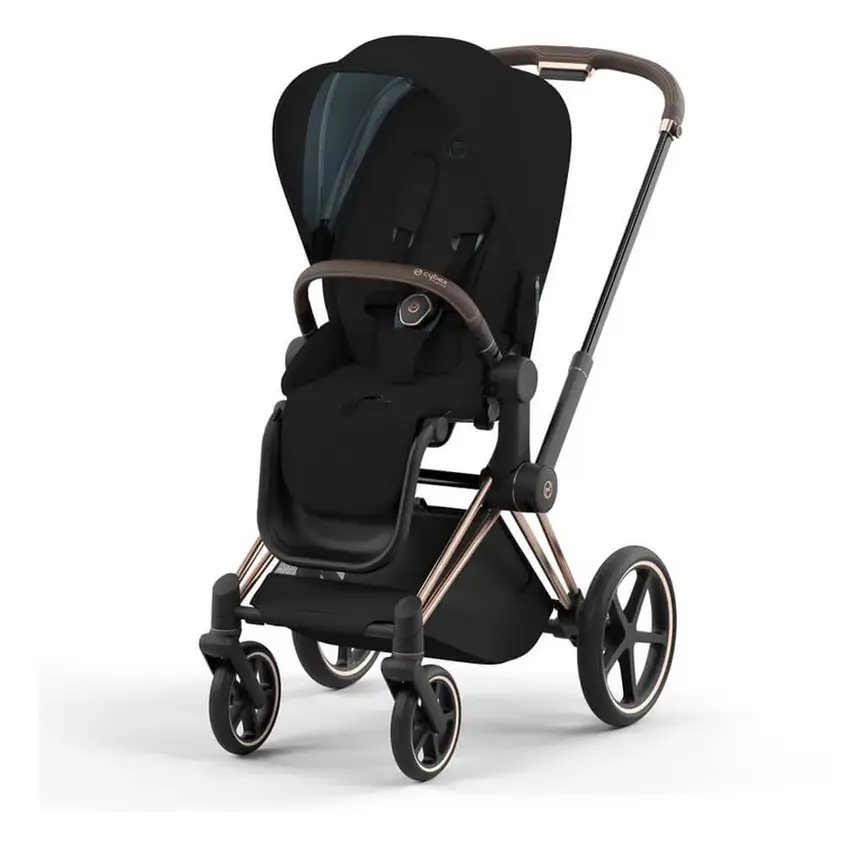
Cybex Priam
Fashion-forward luxury pram with interchangeable seat/bassinet units and an all-terrain option.


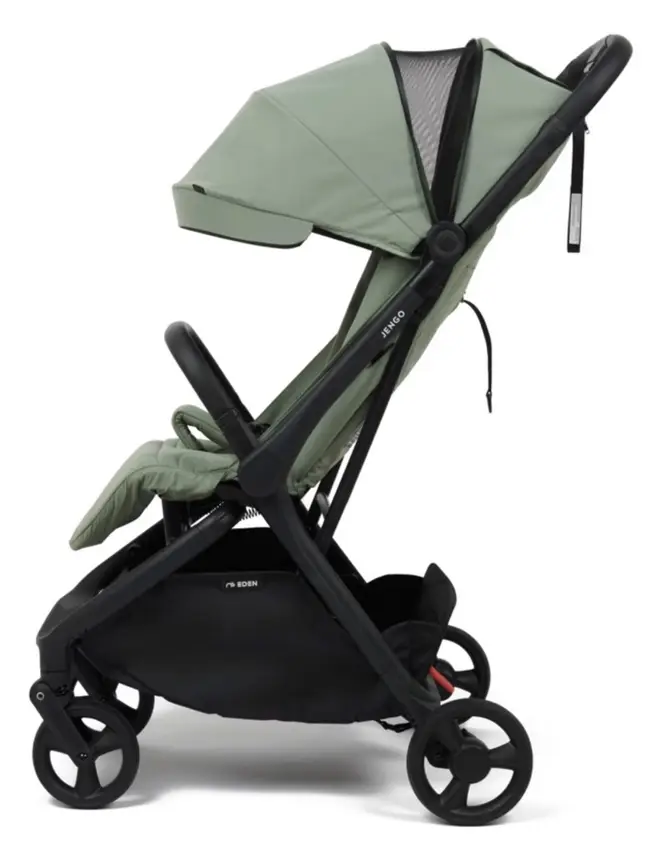
Jengo Eden Compact Stroller
A budget compact stroller from birth to 22 kg. It folds with one hand and has a big basket.
Read our full review →
Joie Pact Pro
A 6.3 kg travel stroller from birth to 22 kg. You can clip a Joie Gemm or i-Gemm capsule on top.
Frequently asked questions
Does a cabin stroller count as my carry-on bag?
It depends on the airline and your ticket. Some airlines let you bring a small folded stroller in addition to your carry-on bag. Other airlines count it as your one allowed overhead bag. Budget fares may charge a fee if you want to put any bag in the overhead locker. Check your airline's baggage page before you leave home.
Can a newborn use a compact cabin stroller?
Only if the stroller is made for newborns. Check that the seat reclines flat, or that it fits a newborn bassinet pack or approved infant car seat. Never put a newborn in an upright stroller seat. If your baby falls asleep, watch their breathing and move them to a flat, firm sleep space when you arrive.
What if the overhead locker is full when I board?
If the cabin lockers are full, flight crew will ask to put your stroller in the cargo hold. This is called gate-checking. Keep a padded travel bag in the basket so you can zip the stroller inside quickly. Remove any loose clips or toys, and take your valuables into the cabin with you.
Do cabin strollers go through the airport X-ray machine?
Yes, in most airports. Security staff will ask you to take your child out, empty the basket, and fold the stroller flat onto the belt. If it is too bulky to fit inside the X-ray tunnel, officers will scan or swab it by hand instead.
Can I use a cabin stroller as my only everyday pram?
You can, if your daily walks are on smooth paths, shops, and public transport. However, small cabin wheels feel bumpy on gravel, grass, and uneven footpaths. The storage baskets are also small for big grocery shops. Many families use a sturdy everyday pram at home and keep a compact stroller for flights and car trips.
How do I stop my cabin stroller from tipping over?
Never hang heavy handbags, backpacks, or shopping bags on the push handle. Place heavy items low down in the under-seat basket. Keep your child buckled in with the five-point harness so they cannot lean far over the side. Always lock the foot brake before you let your child climb in or out.
Sources
- Product Safety Australia – Prams and strollers guide
- Product Safety Australia – Prams and strollers mandatory standard
- Red Nose Australia – Warning on social media hacks for baby capsules
- UK Office for Product Safety and Standards
- The Lullaby Trust (UK) – Safer sleep on holiday
- FAA (US) – Flying with children
- AAP HealthyChildren.org – Flying with baby
- CATSA (Canada) – Families
Related guides
More Car Seats & Travel →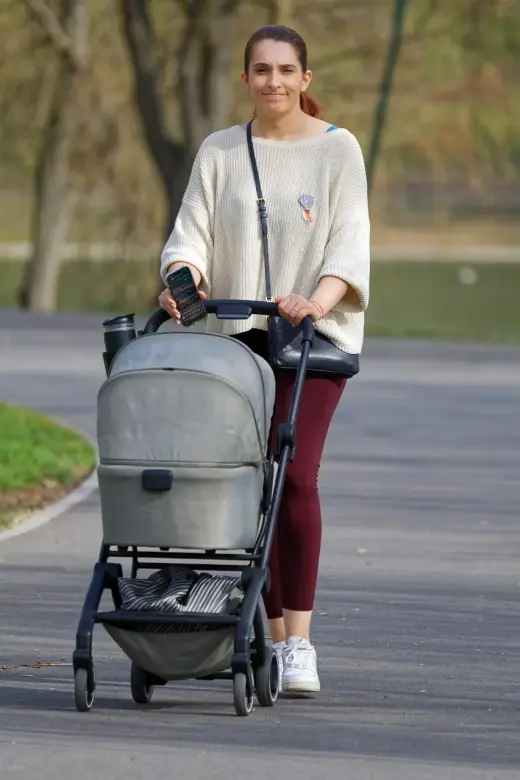
Travel Prams and Compact Strollers: How to Choose, Fold Size, Safety and Flying

Car Seat Frame Strollers: Light, Compact Caddies for Infant Car Seats (and Their Limits)
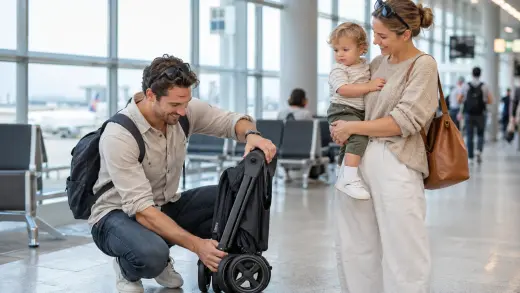
Taking a Travel Stroller on a Plane: Cabin Baggage Sizes, Folding and Safety