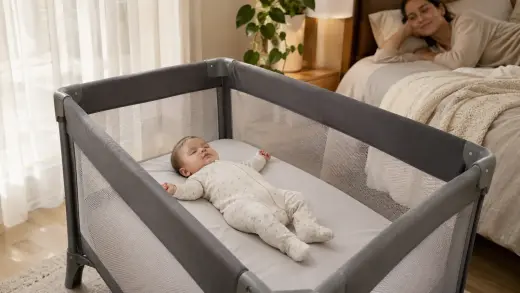
Are Travel Cots Safe for Babies? What Makes Them Safe, and When They Aren't
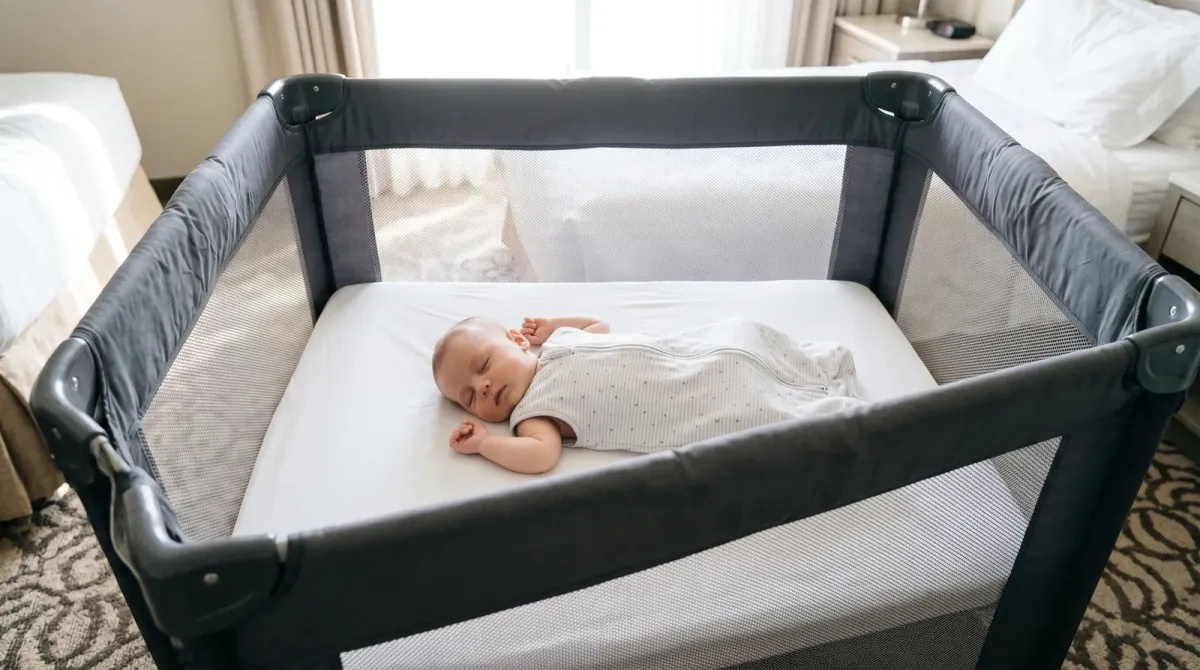
Travel cots (portacots, play yards) are safe for sleep when they meet safety rules, are set up right and hold only their own mattress. Checks for every use.
On this page
- What counts as a travel cot?
- Why a travel cot can be safe
- When a travel cot becomes unsafe
- Safety rules by country
- A safety check before every use
- Using a travel cot at different ages
- Travel cot vs full-size cot: how they compare
- What to look for when buying a travel cot
- Hotel, borrowed and second-hand travel cots
- How to set up a travel cot the right way
- Helping your baby sleep well in a travel cot
- Travel cots on holidays, camping trips and at grandparents'
- Common mistakes
- FAQ
- Sources
Short answer: Yes, a travel cot can be a safe place for a baby to sleep. It must meet your country's safety rules, be set up exactly as the instructions say with every lock clicked in, and have only its own firm mattress and a fitted sheet inside. Travel cots become unsafe when parts are missing, rails aren't locked, extra padding is added, or the baby has grown past the limits.
Key points
- Travel cots go by many names: portacot, portable cot, folding cot, play yard, playpen. The safety rules are the same idea.
- In Australia, folding cots have a mandatory safety standard. From 19 January 2026 they must also meet the Infant Sleep Products Safety Standard.
- The US has a federal rule for play yards. The UK and Canada have their own rules too.
- Use only the mattress that came with the cot. Never add a second mattress or a folded quilt.
- Check every rail is locked before each use. A rail that folds in can trap a baby.
- Stop using it when your baby reaches the weight or height limit, or can climb out.
What counts as a travel cot?
A travel cot is a cot that folds up so you can carry it. Most have a metal or plastic frame, mesh or fabric sides, and a thin mattress that lies on the floor of the cot.
The name changes by country:
- Australia and New Zealand: portacot, portable cot or folding cot.
- UK: travel cot.
- US: play yard (sometimes "pack and play" after a brand name).
- Canada: playpen or play yard.
Some have extra parts: a raised bassinet level for small babies, a change table, or a toy bar. These add-ons have their own age and weight limits.
Why a travel cot can be safe
Safe sleep groups in all four countries agree on what a baby needs to sleep safely:
- on their back;
- on a firm, flat surface;
- in their own safe sleep space;
- with no soft things around them, like pillows, bumpers, toys or loose blankets.
A travel cot that meets the rules gives exactly that. The Lullaby Trust in the UK says to follow the same safer sleep advice in a travel cot as in a regular cot: a rigid frame and base, and a firm, flat mattress with a waterproof cover.
Red Nose Australia describes portable cots as being for occasional or short-term use, such as travel or visits, rather than as a permanent replacement for a standard cot. That is mostly because travel cots are lighter, get folded and moved a lot, and wear out faster.
When a travel cot becomes unsafe
Most injuries with travel cots come from how the cot is set up or used, not from the cot design itself. The main risks are:
1. A rail that isn't locked
Most travel cots have top rails that lock in the middle. If one isn't fully locked, it can fold down into a V shape. A baby's head or neck can get trapped in that V. Health Canada warns that if the sides are not locked, a V shape can form in which a baby can strangle.
2. Extra mattresses or padding
Australia's folding cot standard requires a warning not to add an extra mattress. Red Nose explains this can create gaps where a baby can get wedged and can't breathe. Extra padding also makes the surface soft and raises the baby closer to the top of the sides.
3. A missing or wrong mattress
Without the right mattress, there may be gaps at the edges or a hard, uneven floor. Some people use a mattress from another cot. It is usually the wrong size and thickness.
4. Soft items in the cot
Pillows, quilts, bumpers, toys and sleep positioners all raise the risk of suffocation. Keep the cot bare.
5. A side left down
Some playpens have a side that drops down. Health Canada says never leave a baby in a playpen with the side down, because they can roll into the gap between the mattress and the mesh and suffocate.
6. Outgrowing the cot
An older baby who can stand, climb or push on the sides can tip the cot or climb out. Every cot has a maximum weight and height. Some also say to stop when your child can climb out.
7. Unsafe placement
A cot near curtain or blind cords, a heater, a window or a balcony door is a risk. Health Canada advises keeping cribs and playpens away from window cords, lamps and appliances.
Cots, Bassinets & Bedside Sleepers worth a look
Real products from our catalogue. We don't show star ratings or review counts; check the current price, stock and reviews on Amazon before you buy.
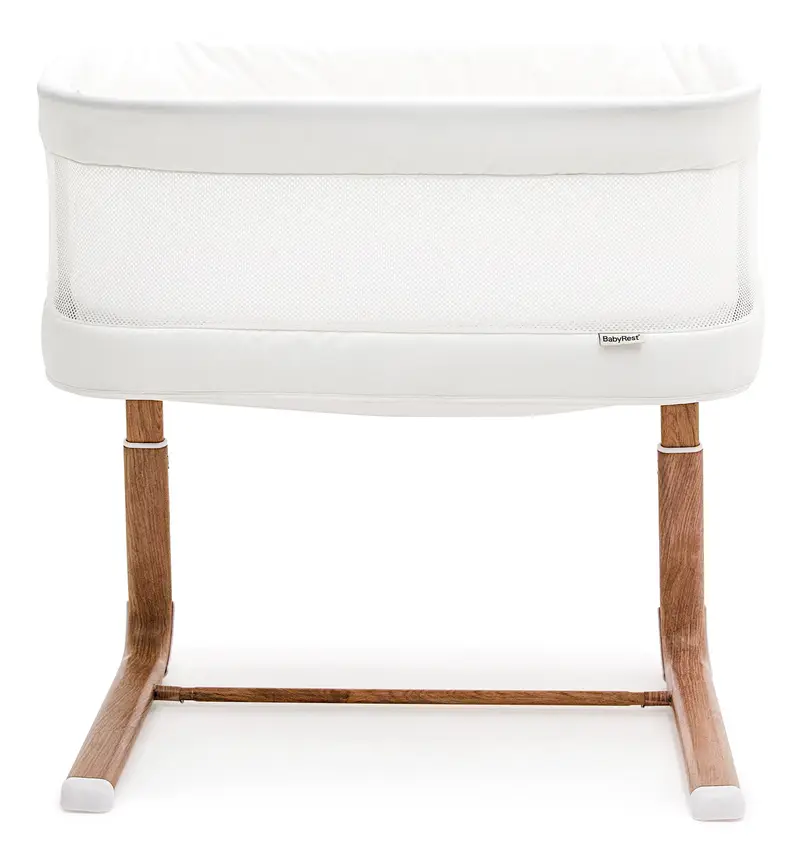
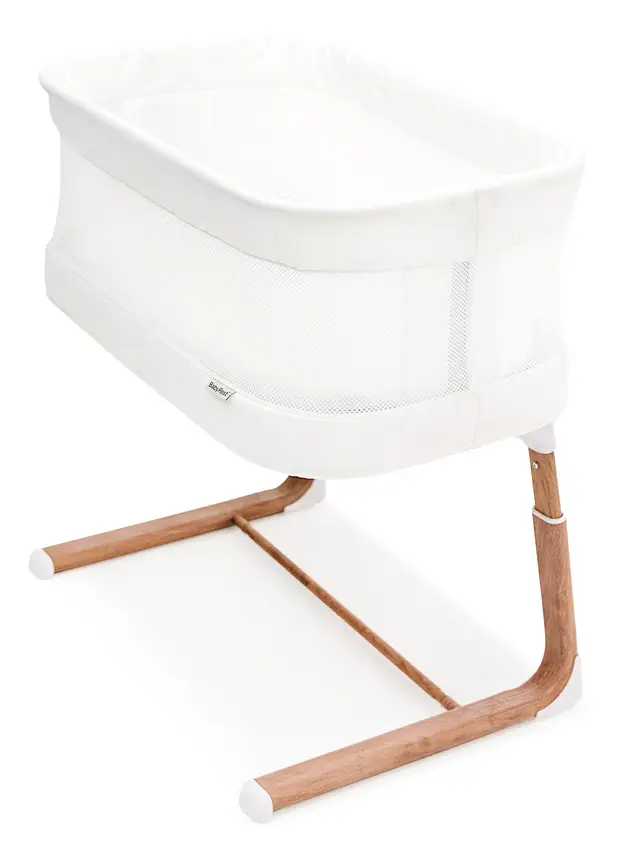
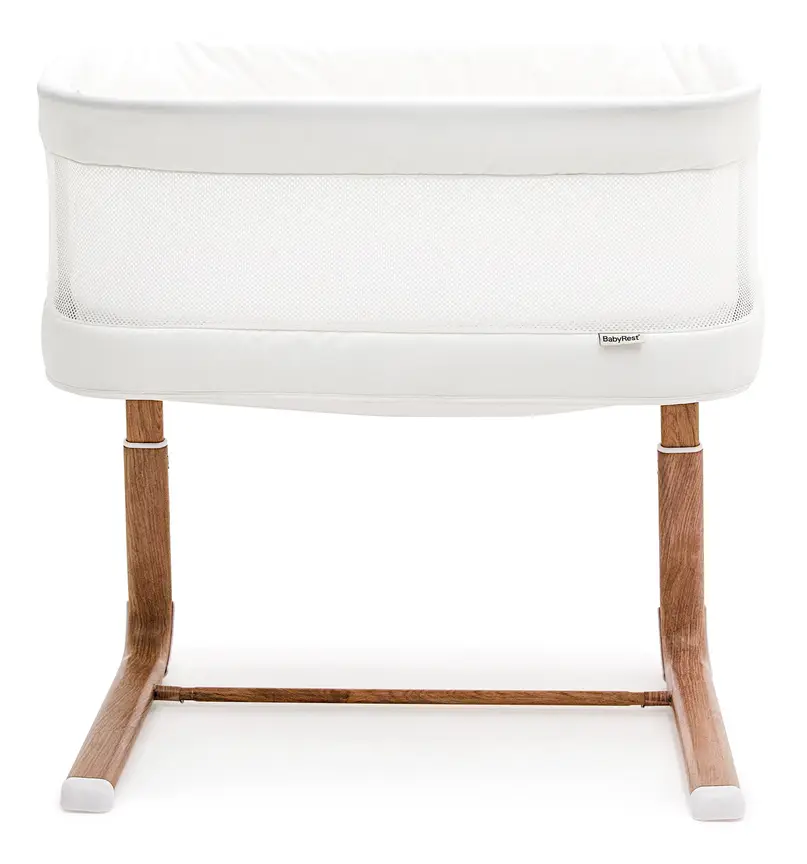


BabyRest Swan Smart Bassinet
A bassinet that rocks by itself when baby stirs, with 3 rocking levels, lullabies and a remote.
Read our full review →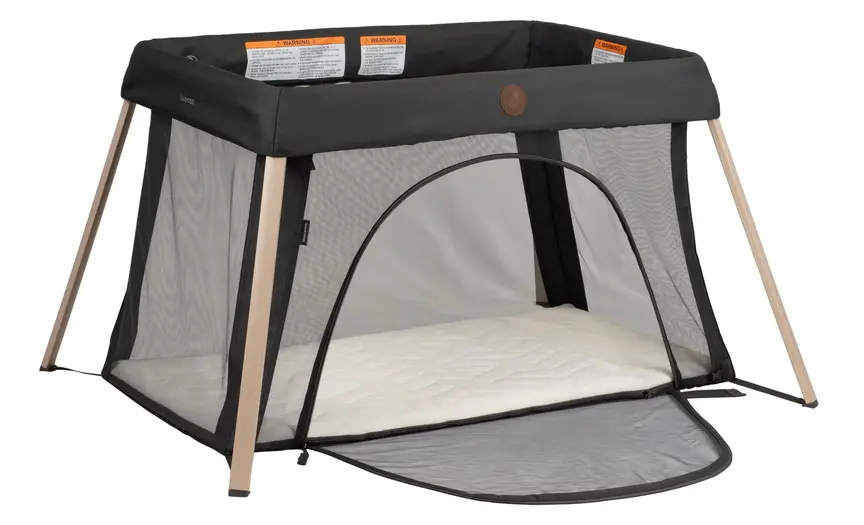
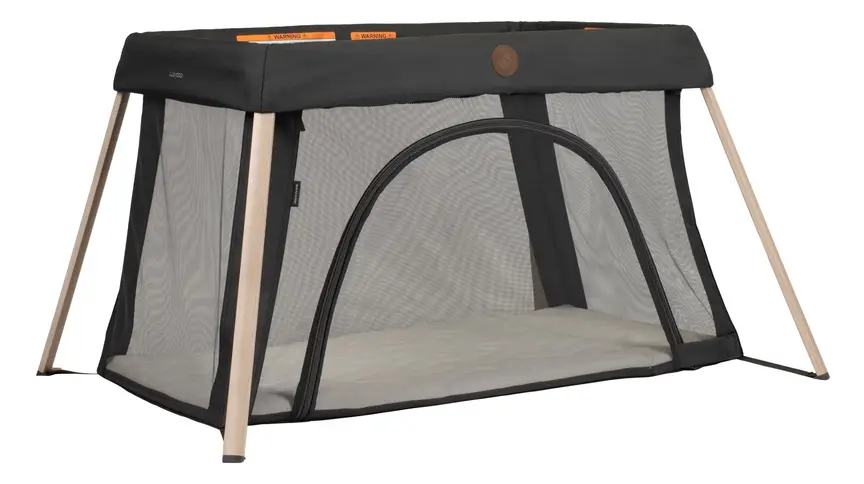

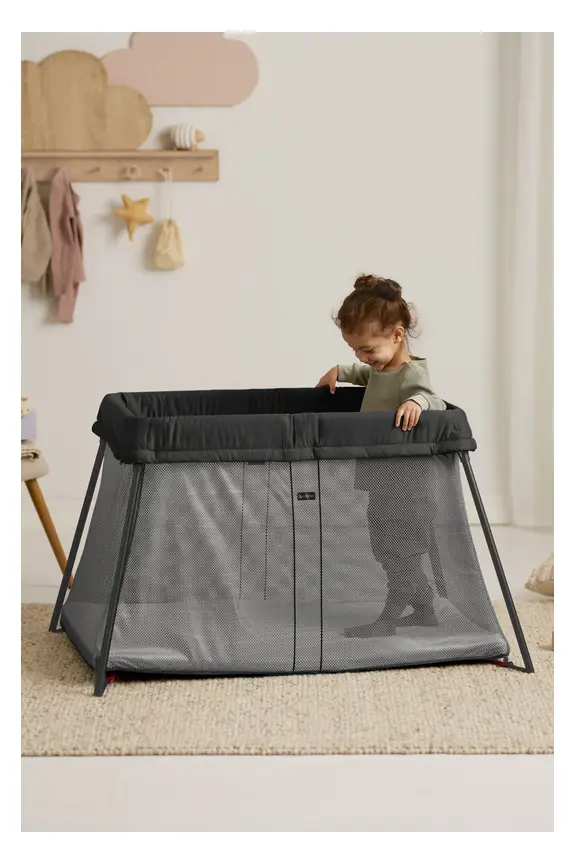
Maxi-Cosi Calao Light Travel Cot
A light travel cot with a newborn level and a toddler level, a side zip and a travel bag.
Read our full review →
Compare all cots, bassinets & bedside sleepers in our reviews →
Safety rules by country
| Country | Rules for travel cots | Key points for parents |
|---|---|---|
| Australia | Mandatory standard for folding cots, based on AS/NZS 2195. From 19 January 2026, also the ACCC Infant Sleep Products Safety Standard. | Must carry warnings, including not to add an extra mattress and to check it is correctly assembled before each use. |
| UK | Sold under British/European standards for cots (BS EN 716) and general product safety law, overseen by the Office for Product Safety and Standards. | The Lullaby Trust: rigid frame and base, firm flat waterproof mattress, no folded blankets under the baby. |
| US | CPSC play yard rule, 16 CFR part 1221, based on ASTM F406. Covers children who can't climb out and are under 35 inches (89 cm). | Use only the mattress supplied, or an aftermarket one made and tested for that model. |
| Canada | Health Canada regulations under the Canada Consumer Product Safety Act. | Lock all side latches. Never leave a side down. Remove toy bars when baby can push up on hands and knees. |
Rules change over time. If you're not sure, look up your national regulator's website, which will list current rules and recalls.
A safety check before every use
It takes about one minute. Do it every time you set up the cot, even if you've done it a hundred times.
- Frame: All legs are fully opened and locked. The cot sits flat on the floor and doesn't rock.
- Top rails: Push down firmly on the middle of each rail. None should fold or move.
- Floor: The centre hub (if there is one) is pushed all the way down and the floor is flat.
- Mattress: Only the supplied mattress, hard side down, lying flat. No gaps at the sides.
- Sheet: A fitted sheet made for that mattress size. No loose fabric.
- Mesh: No holes, tears or loose threads.
- Inside: Nothing else in the cot. No toys, pillows, bumpers or blankets.
- Bassinet level: If you use it, your baby is under its weight limit and can't yet roll or push up.
- Room: Away from cords, heaters, windows and anything a baby could reach.
Using a travel cot at different ages
| Age (roughly) | What to do | Watch out for |
|---|---|---|
| Newborn to 3–4 months | Use the bassinet level if your cot has one, within its limits. Baby on their back, feet near the bottom. | Overheating. Dress for the room. Use a sleeping bag instead of blankets. |
| Rolling (often 4–6 months) | Stop using the bassinet level. Mattress on the cot floor. | Baby rolling into gaps. Make sure the mattress fits snugly. |
| Sitting and pulling up (6–12 months) | Take off toy bars and mobiles. | Climbing using toys or bags placed near the cot. |
| Toddler (12 months+) | Check weight and height limits on the label. | Climbing out. If your child can climb out, the cot is no longer safe. |
Health Canada says a bassinet is safe until a baby can roll over or reaches the weight limit. Many travel cots also list a maximum weight, often around 15 kg, but limits vary, so check your manual.
Travel cot vs full-size cot: how they compare
| Travel cot | Full-size cot | |
|---|---|---|
| Main use | Travel, visits, short stays | Everyday sleep at home |
| Sides | Mesh or fabric | Solid timber or metal bars |
| Mattress | Thin, firm pad supplied with the cot | Thicker mattress bought to fit the cot size |
| Weight limit | Usually lower | Usually higher |
| Risk points | Unlocked rails, added padding, wear from folding | Gaps between mattress and frame, loose parts |
| Safe for sleep? | Yes, when it meets the rules and is set up right | Yes, when it meets the rules and is set up right |
What to look for when buying a travel cot
- The right safety label for your country.
- Clear instructions and warnings printed on the cot.
- Locks you can see and hear click into place. Some have colour markers that show when they're locked.
- Breathable mesh sides so you can see your baby.
- A firm mattress that fits with no gaps.
- A weight and height limit that suits your plans.
- Easy set-up. Practise in the shop if you can. If it's a struggle in the shop, it will be harder at night in a hotel.
- A carry bag that keeps all parts together, especially the mattress.
Side by side: more cots, bassinets & bedside sleepers to compare
Real products from our catalogue. We don't show star ratings or review counts; check the current price, stock and reviews on Amazon before you buy.

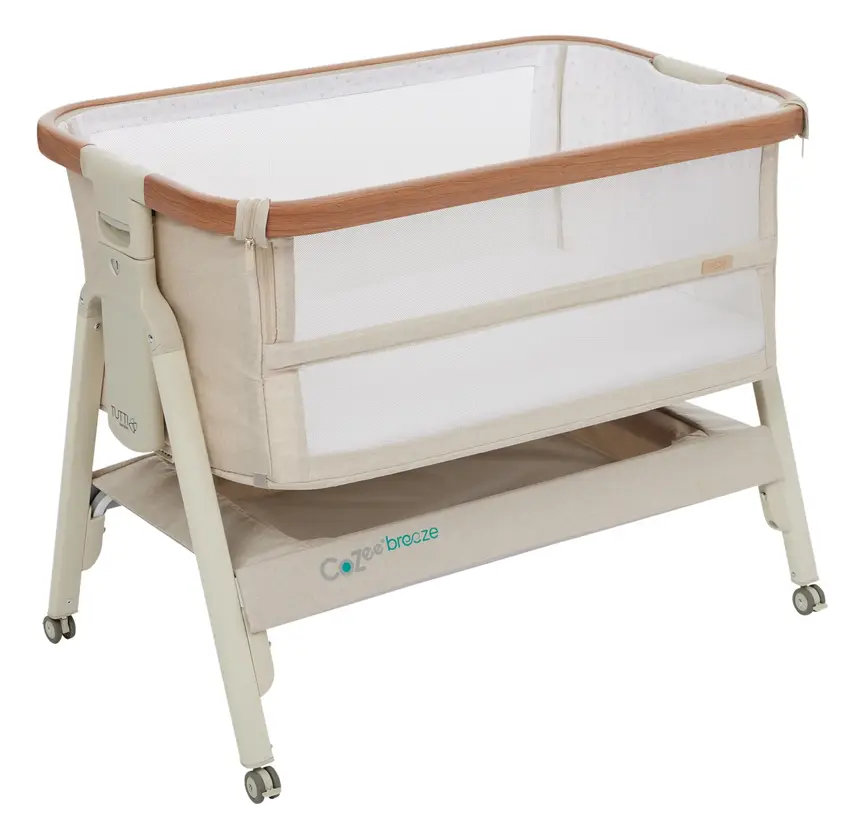
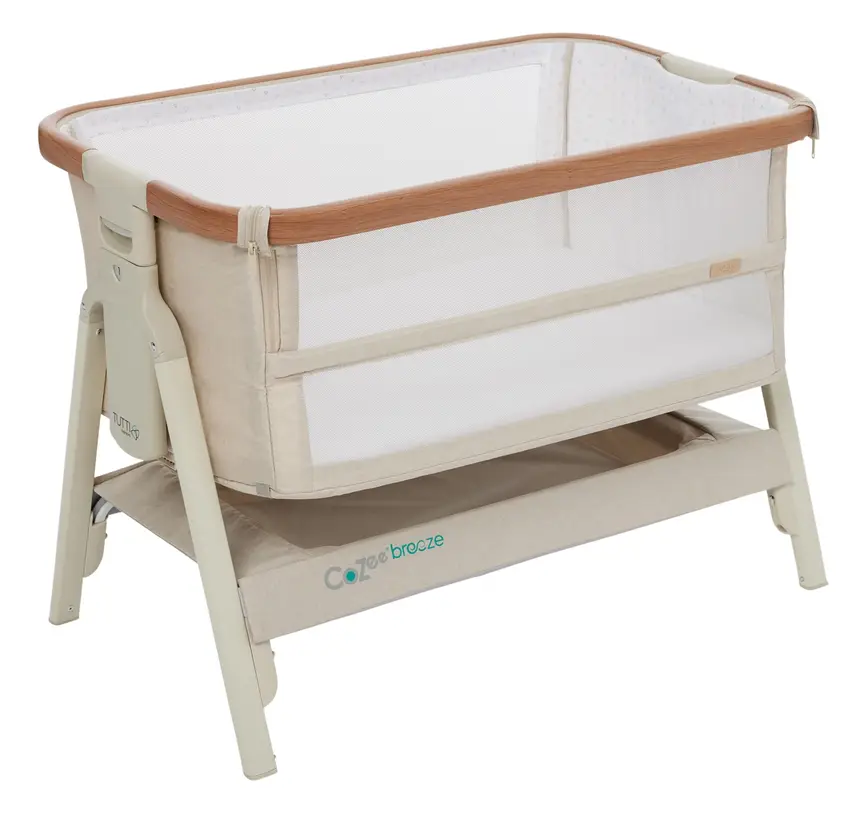
Tutti Bambini CoZee Breeze Lite
A bedside sleeper that opens or folds in about 30 seconds, with mesh sides and a travel bag.
Read our full review →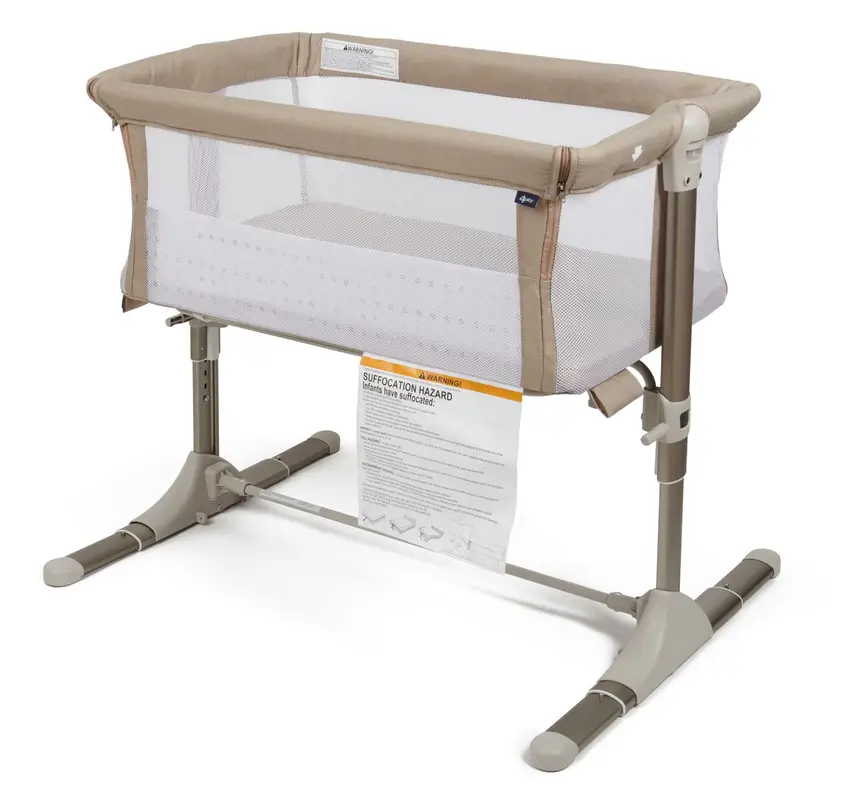
4baby Snuggle Cuddle Bedside Sleeper
A low-cost bassinet that turns into a bedside sleeper, with 4 heights and mesh sides.
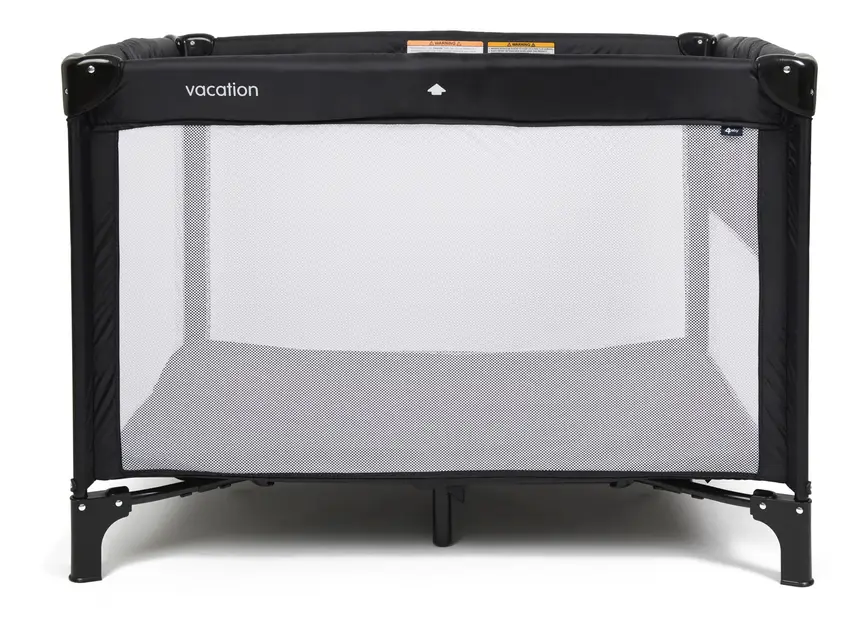
4baby Vacation Portacot
A low-cost portacot with a padded mattress and mesh sides.
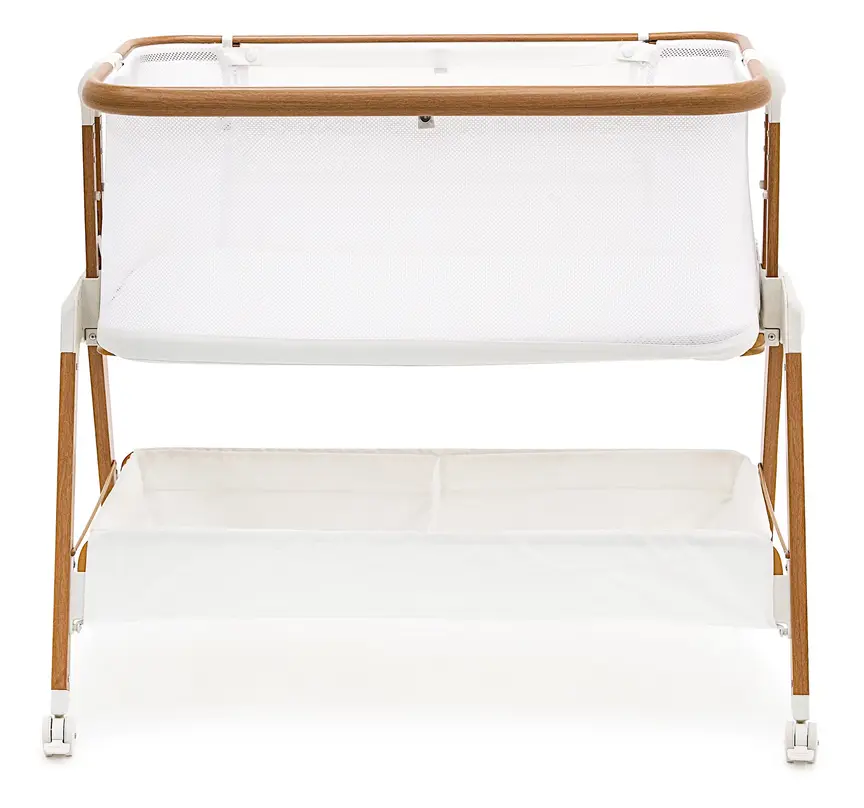
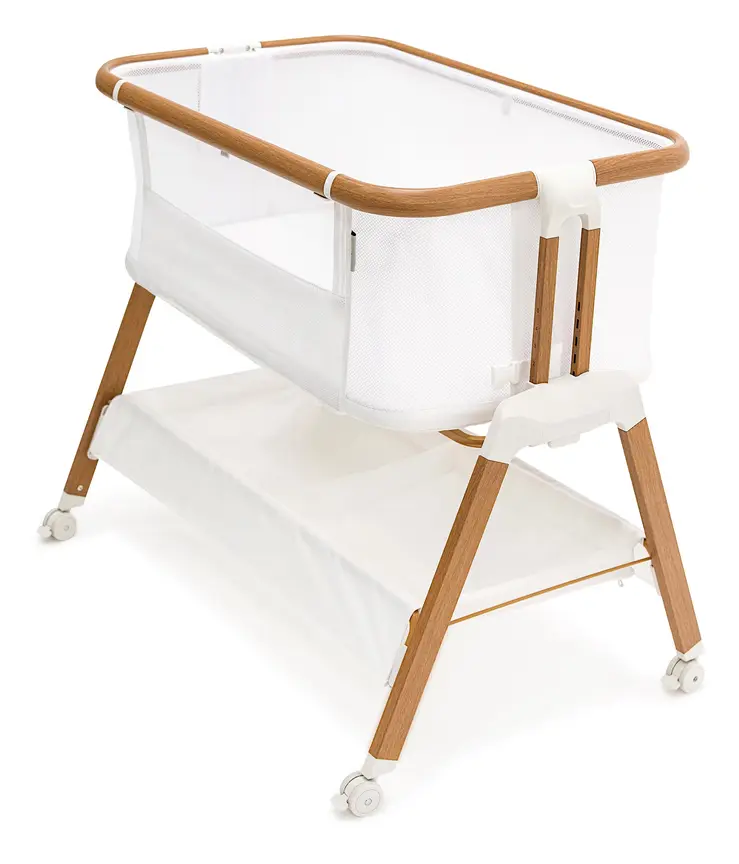
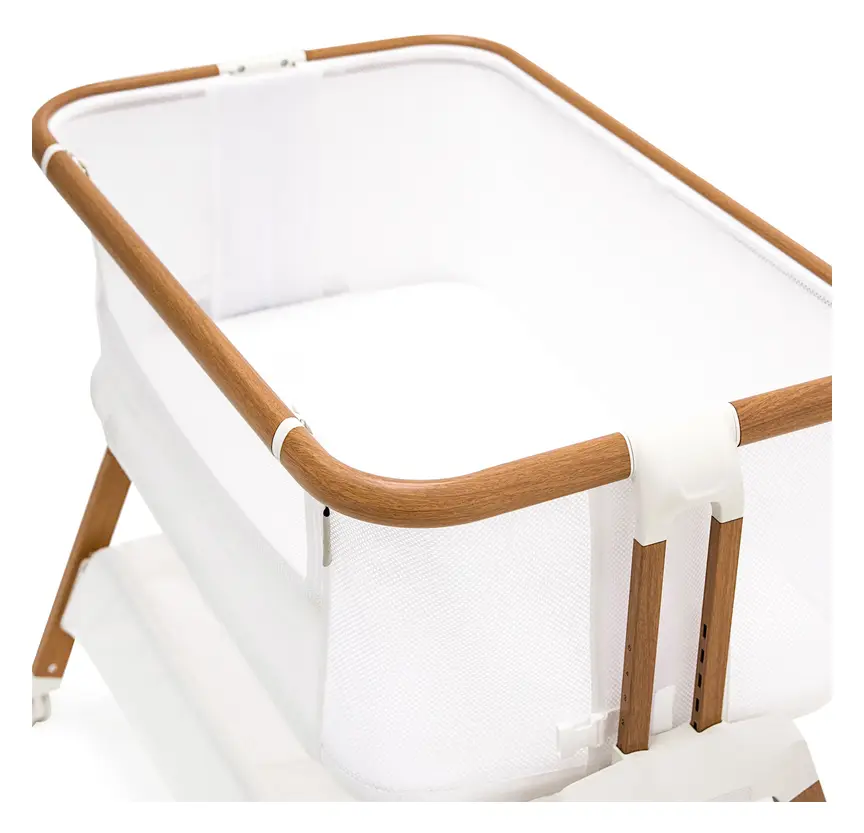
BabyRest Alfie2 Bedside Bassinet
A bedside bassinet with 5 heights, a drop-down side, wheels and an insect net.
Read our full review →Compare all cots, bassinets & bedside sleepers in our reviews →
Hotel, borrowed and second-hand travel cots
Hotels and holiday homes often supply a travel cot. Family members may lend one. These can be safe, but you can't assume they are.
- Set it up yourself or check it with the list above.
- Make sure it has its original mattress. Hotels sometimes add a second mattress or a quilt to make it "comfier". Take it out.
- Look for the label and model name, and search for recalls on your regulator's site.
- If parts are missing or broken, ask for another cot or bring your own.
Health Canada notes that its laws apply to used products as well as new ones, and that people who sell or give away products that don't meet the rules can face enforcement. In any country, never use a cot with missing warnings or instructions.
How to set up a travel cot the right way
Every model is a little different, so keep the manual with the cot. Most travel cots follow these steps:
- Take the mattress off. Many cots are folded with the mattress wrapped around them. Remove it first.
- Stand the cot up with the floor hub (the middle of the base) pointing down and the folded rails pointing up.
- Lift each top rail until it clicks. Do this before you push the floor down. Many cots won't lock if you do it the other way round.
- Push the floor hub down until the base is flat.
- Put the mattress in, padded side up and board side down, so it lies flat across the whole floor. Fasten any straps or Velcro tabs underneath, if your model has them.
- Add the fitted sheet.
- Do the safety check from the list above.
To fold it, reverse the steps. Most cots need the floor hub pulled up first, then the rail buttons pressed. Never fold a cot with a baby in it.
Helping your baby sleep well in a travel cot
New places can unsettle babies. You don't need to add padding or toys to help. These safe ideas work better:
- Bring familiar smells and sounds. Use your baby's own sleeping bag, and a fitted sheet from home if it is the right size. If you use white noise at home, a phone app or small speaker placed well away from the cot can help.
- Keep the routine. Bath, feed, story, bed, in the same order as at home.
- Get the room temperature right. Hotel rooms can be hot or cold. Dress your baby for the room. Feel the back of the neck or tummy: if it's sweaty, remove a layer. The NHS and Red Nose both say overheating raises the risk of sudden infant death.
- Make it dark safely. Close curtains or use a portable blind on the window. Never drape a blanket or towel over the cot.
- Do a few practice naps. If you have time before a trip, let your baby nap in the travel cot at home so it feels familiar.
Travel cots on holidays, camping trips and at grandparents'
Flying: Many airlines let you check in a travel cot as part of your baby items. Rules differ, so check with your airline. Pack the mattress inside the cot's bag so it doesn't get lost.
Camping: Set the cot on flat, firm ground inside the tent, not on an air mattress or soft bedding. Keep it away from the tent walls, heaters and cords. Think about warmth with a sleeping bag suited to the night temperature, not extra blankets.
At grandparents': If a grandparent keeps a travel cot for visits, check the model for recalls, make sure the original mattress is there, and walk them through the safety check. Older cots may not meet current rules.
In cars and caravans: A travel cot is not a car seat. Never use it in a moving vehicle.
Common mistakes
- Adding a soft mattress, folded doona or topper because the pad "looks hard".
- Not pushing the centre floor hub all the way down, so the floor sags.
- Using the bassinet level for a baby who can roll.
- Putting bags, toys or furniture next to the cot that a toddler can climb on.
- Covering the cot with a blanket to make it dark. This blocks airflow and can make baby too hot.
- Using a travel cot every night for months and not checking for wear.
More options, from budget to premium
Real products from our catalogue. We don't show star ratings or review counts; check the current price, stock and reviews on Amazon before you buy.
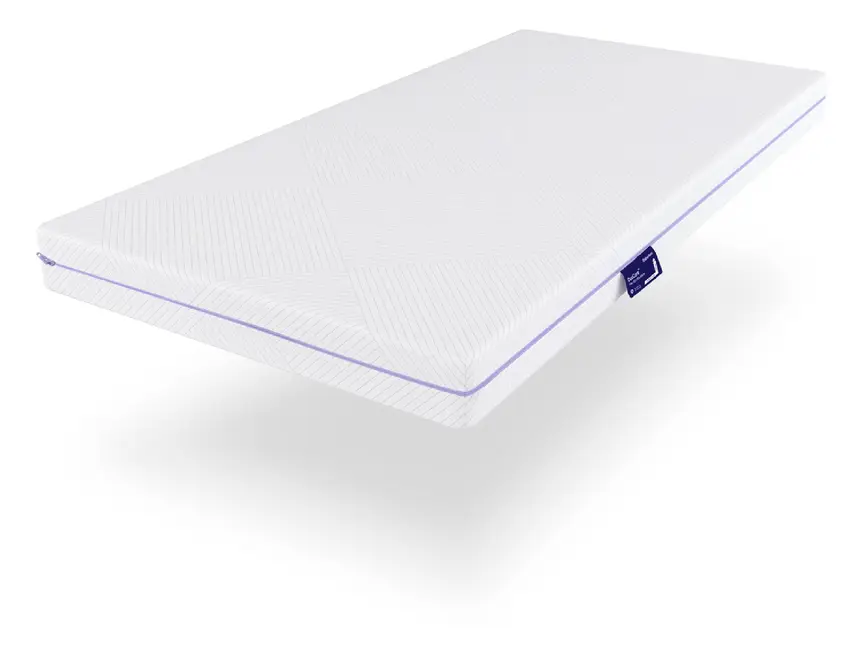
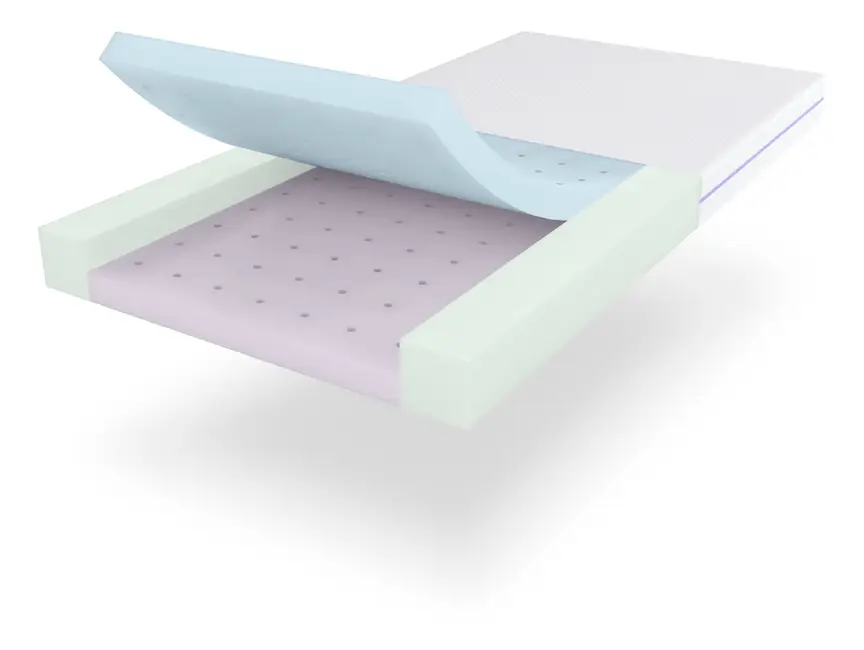

BabyRest Duocore Bamboo Cot Mattress
A two-sided mattress: a baby side to 12 kg and a toddler side from 12 kg to about 4 years.
Read our full review →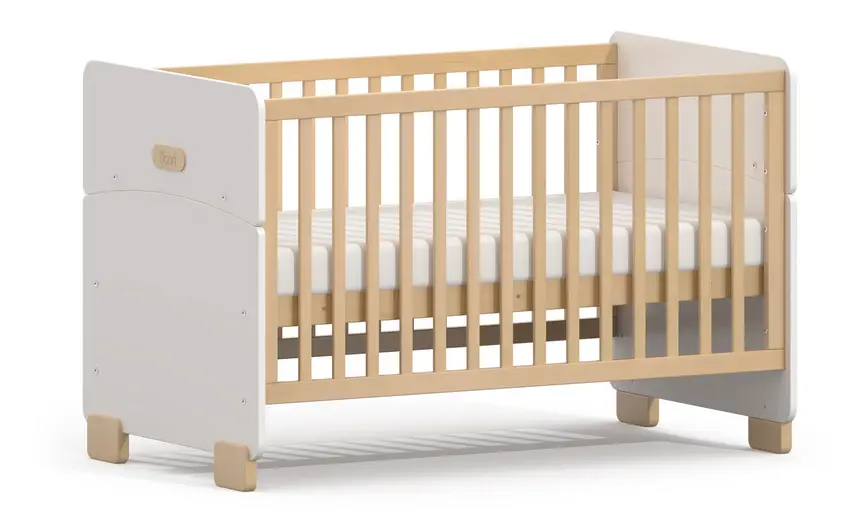

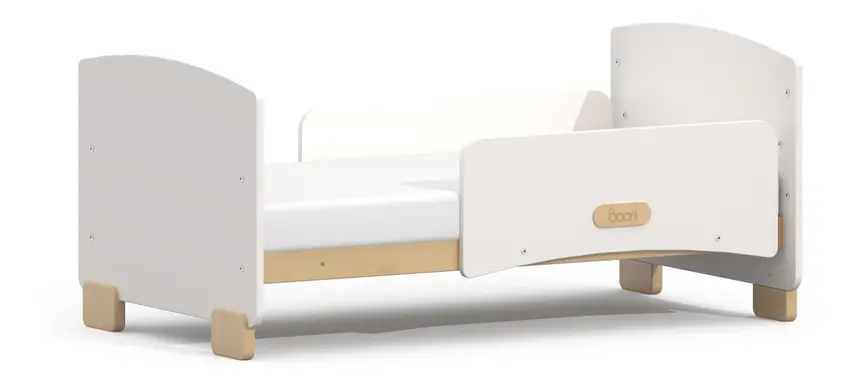

Boori Matilda Cot Bed
A cot that turns into a toddler bed using its own end panels. No extra kit needed.
Read our full review →
Boori Oasis Oval Cot
A curved solid beech cot on lockable wheels, with two base heights.
Compare all cots, bassinets & bedside sleepers in our reviews →
FAQ
Can my baby sleep in a travel cot every night?
Many families do for a while, and a travel cot that meets the rules is a safe sleep space. Red Nose suggests they are best for occasional or short-term use. If it is your baby's main bed, check the frame, locks, mesh and mattress often.
Are travel cots safe for newborns?
Yes, if set up correctly with the right mattress. Use the bassinet level only within its limits. Always put a newborn on their back.
Why is the travel cot mattress so thin?
It is thin and firm on purpose. A thicker or softer mattress could leave gaps and make the sides too low compared with your baby.
Can I put a blanket over the travel cot to make it dark?
No. Covering a cot can trap heat and reduce airflow. Use curtains or blinds to darken the room instead, keeping cords out of reach.
When should we stop using a travel cot?
When your child reaches the weight or height limit on the label, or can climb out, whichever comes first.
Are mesh sides safe?
Yes. Mesh lets air through and lets you see your baby. Check the mesh has small holes and no tears. Health Canada advises choosing mesh with small openings.
Can I use the change table attachment while baby sleeps below?
No. Health Canada warns never to place a baby in the main part of a playpen while the change table insert is still in place. Take the change table off before your baby goes in to sleep.
Is it safe for twins or siblings to share a travel cot?
Safe sleep groups advise each baby has their own sleep space. Older siblings should never sleep in a cot with a baby.
How do I check a travel cot for recalls?
Find the brand and model on the label. Search it on your regulator's recall site: Product Safety Australia, the UK Office for Product Safety and Standards, the US CPSC, or Health Canada's recalls site. Register new cots with the maker so they can contact you.
Do I need a special sheet?
Use a fitted sheet made for that mattress size. A loose sheet or an adult sheet folded up can bunch near your baby's face.
Sources
- Product Safety Australia (ACCC) – Folding cots mandatory standard
- Product Safety Australia (ACCC) – Infant sleep products mandatory standards
- Red Nose Australia – Portable and folding cots
- Red Nose Australia – Six safe sleep recommendations
- The Lullaby Trust (UK) – Mattresses and bedding (travel cots)
- NHS – Reducing the risk of sudden infant death syndrome
- US CPSC – Play yards business guidance (16 CFR 1221)
- US CPSC – Safe Sleep: cribs and infant products
- Health Canada – Is Your Child Safe? (playpens, cribs and safe sleep)
- Caring for Kids (Canadian Paediatric Society) – Safe sleep for babies
Related guides
More Car Seats & Travel →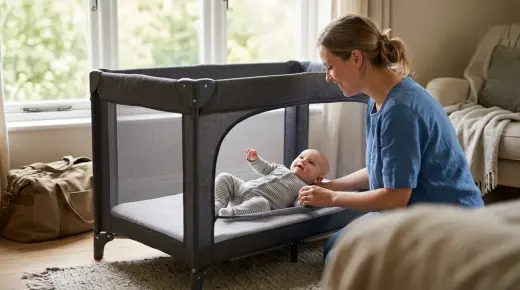
Travel Cots: Real Benefits, Safe Use and How to Choose One
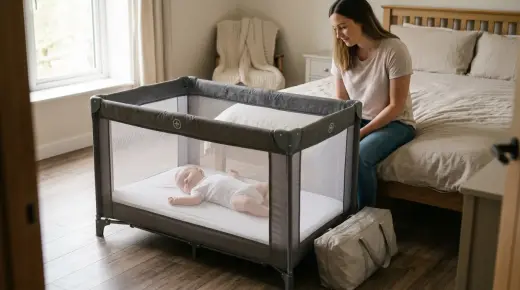
Travel Cots and Portable Cribs: How to Choose a Safe Folding Cot for Every Trip and Budget

How to Choose a Safe Travel Crib or Portable Cot for Your Baby