












True Lie-Flat Stroller Seats vs. Bucket-Tilt Recline: Newborn Airway Safety
Lie-flat stroller seats let newborns lie flat on their back to keep their airway open. Learn how they compare to bucket-tilt seats and what safety bodies say.

On this page
- Key points
- What a true lie-flat stroller seat is
- What a bucket-tilt recline seat is
- Why newborn airway safety matters in a stroller
- True lie-flat vs. bucket-tilt: side-by-side comparison
- How to check if a stroller seat is truly flat
- Age stages: what your baby needs from birth to toddler
- Safety standards and official advice in Australia, the UK, the US and…
- Stroller naps vs. a bassinet, crib or cot
- Common mistakes parents make with reclining seats
- Frequently asked questions
- Sources
Short answer: A true lie-flat stroller seat opens out to about 170 to 180 degrees. Your newborn can lie flat on their back with their body straight. A bucket-tilt seat keeps a fixed L-shape or C-shape curve. When you recline a bucket seat, the whole seat tips back together, so your baby's hips stay bent. For a newborn without head control, a true lie-flat seat or a separate bassinet is much safer for their breathing.
Health and safety groups in Australia (Red Nose and Product Safety Australia), the UK (The Lullaby Trust and the NHS), the US (the American Academy of Pediatrics and the CPSC) and Canada (Health Canada and the Canadian Paediatric Society) all give the same core advice. Young babies need a firm, flat surface on their back. This keeps their head up and their airway open.
Key points
- True lie-flat (170 to 180 degrees): The backrest folds down on its own. Your baby lies flat from head to toe, much like on a mattress.
- Bucket-tilt recline: The backrest and seat base are one curved shell. The whole shell tips back as one piece, keeping the knees raised.
- Airway risk: Newborns have heavy heads and weak necks. A curved or upright seat can push their chin onto their chest and block their air.
- When to use a bucket seat: Wait until your baby can sit up well on their own and hold their head steady. This usually happens around 6 months.
- No extra cushions: Never add thick pillows, wedges or puffy liners to make a curved seat look flat.
- Sleep rule: A stroller is for supervised outings. When you get home, move a sleeping baby onto their back in a safe cot or crib.
What a true lie-flat stroller seat is
A true lie-flat stroller seat has a hinged backrest. When you pull the recline lever or loosen the strap, the back drops down. The seat base stays flat and level. Together, the seat and backrest form a straight or nearly straight line.
Most true lie-flat seats open to between 170 and 180 degrees. At 180 degrees, the seat is completely flat like a bed. At 170 degrees, the head end is raised just a tiny bit. That slight angle helps stop a baby from sliding towards the top edge when you walk down a hill.
Many parents choose a true lie-flat stroller so they can skip buying a separate bassinet. A separate bassinet takes up space at home and in the car boot. You also stop using a bassinet after a few months, once your baby starts to roll or push up. A lie-flat stroller seat grows with your child from birth up to the toddler years.
Not every flat-folding seat is safe for a newborn straight out of the box. The maker must state that the seat is suitable from birth. Check the manual for the minimum age and weight. Also check that the top of the seat closes off with fabric or a firm flap so a small baby cannot slip out head-first.
Prams & Strollers worth a look
Real products from our catalogue. We don't show star ratings or review counts; check the current price, stock and reviews on Amazon before you buy.
 Reviewed
Baby Jogger City Tour 2
A 6.5 kg stroller with a near-flat recline. It folds small and comes with a carry bag.
Read our full review →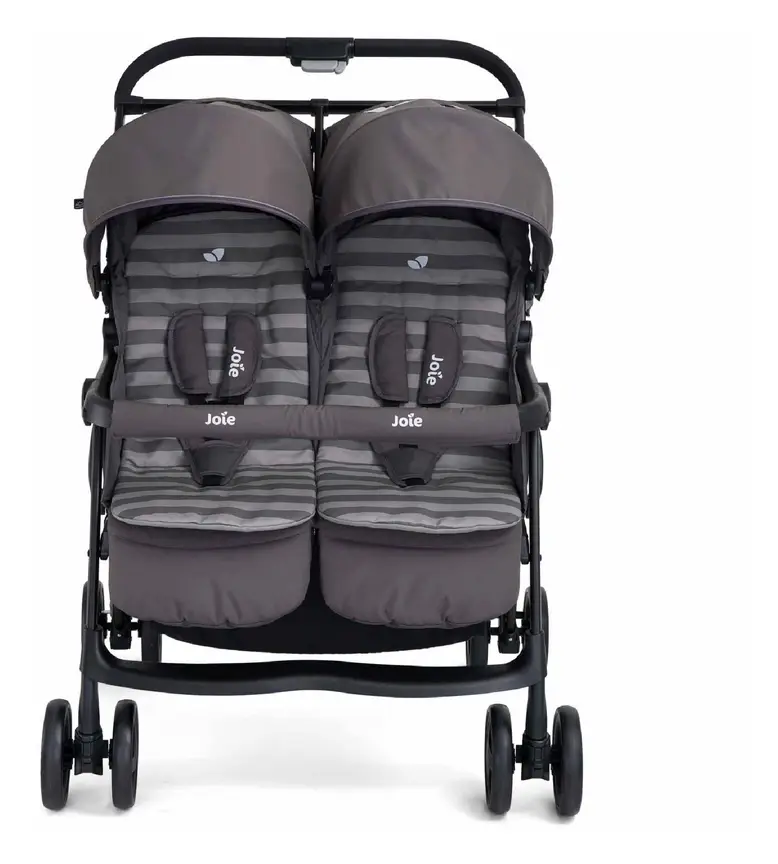
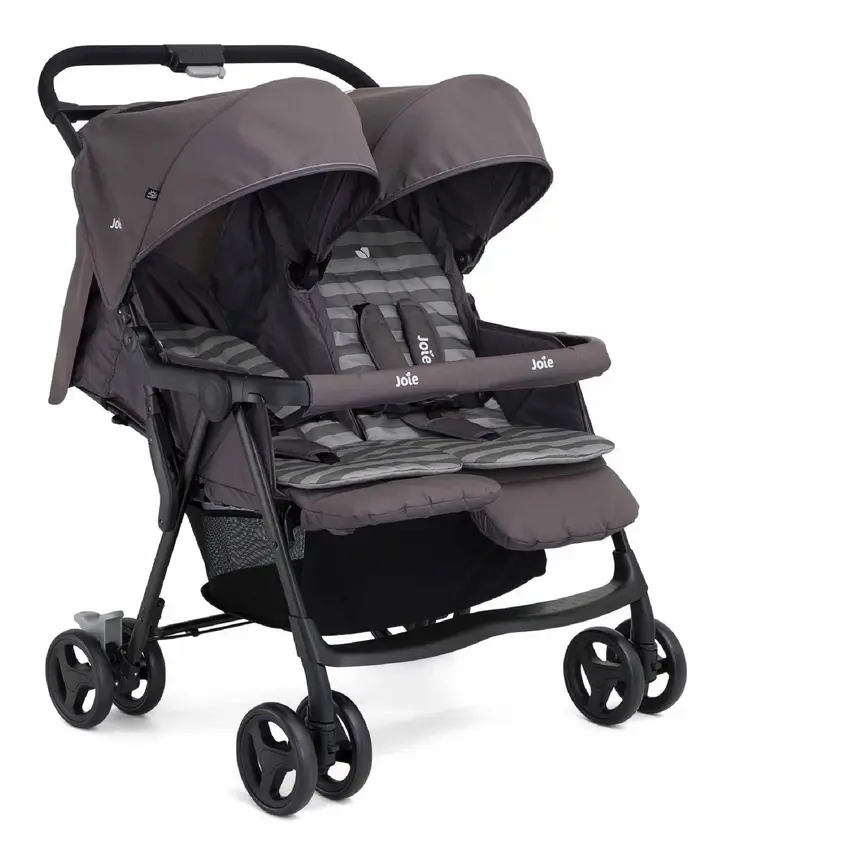

Joie Aire Twin
A lower-cost side-by-side double. Each seat lies flat and reclines on its own.
Read our full review →
Joie Nitro Stroller
A light, low-cost umbrella stroller with a flat recline, so it works from birth.
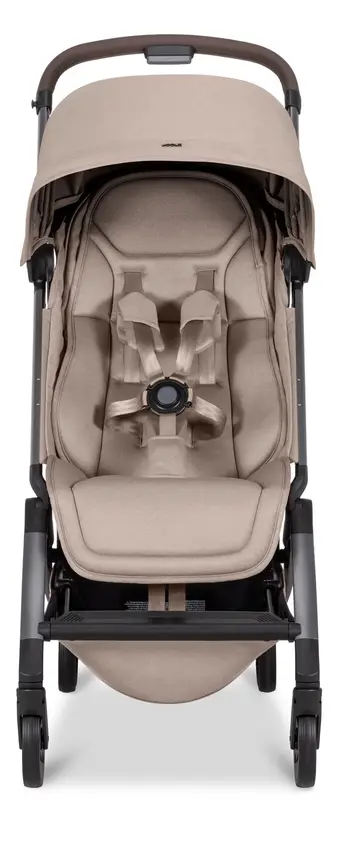


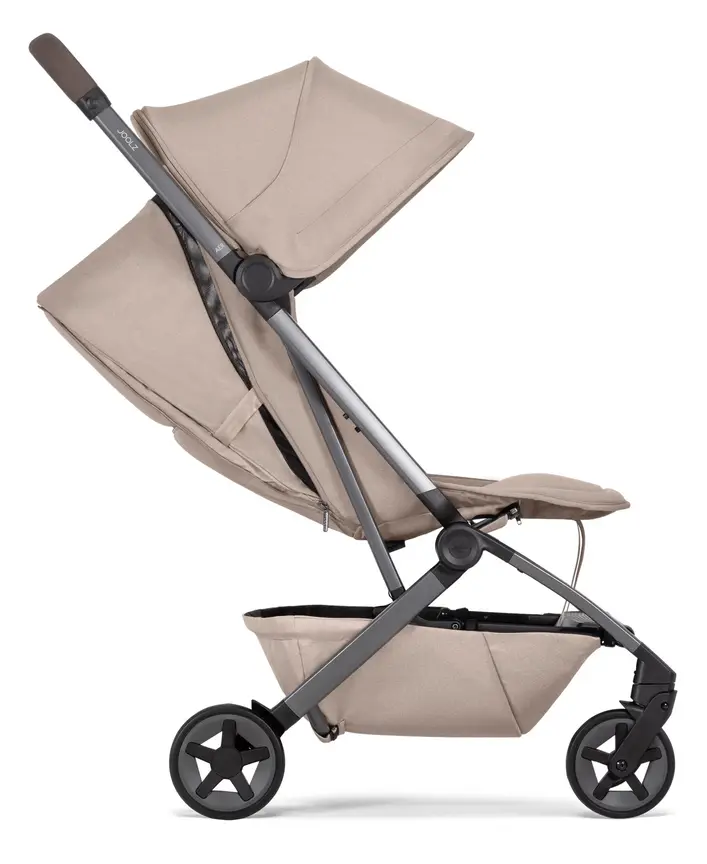


Joolz Aer2
A 6.5 kg stroller with a fast one-hand fold, deep recline from newborn and a UPF50+ sun hood.
Read our full review →What a bucket-tilt recline seat is
A bucket-tilt seat is also called a modular seat or an ergonomic seat. In this design, the backrest and the bottom cushion are moulded together into one rigid L-shape or C-shape frame. They do not hinge apart.
When you recline a bucket seat, you press buttons on the sides and tip the whole seat backwards. The angle between the back and the seat pan stays at about 90 to 110 degrees. Your baby's legs tip up in the air as their back tips down. Their hips and knees stay bent, almost as if they are sitting in a tilted armchair.
Bucket seats are very popular on full-size prams and travel systems. They are easy to lift off the frame and turn around. You can face your baby towards you or towards the street. Older babies and toddlers often find bucket seats cosy because the curved shape supports their legs and bottom.
However, a tilted bucket seat is not flat. Even at the deepest recline, your baby is still curled in a C-shape. For a tiny newborn, that curve can force their body to slump. Most bucket seats are rated from 6 months and up unless you attach a separate bassinet instead.
Why newborn airway safety matters in a stroller
Newborn babies are not built like older children or adults. Understanding how their bodies work makes it clear why the seat angle matters so much.
Heavy heads and weak necks
At birth, a baby's head is very large and heavy compared with the rest of their body. Their neck muscles are soft and weak. They cannot hold their head upright on their own for the first few months. They also cannot lift their head back up if it falls forward.
What happens when the chin drops
A newborn's windpipe is tiny and soft, a bit like a flexible drinking straw. If their heavy head tips forward, their chin presses down onto their chest. That bends the soft windpipe and narrows the space for air to pass through. Health experts call this positional asphyxiation. It simply means a baby's body position makes it hard or impossible to breathe.
This problem is quiet. A baby whose airway is partly blocked does not always cry or cough. They may simply look like they are fast asleep. That is why a flat, open posture is so important whenever a young baby is resting or sleeping.
How a curved seat causes slumping
In a bucket seat, gravity pulls your baby's bottom down into the deep dip of the seat. Their shoulders curve forward. With their hips bent and their back rounded, their heavy head easily rolls forward onto their chest. A bumpy footpath or a kerb makes their head bob even more.
In a true lie-flat seat, your baby lies on their back on a flat, firm surface. Their head rests back against the flat pad. Their chin stays up and away from their chest. Their chest can rise and fall freely with every breath.
Straps and sliding
Even in a flat seat, your baby needs to wear the five-point harness. The harness has two shoulder straps, two waist straps and a strap between the legs. Always buckle it and make it snug. If a baby is not strapped in, they can wriggle or slide down when you push the stroller over bumps. That sliding can still bunch their body up and tip their head forward.
True lie-flat vs. bucket-tilt: side-by-side comparison
Both seat styles have a place. The right choice depends on your baby's age and how you plan to use your stroller. The table below compares the two designs across the features that matter most for everyday safety and use.
| Feature | True lie-flat seat (170 to 180 degrees) | Bucket-tilt recline seat |
|---|---|---|
| How it reclines | Backrest drops down flat while the seat base stays level. | The whole L-shaped seat tips back as one unit. |
| Baby's posture | Straight back, open hips, head resting flat. | Curved back, hips bent, legs raised in the air. |
| Safe from birth? | Yes, if the maker states it is from birth and has head-end protection. | Usually no. Most require a separate bassinet until about 6 months. |
| Chin-to-chest risk | Low when strapped in properly on a firm, flat pad. | Higher for young babies who cannot hold their head up. |
| Footrest position | Often lifts up flat to extend the lying space. | Fixed as part of the curved seat shell. |
| Reversible facing? | Some are parent-facing and street-facing; compact ones often face forward only. | Almost always reversible so baby can face you or the street. |
| Fold size | Often folds smaller and lighter, especially on travel strollers. | Often bulkier; the seat may need to come off before folding. |
| Toddler comfort | Good for long naps; upright angles vary by model. | Very supportive for sitting upright and watching the world. |
Look closely at the facing direction if you want to skip a bassinet. Many lightweight lie-flat strollers only face away from you. That makes it harder to see your newborn's face as you walk. If you buy a forward-facing lie-flat stroller, check that the sun hood has a large peek-a-boo window so you can watch your baby easily.
How to check if a stroller seat is truly flat
Shop signs and online ads can be confusing. Words like "near-flat", "newborn ready" or "deep recline" do not all mean the same thing. Use these checks before you buy or before you put your newborn in a stroller.
- Read the weight and age label. Look for a clear note in the manual or on the frame. It should say suitable from birth or 0 months. If it says 3 months or 6 months, do not use it for a newborn.
- Recline it all the way and look from the side. Stand beside the stroller and drop the seat as far back as it goes. Look at the line from the head end to the bottom. Does it look like a straight board, or is there still a deep V-shape or bucket dip?
- Press the seat pad with your hand. The surface should feel firm and even. It should not sag like a hammock when you press down in the middle.
- Lift the calf rest. Many lie-flat seats have an adjustable leg rest. Flip it up so it sits level with the seat. This stops your baby's legs from hanging down and keeps them from sliding forward.
- Check the top edge of the seat. When a seat lies flat, the top edge behind the baby's head needs a raised lip, solid headboard or zipped mesh barrier. Without it, a baby could slide upwards when you tip the stroller back to climb a kerb.
- Test the lowest harness slots. Look at where the shoulder straps come through the backrest. The lowest slots should sit at or just below a newborn's shoulders. If the slots are too high, the straps will rub on your baby's ears or neck and will not hold them securely.
- Check the sun hood window. Open the peek-a-boo flap on the hood. Make sure you can clearly see your baby's nose, mouth and chest from the handlebar while walking.
Side by side: more prams & strollers to compare
Real products from our catalogue. We don't show star ratings or review counts; check the current price, stock and reviews on Amazon before you buy.
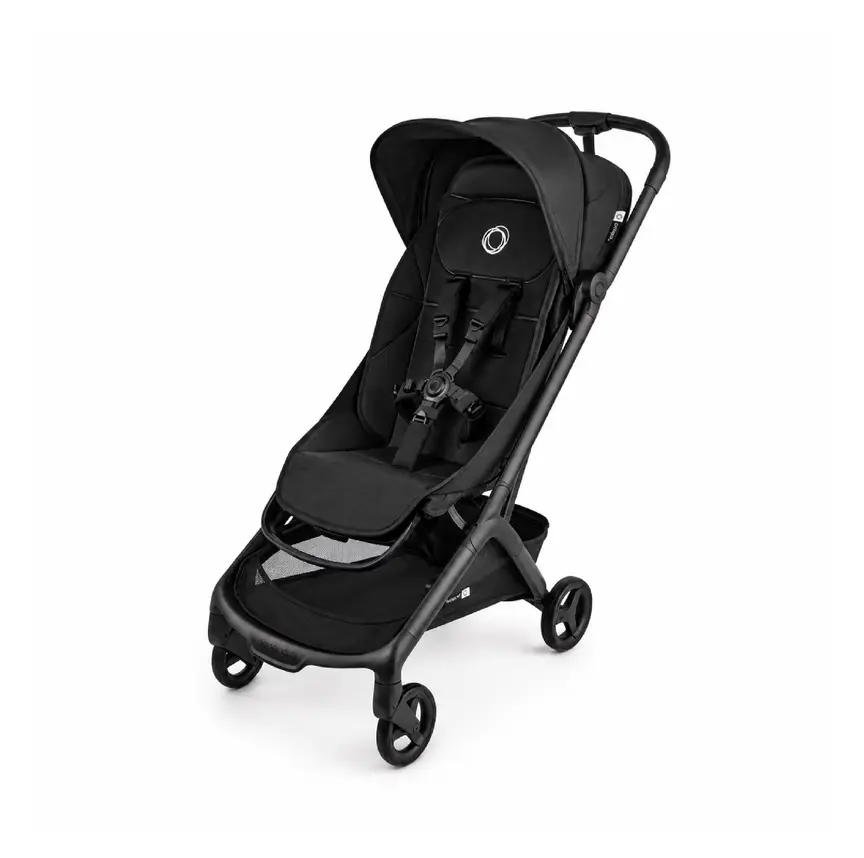
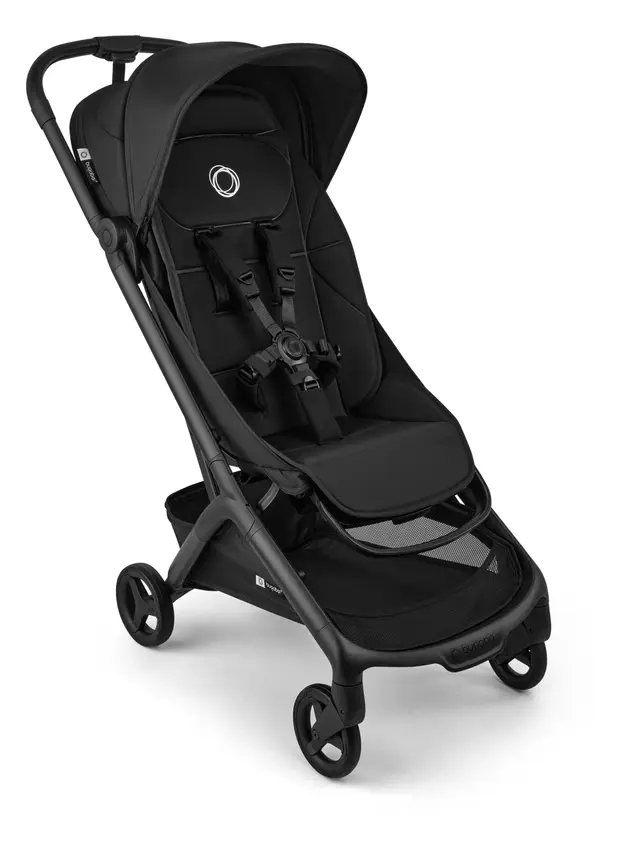
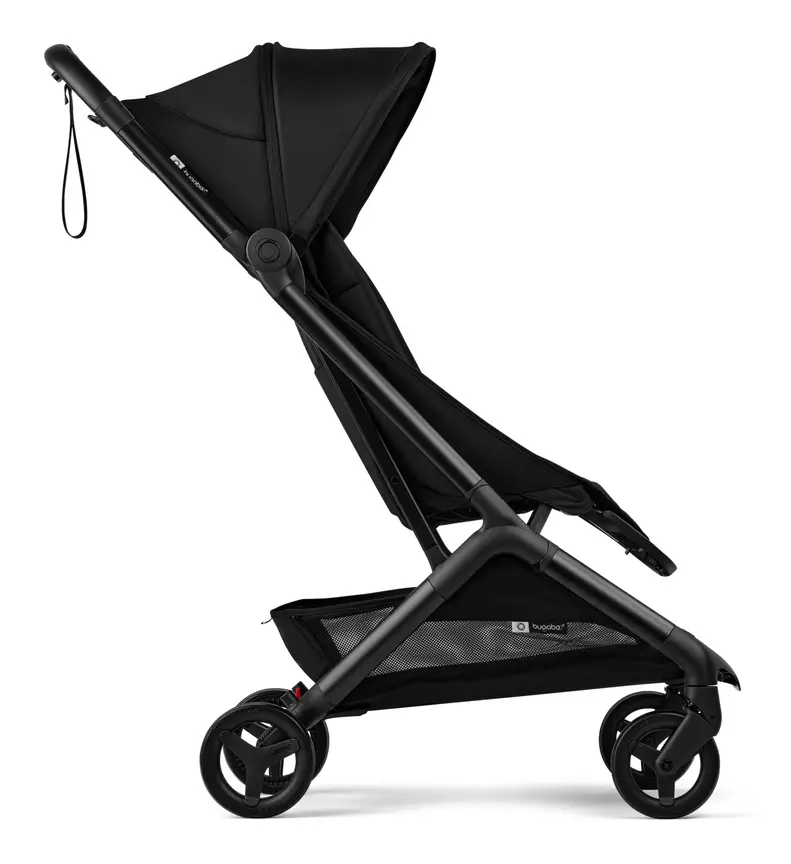


Bugaboo Butterfly 2
The newer Butterfly. It folds in about one second, has a lay-flat seat and a bigger basket with a back pocket.
Read our full review →


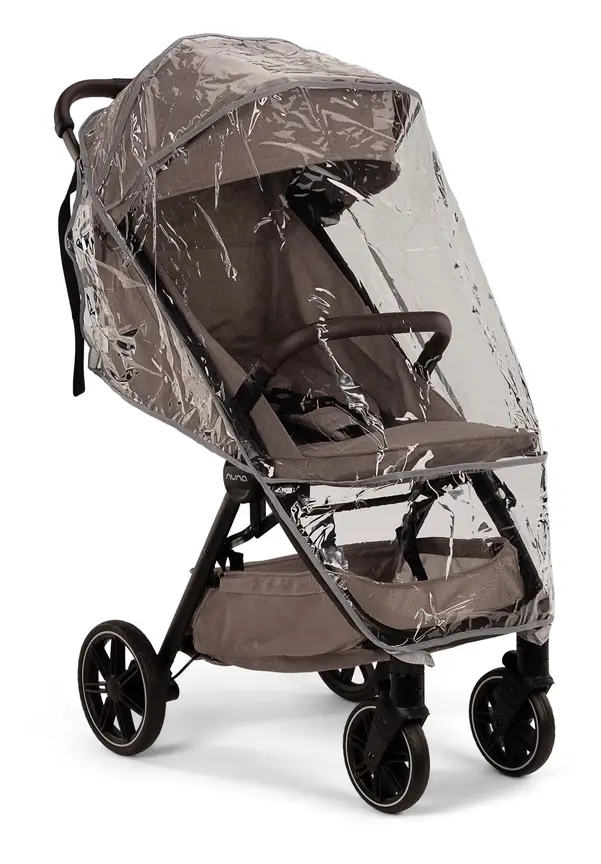

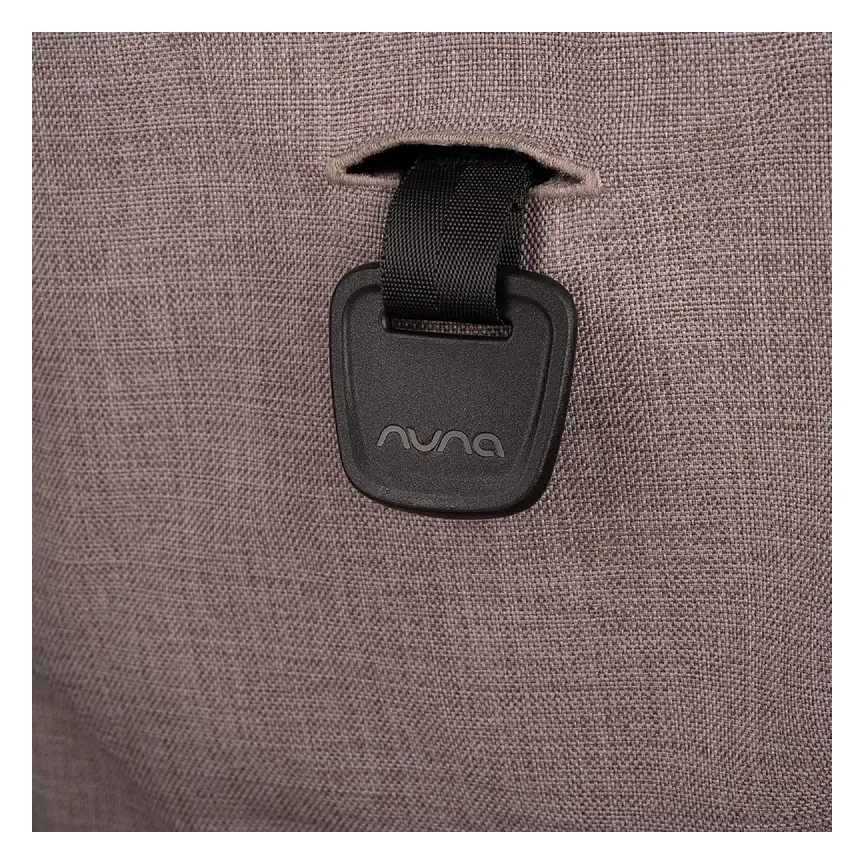
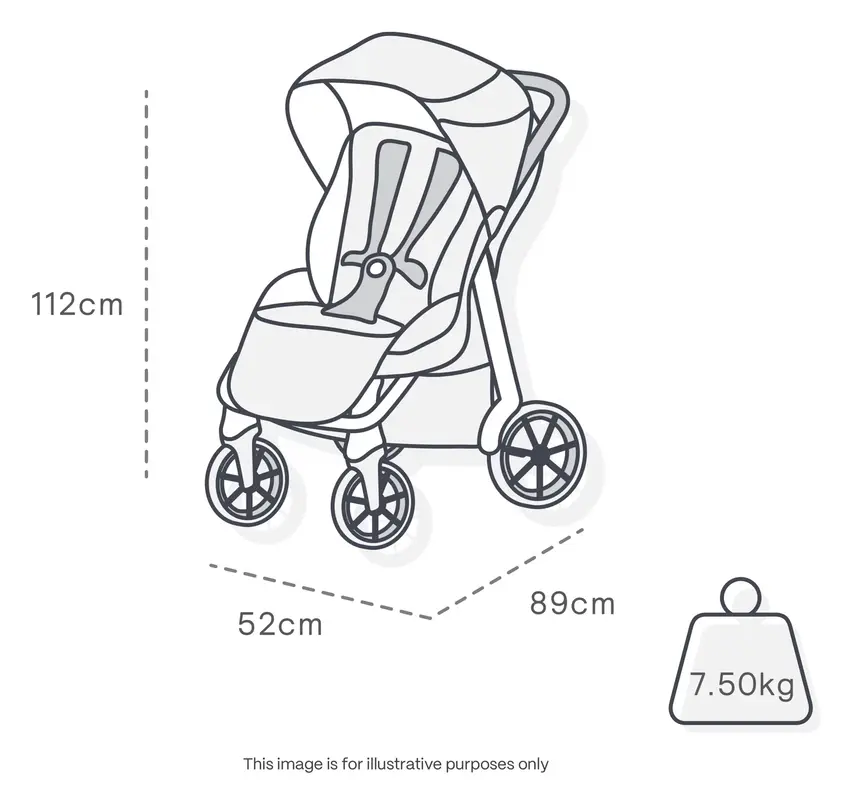
Nuna TRVL LX
A premium compact stroller with a lie-flat seat. It takes the Nuna KLIK Plus capsule on the armbar.
Read our full review →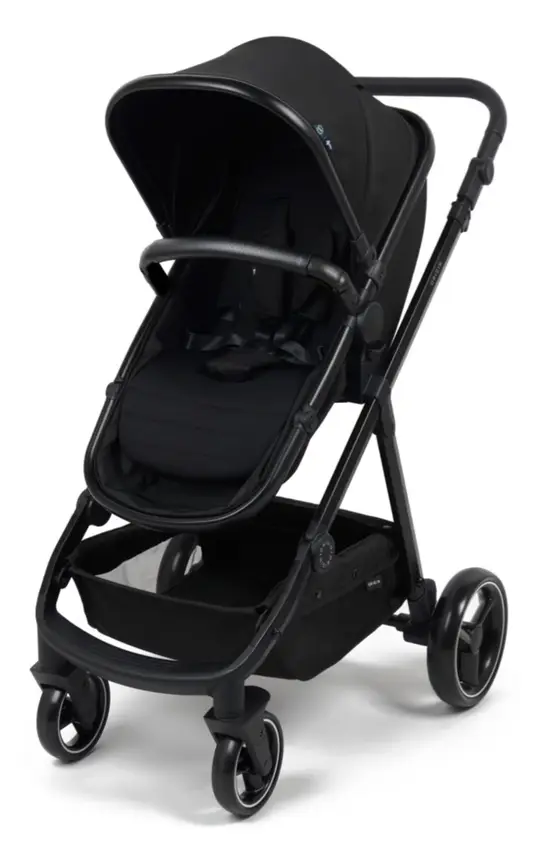
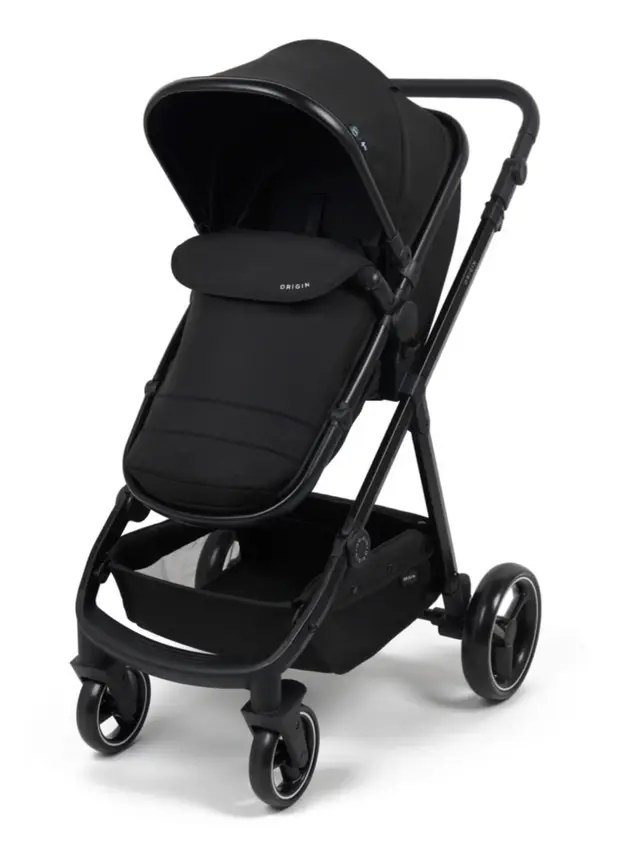
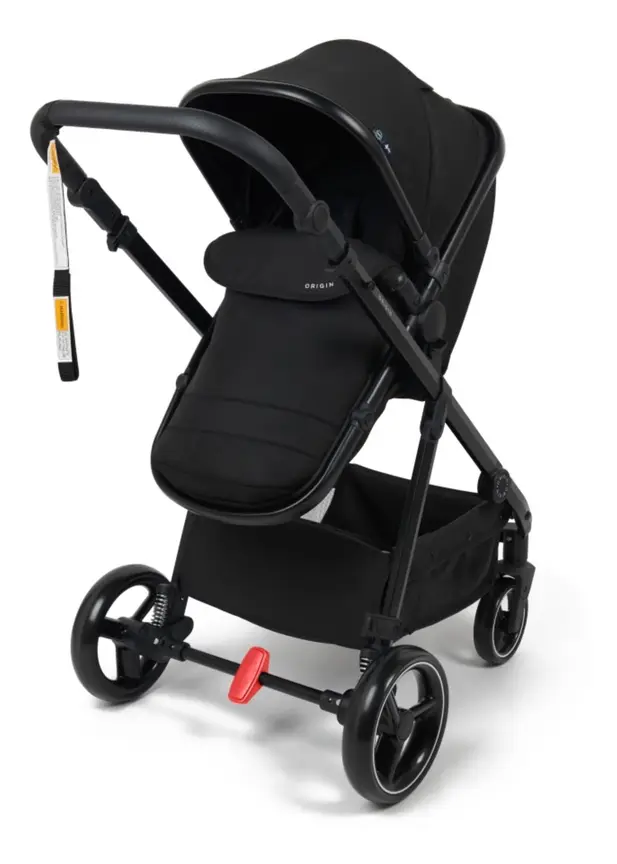
4baby Origin Stroller
A budget pram whose seat turns into a bassinet. The seat can face you or face the world.
Read our full review →
Baby Jogger City Mini GT2
Long-running, lighter all-terrain stroller with a famously simple one-hand strap fold.
Age stages: what your baby needs from birth to toddler
Your baby's body changes fast in the first year. What they need from a stroller seat changes with each stage.
Birth to 3 months: flat and firm only
In the first three months, your baby has almost no neck strength. They spend most of their time sleeping or resting. They must lie flat on their back on a firm surface. Use either a true lie-flat seat (170 to 180 degrees) approved from birth, or a separate stroller bassinet.
Keep walks gentle and watch your baby often. Check that their head stays in the middle and does not roll forward or wedge into the side fabric.
3 to 6 months: building head control
Around 3 to 4 months, your baby starts to hold their head up during tummy time. Still, their neck gets tired quickly, especially when they fall asleep. Most babies cannot sit up on their own yet.
Keep using the flat setting for naps and longer outings. If your stroller has a middle recline setting, wait until your baby's head stays steady without bobbing over bumps before you raise the back slightly while they are awake. Always drop it back down to flat if they fall asleep.
6 to 12 months: ready to sit up
Most babies learn to sit without support around 6 months. Once your baby can sit well on their own and hold their head up with ease, you have more options. A bucket-tilt seat works well now. You can sit them upright to look around, then tilt the whole seat back when they get sleepy.
Even at this age, keep an eye on their head during naps. If their chin drops onto their chest while tilted, adjust the seat or move them when you get home.
12 months and up: active toddlers
Toddlers want to climb, look around and hop in and out. Upright support and a good footrest matter most now. A true lie-flat seat still comes in handy for long days out when a toddler needs a solid nap. Just check the stroller's maximum weight limit as your child grows.
Safety standards and official advice in Australia, the UK, the US and Canada
Stroller rules and safe sleep advice are very similar across Australia, the UK, the US and Canada. Official bodies in all four countries test strollers for frame strength, brakes, harnesses and entrapment gaps. They also share clear warnings about inclined or upright sleeping.
| Country | Main safety regulator | Stroller standard or rule | Peak health and safe sleep bodies |
|---|---|---|---|
| Australia | ACCC / Product Safety Australia | AS/NZS 2088 (mandatory standard) | Red Nose Australia, Kidsafe Australia |
| United Kingdom | Office for Product Safety and Standards (OPSS) | BS EN 1888 | The Lullaby Trust, NHS |
| United States | Consumer Product Safety Commission (CPSC) | ASTM F833 and US Safe Sleep for Babies law | American Academy of Pediatrics (AAP) |
| Canada | Health Canada | Canadian carriage and stroller safety rules | Canadian Paediatric Society (Caring for Kids) |
Australia: Product Safety Australia enforces the mandatory standard AS/NZS 2088 for prams and strollers. It requires a five-point harness, a reliable parking brake and a wrist tether strap so the stroller cannot roll away from you. Red Nose Australia advises that babies always sleep flat on their back on a firm surface. They warn parents not to leave babies sleeping in curved or inclined gear.
United Kingdom: Strollers sold in the UK must meet safety rules such as BS EN 1888, overseen by the Office for Product Safety and Standards. The Lullaby Trust and the NHS stress that babies need a firm, flat sleep surface. The Lullaby Trust advises checking your baby often in a pram or stroller and avoiding long periods in upright seats like car seats.
United States: The CPSC enforces the stroller standard ASTM F833. The US also has the Safe Sleep for Babies law, which bans inclined sleep products with an angle over 10 degrees for infant sleep. While strollers are made for transport rather than unsupervised sleep, the American Academy of Pediatrics advises keeping young babies flat on their back and never letting them sleep unsupervised in seated or inclined gear.
Canada: Health Canada regulates all carriages and strollers for frame locks, brakes, restraint straps and stability. The Canadian Paediatric Society (through Caring for Kids) advises placing babies on their back on a firm, flat surface for every sleep. They also remind parents not to use strollers, swings or car seats as a replacement for a crib.
In every one of these countries, the message is the same. A stroller is a transport tool, not a cot. Check your baby regularly while walking, and move them to a proper flat sleep space once your trip is over.
Stroller naps vs. a bassinet, crib or cot
Many parents wonder if a true lie-flat stroller seat can replace a stroller bassinet, or even a home bassinet. It helps to compare all three.
True lie-flat seat vs. a separate stroller bassinet
A separate stroller bassinet has firm, flat walls on all four sides and a thin, firm mattress inside. Your baby does not need to wear a harness inside a stroller bassinet. It also lifts off the frame easily, so you can carry a sleeping baby inside without unbuckling them. On cold or windy days, the high sides block drafts better than an open seat.
A true lie-flat seat, on the other hand, saves money and storage space. You never have to find room in a cupboard for a bulky bassinet after your baby turns 4 or 5 months old. It is also much easier for travel and small car boots, because the whole stroller folds in one piece. Just remember that in a lie-flat seat, your baby must wear the five-point harness every time.
Can a stroller replace a crib or cot at home?
No. Even a 180-degree lie-flat stroller seat is not a substitute for a household cot, crib or bedside bassinet. Stroller seats are narrower than cots. They have harness straps, fabric hinges and soft hoods that are not tested to cot safety rules. Use the stroller for walks and supervised outings. When you get home, gently move your baby onto their back in their clear, firm cot or bassinet.
Common mistakes parents make with reclining seats
Even with good gear, small habits can create hidden risks. Watch out for these common mistakes.
- Using a bucket seat too early: Putting a 6-week-old baby into a tilted bucket seat because they look "curled up and cosy" puts their airway at risk. Wait until they have strong head and neck control, usually around 6 months.
- Adding thick cushions or wedges: Some parents tuck rolled towels, pillows or aftermarket memory-foam liners behind a baby's head or back to try to flatten a curved seat. Extra padding can push a baby's chin forward onto their chest. It can also block air if the baby turns their face into the soft fabric. Use only the firm pad or newborn insert made by the stroller brand for that exact model.
- Leaving the harness undone when flat: Parents sometimes skip the straps when the seat is flat because the baby cannot sit up yet. Without the harness, a baby can slide down towards the footrest or slip out of the top when you tip the stroller up a step.
- Draping a blanket over the hood: Covering the front of the stroller with a muslin cloth or blanket to block sun or help a baby sleep traps hot air inside. It also stops you from seeing your baby's face and breathing. Use the stroller's built-in ventilated sun hood and park in the shade instead.
- Using a car capsule on the stroller for long trips: Clicking a rear-facing car seat onto a stroller frame is handy for quick dashes into a shop. However, car seats hold babies at a semi-upright angle. Health bodies like Red Nose, the Lullaby Trust and the AAP warn against leaving babies in car seats for long stretches. For longer walks, switch to a lie-flat seat or bassinet.
- Skipping the wrist tether strap: Always loop the tether strap around your wrist when pushing a stroller, especially on slopes. In Australia, this strap is required by law on strollers to stop runaway accidents.
- Hanging heavy bags on the handlebar: Heavy nappy bags on the handle can tip a stroller backwards, especially when a lie-flat seat shifts the baby's weight towards the rear wheels. Put bags in the basket underneath instead.
More options, from budget to premium
Real products from our catalogue. We don't show star ratings or review counts; check the current price, stock and reviews on Amazon before you buy.

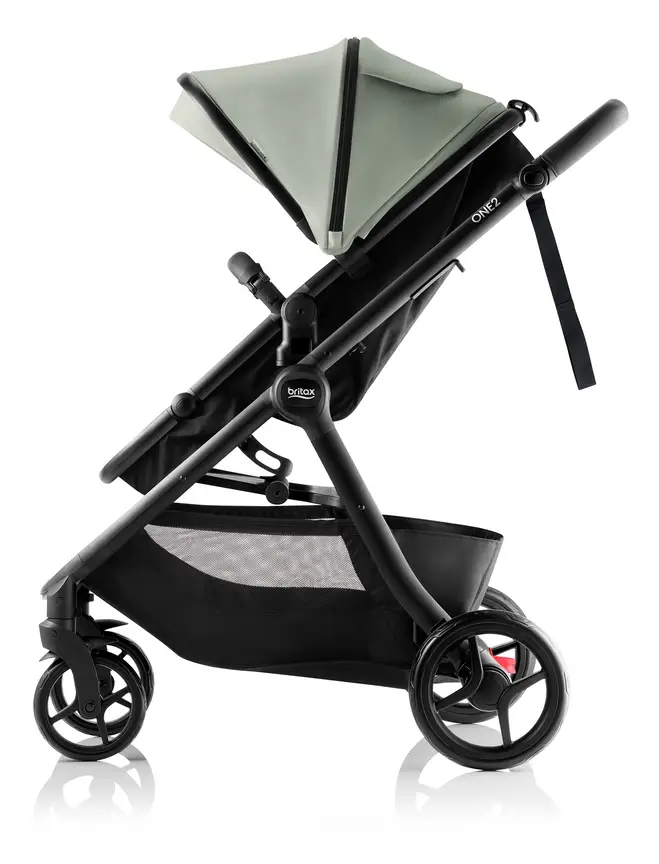
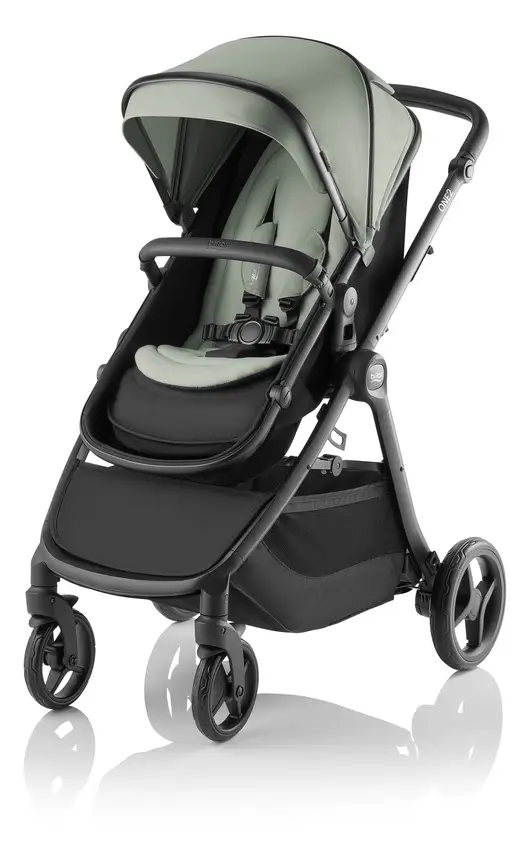


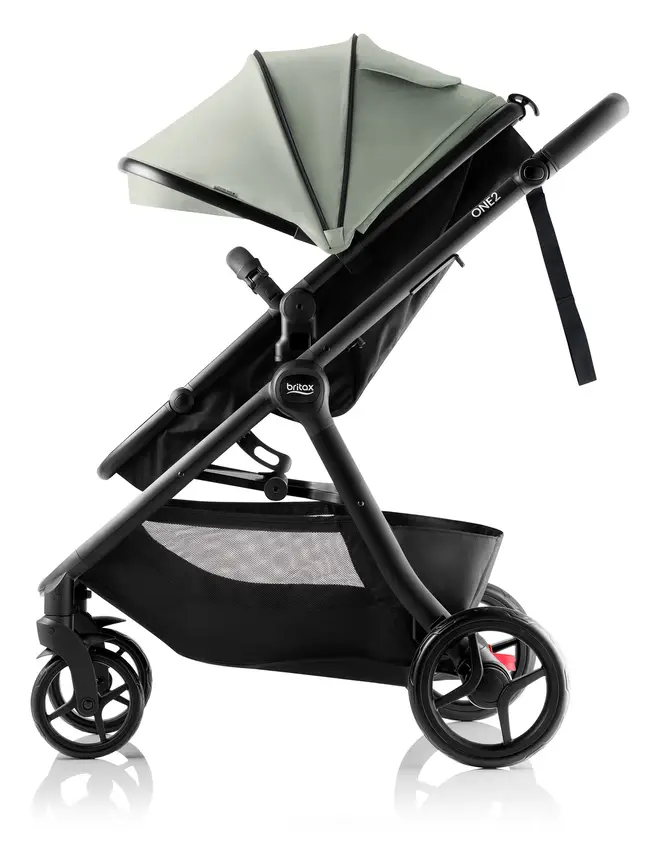


Britax One2
A pram that starts as a single and can take a second child. The seat turns into a lie-flat bassinet.
Read our full review →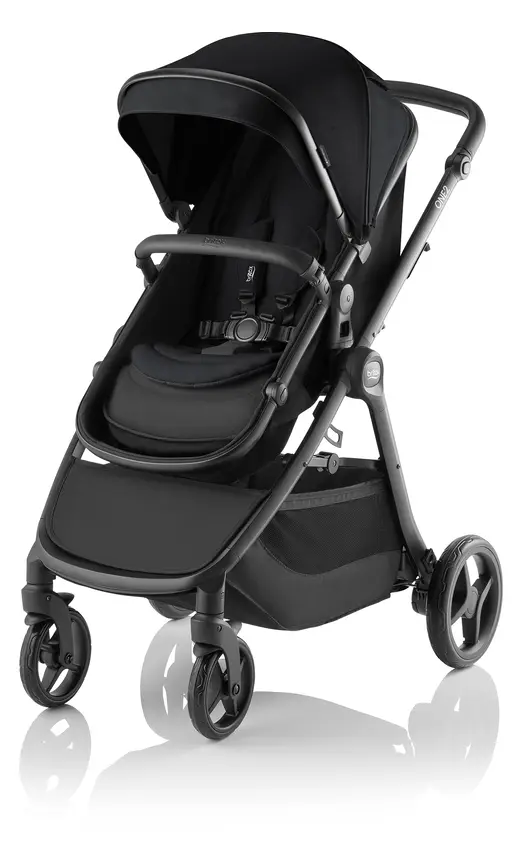
Frequently asked questions
Is 170 degrees flat enough for a newborn?
Yes, 170 degrees is generally considered flat enough for a newborn if the stroller maker approves the seat from birth. The slight 10-degree slope is very gentle. It keeps the baby's back straight and their head back, while helping stop them from sliding towards the head end on downhill paths. Still, always check the manual and watch that your baby's chin stays up off their chest.
Can a newborn sleep in a lie-flat stroller all day?
No. A lie-flat stroller seat is made for supervised walks and short outings, not for all-day or overnight sleep. When you return home from a walk, move your sleeping baby into their clear, firm cot or bassinet on their back. This follows safe sleep advice from Red Nose, the Lullaby Trust, the AAP and the Canadian Paediatric Society.
Why do some bucket seats say "from birth" with an insert?
Some brands sell a firm wedge or newborn insert that fills the deep dip of a bucket seat to create a flatter angle. If a maker officially tests and sells a newborn insert for that exact stroller model, follow their weight limits and setup instructions strictly. Do not buy generic wedges or third-party cushions online, as they are not tested with your stroller's harness or frame.
Should I still use the harness when the seat is fully flat?
Yes, always buckle the five-point harness in a stroller seat, even when it is reclined to 180 degrees. Make sure the straps fit snugly over the shoulders and around the waist, with two fingers of space between the strap and your baby's chest. The harness stops your baby from sliding into a slumped position or falling out over bumps.
Do I need a separate bassinet if my stroller lies flat?
Not always. If your stroller has a true lie-flat seat approved from birth, has good head-end protection, and lets you keep an eye on your baby, you do not have to buy a separate bassinet. However, a bassinet can still be nice if you take long daily walks in cold weather or want to carry your sleeping baby indoors without unbuckling them.
When is it safe to switch my baby to a bucket-tilt seat?
Wait until your baby can hold their head steady without wobbling and can sit up well with little or no help. For most babies, this is around 6 months old. Always check your stroller's manual as well, because some makers set a specific minimum age or weight before using a bucket seat.
Sources
- Product Safety Australia – Prams and strollers guide
- Product Safety Australia – Prams and strollers mandatory standard
- Red Nose Australia – What is a safe sleeping environment
- The Lullaby Trust (UK) – Sleeping products
- NHS – Baby and toddler safety
- HealthyChildren.org (American Academy of Pediatrics) – Safe sleep: back is best (2022)
- CPSC (US) – Safe sleep: cribs and infant products
- Caring for Kids (Canadian Paediatric Society) – Safe sleep for babies
Related guides
More Prams & Strollers →
Reversible Stroller Seats: Parent-Facing vs World-Facing

Under-Seat Stroller Basket Capacity: Weight Limits, Access Panels, Grocery Fit, and Tipping Safety

Stroller Seat Liners in Hot Weather: Fit, Comfort and Safety
