














How to Choose a Baby Carrier That Grows with Your Baby
Choose a baby carrier that suits your baby and your body. Compare carrier styles, fit, age stages and safety advice from four countries.

On this page
- What does “convertible” mean?
- How to choose a carrier
- Fit and position: the safety checks
- Choosing a carry position
- Baby carriers by age and stage
- Comparing common carrier styles
- Heat, clothing and comfort
- Using a carrier safely at home and outdoors
- Buying, borrowing and checking a used carrier
- Cleaning and care
- Official guidance in four countries
- Common mistakes to avoid
- A simple fit check before each use
- Frequently asked questions
- Sources and further guidance
- Sources
Short answer: Choose a carrier that fits your baby now, feels secure on your body, and is simple for you to adjust. Check the maker’s weight and age limits before each use. Keep your baby’s face visible and their chin off their chest. Support their head and neck when they are small. Follow the carrier’s instructions, and take your baby out if you need to adjust it.
Baby carriers can make walks and daily tasks easier. A carrier is not right for every baby or every adult. Try one on if you can. Ask another adult to check the fit. Your baby’s comfort, breathing and position matter more than the number of carry positions on the label.
In Australia, check guidance from Product Safety Australia and Red Nose. In the UK, check the Office for Product Safety and Standards and The Lullaby Trust. In the US, check the Consumer Product Safety Commission and your baby’s health professional. In Canada, check Health Canada and your baby’s health professional. Their advice helps families think about product safety and safe babywearing.
What does “convertible” mean?
“Convertible baby carrier” is a shop term. It does not describe one fixed type of carrier. A seller may use it for a carrier that can change its seat width, carry position, or fit as a baby grows.
Some carriers allow front carrying with the baby facing in. Some also allow outward-facing or back carrying. A wrap or a carrier with ties may also be sold as a carrier that changes to suit different users. The name alone tells you little about fit or safety.
Read the product instructions before buying. Check what each setting means. Look for clear limits for the baby’s weight and age. Find out whether the carrier needs an insert for a smaller baby. Check when that insert must be removed. Do not use a setting that the maker does not allow for your baby’s size.
Carrier types you may see
- Soft-structured carrier: A fabric body panel has buckles or fasteners and shoulder straps. A waist belt may help spread the load. It can be quick to put on after practice.
- Wrap: A long length of fabric is wrapped and tied around the adult and baby. It can fit closely, but the adult must learn the maker’s safe tying method.
- Ring sling: Fabric passes through two rings to form a seat. It is worn over one shoulder. The adult needs to tighten and spread the fabric correctly.
- Meh dai: A fabric body panel has long straps that tie around the adult. The fit can be adjusted, but tying takes practice.
- Structured carrier with a changing seat: Buckles or snaps may change the width or height of its seat. Follow the exact settings in the instructions.
These designs suit different people and routines. A carrier that works for one adult may not fit another. A carrier that suits an older baby may not support a newborn. Try the model and setting that match your own baby.
How to choose a carrier
Start with your baby’s current size and the way you expect to use the carrier. Then check the adult fit. A long list of features is not useful if the carrier is hard to put on or uncomfortable after a short walk.
Check the size limits
Look for the smallest and largest baby sizes allowed. Check both weight and age limits where the maker gives them. Some carriers need a special insert for a small baby. Others do not allow newborn use at all.
Do not assume that a baby can use a carrier because they fit the weight range. They must also fit the seat and support settings. Their head must stay supported. Their face must remain clear. Ask your health professional for advice if your baby was born early or has a health concern.
Check how it fits the adult
Try the carrier with the clothes you usually wear. Adjust the waist belt and straps using the instructions. The carrier should feel secure without making it hard to breathe or move. The baby should sit close to your body, with no loose gap where they could slump.
If more than one adult will use it, each person should learn the adjustments. Do not assume that one adult’s settings will fit another. A quick handover is safer after each adult checks the buckles, ties and baby’s position.
Think about daily use
- Can you put it on and take it off with the help you expect to have?
- Can you reach and fasten every buckle without twisting your body?
- Can you see your baby’s face while they are carried?
- Does the carrier feel comfortable when you walk or sit?
- Can you wash and dry it as the maker directs?
- Will it fit the weather and clothes you expect to wear?
- Can you store it and carry it when you are not using it?
If a shop allows it, practise with a weighted doll first. Then try the carrier with your baby while another adult helps. Do not practise a new carry position over stairs or near traffic.
Fit and position: the safety checks
A good fit holds your baby close while leaving their face clear. Check the carrier each time you put it on. Babies grow, clothes change, and straps can loosen during use.
Keep the face visible
Your baby’s face should stay in view. Move fabric away from the nose and mouth. Do not let a hood, blanket, scarf or your clothing cover the face. Check your baby often, especially if they fall asleep or change position.
Keep the chin away from the chest
Your baby’s head should not fall forward with the chin pressed down. A bent neck can make breathing harder. Keep your baby high and close enough to kiss the top of their head, if the carrier instructions allow that fit. Support a small baby’s head and neck as directed by the maker.
Do not rely on a carrier’s label or appearance to tell you that breathing is clear. Watch your baby. If you cannot see their face or their head slumps, stop and adjust the carrier. Take your baby out if the position does not improve.
Support the body
The seat should hold your baby’s bottom and thighs. Their legs should not hang unsupported from the seat. Check the carrier instructions for the correct seat width and position for your baby’s size. Do not add pillows or other padding unless the maker provides it for that carrier.
Some babies need extra care with positioning. If your baby has a diagnosed hip or muscle problem, ask their health professional before using a carrier. The International Hip Dysplasia Institute has general information about babywearing and hip position. It does not replace advice for your child.
Check every fastener
Before lifting your baby, check each buckle, clip, tie and seam. Fasten buckles as the maker shows. Keep loose straps tucked away from the baby. Do not use a carrier with damaged fabric, broken parts, missing instructions or unclear safety limits.
Baby Carriers & Wraps worth a look
Real products from our catalogue. We don't show star ratings or review counts; check the current price, stock and reviews on Amazon before you buy.
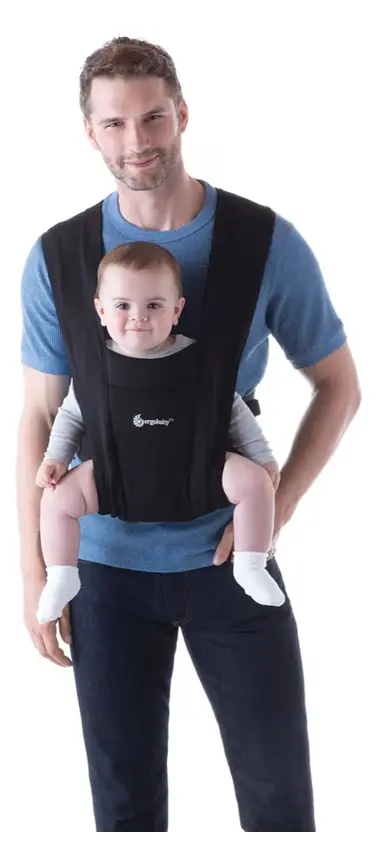


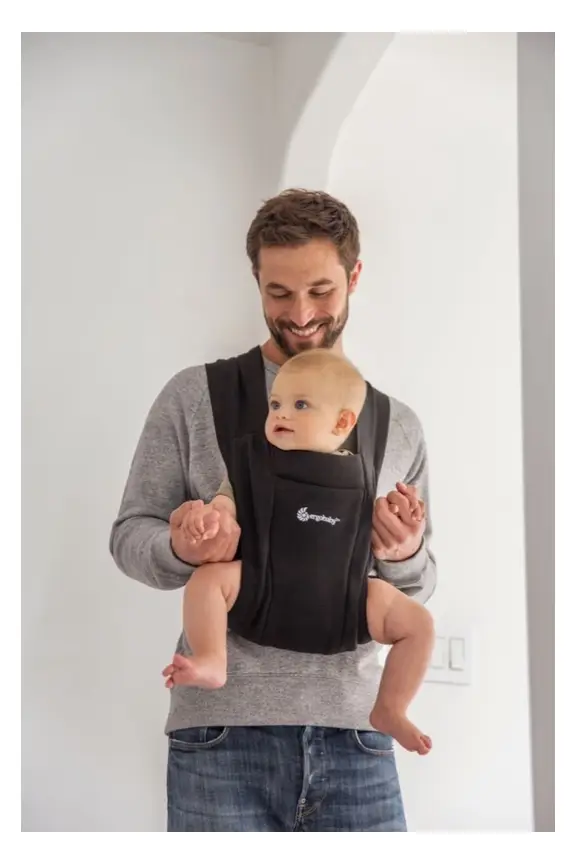


Ergobaby Embrace
A soft knit newborn carrier that buckles on, with no long wrapping.
Read our full review → Reviewed
Ergobaby Omni Deluxe Mesh
The top Omni carrier, with 6 storage spots and strap markers that make it easy to swap between parents.
Read our full review →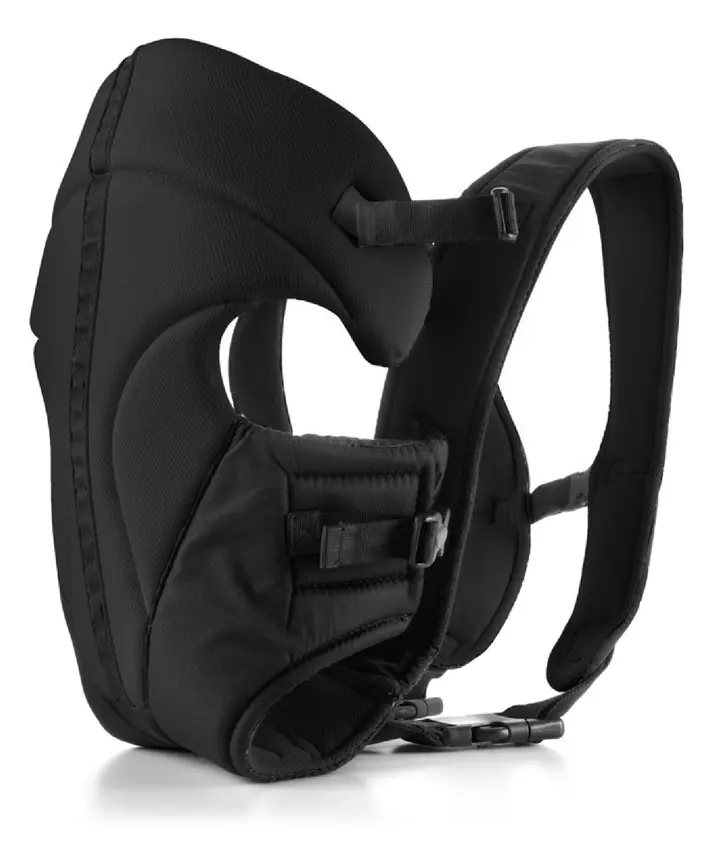 Reviewed
4baby 3 Way Baby Carrier
A very low-cost carrier with 3 positions, for babies 3.6 to 9 kg.
Read our full review →
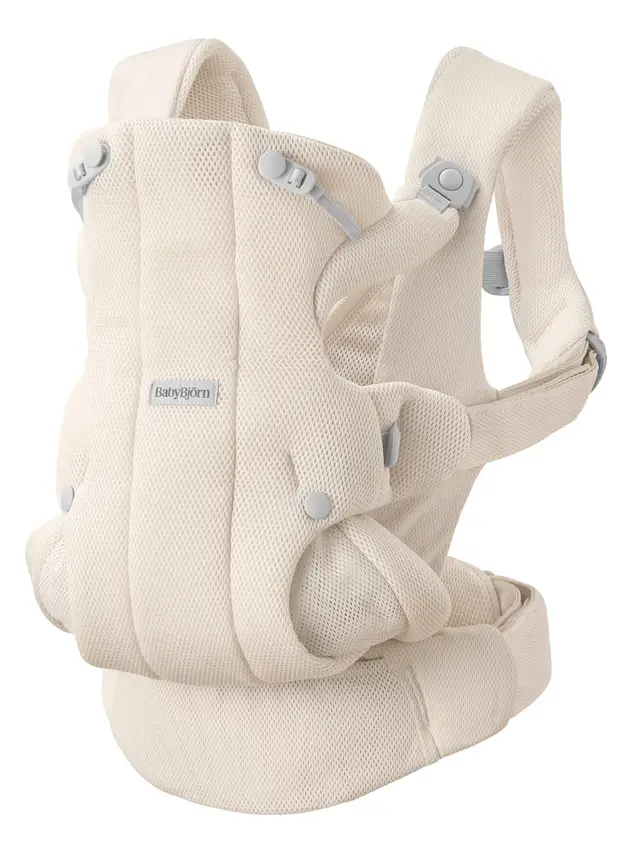
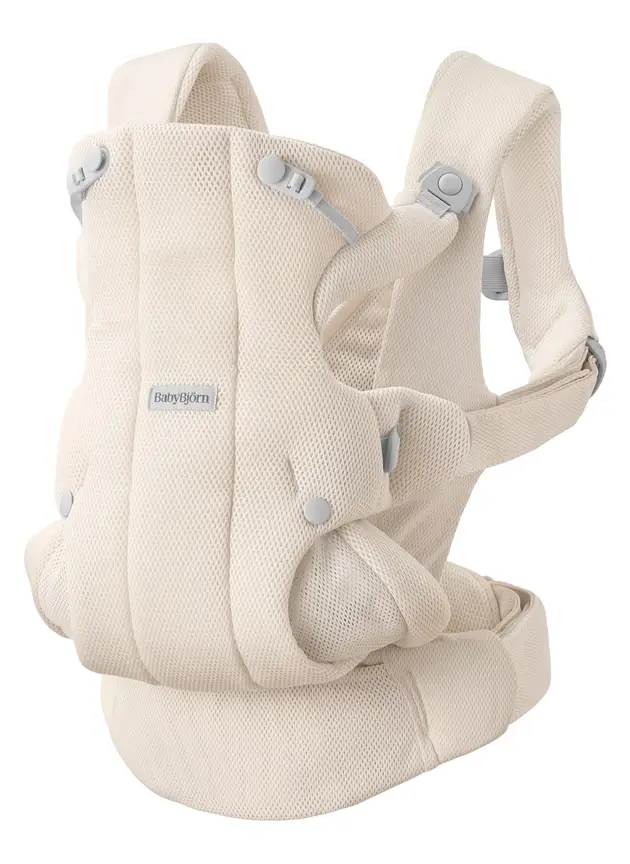
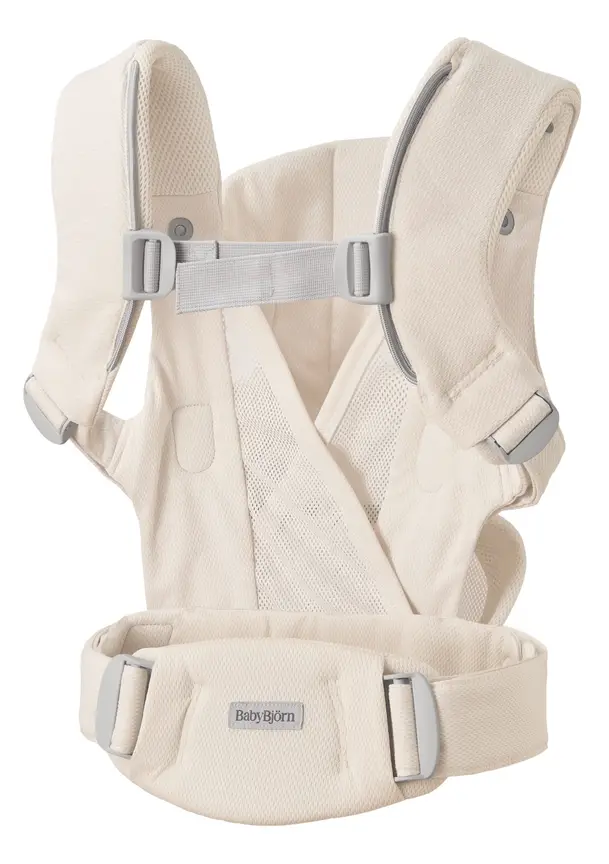



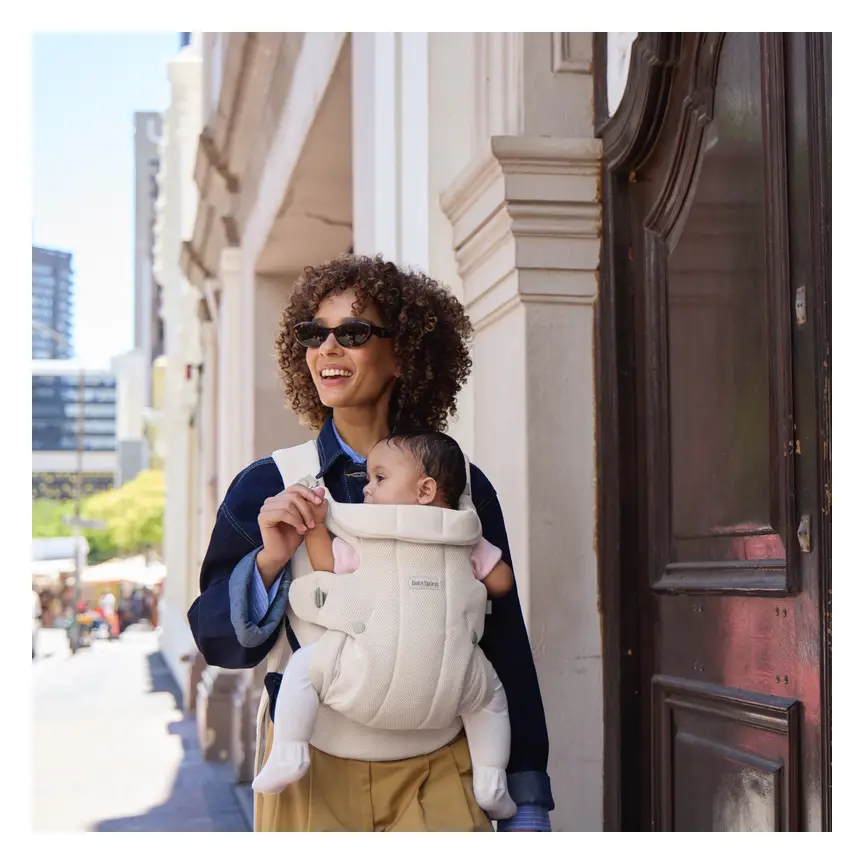
BabyBjörn Baby Carrier Hold
A soft front carrier from newborn to 18 months that fits XS to XXL parents.
Read our full review →Choosing a carry position
Carriers may allow more than one position. Each position has its own age, size and fit rules. The carrier instructions decide which positions are allowed. Do not change positions just because a baby seems curious or can hold their head up.
Front carry, facing in
Many families start with the baby facing the adult. This can make it easier to see the baby’s face and support their head. The baby sits against the adult’s chest. Follow the carrier’s instructions for the baby’s size and support needs.
Front carry, facing out
Some carriers allow a baby to face out. Use this position only when the maker allows it for your baby’s age and size. The baby must have enough head and neck control for that position, as described in the instructions. Keep the baby’s face clear and watch for signs of tiredness or distress.
Turn the baby back towards you or take them out if they seem unsettled. Do not use an outward-facing position for sleep. If the baby falls asleep, move them to a safe sleep space as soon as you can.
Back carry
Some carriers allow back carrying when the baby is older and meets the maker’s limits. You cannot see the baby’s face as easily in this position. Learn the method with another adult present. Check the baby’s fit from every side before you start walking.
Do not use a back carry if you cannot put it on safely or check the fit. The label “convertible” does not mean every position is suitable from birth.
Baby carriers by age and stage
Age gives only a rough guide. Babies develop at different rates. Use the carrier’s instructions and your baby’s size, head control and comfort. If your baby has medical needs, seek individual advice.
| Stage | What to check | Practical choice |
|---|---|---|
| Newborn | Small size limits, head and neck support, clear face, close fit | Use only a carrier approved for a newborn of your baby’s size. Follow the exact setup instructions. |
| Young baby | Support as head control develops; straps and seat still fit | Check the fit at every use. Do not move to a new position until the maker allows it. |
| Baby with stronger head control | Age and weight limits for any new position | Try a new position only if the instructions allow it and you can keep checking your baby. |
| Older baby or toddler | Maximum size, adult comfort, secure seat and back carry method | Use the carrier only within its stated limits. Stop when your child no longer fits safely. |
Do not use milestones as a substitute for the maker’s instructions. “Can sit” or “can hold their head up” may not be enough for a certain position. Check the carrier’s exact requirements.
Comparing common carrier styles
This table gives broad differences. It cannot tell you whether a particular model fits your baby. Product instructions and a hands-on fit check matter most.
| Style | How it adjusts | Possible benefits | Things to practise |
|---|---|---|---|
| Soft-structured carrier | Buckles, straps and sometimes a changing seat | Can be quick to fasten after practice. Often has clear fit points. | Check each strap and buckle. Make sure the seat fits your baby at each stage. |
| Wrap | Long fabric tied around adult and baby | Can be adjusted closely to different adult bodies. | Learn the exact tying method. Keep fabric clear of the face and neck. |
| Ring sling | Fabric tightened through rings | Can be adjusted without tying a long wrap. | Spread and tighten the fabric. It sits over one shoulder, so comfort may vary. |
| Meh dai | Long straps tied around the adult | Can be adjusted for different wearers and positions. | Practise tying securely. Follow the maker’s method for each carry. |
Consider how much practice you are willing to do. A wrap may offer a close fit but take more time to learn. A buckle carrier may feel simpler, but the settings still need care. A ring sling may suit short carries, but its one-shoulder fit may not suit every adult.
Heat, clothing and comfort
A carrier adds another layer around your baby. Warm weather, sun and layers can make a baby too hot. Check your baby often. Feel their back or chest, and look for signs of discomfort. Follow local health advice for hot weather.
Choose clothing for the weather and the carrier. Do not cover the baby’s face with a sun hat brim, cloth or blanket. Keep the face visible. Use shade and other suitable sun protection. Do not assume that mesh panels alone will keep a baby cool.
Adults can also become hot or tired. Take breaks. Drink water. Avoid strenuous activity in hot weather. If your baby seems unusually sleepy, flushed, clammy or unwell, take them out of the carrier and seek health advice when needed.
Using a carrier safely at home and outdoors
A carrier keeps your hands more free, but it does not make every task safe. Avoid hot drinks, cooking over a flame, and handling sharp tools while carrying a baby. Take care when bending. Support your baby with one hand and bend at the knees when possible.
Be careful on stairs and uneven ground. Do not run, cycle or take part in sport while carrying a baby unless the product is specifically designed and approved for that activity. A standard baby carrier is not a bike seat, car seat or safety device for a fall.
Do not use a carrier in a car. Your baby needs an approved child restraint that is fitted and used for your country and vehicle. A carrier also does not replace a safe cot or bassinet. If your baby falls asleep in the carrier, keep watching their breathing and move them to a safe sleep space when practical.
Do not breastfeed in a carrier unless you can keep your baby’s face visible and their breathing clear. Reposition your baby after feeding. Ask a trained health professional for help if you need support with feeding while babywearing.
Side by side: more baby carriers & wraps to compare
Real products from our catalogue. We don't show star ratings or review counts; check the current price, stock and reviews on Amazon before you buy.
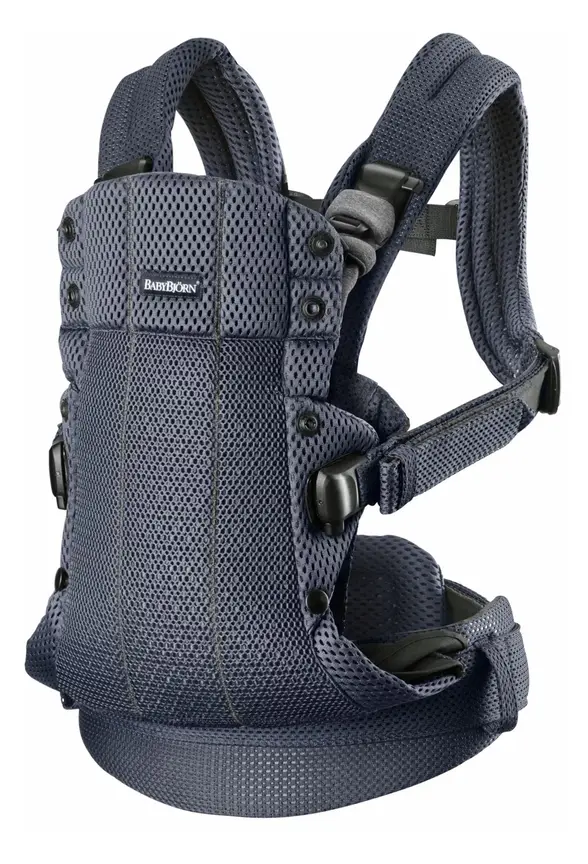 Reviewed
BabyBjörn Baby Carrier Harmony
A premium carrier with four positions, from 3.2 kg newborns to about 3 years.
Read our full review →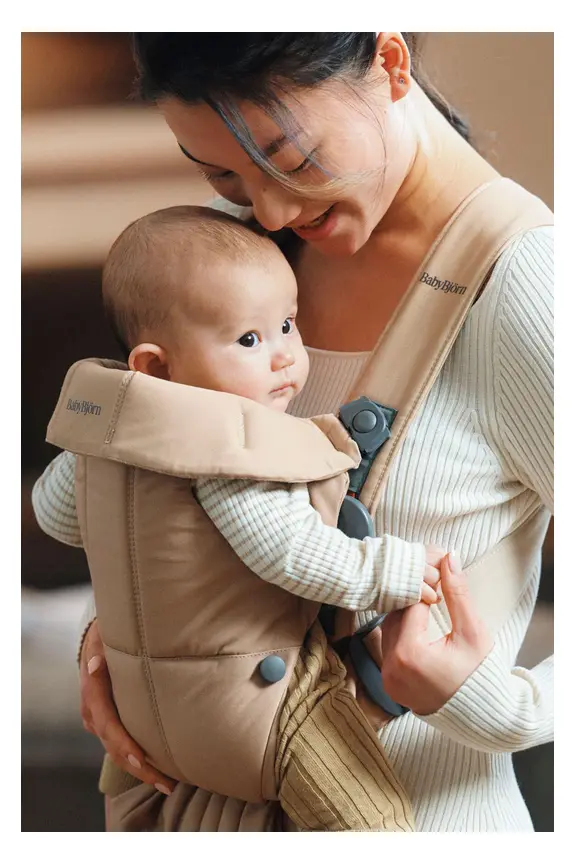


BabyBjörn Baby Carrier Mini
Simple, soft newborn carrier for roughly 0–12 months, with three carrying positions and an easy front opening.
Read our full review → Reviewed
Ergobaby Omni Classic Mesh
An all-position mesh carrier from newborn to toddler with no insert needed.
Read our full review →


Ergobaby Omni Lite Mesh
A light mesh carrier from newborn to 24 months with cross-back straps.
Read our full review →Buying, borrowing and checking a used carrier
Read the maker’s instructions before you buy or borrow a carrier. Check whether the instructions are available for the exact model. Look up product recalls with your country’s official recall service. Do not rely only on an online seller’s description.
For a used carrier, check the model name and its safety limits. Inspect every seam, buckle, strap, ring and panel. Look for wear, stretching, cuts, missing parts or repairs. Ask whether the carrier has been in a fall or other damaging event. If you cannot confirm its history or find its instructions, choose another carrier.
Do not buy a carrier just because a seller claims it is certified. Look for clear information from the maker and the relevant product safety body. A logo or a claim in an advert is not a substitute for instructions and safe use.
Cleaning and care
Babies can spill milk, drool or have nappy leaks in a carrier. Follow the washing instructions on the product. Check which parts can go in a washing machine. Some buckles, rings or stiff panels may need different care.
Let the carrier dry as directed before using it again. Do not use it if the fabric remains damp, smells musty or has weakened. Check the carrier after washing. Look at the seams and fasteners before putting your baby back in it.
Do not add clips, toys, teething items or other parts unless the maker says they are safe for that carrier. Small items can create a choking risk. Straps and cords can also catch on objects.
Official guidance in four countries
Product rules differ between countries. A carrier sold in one country may not meet the rules where you live. Read local advice and check the product’s own instructions before use.
| Place | Official bodies to check | Useful focus |
|---|---|---|
| Australia | Product Safety Australia (ACCC) and Red Nose | Safe use of carriers, wraps and slings; product alerts and recalls. |
| United Kingdom | Office for Product Safety and Standards and The Lullaby Trust | Product safety information and keeping a baby’s face and airway clear. |
| United States | Consumer Product Safety Commission and American Academy of Pediatrics | Carrier safety alerts and safe babywearing advice. |
| Canada | Health Canada and the Canadian Paediatric Society | Product recalls and advice from your child’s health professional. |
The source links below include carrier guidance for Australia, the UK and the US. Canada’s recall service can help you check alerts. Ask a Canadian health professional for advice that applies to your baby.
Common mistakes to avoid
- Choosing by the word “convertible” alone. Check the model’s limits and settings instead.
- Using a newborn setting without checking size. A small baby must fit the carrier as its instructions show.
- Letting fabric cover the face. Keep the nose and mouth visible at all times.
- Allowing the head to slump. Check that the chin stays away from the chest.
- Changing the carry position too soon. Follow the maker’s age, size and head control rules.
- Assuming a sleeping baby is safe without checks. Watch breathing and move the baby to a safe sleep space when practical.
- Using the carrier for a car journey. Use the correct child car seat instead.
- Ignoring damaged parts. Stop using a carrier with torn fabric, broken buckles or uncertain repairs.
- Sharing settings without checking. Each adult must adjust the carrier and check the baby’s position.
- Following a social media trick. Use the maker’s instructions and official safety advice.
A simple fit check before each use
- Read the label and confirm your baby is within the allowed size range.
- Check the carrier for damage, missing parts or loose stitching.
- Fasten every buckle or tie as the instructions show.
- Place your baby in the approved position for their age and size.
- Check that your baby is close, supported and not slumped.
- Make sure the face is visible and the nose and mouth are clear.
- Check that the chin is not pressed down onto the chest.
- Look at your baby often while you are carrying them.
If you cannot get a safe fit, take your baby out. Ask the maker, a trained babywearing adviser or your health professional for help. Do not keep walking with a fit you are unsure about.
More options, from budget to premium
Real products from our catalogue. We don't show star ratings or review counts; check the current price, stock and reviews on Amazon before you buy.


BabyBjörn Baby Carrier Mini 3D Jersey
Newborn baby carrier

Frequently asked questions
What is the best convertible baby carrier?
There is no single best carrier for every family. Choose one that fits your baby’s current size and your body. Check the instructions, practise the setup and make sure you can keep the baby’s face visible.
Can I use one carrier from birth to toddlerhood?
Some carriers cover a wide size range. Others need an insert or have different limits. Check the exact model instructions. Stop using it when your child reaches a limit or no longer fits securely.
When can my baby face out?
Only when the carrier’s instructions allow it for your baby’s age and size. The baby must meet the maker’s requirements for head and neck control. Watch for tiredness and keep the face clear.
Can my baby sleep in a carrier?
A carrier is not a cot or bassinet. Keep watching your baby’s face and breathing. If they fall asleep, move them to a safe sleep space when practical. Never leave them unattended in the carrier.
How high should I carry my baby?
Follow the carrier instructions. The baby should sit close enough for you to check their face and position. Their head should not slump, and the chin should not press against the chest.
Can I use a second-hand carrier?
You can consider one if you can identify the exact model, find its instructions and inspect every part. Check official recall notices. Avoid it if the carrier is damaged or its history is unclear.
Can I wear my baby while doing housework?
Some light tasks may be possible when the carrier fits well. Avoid cooking over heat, carrying hot drinks, using sharp tools or doing anything that could make you fall. Keep checking your baby.
Do all carriers need a newborn insert?
No. It depends on the model. Use an insert only if the maker provides it for that carrier. Follow its instructions for the baby’s size and for removing the insert.
What if my baby has hip or breathing concerns?
Ask your baby’s health professional before choosing a carrier or position. Share the product instructions with them. General online guidance cannot tell you what is right for your child.
Does a carrier replace a stroller?
No. A carrier and stroller serve different needs. Choose the option that suits the trip, your baby and your comfort. Use each product only as its maker directs.
Sources and further guidance
- Product Safety Australia (ACCC): Baby carriers, wraps and slings guide
- Red Nose Australia: Slings and baby carriers
- Raising Children Network: Baby carrier, sling and backpack safety
- The Lullaby Trust: Baby slings and carriers
- U.S. Consumer Product Safety Commission: Safe babywearing warning
- International Hip Dysplasia Institute: Baby wearing
- Health Canada: Recalls and safety alerts
Disclaimer: This article is general information, not medical advice. Follow the carrier’s instructions and seek advice from your health professional if you have concerns about your baby’s health or fit. BabyGearFinder may earn a commission from qualifying links. This does not change the price you pay.
Sources
- Product Safety Australia – Baby carriers, wraps and slings guide
- Red Nose Australia – Slings and baby carriers
- Raising Children Network – Baby carrier, sling and backpack safety
- The Lullaby Trust (UK) – Baby slings and carriers
- U.S. CPSC – Safe babywearing and sling suffocation warning
- International Hip Dysplasia Institute – Baby wearing
- Health Canada – Recalls and safety alerts
Related guides
More Clothing & Accessories →
How to Choose Baby Gear That Fits Your Family

Dad's Day Out: How to Choose a Safe, Comfortable Baby Carrier

How to Choose a Baby Carrier: Wraps, Slings, Soft Carriers and Hiking Packs
