














Adjustable Baby Carriers: How to Choose and Use One From Newborn to Toddler
How to choose and use an adjustable baby carrier from newborn to toddler: TICKS breathing safety, hip-healthy M-position, age stages, and global safety rules.

On this page
- Key points
- What an adjustable baby carrier is and why parents use one
- The TICKS rule: keeping your baby's airway safe
- Protecting your baby's hips: the M-position
- How adjustable carriers compare to other baby carriers
- Carry positions by age: newborn to toddler
- How to choose an adjustable baby carrier
- How to fit and adjust your carrier step by step
- Safety standards and official advice around the world
- Common mistakes to avoid
- Caring for your carrier and checking for wear
- Frequently asked questions
- Sources
Short answer: An adjustable baby carrier grows with your child from newborn to toddler. You change the seat width and back panel height as your baby gets taller. Always keep your baby's face clear, chin off their chest, and legs in a wide M-shape. Follow the TICKS rule every time you wear your baby.
Health and safety bodies in Australia (Product Safety Australia, Red Nose, and Raising Children Network), the UK (The Lullaby Trust and NHS), the US (CPSC and American Academy of Pediatrics), and Canada (Health Canada and the Canadian Paediatric Society) all agree on these core rules.
Key points
- One carrier, many stages: Adjustable seats and panels fit newborns up to toddlers, within the carrier's weight limits.
- Breathing comes first: Keep your baby upright, high on your chest, and easy to see at all times.
- Follow TICKS: Tight, In view, Close enough to kiss, Keep chin off the chest, and Supported back.
- Hip health matters: Support the thighs from knee to knee so the knees sit higher than the bum.
- Check the label: Never use a carrier below its minimum weight or above its maximum weight.
- Hands free, not risk free: Avoid hot drinks, cooking, biking, and car travel while wearing a carrier.
What an adjustable baby carrier is and why parents use one
An adjustable baby carrier is a soft fabric carrier with padded straps and buckles. Unlike a fixed-size carrier, its seat and body panel change size. You can make the seat narrow for a tiny newborn. Later, you make it wider for a growing baby or toddler.
Many parents call these soft-structured carriers. Most have a padded waistband, two shoulder straps, and a chest or back clip. Some use snaps, Velcro, or sliding fabric tabs to change the seat width.
Parents like adjustable carriers because they save space and money. Instead of buying a newborn wrap, a medium carrier, and a toddler carrier, one model can cover all three stages. It also lets different caregivers share the same carrier. A tall dad and a petite mum can both adjust the straps to fit their own bodies.
Carrying your baby close has everyday benefits too. Babies often cry less when held against your chest. They hear your heartbeat and feel your warmth. At the same time, your hands stay free to make lunch, fold washing, or hold an older child's hand.
When a pram is a better choice
A carrier is handy, but it does not replace a pram or stroller for every trip. On very hot days, body heat builds up fast between you and your baby. A shaded pram with good airflow can keep your baby cooler. A pram is also better when your back aches, when you carry heavy shopping, or when your baby needs a long, flat sleep.
The TICKS rule: keeping your baby's airway safe
Newborn babies have heavy heads and weak neck muscles. They cannot lift their head if their airway gets blocked. If a baby slumps forward, their chin presses onto their chest. This bends the windpipe and makes it hard to breathe. Doctors call this positional asphyxia, and it can happen silently in minutes.
Safety groups in the UK, Australia, the US, and Canada teach the TICKS rule to stop this from happening. Check all five points every time you put your baby in a carrier.
- T – Tight: The carrier should hold your baby snug against your body. Loose fabric lets your baby slump down or lean away from you.
- I – In view at all times: You should see your baby's face just by glancing down. Never cover their face with a flap, hood, scarf, or blanket.
- C – Close enough to kiss: Your baby's head should sit high on your chest. You should be able to tip your head down and kiss their forehead easily.
- K – Keep chin off the chest: Make sure there is at least one or two fingers of space under your baby's chin. Their chin must never rest on their chest.
- S – Supported back: Your baby's back should stay in its natural, gentle curve. The fabric must hold their back firm against your chest so they do not curl into a C-shape.
Babies who need extra care
Red Nose Australia and the US Consumer Product Safety Commission (CPSC) warn that some babies face higher risks in slings and carriers. This includes babies born early, low-birthweight babies, twins, and babies under four months old. Babies with a cold, blocked nose, or breathing trouble also need extra care. Ask your doctor or child health nurse before using a carrier if your baby has any health or breathing concerns.
Baby Carriers & Wraps worth a look
Real products from our catalogue. We don't show star ratings or review counts; check the current price, stock and reviews on Amazon before you buy.
 Reviewed
Ergobaby Omni Classic Mesh
An all-position mesh carrier from newborn to toddler with no insert needed.
Read our full review →
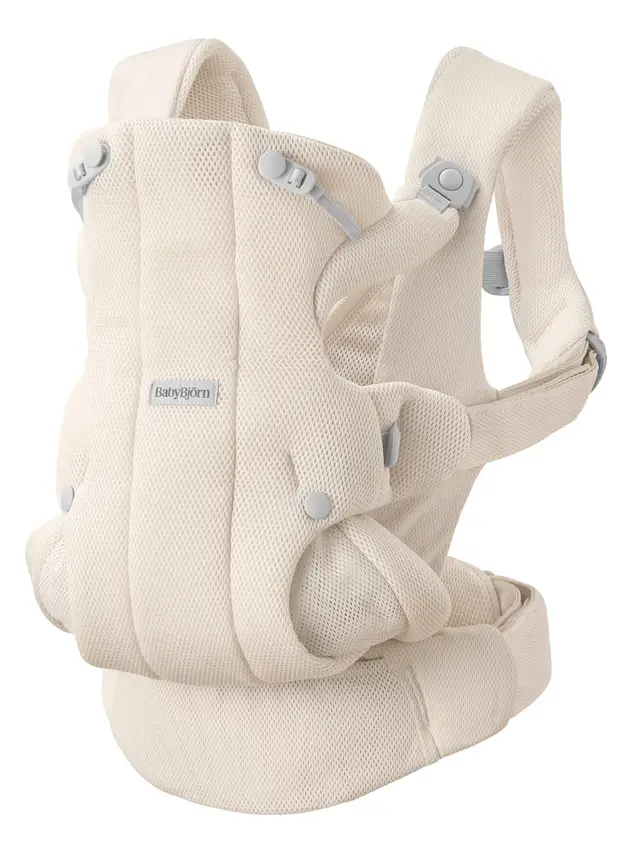
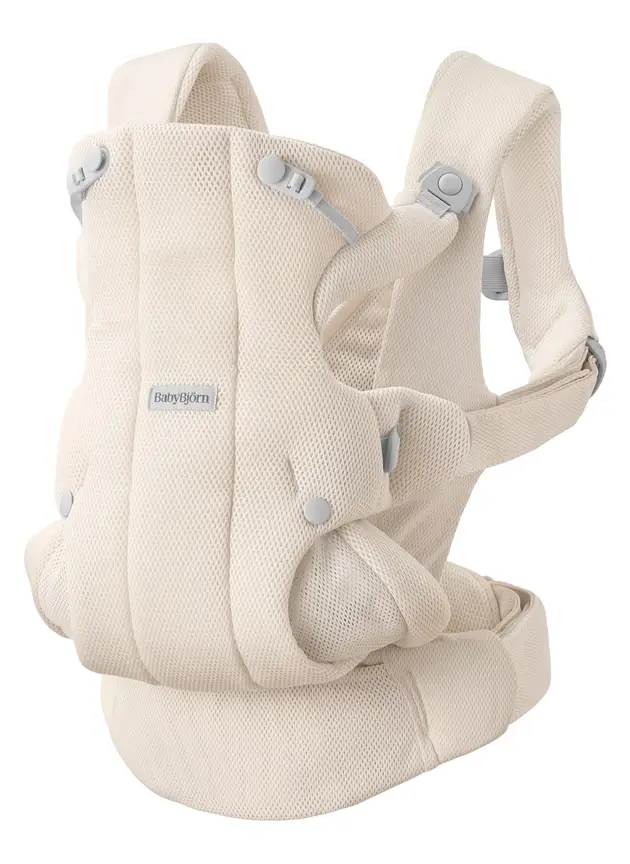
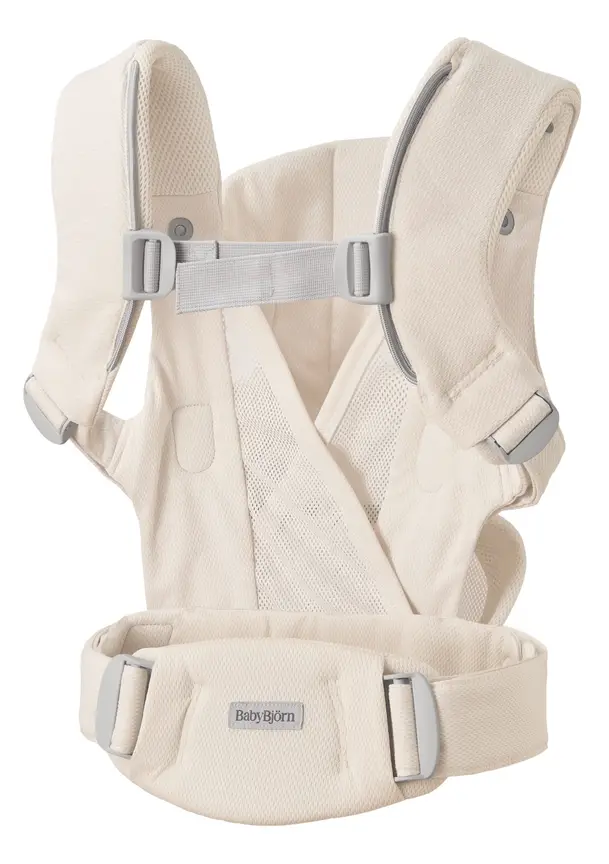



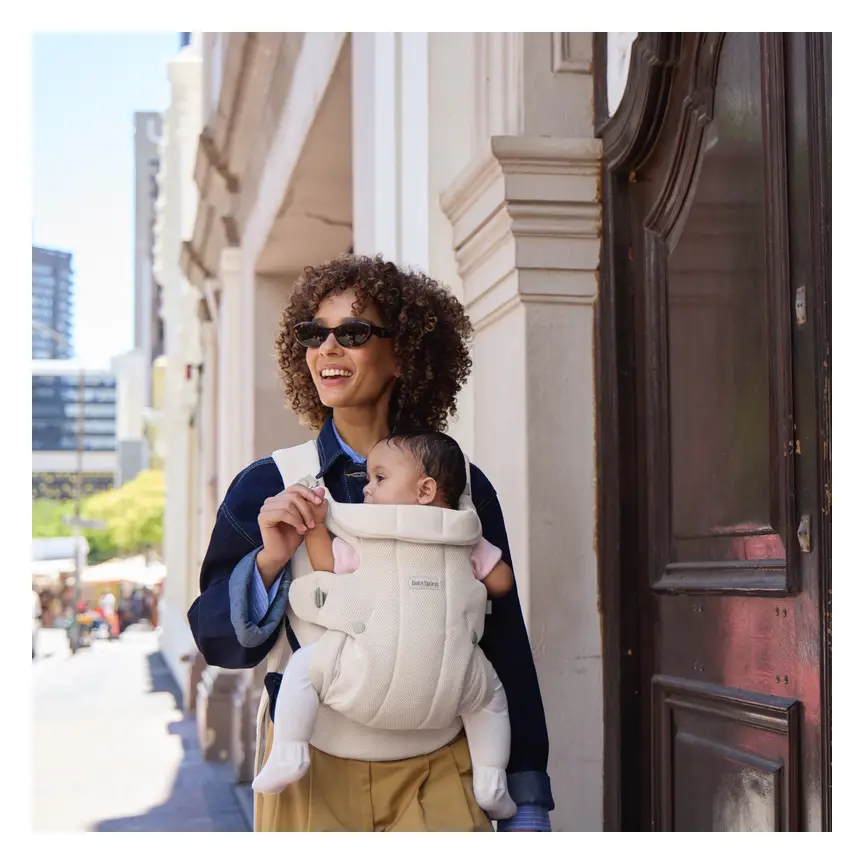
BabyBjörn Baby Carrier Hold
A soft front carrier from newborn to 18 months that fits XS to XXL parents.
Read our full review →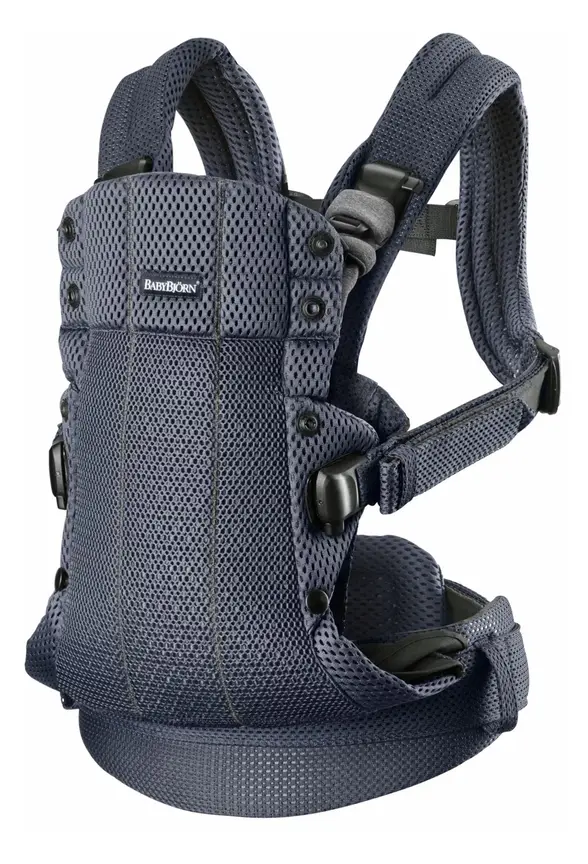 Reviewed
BabyBjörn Baby Carrier Harmony
A premium carrier with four positions, from 3.2 kg newborns to about 3 years.
Read our full review →


Ergobaby Omni Lite Mesh
A light mesh carrier from newborn to 24 months with cross-back straps.
Read our full review →Protecting your baby's hips: the M-position
A baby's hip joints are soft and still forming during the first year. When a baby's legs hang straight down, the hip joint can get strained. Over time, poor hip support can add to hip dysplasia, a condition where the hip socket does not form properly.
The International Hip Dysplasia Institute recommends the M-position (also called the jockey or frog position). In this position:
- Your baby's thighs spread naturally around your torso.
- The carrier seat supports the thighs all the way from one knee pit to the other.
- Your baby's knees sit higher than their bum, forming an "M" shape when viewed from the front.
An adjustable seat makes the M-position much easier to get right. For a newborn, you narrow the seat so the fabric does not push into the baby's calves. As their legs grow longer, you widen the seat step by step. Always check that your baby's lower legs can swing freely from the knee down.
How adjustable carriers compare to other baby carriers
Not every carrier works the same way. Some are better for tiny newborns, while others shine on long bushwalks with a toddler. The table below compares the main types side by side.
| Carrier type | Typical age range | Ease of use | Hip and back support | Best for |
|---|---|---|---|---|
| Adjustable soft-structured carrier | Newborn to toddler (check label weight) | Fast once buckles are set | Strong waist and shoulder support | Families wanting one carrier for all stages |
| Stretchy wrap | Newborn to about 6 months | Takes practice to tie snugly | Gentle wrap support; gets saggy as baby gets heavier | Cosy newborn days at home |
| Ring sling | Newborn to toddler | Quick to slip on; one-shoulder carry | Good M-position; weight sits on one shoulder | Short trips, quick ups and downs |
| Fixed-size buckle carrier | Often 4 months to toddler (may need insert for newborn) | Easy to clip and go | Good support, but seat width cannot shrink for tiny babies | Older babies who already fit the seat width |
| Framed hiking backpack | From when baby sits unaided to toddler | Easy to load; bulky to store | Metal frame shares load onto hips; upright seat | Long bushwalks and outdoor trails |
Stretchy wraps feel lovely on newborns, yet many parents stop using them once their baby reaches around 7 to 9 kg. That is when stretchy fabric starts to bounce and sag. An adjustable buckle carrier stays firm and supportive well into the toddler years.
Carry positions by age: newborn to toddler
Your baby's needs change fast in the first three years. A carrier that fits a three-week-old must be adjusted completely differently for a two-year-old. Use this stage-by-stage guide alongside your carrier's manual.
| Stage | Head and body skills | Safe carry positions | How to adjust the carrier |
|---|---|---|---|
| Newborn (birth to 3 months) | Weak neck; cannot hold head up alone | Front carry, facing inward towards you | Narrowest seat setting; panel up to earlobes; firm back support |
| Young baby (3 to 6 months) | Gaining neck strength; looks around more | Front carry, facing inward | Widen seat as thighs grow; fold top flap down if baby wants to see out |
| Older baby (6 to 12 months) | Strong neck; starts sitting without help | Front inward, hip carry, or back carry (once sitting unaided) | Widen seat to knee-to-knee; short bursts facing out only if awake and allowed by manual |
| Toddler (12 months to 3 years) | Walking, heavy, curious, wants up and down | Back carry or front inward carry | Widest seat setting; raise back panel for tall torso; use waist belt on hips |
Newborns: birth to 3 months
Check the minimum weight on the carrier label first. Many adjustable carriers start at 3.2 kg or 3.5 kg. If your baby is smaller than the minimum weight, wait until they grow into it or ask a health professional for advice.
Always carry a newborn on your front, facing your chest. Never use a back carry or outward-facing carry for a newborn. Set the seat to its narrowest mark so the fabric stops at the back of the knees. Adjust the top of the panel so it reaches the base of your baby's ears, never over the back of their head. Keep their face clear to the side so they breathe fresh air.
Young babies: 3 to 6 months
Around three to four months, babies start holding their head steady. They also want to look around at the world. Keep them facing inward on your chest, where they can still rest their head when tired. If your carrier has a fold-down neck cushion, you can fold it down when your baby is awake and holding their head up well.
Older babies: 6 to 12 months
Once your baby can sit up on their own without falling over, you can try a back carry or hip carry if your carrier allows it. A back carry shifts the weight to your legs and core, which feels much lighter on longer walks. Use a mirror or ask another adult to help until you feel confident loading your baby onto your back.
Some adjustable carriers allow a front outward-facing position for babies with strong head and neck control. Follow three strict rules if you use it:
- Never face a baby outward before they have full head and neck control, usually around 5 to 6 months.
- Keep outward-facing turns short, around 15 to 20 minutes, because babies can get overstimulated.
- Never let your baby sleep facing outward. Their head can slump forward without chest support. Turn them to face you as soon as they look sleepy.
Toddlers: 12 months and up
Toddlers love to walk, then suddenly ask to be carried. An adjustable carrier shines here because you can pack it in a bag or wear it loosely around your waist. Raise the back panel to its tallest setting so your toddler cannot lean back out of the carrier. Check the maximum weight limit on the label, which is often around 15 kg to 20 kg depending on the model.
How to choose an adjustable baby carrier
With so many carriers on the shelf, focus on fit, safety, and comfort rather than trendy colours. Here is what to look for before you buy.
- Clear weight and age limits: The box and sewn-in label should state the exact minimum and maximum weights.
- True seat adjustment: Look for sliders, snaps, or Velcro inside the waistband that shrink and widen the seat cleanly. Avoid carriers that rely on bulky rolled-up towels or loose cushions to prop up a newborn.
- Comfortable straps for all caregivers: Test how easy it is to tighten and loosen the shoulder straps and waistband. If two adults share the carrier, quick-glide buckles save time.
- Strap style: Some carriers let you cross the shoulder straps in an X-shape across your back. Others use an H-shape with a chest clip between your shoulder blades. Crossed straps are often easier to reach if you have stiff shoulders.
- Breathable fabric: Natural cotton, linen, or soft mesh panels help stop both you and your baby from getting sweaty. This matters even more in warm Australian summers.
- Safe buckles and seams: Squeeze the buckles to check they feel sturdy and snap shut cleanly. Many carriers include elastic safety loops next to each buckle. If a buckle pops open, the loop catches the strap.
- Easy to wash: Babies dribble, spit up, and have nappy leaks. Pick a carrier that goes in the washing machine on a gentle cycle. Removable cotton dribble pads on the straps save you washing the whole carrier every week.
- Buy from trusted shops: Avoid unbranded cheap copies sold online. Counterfeit carriers can have weak stitching and brittle plastic buckles that snap under weight.
Side by side: more baby carriers & wraps to compare
Real products from our catalogue. We don't show star ratings or review counts; check the current price, stock and reviews on Amazon before you buy.

BabyBjörn Baby Carrier Mini 3D Jersey
Newborn baby carrier
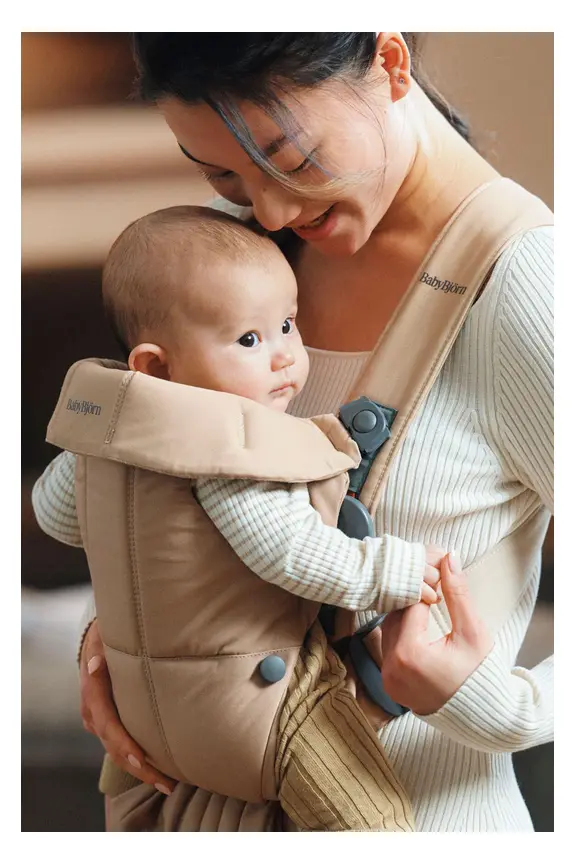


BabyBjörn Baby Carrier Mini
Simple, soft newborn carrier for roughly 0–12 months, with three carrying positions and an easy front opening.
Read our full review →
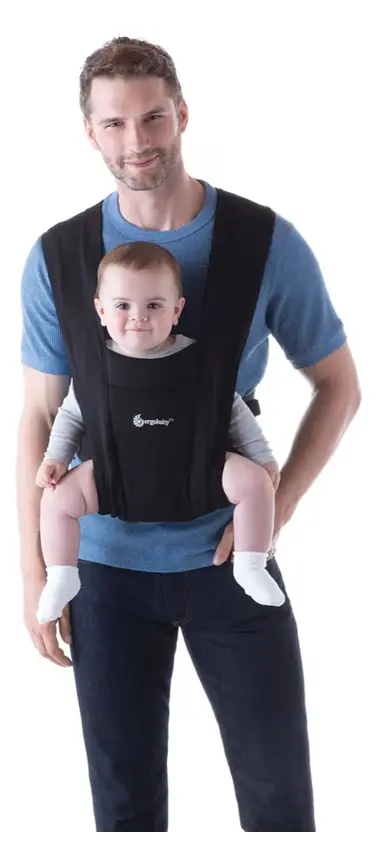


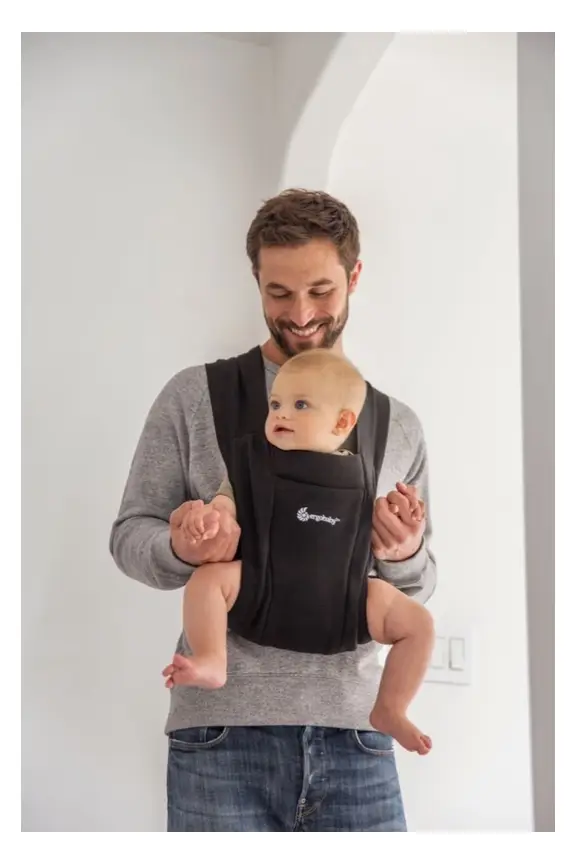


Ergobaby Embrace
A soft knit newborn carrier that buckles on, with no long wrapping.
Read our full review →How to fit and adjust your carrier step by step
Take your time the first few times you put the carrier on. Practise over a bed or sofa, or with another adult nearby, until your hands know where every buckle sits.
- Set the seat and panel first: Adjust the seat width and back panel height to match your baby's size before you pick your baby up.
- Fasten the waistband high: For a newborn, buckle the waistband high around your natural waist, near your ribs. This keeps your baby high enough to kiss. For a heavier toddler, you can wear the belt lower on your hips.
- Check the belt is snug: Pull the waistband tight so it sits flat and does not droop forward under weight. Thread the buckle through its elastic safety loop if it has one.
- Lift your baby onto your chest: Hold your baby upright against your chest with their legs straddling your waist.
- Bring the panel up: Keep one hand supporting your baby's back and bum. Use your other hand to pull the carrier panel up over their back.
- Put on the shoulder straps: Slip one arm through a strap, then the other. Keep one hand on your baby whenever a strap is not yet buckled.
- Fasten the chest clip: Clip the back strap across your shoulder blades and pull the shoulder straps snug. Do not pull so tight that your baby's back flattens unnaturally.
- Do the pelvic tuck: Slide both hands inside the carrier beside your baby's thighs. Gently scoop their bum down and tilt their knees up. This puts their hips into a deep M-position.
- Run the TICKS check: Check that the carrier is tight, your baby's face is in view, their head is close enough to kiss, their chin is off their chest, and their back is supported.
Taking your baby out safely
Keep one arm firmly around your baby before you unclip any buckle. Unfasten the chest clip first, slide the shoulder straps off, and gently lower the panel while holding your baby against your chest. Lift your baby away, then unbuckle the waistband last.
Safety standards and official advice around the world
Baby carriers are checked under different rules around the world, yet the safety goals are the same everywhere. Regulators want strong seams, secure buckles, clear weight labels, and safe breathing space for babies.
| Country | Key safety and health bodies | What they check and advise |
|---|---|---|
| Australia | Product Safety Australia (ACCC), Red Nose Australia, Raising Children Network | Follows voluntary and product safety rules, teaches the TICKS rule, warns against bag-style slings, and lists recalled carriers. |
| United Kingdom | Office for Product Safety and Standards (OPSS), The Lullaby Trust, NHS | Enforces UK product safety rules, promotes the TICKS rule, and reminds parents to keep newborns' airways clear. |
| United States | U.S. Consumer Product Safety Commission (CPSC), American Academy of Pediatrics (AAP) | Enforces mandatory federal safety rules for soft infant carriers and sling carriers, and publishes recall alerts. |
| Canada | Health Canada, Canadian Paediatric Society (Caring for Kids) | Enforces general consumer product safety laws, monitors carrier recalls, and shares safe babywearing tips. |
Before you buy a new or used carrier, search your national recall list. Product Safety Australia, the UK OPSS, the US CPSC, and Health Canada all keep free online recall pages. Checking takes less than a minute and can prevent serious harm.
Common mistakes to avoid
Even careful parents can slip into habits that make babywearing uncomfortable or unsafe. Watch out for these common mistakes.
- Wearing the baby too low: If your baby sits down near your belly button, you cannot see their face easily and your lower back will ache. Raise the waistband so their head sits near your collarbone.
- Using a loose or curved bag sling: Bag-style slings curl a baby into a tight C-shape with their chin forced onto their chest. Product Safety Australia and the CPSC both warn against these slings for newborns.
- Cooking or holding hot drinks: Never cook over a hot stove, pour boiling water, or carry hot coffee while wearing your baby. One spill or sudden reach by your baby can cause severe burns.
- Wearing a carrier in a car or on a bike: A baby carrier is never a car seat. In a crash, straps cannot protect a baby, and your body weight could crush them. Also never wear a baby in a carrier while riding a bike, scooter, or skateboard.
- Overdressing in winter or summer: The carrier itself counts as at least one layer of clothing, and your body heat warms your baby too. Avoid bulky snowsuits inside a carrier, as thick padding can restrict breathing and push hips out of shape.
- Ignoring your own body: Carrying weight on one sore spot can strain your shoulders, back, or pelvic floor after birth. If you feel pain or heaviness, adjust the straps, swap to a back carry if your baby is old enough, or take a break.
Caring for your carrier and checking for wear
A carrier works hard every day, so give it a quick safety check once a week. Look over the stitching where the shoulder straps and waist belt meet the main panel. Pull gently on the buckles after they click shut to make sure the tabs hold tight.
Check for frayed webbing, cracked plastic clips, or loose Velcro that has filled with fluff. Clean fluff out of Velcro strips so they grip firmly. When washing your carrier, buckle all clips first and place it inside a pillowcase or laundry bag. Use mild liquid soap, cold water, and a gentle cycle. Always air-dry your carrier in the shade, because tumble dryers can melt straps and weaken plastic buckles.
More options, from budget to premium
Real products from our catalogue. We don't show star ratings or review counts; check the current price, stock and reviews on Amazon before you buy.
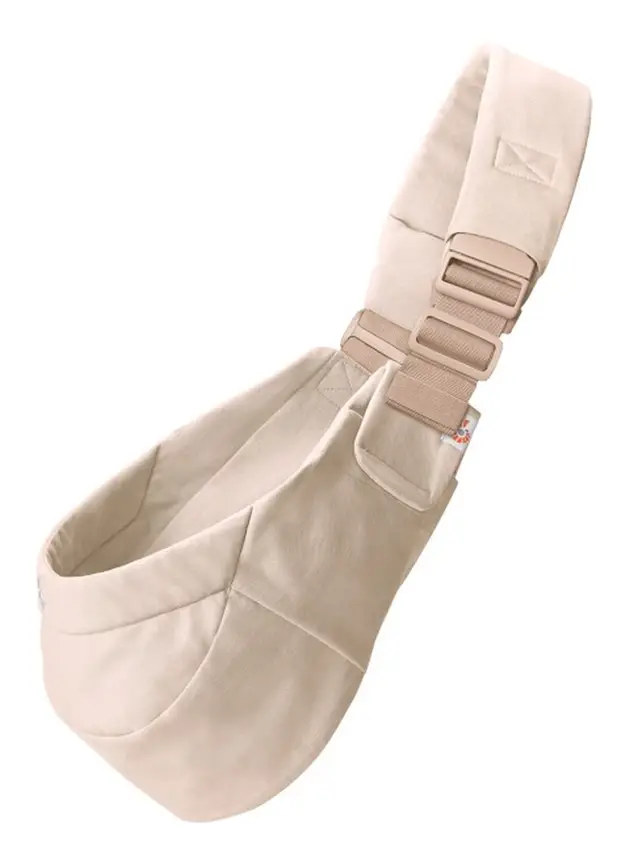

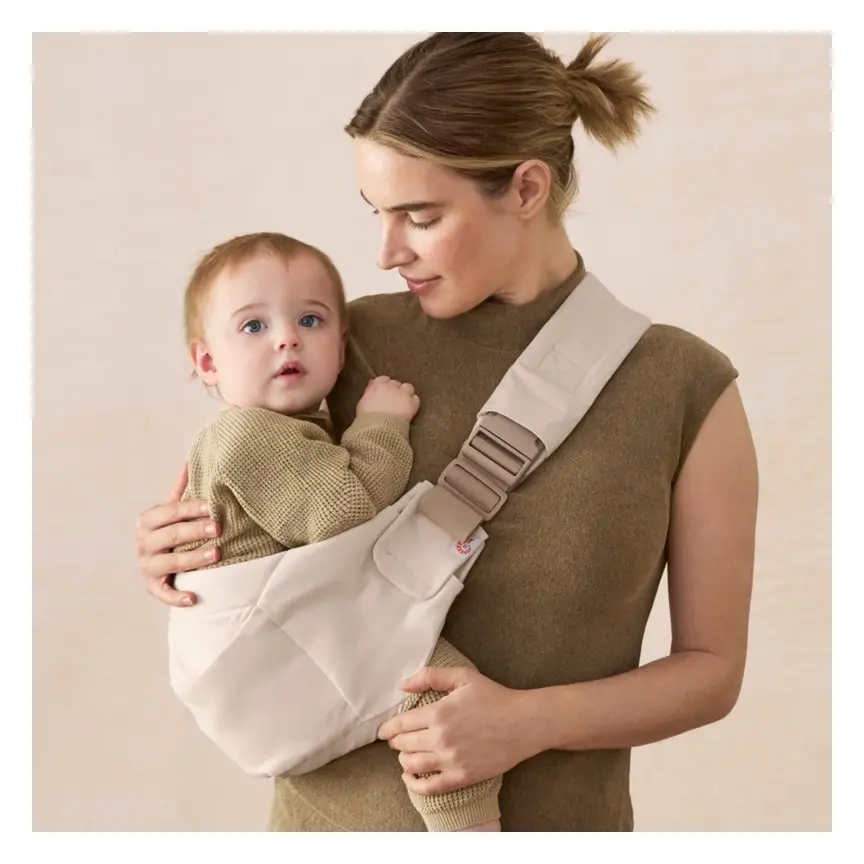

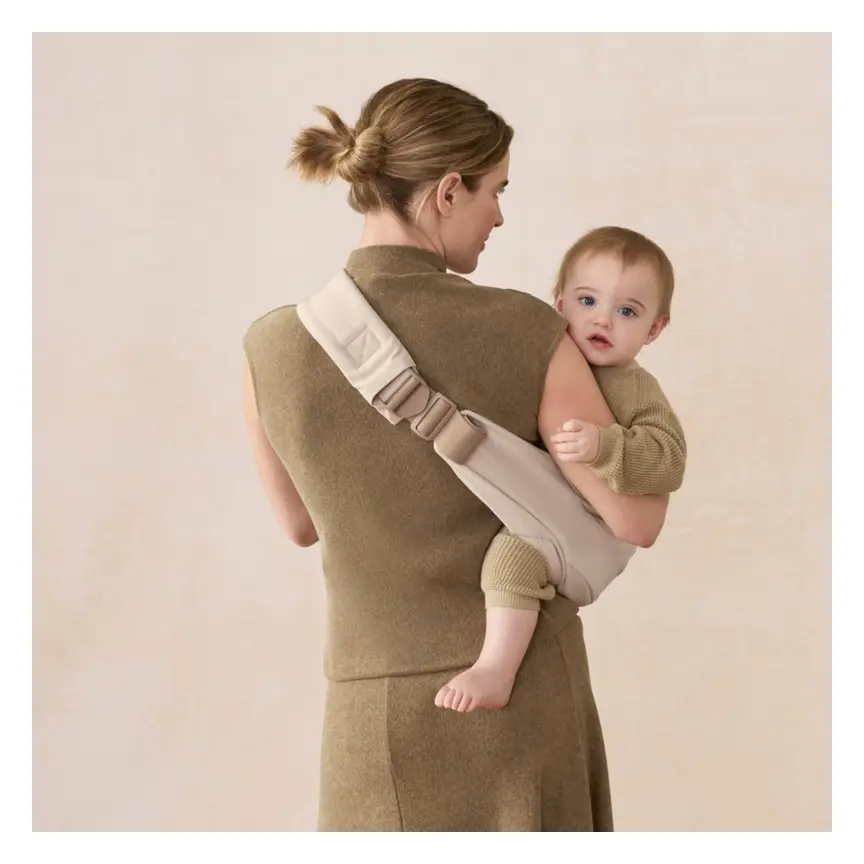
Ergobaby Upsie Sling Carrier
A quick hip sling for toddlers who want up and down a lot. It folds small.
Read our full review →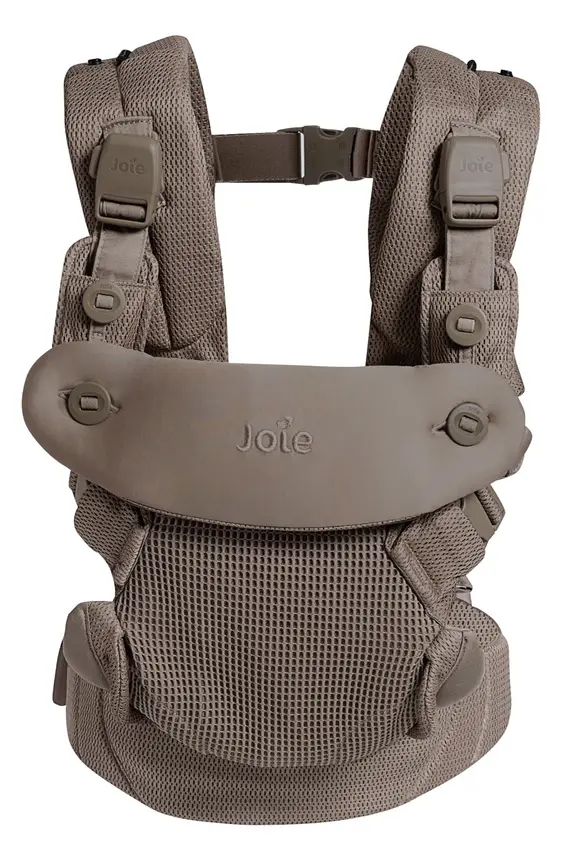
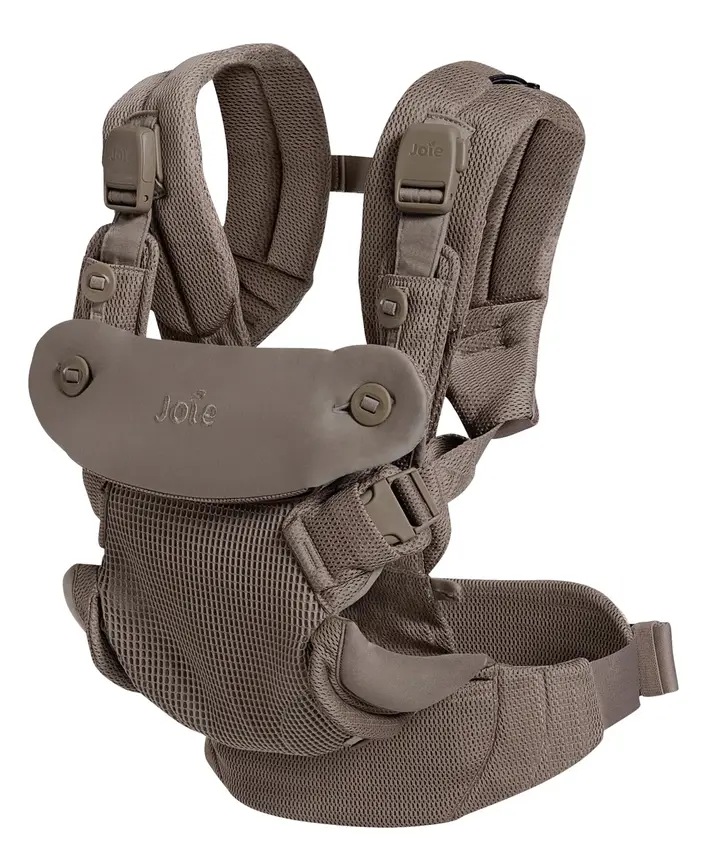
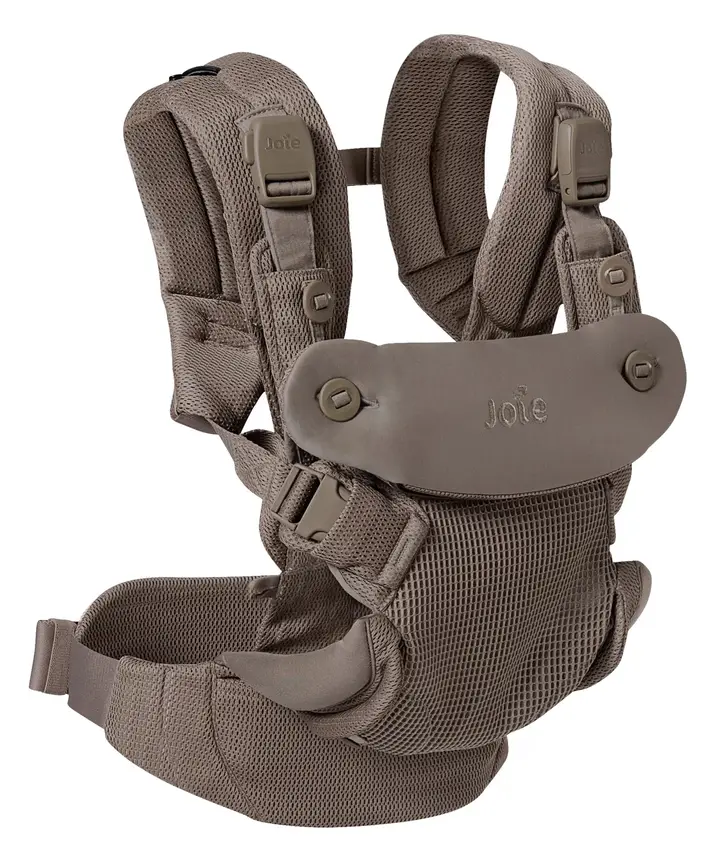
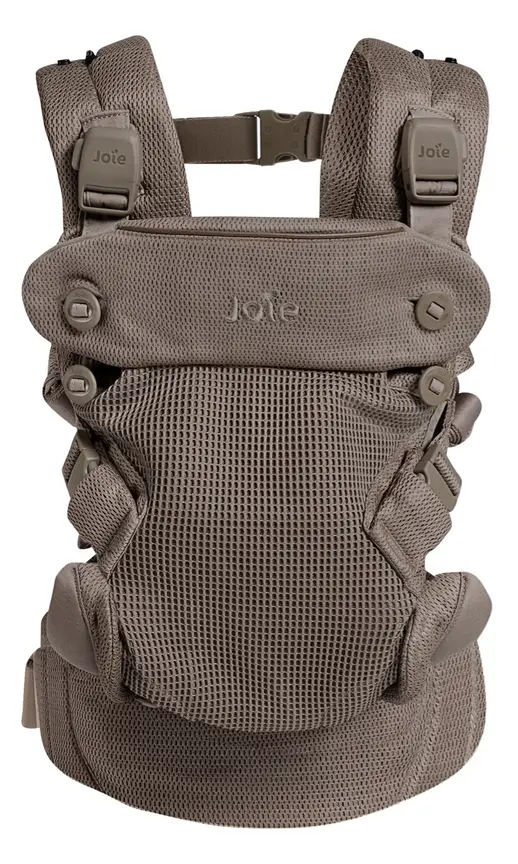

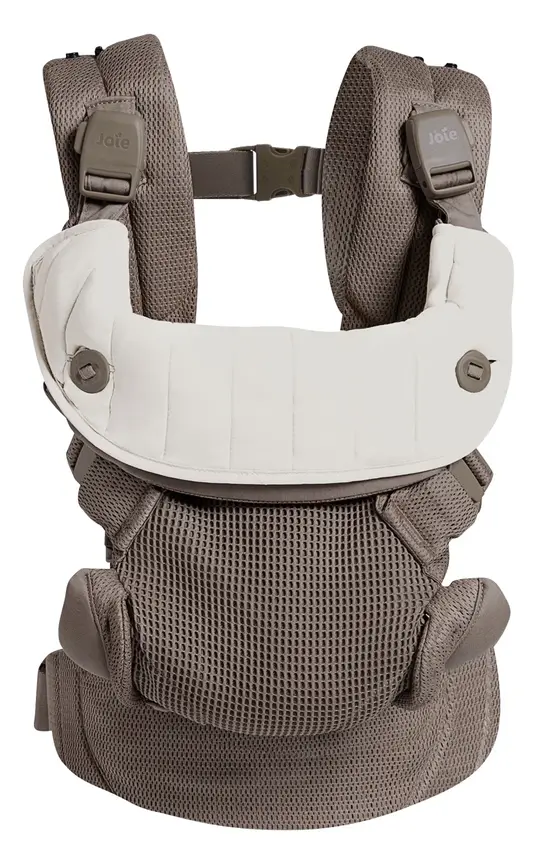
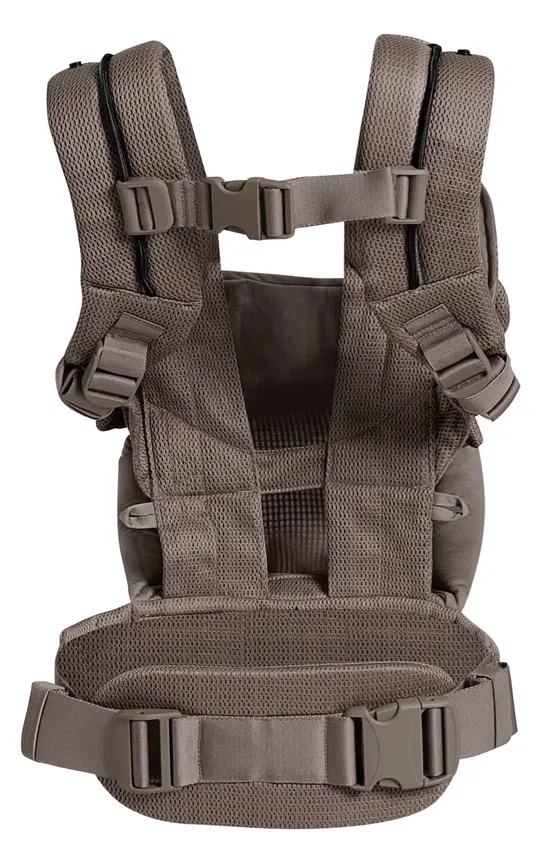

Joie Savvy Air 4-in-1
A 4-position carrier from 3.5 kg newborns, with a wide waistband that fits most adults.
Read our full review →
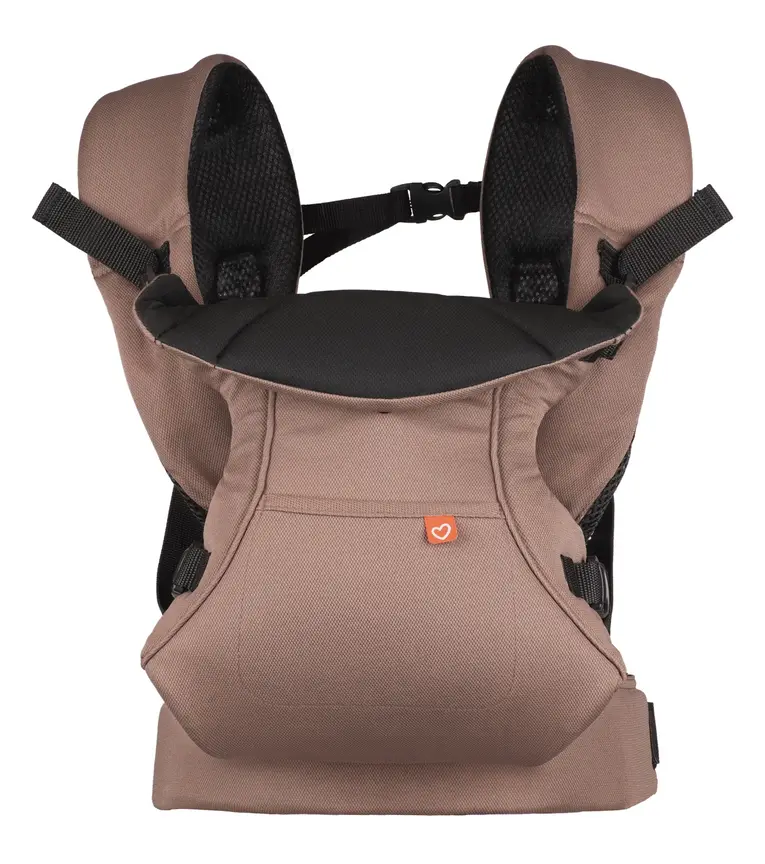

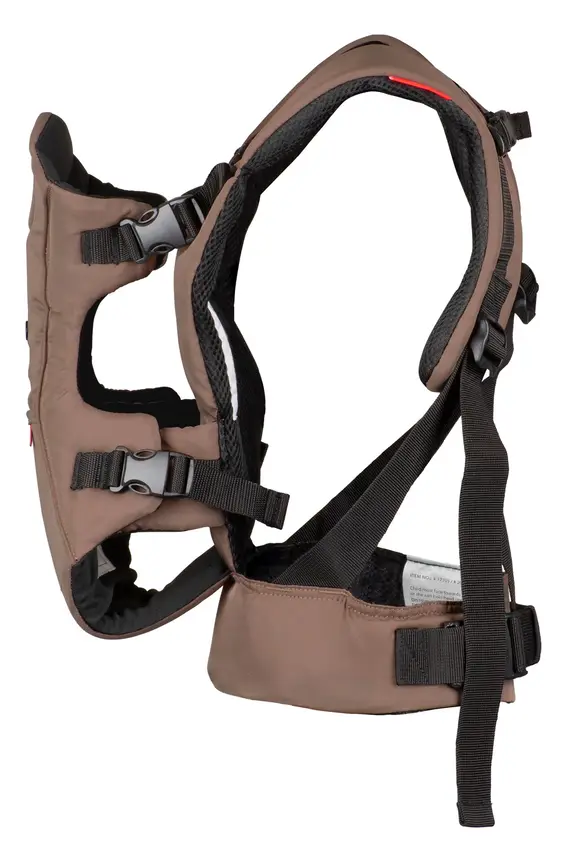

Mother's Choice Cub Carrier
A low-cost carrier from newborn to about 3 years with 3 positions, including back carry.
Read our full review →Frequently asked questions
Can a newborn go in an adjustable baby carrier from birth?
Yes, as long as your baby meets the minimum weight on the carrier's label. Most adjustable carriers start around 3.2 kg to 3.5 kg. Adjust the seat to its narrowest setting and follow every step of the TICKS rule. If your baby was born early or has a low birth weight, check with your doctor or child health nurse first.
Is it safe for my baby to sleep in a carrier?
Short daytime naps in a carrier can be safe if you stay awake and keep checking your baby. Keep them upright, facing your chest, with their chin off their chest and their face completely uncovered. Never lie down or fall asleep yourself while wearing a baby in a carrier. Move your baby to a firm, flat cot or bassinet on their back if you want to rest.
When can my baby face outward in a carrier?
Wait until your baby has strong, steady head and neck control, which is usually around 5 to 6 months. Check that your carrier manual allows outward-facing carries and that your baby's chin clears the top edge of the panel. Keep outward-facing sessions short, around 15 to 20 minutes, and turn your baby back towards you if they get tired or fall asleep.
When can I carry my baby on my back?
Most adjustable buckle carriers allow a back carry once your baby can sit up well without support. For many babies, this happens around 6 months or older. Never put a newborn or a baby with weak neck control on your back, because you cannot see their face or check their breathing easily.
How do I dress my baby in a carrier in hot or cold weather?
Remember that the carrier acts like an extra layer of clothes, plus your body shares heat. In warm weather, dress your baby in light cotton clothes, a sun hat, and sunscreen on uncovered skin where age-appropriate, and seek shade. In cold weather, dress your baby in normal indoor layers, put a warm hat and socks on them, and zip a large coat or cardigan around both of you instead of using a thick padded snowsuit inside the carrier.
Is it safe to buy a second-hand adjustable baby carrier?
It can be, as long as you inspect it carefully first. Check the brand, model name, and date label against national recall lists in Australia, the UK, the US, or Canada. Look closely at every seam, strap, and buckle for cracks, tears, or sun damage. Make sure the original manual is included or download it from the maker's website before using it.
Will wearing a baby carrier hurt my back or pelvic floor?
A well-fitted adjustable carrier spreads weight across your hips and shoulders, which helps protect your back. In the first weeks after giving birth, your pelvic floor and core muscles are still healing. Start with short carrying sessions of 10 to 15 minutes, wear your baby high and snug, and stop if you feel lower back pain or pelvic pressure.
Sources
- Product Safety Australia – Baby carriers, wraps and slings guide
- Red Nose Australia – Slings and baby carriers
- Raising Children Network – Baby carrier, sling and backpack safety
- The Lullaby Trust (UK) – Baby slings and carriers
- NHS Cheshire and Wirral Partnership – TICKS rule for safe babywearing (PDF)
- U.S. CPSC – Safe babywearing and sling suffocation warning
- International Hip Dysplasia Institute – Baby wearing
- Health Canada – Recalls and safety alerts
Related guides
More Clothing & Accessories →
Ergonomic Baby Carriers: Hip-Healthy Positioning from Newborn to Toddler

Baby Wrap Carriers: How to Choose and Use One Safely

Baby Carriers for Newborns and Toddlers: How to Choose and Use One Safely
