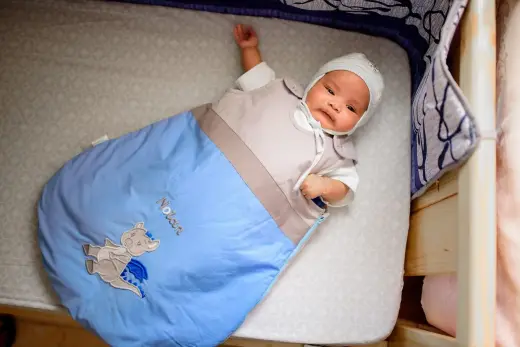
Two-Way Zipper or Magnetic Baby Sleeper? How to Choose for Easier Nappy Changes
Compare two-way zips and magnetic fasteners on baby sleepers. Learn about fit, night changes, washing and safe sleep in four countries.

On this page
- What these closures do
- What matters during a night change
- Two-way zips: strengths and limits
- Magnetic closures: strengths and limits
- Side-by-side comparison
- How to choose a sleeper that fits
- Clothing and safe sleep
- Age and changing needs
- Cleaning and checking the garment
- Common mistakes to avoid
- Official advice in four countries
- A simple way to decide
- Frequently asked questions
- Sources
- Sources
Short answer: A two-way zip can open from the bottom for a nappy change. A magnetic sleeper uses fasteners that meet and close without a zip. Either may work for your family. The best choice depends on the design, your baby's fit, your hands, and how easily you can check every fastener. No sleeper can promise a quick change or keep a baby asleep.
A sleeper is clothing. It is not a safe sleep surface or a way to prevent waking. Follow safe sleep advice wherever your baby rests. In Australia, consult Red Nose and Product Safety Australia. In the UK, consult the NHS and The Lullaby Trust. In the US, consult the American Academy of Pediatrics and the Consumer Product Safety Commission. In Canada, consult the Canadian Paediatric Society and Health Canada.
What these closures do
A two-way zip has two sliders on one track. Depending on its design, one slider can open the lower part while the upper part stays closed. This can expose the nappy area without opening the sleeper from the neck down. Check the actual garment. Some products have a zip that opens only one way.
A magnetic closure uses small magnets sewn into fabric panels. The panels meet, and the magnets help hold them together. The opening pattern depends on the garment. Some open down the front. Others open across the legs. Read the maker's instructions and inspect how each fastener works.
Both designs can be simple to use. Both can be frustrating if the baby moves, the garment fits poorly, or the change is messy. A closure does not replace a safe changing place, careful handling, or a clean nappy routine.
What matters during a night change
Night changes can happen while everyone feels tired. Keep the area ready before bedtime. Put clean nappies, wipes or a damp cloth, and a change of clothes within reach. Use a safe, flat changing surface. Keep one hand on your baby whenever they are on a raised surface. If you do not have a suitable change table, change your baby on the floor.
Choose enough light to see your baby's skin and the fasteners. A dim room may help keep the room calm, but you still need to see what you are doing. Avoid using a phone torch in your baby's face. Keep any lamp and its cords out of reach.
Move at a steady pace. You do not need to rush to protect sleep. If the nappy is soiled or leaking, change it. Clean and dry the skin gently. If the nappy is only wet, follow your baby's care advice and your usual routine. Ask a health professional if you are unsure about skin care or how often to change.
Some babies stay asleep through a change. Others wake fully. Neither outcome tells you that one closure is better for all babies. Clothing can affect the steps of a change. It cannot control a baby's sleep.
Two-way zips: strengths and limits
A lower opening can let you reach the nappy without removing the whole sleeper. This may help in a cool room, since the chest and arms can stay covered. It can also reduce the number of clothing steps when your baby is lying still.
A zip needs to be lined up and moved along its track. A tired caregiver may find that easier than matching several small fasteners. Yet a zip can snag fabric or skin if the design lacks a protective guard. Check that the zip pull sits away from your baby's face. Look for a soft fabric cover at the top, if the garment has one.
Not every two-way zip works from the feet upward. Some sleepers use two sliders in a different layout. Practise opening and closing the garment while your baby is dressed and calm. Read the care label before washing. Do not force a stuck slider. Check the track for trapped fabric and damage.
A zip can feel bulky at the front or legs. A baby may also lie on a raised seam or pull. Check the garment while your baby is on their back. Remove it if a damaged zip has sharp edges, loose parts, or fabric that could catch a finger.
Magnetic closures: strengths and limits
Magnets can bring two fabric edges together without the caregiver pushing a snap through a hole. This may help some people with limited hand strength or movement. It may also make dressing easier when the panels are placed clearly.
Magnetic designs differ. Some closures line up quickly. Others need careful placement to avoid gaps or twisted fabric. A baby's movement can pull the panels apart. Before each use, check the full opening. Make sure each fastener is secure and the garment covers the body as intended.
Inspect the garment often. Do not use it if a seam is open, a magnet is exposed, a fastener has come loose, or fabric is torn. Keep damaged clothing away from children. Follow the maker's washing and repair advice. Do not try to sew a magnet back into a garment unless the maker says how to do so safely.
A magnet inside an intact garment is different from a loose magnet. Loose magnets can be swallowed and can cause serious harm. Keep detached parts and damaged items away from children. If you think a child has swallowed a magnet, seek urgent medical help.
Side-by-side comparison
| Feature | Two-way zip | Magnetic closure |
|---|---|---|
| How it closes | Two sliders move along a zip track. | Magnets in fabric panels meet and hold. |
| Lower nappy access | Possible when the design opens from the bottom. | Depends on where the panels open. |
| Hand movement | Needs a grip and a smooth pull. | Needs the panels brought together. |
| Common snag to check | Trapped fabric, a rough edge, or a damaged track. | Loose magnets, open seams, or panels that do not stay shut. |
| Best way to judge | Try the sliders and inspect the zip guard. | Open and close each panel, then inspect the seams. |
| What neither can promise | That a change will be faster or baby will stay asleep. | That a change will be faster or baby will stay asleep. |
| Care | Follow the label; close the zip before washing if advised. | Follow the label; inspect closures after washing. |
This table describes common design features. A particular garment may work differently. Check its instructions and try it before relying on it at night.
How to choose a sleeper that fits
Start with the size guide on the garment. Check both height or length and weight where the maker provides them. Age labels are rough guides. Babies of the same age can have different body shapes.
- Neck opening: it should not be loose enough for your baby to slip inside.
- Arms and legs: your baby should move freely. Fabric should not pull tightly.
- Torso: the sleeper should not strain at the zip or fasteners.
- Feet: footed sleepers need enough room for toes to lie naturally.
- Fasteners: check that they lie flat and do not press into the skin.
- Fabric: choose a comfortable layer for the room and your baby's clothing needs.
Do not buy a larger size to use as extra bedding. Loose fabric can bunch around the face. Do not use a garment that has stretched, shrunk, torn, or no longer closes as designed. If a product has a separate sleep sack or swaddle part, follow its own age and movement guidance.
Clothing and safe sleep
A sleeper does not make an unsafe sleep space safe. Place your baby on their back for every sleep. Use a firm, flat, clear sleep surface made for infant sleep. Keep pillows, loose blankets, toys, and other soft items out of the sleep space. Keep your baby's head uncovered.
Dress your baby for the room. Check their chest or back to judge warmth. Hands and feet can feel cooler than the body. Avoid adding layers simply because the room feels cool to you. Do not use a hooded sleeper for sleep. Remove clothing that is wet, damaged, or too warm.
Do not use weighted clothing or products to try to make a baby sleep longer. Do not add ties, cords, clips, or loose accessories to a sleeper. Follow safe sleep advice from your local health service and product safety body.
Age and changing needs
Newborn stage: newborns may need frequent clothing changes. A simple opening can help caregivers see the skin and reach the nappy area. Practise with the garment during the day. Keep the baby's face clear and the sleep space safe.
Early months: babies begin to move more. Check that sleeves, legs, and fasteners still fit. Look at the garment before each use, especially after washing. Follow safe sleep advice about wrapping and stop wrapping when your baby shows signs of trying to roll.
Rolling and active movement: keep arms free for sleep. Choose clothing that does not restrict movement. Do not use a garment that holds the baby in one position. Check the product's own guidance, since a sleeper and a swaddle product are not the same thing.
Older babies and toddlers: some children pull at zips or fasteners. Check for damage and keep detached pieces away. A toddler's clothing should allow walking and play without trailing fabric. Use the right garment for the activity and temperature.
Cleaning and checking the garment
Follow the washing label. Close fasteners as directed. Turn garments inside out only if the maker recommends it. Use the stated water temperature and drying method. Heat or rough washing can damage fabric, elastic, zips, or seams.
After each wash, check the closure and the nearby seams. Run your fingers along the zip track and guard. Look for loose threads, rough edges, or a slider that no longer moves smoothly. For magnetic garments, check that panels stay attached and no magnet can be felt through an opening seam.
Remove a damaged garment from use. Do not rely on a temporary repair near a baby's face or body. Contact the maker about repairs or replacement. Check official recall notices in your country if you have concerns about a product.
Common mistakes to avoid
- Assuming a special closure keeps baby asleep: it may change the steps, but babies still wake for many reasons.
- Choosing by age alone: check the maker's size guide and how the garment fits.
- Leaving the baby alone on a raised change surface: keep a hand on your baby or use the floor.
- Using dim light that hides a problem: use enough light to see skin, seams, and fasteners.
- Forcing a stuck zip: stop and free the fabric gently. Replace the garment if damaged.
- Ignoring a loose magnet: stop using the garment and keep it away from children.
- Using clothing as bedding: a sleeper does not replace a safe sleep space.
- Overheating your baby: use suitable layers for the room and check the body, not just hands.
- Following a product claim without checking: look at the care and safety information from the maker and official advice.
Official advice in four countries
Baby clothing does not replace local safe sleep guidance. The main public advice in these countries is to use a clear, suitable sleep space and place babies on their backs. For clothing and product concerns, check the official bodies listed below.
| Country | Official bodies to check | Useful focus |
|---|---|---|
| Australia | Red Nose; Product Safety Australia | Safe sleep, clothing, product safety information and recalls. |
| United Kingdom | The Lullaby Trust; NHS; Office for Product Safety and Standards | Safer sleep, dressing for sleep and product safety alerts. |
| United States | American Academy of Pediatrics; Consumer Product Safety Commission | Safe sleep advice, product rules, recalls and infant product guidance. |
| Canada | Canadian Paediatric Society; Health Canada | Safe sleep advice, consumer product safety and recalls. |
Rules for clothing can differ from rules for sleep products. Do not assume a sleeper is tested or approved as a sleep product. Read its label and ask the maker or your local product safety body if the use is unclear.
A simple way to decide
- Check the size guide and try the garment during a calm daytime change.
- Open and close every fastener several times.
- Look for a zip guard, smooth edges, sound seams, and no loose parts.
- Try the nappy opening while keeping the upper body covered.
- Choose the style that you can operate safely and check clearly.
- Follow the care label and inspect the garment after washing.
If both styles fit well, choose the one that feels simpler in your hands. You can also use ordinary clothing with a safe, practical opening. A special sleeper is optional.
Frequently asked questions
Is a two-way zip faster than a magnetic closure?
It depends on the garment and the caregiver. A lower zip may give direct nappy access. A magnetic design may be easier for some hands. Try the exact garment before buying, if possible. There is no reliable reason to promise one style is always faster.
Will either closure stop my baby waking?
No. A closure can change how you open clothing. It cannot control your baby's sleep. Keep the room calm, use enough light to see, and change a soiled or leaking nappy as needed.
Are magnetic baby sleepers safe?
Use a garment as its maker directs. Check seams and fasteners often. Stop using it if a magnet is loose, exposed, or detached. Keep loose magnets away from children. Seek urgent help if you suspect a child swallowed one.
Can I leave a sleeper on for sleep?
A suitable sleeper can be clothing for sleep. It does not replace a clear, firm, flat sleep surface. Place your baby on their back. Keep the head uncovered and the sleep area free of loose items.
Should I choose cotton or another fabric?
Choose a fabric that feels comfortable, suits the room, and follows the garment's care instructions. Check the warmth of the full clothing layers. Avoid dressing your baby too warmly. Ask a health professional if you have concerns about a skin reaction.
Can I use a sleeper with a swaddle?
Follow the instructions for both products and local safe sleep advice. Do not add layers that make your baby too warm. Stop wrapping when your baby shows signs of trying to roll. Keep arms free once rolling may begin.
What should I do if the zip catches skin?
Stop moving the slider. Ease the fabric away without pulling hard. If skin is hurt, seek medical advice as needed. Do not use the garment again if its zip or guard is damaged.
How often should I inspect the fasteners?
Check before each use and after washing. Look for loose seams, sharp edges, broken sliders, or exposed magnets. Remove damaged clothing from use. Follow the maker's advice about repairs.
Do these sleepers need to meet a cot standard?
Clothing and cots are different products. Do not assume a sleeper meets a cot or sleep product rule. Use a safe sleep space and check local product safety guidance for the item you bought.
Sources
- Red Nose Australia – What is a safe sleeping environment
- The Lullaby Trust – How to dress your baby for sleep
- American Academy of Pediatrics – A parent's guide to safe sleep
- Canadian Paediatric Society – Safe sleep for babies
- Product Safety Australia – Recalls
- UK Office for Product Safety and Standards
- U.S. Consumer Product Safety Commission – Safe sleep: cribs and infant products
- Health Canada – Recalls and safety alerts
This article is general information, not medical advice. Ask your child health professional about your baby's needs. BabyGearFinder may earn a commission from eligible affiliate links. This does not change the price you pay.
Sources
- Red Nose Australia – What is a safe sleeping environment
- The Lullaby Trust – How to dress your baby for sleep
- American Academy of Pediatrics (US) – A parent's guide to safe sleep
- Caring for Kids (Canadian Paediatric Society) – Safe sleep for babies
- Product Safety Australia – Recalls
- UK Office for Product Safety and Standards
- CPSC (US) – Safe sleep: cribs and infant products
- Health Canada – Recalls and safety alerts
Related guides
More Sleep & Nursery →
Bassinets with Storage Baskets: Night-Time Nappy Changes Made Easier and Safer

Portable Nappy Changing Stations and Felt Caddies: How to Choose and Use Them Safely
Drop-Side vs Fixed-Side Baby Cots: Safety Bans, Rules and How to Choose