




Short-Sleeved Bibs for Babies and Toddlers: How to Choose, Use and Clean Them
How to choose a safe, easy-clean short-sleeved bib for messy meals. Compare bib styles, fabrics, age stages, and safety rules in AU, UK, US and Canada.
On this page
- Key points
- What a short-sleeved bib is
- How to choose a short-sleeved bib
- Bib styles compared
- Choosing the right bib by age and stage
- Safety checks and rules in Australia, the UK, the US and Canada
- How to clean, dry and store bibs
- Common mistakes parents make
- How many short-sleeved bibs do you need?
- Frequently asked questions
- Sources
Short answer: A short-sleeved bib covers your child's chest, tummy, shoulders, and upper arms. It stops food stains better than a standard front bib. It is also cooler and easier to put on than a full long-sleeved smock. Pick one with a soft, adjustable neck, waterproof fabric, and no loose cords or small parts.
Mealtime mess is normal when babies learn to eat. Health groups in Australia (Pregnancy, Birth and Baby), the UK (NHS), the US (American Academy of Pediatrics), and Canada (Caring for Kids) all encourage babies to touch and explore food. A good bib lets your child practise self-feeding while keeping their clothes clean.
Key points
- Coverage: A short-sleeved bib covers the chest, shoulders, and upper arms. It leaves the forearms free.
- Best use: Great for warm weather, early self-feeding, and messy snacks on the go.
- Fabric: Choose soft waterproof fabric that wipes clean fast. Check that it is free from harmful chemicals.
- Neck fit: You should fit two fingers between the neckband and your child's skin.
- Safety first: Never use bibs with long ties. Never leave a bib on a sleeping baby.
- Care: Rinse stains right away. Air dry waterproof bibs instead of using a hot dryer.
What a short-sleeved bib is
A short-sleeved bib looks like a light, half-back t-shirt with a wide front panel. You slip your child's arms through the short sleeves. Then you fasten the bib at the back of the neck.
Most standard bibs only hang over the chest. When a baby reaches for a bowl or rubs their eyes, food goes straight onto their shirt shoulders. A short-sleeved bib blocks those spots. It also stops puree and yoghurt from dripping down the sides of the neck.
At the same time, it is not as bulky as a long-sleeved smock. Long sleeves can feel hot in summer. They can also get in the way when a baby dips their hands into soup or porridge. Short sleeves give a nice middle ground.
Who they suit best
Short-sleeved bibs work well for babies and toddlers who wear short-sleeved tops or singlets. They are handy in warm homes and summer months. They also pack down small in a nappy bag for cafes and daycare.
If your child wears long-sleeved jumpers in winter, food can still land on their cuffs. In cold weather, you may want to roll up their jumper sleeves first. Or you can use a long-sleeved smock for very wet meals like soup.
How to choose a short-sleeved bib
Not all bibs work the same way. Small details decide whether a bib lasts for months or ends up in the back of a drawer. Check these five features before you buy.
1. Fabric and waterproofing
Look for light, flexible waterproof fabric. Two common choices are PUL and PEVA.
PUL stands for polyurethane laminate. It is a soft polyester cloth with a thin waterproof layer bonded to the back. It feels like fabric, bends easily, and usually handles machine washing well.
PEVA is a smooth plastic-like sheet without PVC (a type of vinyl plastic that can contain harsh softeners). PEVA wipes clean with a wet cloth in seconds. However, it can feel stiffer than PUL and may crack if put in a hot dryer.
Some short-sleeved bibs use coated cotton or silicone fronts with fabric sleeves. Coated cotton looks nice, but stains can soak into the weave over time. Pure waterproof fabric is better for tomato sauce, berries, and curry.
2. Neck closure
The neckband needs to stay shut when a toddler tugs on it. At the same time, it should never scratch the skin. Most bibs use one of two closures:
- Snaps (press studs): Snaps are hard for young babies to pull open. Look for two or three snap settings so the neck grows with your child. Check that each snap is pressed tightly into the fabric so it cannot come loose.
- Hook-and-loop (Velcro-style tape): This is quick to fasten on a wriggling child. Pick soft, rounded tabs that do not scratch the neck. Fold the tabs shut before washing so they do not catch on other clothes.
Avoid bibs that fasten with long fabric ribbons or cords at the neck. Long ties can catch on highchair parts or wrap around a child's neck.
3. Catch pocket
Many short-sleeved bibs have a wide pocket sewn across the bottom. This pocket stays slightly open to catch dropped peas, toast crumbs, and dribbled water.
Check how the pocket is made. Some pockets flip inside out so you can shake out crumbs easily. Others have deep corners that trap wet food and grow mould if you miss them during cleaning. A pocket with rounded corners and flat seams is much easier to rinse.
4. Seams and edge binding
Liquid often leaks through tiny stitch holes. Look for neat, tight stitching and soft edge binding around the neck and armholes. Rough plastic edges can rub a baby's chubby neck or underarms red during a meal.
If the bib has an elastic cuff on the short sleeves, stretch it gently. It should feel soft and loose, not tight enough to leave red marks on your child's upper arms.
5. Breathability and weight
Waterproof fabrics block air as well as water. A heavy, thick bib can make a baby sweaty during a warm meal. Choose a lightweight bib that hangs loosely over the chest instead of clinging tightly to the body.
Bib styles compared
Parents often wonder if they need short-sleeved bibs, silicone bibs, or full smocks. Every style solves a slightly different mess problem. This table compares the four main types side by side.
| Feature | Classic front bib | Silicone pocket bib | Short-sleeved bib | Long-sleeved smock |
|---|---|---|---|---|
| Areas covered | Chest and front of shirt | Chest and tummy | Chest, shoulders, and upper arms | Chest, shoulders, and full arms |
| Best stage | Newborn dribble and bottle feeds | Early purees and spoon feeding | Self-feeding, finger foods, warm days | Messy finger foods, painting, winter |
| Cleaning speed | Needs machine wash | Wipes or rinses in seconds | Wipes clean or quick wash | Wipes clean or machine wash |
| Heat and comfort | Very cool and soft | Cool, but neck can feel heavy | Light and airy on arms | Can feel warm in summer |
| Packing size | Very small | Bulky unless rolled | Folds flat and small | Medium to large |
Many families keep two styles on hand. Silicone pocket bibs are great for quick snacks and highchair meals with short sleeves. Short-sleeved bibs step in when you want extra shoulder protection without full sleeves.
Choosing the right bib by age and stage
Your baby's eating skills change fast in the first two years. A bib that works at five months may not suit an active eighteen-month-old. Here is how to match the bib to your child's stage.
| Age stage (rough guide) | What your child is doing | What to look for in a bib |
|---|---|---|
| 4 to 6 months | Showing signs of readiness for solids, mostly sitting with support | Soft neckband, light fabric, gentle on sensitive chin skin |
| 6 to 9 months | Reaching for spoons, squishing soft foods, wiping hands on shoulders | Short sleeves to guard shoulders, easy wipe surface, secure snaps |
| 9 to 12 months | Practising pincer grasp, dropping food, learning to use open cups | Deep flip-out catch pocket, waterproof front for cup spills |
| 12 to 24 months | Using spoons and forks, shaking head, pulling at clothes | Strong back closure they cannot undo, tough seams, roomy arm holes |
| 2 years and older | Eating family meals, painting, helping in the kitchen | Wider torso fit, quick-dry fabric, dual use for crafts and snacks |
Starting solids (around 6 months)
Health bodies in Australia, the UK, the US, and Canada recommend starting solid foods at around 6 months, when your baby shows signs of readiness. At this stage, babies have delicate skin around their neck and chin. Drool mixes with mashed food and can cause a red rash.
Pick a short-sleeved bib with soft cloth binding at the neck. Wipe your baby's chin gently with a damp cloth after the meal. Let the skin dry before putting on a clean dribble bib.
Messy self-feeding (9 to 18 months)
By nine months, most babies want to hold the spoon or pick up food pieces themselves. Both NHS Start for Life and the American Academy of Pediatrics note that touching food helps babies learn. Expect yoghurt in their hair and sauce on their sleeves.
At this age, a short-sleeved bib with a bottom pocket saves a lot of laundry. Put the bib on before you set the bowl down. Tuck the bottom edge slightly over the edge of the highchair tray if it fits, or let the pocket hang free in front of the tummy.
Toddler independence (18 months and up)
Toddlers love to say "no" and pull things off. A bib with a front closure is too easy for them to rip off. Back snaps or back hook-and-loop tabs work much better. Some parents also use short-sleeved bibs backwards as quick craft aprons when toddlers paint or play with clay.
Safety checks and rules in Australia, the UK, the US and Canada
A bib looks like a simple piece of cloth, yet it sits right around your child's neck. Product safety regulators in all four countries warn parents about three main risks on baby clothing and feeding gear: strangulation, choking on small parts, and unsafe chemicals.
| Safety topic | Australia | United Kingdom | United States | Canada |
|---|---|---|---|---|
| Product safety body | ACCC / Product Safety Australia | Office for Product Safety and Standards (OPSS) | Consumer Product Safety Commission (CPSC) | Health Canada |
| Feeding and care advice | Pregnancy, Birth and Baby / NHMRC | NHS Start for Life | American Academy of Pediatrics (AAP) | Caring for Kids (CPS) |
| Recall checks | Product Safety Australia recalls list | OPSS product safety alerts | CPSC recalls database | Health Canada recalls and alerts |
| Main bib hazards watched | Cords, small detached parts, unsafe sleep use | Neck ties, loose snaps, chemical limits | Phthalates, lead, small parts, cords | Strings, small parts, toxic coatings |
1. Never use bibs during sleep
Take the bib off as soon as your baby finishes eating. Never put a baby down for a nap or bedtime wearing any bib. Loose fabric or neck fasteners can cover a baby's nose and mouth or snag on cot bars. Safe sleep advice in Australia, the UK, the US, and Canada is clear: keep the cot free of loose items.
2. Check neck fit and skip long ties
Test the neck opening every time you fasten the bib. Slide two adult fingers inside the neckband. If your fingers do not fit easily, loosen the snap or move to a bigger size. A tight neckband can press on the windpipe or rub the skin sore.
Also avoid bibs with long strings, drawstrings, or ribbons. Cords near the neck can catch on highchair corners, door handles, or toys.
3. Inspect snaps, buttons, and trims
Babies love to chew on the edges of their bibs. Tug firmly on plastic snaps, sewn-on patches, and decorative buttons before every use. If a snap feels loose, cracked, or ready to pop off, throw the bib away. Small detached parts are a serious choking hazard for children under three.
4. Watch out for harmful chemicals
Waterproof and stain-resistant fabrics sometimes use chemical coatings. Two groups of chemicals to watch for are phthalates and PFAS.
Phthalates are chemicals used to make hard plastics soft and bendy. The U.S. CPSC limits certain phthalates in children's toys and child care articles because they can harm health if chewed or swallowed. Look for bibs labelled PVC-free and phthalate-free.
PFAS are a group of man-made chemicals often used to make fabrics repel water and oil. Health agencies such as the Australian Government and the US EPA note that PFAS last a long time in the body and the environment. Many newer bibs now advertise PFAS-free waterproof coatings. Checking the label helps you pick safer materials for a baby who chews their bib.
5. Buy from trusted sellers and check recalls
Unverified online marketplaces sometimes sell cheap bibs that skip local safety checks. They may have weak snaps or banned dyes. Follow the UK Government's simple rule: buy from trusted shops that follow local safety laws. You can also search for recalls on Product Safety Australia, GOV.UK, CPSC, or Health Canada before buying second-hand gear.
How to clean, dry and store bibs
Waterproof bibs can get smelly or mouldy fast if food sits in the folds. A simple three-step routine keeps them fresh for months.
Step 1: Rinse right after the meal
Take the bib off before you lift your child out of the highchair, or right after. Shake solid crumbs into the bin or compost. Flip the catch pocket inside out and rinse it under cool tap water. Cool water stops protein stains like egg and milk from setting into the fabric.
Step 2: Wipe or machine wash
For light messes, wipe the bib with warm soapy water and a clean cloth. Rinse off the soap and hang it up.
For heavy stains or greasy meals, put the bib in the washing machine. Follow these simple laundry rules:
- Use a gentle, fragrance-free laundry liquid.
- Fasten hook-and-loop tabs shut so they do not snag other clothes.
- Wash in cold or warm water, not boiling hot water.
- Skip fabric softeners and bleach. Both can strip the waterproof coating and irritate baby skin.
Step 3: Air dry away from direct heat
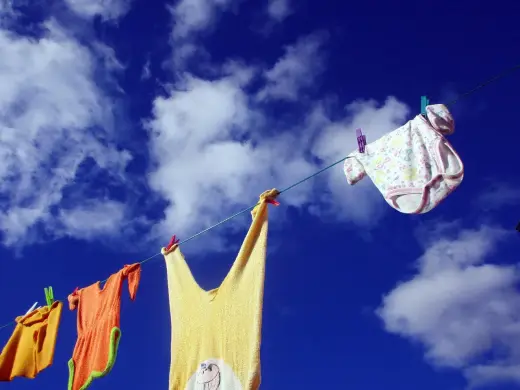
Hang waterproof bibs on a clothes airer or outdoor line in the shade. Never put PUL or PEVA bibs in a hot tumble dryer. High heat melts the waterproof backing, causes peeling, and shrinks the neck binding. Most light short-sleeved bibs dry in an hour or two on a rack.
Dealing with tough stains and smells
Tomato paste, pumpkin, berries, and turmeric leave bright marks on light fabrics. If a stain stays after washing, lay the damp bib in gentle morning sunlight for an hour. Sunlight fades many natural food dyes. Just bring it inside once the mark fades so strong UV rays do not make the waterproof layer brittle.
If a bib smells sour even after washing, soak it in cool water with a spoonful of baking soda for 30 minutes. Then wash it as normal. Never store a damp bib inside a sealed wet bag for days, as black mould spots grow fast in dark, damp fabric.
Common mistakes parents make
Even careful parents run into bib troubles. Avoiding these common mistakes saves time, money, and stained shirts.
- Using one bib all day: A wet bib against the chest makes a child cold and can irritate their skin. Keep three to five bibs ready so you always have a dry one.
- Washing with hot water and high heat: Hot cycles break down waterproof coatings. Always check the care tag first.
- Leaving hook-and-loop tabs open in the wash: Open tabs grab onto baby singlets, socks, and knitwear, leaving fuzzy pulls everywhere.
- Forgetting the catch pocket corners: Mashed banana and porridge hide in pocket seams. Turn pockets inside out after every single meal.
- Buying a neckline that is too wide: If the neck gapes open, runny puree slides straight down onto the collar of the shirt underneath.
- Using a bib as a napkin: Wiping a child's face with a rough waterproof bib can chafe their cheeks. Keep a soft damp face washer nearby instead.
- Putting a bib on over a thick hoodie: Thick layers bunch up inside short sleeves and feel tight under the arms. Take bulky jumpers off before meals, or use a larger size.
How many short-sleeved bibs do you need?
You do not need a drawer full of twenty bibs. Most families do well with three to five short-sleeved bibs. That gives you one for breakfast, one for lunch, one for dinner, and one or two spares in the wash or nappy bag.
If your child attends daycare, check their rules first. Some centres supply bibs, while others ask parents to pack two clean bibs each day in a labelled wet bag.
Frequently asked questions
Can my baby sleep in a short-sleeved bib?
No. Always take the bib off before sleep, even for a short car or pram nap. Safe sleep guidelines in Australia, the UK, the US, and Canada warn against loose fabric or neck fasteners around a sleeping baby. Remove the bib as soon as the meal ends.
Are waterproof bibs safe if my baby chews on them?
Most quality bibs made for babies are safe if your child sucks on the edge now and then. Choose bibs labelled free from PVC, BPA, phthalates, and PFAS. Even with safe materials, gently move the bib away if your baby starts chewing on snaps or seams, and check for damage often.
How many short-sleeved bibs do I need?
Three to five bibs is enough for most homes. Waterproof bibs wipe clean fast and dry quickly on a rack. You can reuse a wiped bib for dry snacks, then wash it at the end of the day.
Should I pick snaps or hook-and-loop at the neck?
Snaps are harder for curious toddlers to pull off, and they do not catch on other clothes in the wash. Hook-and-loop tabs are faster to adjust on a wriggling baby, though they can wear out or collect lint over time. Both are safe as long as snaps stay firmly attached and tabs sit smoothly without scratching.
Why do waterproof bibs start leaking or peeling?
Peeling usually happens when waterproof fabric meets high heat, bleach, or harsh stain removers. Tumble dryers and hot radiators melt the thin waterproof film. Wash bibs in cool or warm water and hang them to dry to make them last much longer.
When should I use a short-sleeved bib instead of a long-sleeved one?
Pick a short-sleeved bib on warm days, when your child wears short sleeves, or when you want a light bib for travel. Pick a long-sleeved smock when your child wears long sleeves in winter, eats very sloppy foods like soup, or does messy painting.
Sources
- Pregnancy, Birth and Baby – Introducing solid food
- Product Safety Australia – Recalls
- NHS Start for Life – Weaning
- UK Government – Buy safe, be safe
- American Academy of Pediatrics (US) – Starting solid foods
- U.S. CPSC – Phthalates business guidance
- Caring for Kids, Canadian Paediatric Society – Feeding your baby in the first year
- Health Canada – Recalls and safety alerts
Related guides
More Feeding & Baby Food →
Short-Sleeved Baby Bibs: How to Choose One, Clean It, and Keep Mealtime Safe

Food-Grade Silicone Bibs with Crumb Catchers: How to Choose, Use, and Clean Them
Weighted Straw Cups vs 360 Cups: How to Choose and Clean Them