Yeast Nappy Rash or Irritation? How to Spot the Signs and Get Help
Learn how yeast nappy rash differs from simple irritation, what care may help, when to seek medical advice, and how guidance compares across four countries.
On this page
- What nappy rash is
- How simple irritation may look
- How yeast rash may look
- How the common patterns compare
- Why zinc oxide may not be enough
- Gentle care during a nappy change
- Products and habits to avoid
- When to get medical advice
- What to expect from a health check
- Care at different ages
- Official guidance across four countries
- Common mistakes and calmer next steps
- Frequently asked questions
- Sources and further reading
- Sources
Short answer: A rash in the nappy area can have several causes. Simple irritation is common. Yeast can also grow on sore, damp skin. A rash with small spots around its edge may fit yeast rash. That pattern cannot confirm the cause. Bacterial infection and other skin problems can look similar. A health professional can check your child and advise on treatment.
Keep the area clean and dry. Change wet or dirty nappies often. Use gentle care, and avoid products that sting or rub. Barrier cream may help protect skin from wee and poo. It does not treat every cause. Ask a doctor, nurse or pharmacist what is right for your child. Seek care sooner if your child seems unwell, has a fever, or the rash is severe or spreading.
In Australia, see healthdirect Australia and Pregnancy, Birth and Baby. In the UK, the NHS gives health advice. In the US, the American Academy of Pediatrics shares parent guidance through HealthyChildren.org. In Canada, the Canadian Paediatric Society shares advice through Caring for Kids. Their advice supports gentle skin care and getting help when a rash is severe, unusual or not improving.
What nappy rash is
Nappy rash means sore or inflamed skin under a nappy. It often affects the bottom, genitals and upper thighs. The skin may look pink, red or darker than usual. Its colour can look different on different skin tones. The area may feel warm or tender. Your child may fuss during a change or when the area is touched.
A nappy traps heat and moisture against the skin. Wee and poo can irritate it. Rubbing from the nappy can add to the soreness. This kind of irritation is often called irritant nappy rash. It is common, and it can happen even when a parent takes good care of their child.
A rash can also be linked to yeast, bacteria, allergy or another skin condition. These causes need different care. The word “yeast” here usually refers to a type of fungus called Candida. It can live on the body without causing trouble. Warm, damp skin can help it grow. A health professional must check the rash to tell what is causing it.
How simple irritation may look
Irritant rash often appears where the nappy touches the skin. It may affect the bottom and the front of the nappy area. Skin folds can be less affected. The rash may look like a broad, sore patch. It can have clear edges or uneven edges.
Wetness, poo, friction and frequent stools can make the skin sore. A new food may change a child’s poo. Illness can also lead to more frequent stools. Neither change proves the rash has a particular cause. Notice what changed, but do not blame yourself or assume one event explains everything.
Simple irritation may improve with frequent nappy changes and gentle care. Some rashes do not improve, even with these steps. That can mean your child needs a different treatment or a medical check. The appearance alone cannot rule out another cause.
How yeast rash may look
Yeast rash can be a bright or deep red patch. It may involve skin folds, where the skin touches itself. Small separate red spots can appear just outside the main patch. These are often called “satellite spots” or “satellite bumps”. The spots may sit around the rash like small islands.
These signs can suggest yeast, but they do not prove it. A bacterial infection or another skin condition can also cause redness, spots or sore skin. A photo or online description cannot reliably diagnose your child. If you are unsure, ask a health professional to examine the area.
Yeast can grow after a child has taken antibiotics. Antibiotics can change the balance of germs in the body. But an antibiotic history alone does not confirm yeast rash. Do not stop a prescribed medicine unless the prescriber tells you to.
A child can have irritation and yeast at the same time. One cause does not rule out another. That is one reason a rash may not settle with barrier cream alone.
How the common patterns compare
This table shows clues, not a diagnosis. A rash can look different from child to child. Skin colour can also change how redness appears.
| Clue | Simple irritation | Possible yeast rash | What to do |
|---|---|---|---|
| Where it appears | Often on skin that touches the nappy | May affect folds and nearby skin | Note where it is, and ask for advice if unsure |
| How it looks | Can be a broad sore patch | May be a red patch with small spots nearby | Looks alone cannot confirm the cause |
| How it feels | May be tender or sting during changes | May also be sore or tender | Handle gently and avoid rubbing |
| What may contribute | Wetness, poo and friction | Yeast can grow in warm, damp skin | These clues are not proof |
| What may help | Gentle cleaning, changes and a barrier | A clinician may advise an antifungal treatment | Ask before using a medicated cream |
| When to seek help | If severe, worsening or not improving | If suspected, spreading or not improving | Contact a doctor, nurse or pharmacist |
Why zinc oxide may not be enough
Zinc oxide is used in some barrier creams. A barrier cream can help protect skin from wetness and poo. It may help with simple irritation. It does not kill yeast or treat every other cause of rash.
If a rash does not improve, that does not prove it is yeast. The cream may not suit the problem. The rash may need a different treatment. There may also be another skin condition. Get medical advice instead of adding more products or changing treatments repeatedly.
Do not put a medicated cream, including an antifungal or steroid cream, on your child without suitable advice. The right treatment depends on the cause and the product. A pharmacist can explain whether a product is suitable. A doctor or nurse can assess a severe or persistent rash.
Tell the health professional what you have already used. Include barrier creams, powders, wipes and any prescribed medicines. Bring the product or a clear photo of its label if you can. This helps them give advice that fits your child.
Gentle care during a nappy change
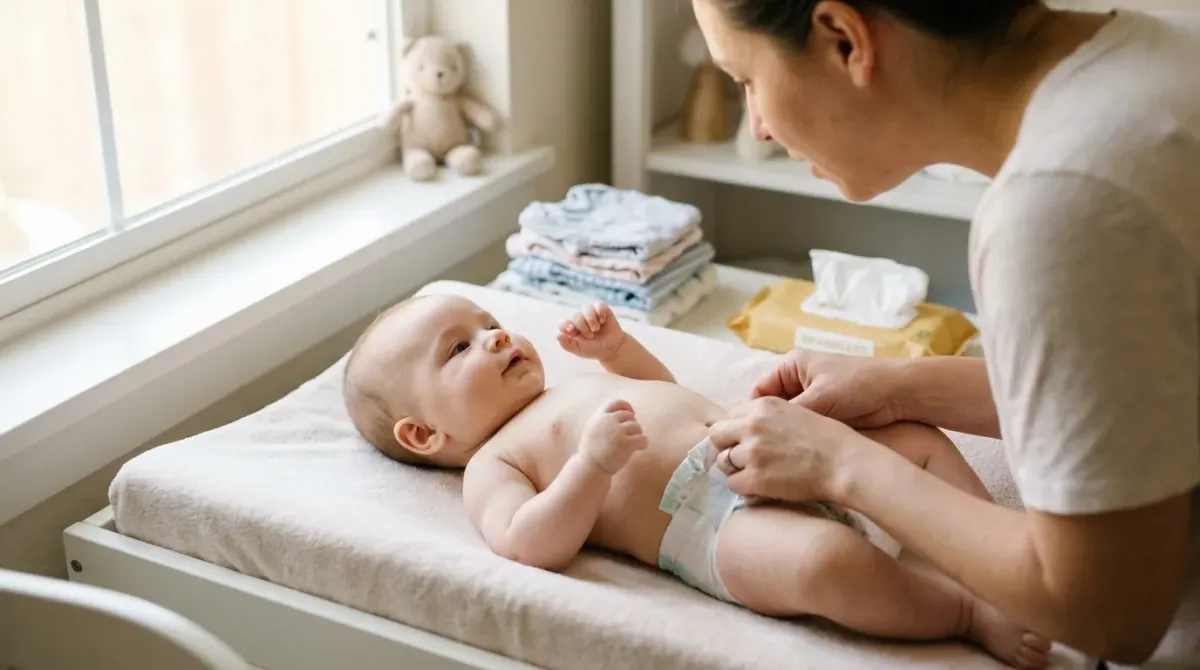
These steps can reduce wetness and friction while you seek advice. Follow any care plan from your child’s health professional.
- Change nappies often. Change a wet or dirty nappy as soon as you can. Check more often when your child has diarrhoea.
- Clean gently. Use lukewarm water and a soft cloth, or a suitable unscented wipe if your child tolerates it. Do not scrub.
- Pat dry. Use a soft towel and gentle pats. Rubbing can make sore skin worse.
- Give the skin some air. When practical, leave the nappy off for a short time. Keep your child warm and supervise them.
- Use a barrier only as advised. A suitable barrier can protect skin from wetness. Ask a health professional or pharmacist if you are unsure which product to use.
- Fit the nappy comfortably. It should not rub or feel too tight. A little room can help air move around the skin.
- Wash your hands. Wash before and after changing a nappy. This helps limit the spread of germs.
If the skin is very sore, ask how to clean it without causing more pain. Do not pull stuck material from broken skin. Avoid using a hair dryer or heater near your child’s skin. A warm cloth and gentle drying are safer choices.
Products and habits to avoid
Babies and toddlers can react to products in different ways. Keep care simple while the skin is sore.
- Avoid scented products. Perfume can bother sensitive skin. Choose a simple product without added fragrance when possible.
- Avoid scrubbing. Wiping hard can cause more rubbing and pain.
- Avoid powders. A child can breathe in powder dust. Ask a health professional before using any powder.
- Avoid household remedies. Food, oils and other home treatments may irritate the skin or delay the right care.
- Do not use another child’s prescription cream. The product may be unsuitable for your child or this rash.
- Do not use leftover medicine. Old medicine may be out of date or may not suit the current problem.
- Do not keep changing products. Many products can make it harder to see what helps or causes irritation.
If you think a product caused a rash, stop using it and ask a health professional what to do. Keep the label. A clear photo of the ingredients can help the pharmacist or doctor.
When to get medical advice
Contact a doctor, nurse or other health professional if the rash is severe, getting worse, or not improving. Ask for advice if you see small spots around a sore patch or rash in the skin folds. Those signs can fit yeast, but an examination may be needed to choose treatment.
Get prompt advice if the skin has blisters, open sores, pus or bleeding. Seek care if the rash spreads beyond the nappy area, is very painful, or your child seems unwell. A fever with a rash also needs medical advice. Follow local urgent-care advice if your child becomes very sleepy, hard to wake, or has trouble breathing.
For a young baby, use a lower threshold for seeking advice. If your baby is under three months and has a temperature of 38°C or higher, get urgent medical advice. If you are worried about your child’s condition, contact your local health service. Do not wait for a rash to fit a pattern in this guide.
Take note of when the rash began and whether it is changing. Tell the clinician about recent illness, loose stools, antibiotics and products used. These details can help, but they do not replace an examination.
What to expect from a health check
A clinician may ask when the rash started and how it has changed. They may ask about stools, medicines, wipes and creams. They may also ask whether your child has had similar rashes before.
They may look at the affected skin. Many rashes can be assessed by looking and asking questions. If the cause is unclear or the rash is unusual, they may suggest another check. Follow their advice about treatment and when to return.
Ask how and where to apply any recommended cream. Ask how often to use it and when to stop. Check whether it can be used with a barrier cream. Ask what changes should lead you to seek help again.
If a treatment does not help, contact the clinician again. Do not keep using a medicine for longer than advised. A rash that persists may need a new assessment.
Care at different ages
Nappy rash can happen at any age when a child wears nappies. The same basic ideas apply: reduce wetness and rubbing, clean gently, and seek help when needed. A child’s age can change what care is practical.
Newborns and young babies
Newborn skin can be delicate. Change nappies often, and use gentle cleaning. If you are unsure about a rash on a very young baby, ask a nurse, doctor or midwife. Seek prompt advice if the baby seems unwell or has a fever.
Older babies starting solid foods
Stools can change as babies begin eating new foods. A change in poo may irritate skin, but it does not identify the rash’s cause. Keep changing nappies promptly. Ask for advice if loose stools continue or your baby shows signs of dehydration.
Toddlers and children in care
Tell other caregivers what products are used and what the health professional advised. Ask them to change nappies promptly and clean gently. Do not send a medicated cream unless its use has been agreed with the caregiver and the child’s clinician.
Official guidance across four countries
Health advice can use different words. Australia often says “nappy rash”. The UK also uses “nappy rash”. The US and Canada often say “diaper rash”. The basic care ideas are similar, but a local clinician can advise on your child.
| Country | Official or peak body | Parent guidance |
|---|---|---|
| Australia | healthdirect Australia; Pregnancy, Birth and Baby | Gentle care, frequent changes, and medical advice when needed |
| United Kingdom | National Health Service (NHS) | Keep the area clean and dry; seek advice if the rash is severe or persistent |
| United States | American Academy of Pediatrics (AAP), through HealthyChildren.org | Use gentle care and ask a clinician if the rash is severe or does not improve |
| Canada | Canadian Paediatric Society, through Caring for Kids | Change diapers often, keep skin clean and dry, and get medical advice when needed |
These organisations offer general information. Their pages cannot diagnose your child. Follow local advice for urgent care and medicines. Ask a health professional if guidance differs from your child’s care plan.
Common mistakes and calmer next steps
- Calling every rash yeast. Small spots can be a clue, but they do not prove the cause. Ask for an assessment when unsure.
- Assuming barrier cream treats yeast. A barrier protects skin. It does not treat every cause.
- Scrubbing the rash clean. Gentle cleaning is enough. Rubbing can add soreness.
- Trying many products at once. Keep care simple. Ask before adding a medicated product.
- Waiting despite worsening signs. Seek help for severe pain, spreading rash, sores, fever or an unwell child.
- Blaming yourself. Nappy rash is common. It can happen despite careful changes and cleaning.
A practical plan is simple. Change the nappy, clean gently, and pat dry. Give the skin some air when practical. Use only products suited to your child. Seek medical advice if the rash is severe, unusual, spreading or not improving.
Frequently asked questions
Do satellite bumps mean my child has a yeast rash?
No. Small spots around a larger red patch can fit yeast rash. They do not confirm it. Other causes can look similar. Ask a health professional if you notice this pattern or feel unsure.
Can I treat a suspected yeast rash with zinc oxide?
Zinc oxide can help protect skin from wetness and poo. It does not treat yeast. Ask a doctor, nurse or pharmacist what care is right. Do not start an antifungal cream without suitable advice.
How long should a nappy rash last?
There is no single time that fits every child or every cause. Get advice if the rash is severe, worsening or not improving with gentle care. A clinician can tell you whether your child needs another treatment or check.
Can antibiotics cause yeast nappy rash?
Yeast can grow after antibiotics. This may happen because antibiotics change the balance of germs. But antibiotic use does not prove that a rash is yeast. Do not stop prescribed medicine without speaking to the prescriber.
Should I leave my baby’s nappy off?
Short periods without a nappy can let air reach the skin. Do this only when practical and safe. Keep your child warm and supervised. It does not replace medical advice when a rash is severe or persistent.
Are wipes safe to use on sore skin?
Some children tolerate suitable unscented wipes. Others may find them uncomfortable. Lukewarm water and a soft cloth are another option. Stop if a product stings or seems to worsen the rash, and ask a health professional.
When should I seek urgent help?
Seek prompt advice if your child has a fever with the rash, seems unwell, or has blisters, open sores, pus or bleeding. A baby under three months with a temperature of 38°C or higher needs urgent medical advice. Follow your local health service’s instructions.
Can a rash be both irritation and yeast?
Yes. More than one cause can affect the same area. A barrier may protect irritated skin while a clinician advises on another treatment. Ask for an assessment if the rash does not settle.
Does a yeast rash mean the nappy area was not kept clean?
No. Yeast can grow in warm, damp skin. A rash can happen even when a parent changes nappies and cleans carefully. Focus on gentle care and getting help when needed.
Sources and further reading
- healthdirect Australia – Nappy rash
- Pregnancy, Birth and Baby – Nappy rash
- American Academy of Pediatrics – Diaper rash
- Canadian Paediatric Society – Diaper rash
- NHS – Washing and bathing your baby
Disclaimer: This article is general information. It is not a diagnosis or a substitute for care from a doctor, nurse or pharmacist. Seek medical advice if you are worried about your child.
Affiliate disclosure: BabyGearFinder may earn a commission from qualifying purchases through links on this site. This does not affect the price you pay. Product information is general and is not medical advice.
Sources
Related guides
More Parental Tips →
Ear Infections in Babies and Toddlers: Signs, Pain Relief and When to Get Help

How to Prevent and Treat Stubborn Nappy Rash: Barrier Cream, Air Time, and Cloth Wipes
Dehydration and Heat Illness in Babies: Wet Nappy Counts, Warning Signs and Keeping Cool in Summer