














How to Build a Baby Sleep Schedule That Works
A simple guide to building a baby sleep schedule by age, spotting tired signs, setting a calm bedtime routine, and following safe sleep rules.
On this page
- Key points
- Why a flexible sleep routine helps
- How much sleep babies need by age
- Spotting tired signs before your baby gets overtired
- How to build a simple bedtime and nap routine
- Setting up a safe and calm sleep space
- What can throw off a baby sleep schedule
- Common mistakes to avoid when setting a sleep schedule
- When to ask a doctor or child health nurse for help
- Frequently asked questions
- Sources
Short answer: A good baby sleep schedule follows your baby's tired signs and age, not a strict clock. Newborns sleep in short bursts day and night. From about 3 to 4 months, most babies start to form a clearer day and night pattern. Watch for early tired signs, use a calm bedtime routine, and follow safe sleep rules every time.
This advice lines up with health groups in Australia (Red Nose, Pregnancy, Birth and Baby, and Tresillian), the UK (NHS and The Lullaby Trust), the US (American Academy of Pediatrics), and Canada (Canadian Paediatric Society).
Key points
- Follow your baby, not the clock: Flexible routines work better than rigid times, especially in the first 3 months.
- Know the age range: Newborns sleep 14 to 17 hours a day. Babies aged 4 to 11 months usually need 12 to 15 hours.
- Spot early tired signs: Yawning, looking away, or rubbing eyes means it is time for sleep before overtiredness kicks in.
- Keep bedtime simple: A short, repeatable routine like a warm bath, feed, and quiet song helps your baby wind down.
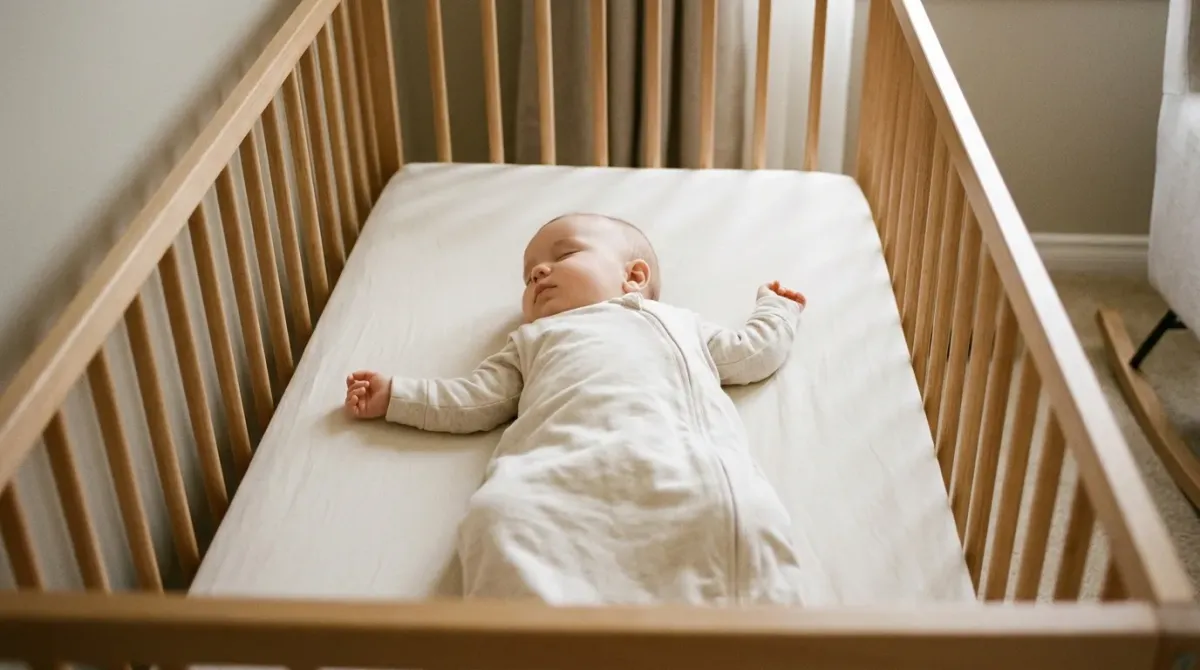
- Safe sleep comes first: Always place your baby on their back, on a firm flat mattress, in a clear cot with no loose items.
- Get light right: Bright morning light and dim, quiet nights help set your baby's body clock.
Why a flexible sleep routine helps
Sleep does a lot of quiet work for your baby. While they sleep, their body grows and repairs itself. Their brain also sorts through everything they saw and heard that day.
A steady sleep routine helps your baby get the rest they need. Well-rested babies are often calmer during the day. They may feed better and cry less from being overtired.
A routine helps parents and carers too. When naps and bedtime happen around the same times each day, you can plan meals, errands, and your own rest. You spend less time guessing why your baby is fussing.
Routine vs strict schedule
Many parents hear the word "schedule" and picture exact times on a wall chart. That kind of strict timetable rarely works for babies.
Babies grow fast. A growth spurt, a new skill, or a cold can shift nap times by an hour. A flexible routine keeps the same order of events—wake, feed, play, sleep—while letting the exact clock times bend a little.
Think of it as a rhythm rather than a rulebook. Your baby leads, and the routine gently guides the day.
How much sleep babies need by age
Every baby is different. Some babies need a little more sleep than average, and some need a little less. The American Academy of Pediatrics (AAP) and Australian health services share these general ranges for total sleep in 24 hours.
| Age stage | Total sleep in 24 hours | Typical nap pattern | What to expect |
|---|---|---|---|
| Newborns (0 to 3 months) | 14 to 17 hours | Short naps all day and night | No set day-night rhythm yet. Wakes often to feed. |
| Babies (4 to 11 months) | 12 to 15 hours | 3 naps at 4 months, dropping to 2 naps by 8 to 9 months | Longer night stretches start. Clearer wake times between naps. |
| Toddlers (1 to 2 years) | 11 to 14 hours | 2 naps at first, moving to 1 afternoon nap around 12 to 18 months | More active play. Bedtime resistance can pop up. |
| Preschoolers (3 to 5 years) | 10 to 13 hours | 1 short nap or quiet time, then no naps | Most sleep happens at night. |
These numbers include both night sleep and daytime naps. If your baby is happy, growing well, and alert when awake, they are likely getting enough sleep.
Newborns (0 to 3 months)
Newborns do not know the difference between day and night yet. Their stomachs are tiny, so they wake every 2 to 4 hours to feed. This is normal and healthy.
Do not try to force a clock schedule at this age. Instead, feed your baby when they show hunger cues. Watch for tired signs and help them sleep soon after.
Most newborns can only stay awake for 45 to 60 minutes at a time. That includes feeding and nappy changes. By the time you finish a feed and burp your baby, it may already be time for the next sleep.
Young babies (3 to 6 months)
Around 3 to 4 months, your baby's body clock starts to mature. They begin to make melatonin, a natural sleep hormone, in the evening. Night stretches often get a bit longer.
Most babies at this stage take 3 or 4 naps a day. Awake time between naps grows to about 1.5 to 2.5 hours. You can start putting your baby down at roughly the same time each evening.
A sample day might look like this:
- 7:00 am: Wake up, feed, and morning light.
- 8:30 am: First nap.
- 11:30 am: Second nap.
- 2:30 pm: Third nap.
- 5:00 pm: Short catnap if needed to reach bedtime.
- 7:00 pm: Bedtime routine and night sleep.
Use this only as a rough guide. If your baby wakes at 6:00 am, everything shifts earlier by an hour.
Older babies (6 to 12 months)
Between 6 and 9 months, most babies drop from 3 naps down to 2 solid naps a day. One nap happens in the morning, and one happens in the early afternoon.
Awake times stretch to 2.5 to 4 hours. Many babies start eating solid foods around 6 months, though milk feeds stay the main source of nutrition until 12 months. Some babies still wake once or twice at night for a feed or comfort, which is normal.
A sample 2-nap day might look like this:
- 7:00 am: Wake up and milk feed.
- 9:30 am to 11:00 am: Morning nap.
- 2:00 pm to 3:30 pm: Afternoon nap.
- 7:00 pm: Bedtime routine and sleep.
Toddlers (1 to 2 years)
Between 12 and 18 months, most toddlers move from 2 naps down to 1 longer afternoon nap. This change can take a few weeks. On some days your toddler may still need a short morning nap.
Once they settle into 1 nap, it usually happens after lunch for 1 to 2 hours. Bedtime often sits around 7:00 pm to 7:30 pm. Keeping wake-up and bedtime steady helps a lot at this age.
Spotting tired signs before your baby gets overtired
The secret to an easier sleep schedule is timing. If you put your baby down when they first get sleepy, they usually settle faster. If you wait too long, their body releases stress hormones to keep them going.
An overtired baby looks wide awake and wired. They fight sleep, cry hard, and wake more often after falling asleep. Learning your baby's early tired signs helps you catch the sweet spot.
| Early tired signs (act now) | Late overtired signs (harder to settle) | Signs of hunger or discomfort |
|---|---|---|
| Yawning | Loud crying or screaming | Rooting or sucking on hands |
| Rubbing eyes or pulling ears | Arching the back | Smacking lips |
| Looking away from toys or faces | Clenched fists and stiff legs | Wriggling with a wet or dirty nappy |
| Staring blankly into space | Jerky, frantic arm movements | Crying right after a loud noise |
| Moving more slowly or getting quiet | Hard to calm even when held | Pulling legs up with trapped wind |
Note that young babies can show hunger and tired signs at the same time. If your baby has been awake for a while and just fed, those rubbing eyes and yawns point to sleep. If it has been a few hours since a feed, offer milk first.
Using awake windows as a helper
An awake window is simply how long your baby can stay awake happily between sleeps. It starts when you pick your baby up from a nap and ends when they fall asleep again.
Awake windows are not strict rules. They are just a clue so you know when to start looking for tired signs. Here is a rough guide:
- 0 to 2 months: 45 to 60 minutes.
- 2 to 4 months: 1 to 2 hours.
- 4 to 6 months: 1.5 to 2.5 hours.
- 6 to 9 months: 2.5 to 3.5 hours.
- 9 to 12 months: 3 to 4 hours.
- 12 to 18 months: 4 to 5.5 hours.
Notice that the first awake window of the day is often the shortest. The last awake window before bedtime is often the longest.
How to build a simple bedtime and nap routine
Babies cannot read a clock, so they rely on clues to know what comes next. A bedtime routine is a short set of calm steps you do in the same order every night. After a week or two, your baby's brain links those steps to sleep.
Keep the routine short—about 20 to 30 minutes is plenty. Too many steps can make an overtired baby cranky.
A simple 5-step bedtime routine
- Warm bath: A warm bath relaxes muscles and marks the end of playtime. You do not need soap every night if your baby has dry skin.
- Nappy and pyjamas: Put on a clean nappy and cosy sleep clothes. Dress your baby for the room temperature so they do not get too hot or cold.
- Feed in a quiet room: Give a breastfeed or bottle feed in dim light. Try to keep your baby calm and relaxed, not overly stimulated.
- Short book or song: Read a short board book or sing a soft lullaby. Hearing your calm voice helps your baby feel safe.
- Cuddle and into the cot: Give a gentle kiss, say your usual sleep phrase like "time for sleep", and lay your baby down on their back.
A quick nap routine
Daytime naps do not need a bath. A 5-minute mini routine works well. Take your baby into the bedroom, close the curtains, put on a sleeping bag, sing one short song, and lay them down.
Doing the same two or three steps before each nap gives your baby a clear signal that sleep is coming.
Teaching day and night
Light is the strongest tool for setting your baby's body clock. Health groups like Raising Children Network and the NHS suggest keeping days bright and nights boring.
- In the morning: Open the curtains at a regular wake-up time. Take your baby outside for fresh air and natural daylight when you can.
- During daytime feeds and play: Talk, smile, and keep normal household sounds around you.
- At night: Keep lights dim during night feeds and nappy changes. Speak softly and skip playtime. Put your baby straight back to sleep once they are fed and clean.
Keep screens out of the bedroom
The Canadian Paediatric Society, the AAP, and the NHS advise no screen time for children under 18 to 24 months, apart from video calls with family. Bright screens before bed can also block sleep hormones and make it harder for babies and toddlers to fall asleep.
Keep phones, tablets, and TVs turned off during the bedtime routine. A paper book or your voice is much better for sleep.
Setting up a safe and calm sleep space
No sleep schedule matters if the sleep space is not safe. Every country's peak safe-sleep body agrees on the main rules. Always follow these rules for every nap and every night sleep.
| Safe sleep rule | Australia (Red Nose) | UK (The Lullaby Trust / NHS) | US (AAP / NICHD) | Canada (CPS / Health Canada) |
|---|---|---|---|---|
| Sleep position | Back only from birth | Back only for every sleep | Back only until 1 year | Back only for every sleep |
| Sleep surface | Firm, flat, clean mattress | Firm, flat, waterproof mattress | Firm, flat, non-inclined surface | Firm, flat mattress in a safe cot |
| Cot contents | Clear cot: no pillows, doonas, bumpers, or soft toys | Clear cot: no loose bedding, pillows, or toys | Bare crib: fitted sheet only, no blankets or toys | Empty crib: fitted sheet only, no pads or toys |
| Room sharing | Same room as parent for first 6 to 12 months | Same room as parent for first 6 months | Same room as parent for at least 6 months | Same room as parent for first 6 months |
| Smoke-free | Smoke-free before and after birth | Keep baby away from smoke | Smoke-free home and car | Smoke-free environment |
When buying a cot or crib, check that it meets your country's safety standard. In Australia, look for AS/NZS 2172. In the UK, look for BS EN 716. In the US, look for ASTM F1169. Do not use inclined sleepers, sleep positioners, or weighted swaddles or sleep sacks.
Room temperature and clothing
Overheating raises the risk of sudden infant death. The Lullaby Trust in the UK suggests a room temperature of about 16°C to 20°C as a comfortable guide. Red Nose Australia advises dressing your baby in light layers and checking their tummy or back of the neck, not their hands or feet, to see if they are too warm.
Never put a hat or beanie on your baby for sleep indoors. Babies lose extra heat through their heads. A safe sleeping bag with a fitted neck and armholes is safer than loose blankets.
Light and sound
For daytime naps, a darkened room helps older babies sleep past one sleep cycle. Blackout curtains or blinds can block early morning sun in summer.
If you use a white noise machine, be careful with volume and placement. Research published in Pediatrics showed that some infant sleep machines can play louder than safe levels when placed close to a baby's ear. Keep any sound machine well across the room and set it low, no louder than a quiet shower. Turn it off when your baby is awake.
What can throw off a baby sleep schedule
Even the best sleep schedule hits bumps along the way. Knowing what causes rough patches stops you from blaming yourself.
Hunger and growth spurts
Babies go through fast growth spurts every few weeks. During a growth spurt, your baby may wake more often to feed. Follow their lead and offer extra feeds for a few days. Sleep usually settles back down once the spurt passes.
Discomfort
A soaked nappy, scratchy clothing tag, or a room that is too hot or cold can wake a baby early. Teething sore gums can also make settling harder for a few nights. Check the basics first when your baby wakes suddenly.
Overstimulation
Busy days with lots of visitors, loud shops, or bright lights can wind a baby up. Give your baby 20 to 30 minutes of quiet time in a calm room before trying to put them down for a nap.
Illness
A blocked nose, earache, or fever makes sleep uncomfortable. When your baby is sick, drop the schedule and focus on comfort, fluids, and rest. Seek medical care if your baby has trouble breathing, a high fever, or fewer wet nappies than usual.
New skills and sleep changes
Many parents hear about "sleep regressions" around 4 months, 8 months, or 12 months. These are not steps backwards. They happen when your baby's brain learns big new skills like rolling, crawling, or pulling up to stand.
Babies often practise new moves in the cot at night. Give your baby plenty of floor time and tummy time during the day so they can practise while awake. Keep your bedtime routine steady through these weeks.
Common mistakes to avoid when setting a sleep schedule
When you are exhausted, it is easy to try anything for more sleep. Watch out for these common traps.
- Starting a strict schedule too early: Newborns need to feed on demand. Trying to stretch feeds by the clock in the first weeks can hurt milk supply and weight gain.
- Keeping a baby awake to make them sleep longer: Skipping naps almost always backfires. An overtired baby sleeps worse at night, not better.
- Changing plans every two days: Babies need time to learn a new routine. Stick with a gentle change for at least 7 to 14 days before deciding if it works.
- Using car seats or bouncers for routine naps: Red Nose, the AAP, and The Lullaby Trust warn against leaving babies to sleep in car seats, capsules, bouncers, or swings once you arrive home. Their heads can tip forward and block their airway. Always move a sleeping baby to a flat, firm cot or bassinet.
- Ignoring your own rest: Sleep-deprived parents struggle to stay patient and safe. Nap when you can, share night duties with a partner or support person, and accept help with meals or chores.
When to ask a doctor or child health nurse for help
Broken sleep is normal for babies, especially in the first year. Still, some signs mean you should check in with a doctor, child health nurse, or paediatrician.
Get medical advice if your baby:
- snores loudly or pauses in breathing during sleep;
- seems very floppy, hard to wake, or unusually sleepy during the day;
- is not gaining weight or has fewer wet nappies;
- cries in pain for hours and cannot be comforted;
- keeps you feeling overwhelmed, hopeless, or unable to cope.
Free support is available in all four countries. In Australia, you can call Pregnancy, Birth and Baby or contact Tresillian or Karitane. In the UK, speak to your health visitor or NHS 111. In the US, call your paediatrician's office. In Canada, call your local public health nurse or provincial health line.
Frequently asked questions
When should I start a baby sleep schedule?
Start with gentle day-and-night cues from birth, like morning sunlight and quiet night feeds. Wait until around 3 to 4 months before aiming for set nap and bedtime windows. Before 3 months, follow your baby's hunger and tired cues.
Should I wake a sleeping baby to stick to a schedule?
Usually, no—let a sleeping baby rest. There are two exceptions. First, if your newborn has not regained birth weight or your doctor told you to feed every few hours. Second, if a late afternoon nap goes past 4:30 pm or 5:00 pm and pushes bedtime too late for an older baby.
What do I do if my baby only takes short 30-minute naps?
Short 30-to-45-minute naps are very common from 2 to 5 months. That is the length of one baby sleep cycle. Most babies learn to link two cycles together around 5 to 7 months. In the meantime, check that the room is dark and watch awake windows so your baby is not overtired going down.
Is it okay to rock or feed my baby to sleep?
Yes, if it works for your family and your baby is placed safely on their back in a clear cot once asleep. Many newborns need rocking or feeding to settle. As your baby gets older, you can gently put them down drowsy but awake if you want them to practise falling asleep in their cot.
How do I adjust the schedule when my baby drops a nap?
Signs your baby is ready to drop a nap include fighting the last nap, taking a long time to fall asleep at bedtime, or waking early. Slowly push awake windows out by 15 minutes every few days. On days when naps are short, bring bedtime 30 minutes earlier so your baby does not get overtired.
Why does my baby wake up at 5 am ready to play?
Early morning waking is common because sleep is lightest in the early hours. Check for morning light peeking around curtains, cold room temperatures around 4 am, or a bedtime that is too late. Sometimes an earlier bedtime by 30 minutes actually helps a baby sleep later.
Can a baby sleep in a car seat or pram for daytime naps?
Babies often fall asleep in the car or on a walk, and short trips are fine if you are watching them. Do not use a car seat, capsule, or bouncer as a regular nap spot at home. When you get home, lift your baby out and place them on their back on a firm, flat mattress in a safe cot.
Sources
- Pregnancy, Birth and Baby – Baby sleep patterns by age
- Pregnancy, Birth and Baby – Getting your baby to sleep
- Tresillian (NSW Health) – Baby sleep
- Red Nose Australia – Six safe sleep recommendations
- NHS – Helping your baby to sleep
- The Lullaby Trust (UK) – Safer sleep advice
- AAP HealthyChildren.org – Healthy sleep habits: how many hours does your child need?
- Caring for Kids (Canadian Paediatric Society) – Healthy sleep for your baby and child
Related guides
More Parental Tips →
Newborn Sleep Patterns: How Baby Sleep Works and How to Help

Breastfeeding and Postpartum Depression: Finding Support That Works for You

Helping Your Baby Sleep Through the Night: A Simple, Safe Guide
