














Setting Up a Nursery and Changing Station That Is Easy on Your Back and Safe for Baby
How to organise a nursery and nappy changing station so you strain less and stay safe: layout, heights, storage, anchoring furniture, night-time set-up and…

On this page
- Why layout matters in the first months
- Plan your nursery in zones
- The changing station
- Storage that saves your back
- Anchor furniture and TVs
- Cords, blinds and windows
- The feeding corner
- Night-time set-up
- Room temperature, air and light
- The cot: a quick safety check
- A nursery checklist
- Small spaces and shared rooms
- Budget tips
- Rules and advice in each country
- Common mistakes to avoid
- FAQ
- Sources
Short answer: a good nursery is set up around what you do most often: change, feed and settle your baby, many times a day and night. Put your changing area at about waist height so you don't stoop, keep everything you need within one arm's reach, and store heavy things at hip height. Anchor tall furniture to the wall, keep cords away from the cot, and put the cot clear of windows. Use a dim night light and a feeding chair with good back support. Then your nights run smoothly, your back stays happier and your baby stays safe.
Key points
- Changing station: waist height, supplies in reach, raised sides, and a hand on your baby at all times.
- Storage: heavy items at hip height; nappies and wipes at arm's reach; nothing dangerous on top of furniture.
- Safety: anchor furniture and TVs, tie up cords, keep the cot away from windows and heaters.
- Feeding chair: back support, armrests, a footstool and a small table for water.
- Night set-up: dim light, supplies ready, and everything where you can find it half asleep.
Why layout matters in the first months
In the early weeks, a baby may need 8 to 12 nappy changes and several feeds every day. That adds up to hundreds of small bends, lifts and twists each week. If your set-up is awkward, your back, neck and wrists feel it. Physiotherapy guides for people after childbirth advise setting the changing surface at waist height so you don't stoop. They also advise keeping the things you use most close to where you use them.
A well-planned nursery saves effort. It also saves time at 3 am, when you're tired and need to find a nappy fast. Safety is part of the same plan. A nursery that has everything in the right spot also keeps hazards out of reach.
You don't need to buy lots of new furniture. Many families use a dresser, a shelf and a few baskets. The layout matters more than the price.
Plan your nursery in zones
Think of the room as four zones: sleep, change, feed and store. Each has its own needs.
| Zone | What it's for | Where to put it | Key rules |
|---|---|---|---|
| Sleep | Cot or bassinet | Away from windows, blind cords, heaters and shelves; in your room for the first 6 months | Safe cot, firm flat mattress, nothing else in the cot |
| Change | Nappy changes and dressing | Near the door and the bin, away from the window | Waist height, supplies at hand, hand on baby |
| Feed | Breast or bottle feeds | A quiet corner with a lamp | Supported back, feet resting, water and snacks near |
| Store | Clothes, nappies, spare sheets | Wardrobe or drawers with anchors | Heavy things low, light things high, locked drawers for toddlers |
Safe sleep advice says babies should sleep in the same room as an adult for the first 6 months. If the nursery is a separate room, you may use it mostly for changes and feeds at first, and have the cot in your room. Our guide on moving from a bassinet to a cot explains this.
The changing station
Choose where to change
You have three common options:
- A change table or dresser with a change top. Waist height saves your back. Product Safety Australia suggests tables with raised sides, and says there is no mandatory standard for change tables in Australia.
- A change mat on a bed or bench. Works in small spaces, but you must never leave your baby, as babies can roll.
- A change mat on the floor. The safest from falls. It means kneeling, so use a padded mat or cushion for your knees.
Many families use two: a table at home and a floor mat for travel or rolling babies.
Get the height right
- The surface should sit at about waist height, or just below your elbows when your arms hang by your sides and bend slightly.
- If you're much taller or shorter than your partner, choose a table with a height you can both use, or an adjustable one. A stable step can help a shorter parent.
- Stand close, with your feet apart. Don't reach forward over the table.
Safety on the table
- Keep a hand on your baby at all times, as Product Safety Australia advises. Never turn away.
- Look for raised sides. The guide suggests barriers of at least 10 cm.
- Use the strap if there is one, but don't rely on it.
- Check for gaps that could trap fingers or heads, and make sure the table is stable and locked.
- Don't change on a high surface with a wriggly baby. Move to the floor.
- Keep the table away from windows and blind cords.
What to keep at the changing station
| Item | Where to keep it | Notes |
|---|---|---|
| Nappies | Basket or shelf at waist height, within arm's reach | Keep 6 to 10 ready |
| Wipes or water and cotton wool | On the table or shelf | Wipes in a pop-up pack you can open with one hand |
| Barrier cream | Small tub at hand | Keep lids closed; out of a crawling baby's reach |
| Spare outfit and sleeping bag | Top drawer | For leaks and night changes |
| Change mat covers or towels | Next shelf down | Spare ones in a drawer |
| Bin or nappy pail | Next to the table, with a lid | Out of baby's reach; empty often |
| A small toy or mobile | Within reach for you, out of reach for baby | Keeps your baby calm |
Keep the station tidy. Too many items make it hard to find things, and a cluttered table is a hazard if your baby knocks something onto the floor.
Storage that saves your back
Where you store things matters as much as what you store. Use these simple heights:
- Hip to waist height: things you use every day. Nappies, wipes, creams, daily outfits.
- Chest height: light things you use often. Muslins, bibs, socks.
- Above the shoulders: light things you use rarely. Seasonal clothes, spare sheets.
- Floor level: heavy things. Bulk nappy boxes, a nappy bin, bulky blankets.
Avoid putting heavy items high up, or stacking boxes where you have to lift them overhead. Use baskets with handles and lift them close to your body. A small trolley or rolling cart can move supplies from room to room.
Open baskets and drawers are easier at night than doors and lids, but keep things your toddler might reach, like creams, in a drawer with a child lock.
Anchor furniture and TVs
Product Safety Australia says children under 5 are most at risk of serious harm from toppling furniture or TVs, and that toppling furniture has killed at least 28 people in Australia since 2000. A nursery is full of drawers, shelves and tall furniture that a climbing toddler can pull over.
- Anchor bookcases, chests of drawers, wardrobes and TVs to the wall. The guide says the best way is to secure furniture to the wall or floor.
- Buy anchor kits from furniture, hardware or baby stores if your furniture didn't come with one. A tradesperson can help if you're unsure which anchor suits your wall.
- Use drawer locks so children can't open drawers and climb them like steps.
- Put heavy items low in drawers and shelves.
- Don't put TVs on furniture not made for them, like a chest of drawers.
- Keep toys, remotes and treats off the top of furniture, so children aren't tempted to climb.
- Renters: ask your landlord or agent about wall anchors, explain the reason, and offer to fix the holes when you leave.
In the US, the CPSC runs the "Anchor It!" campaign for the same reason, and the UK and Canada give similar advice. Even if your baby isn't mobile yet, anchor furniture now, so you don't forget when they start crawling and climbing.
Cords, blinds and windows
- Blind and curtain cords can strangle babies and toddlers. Product Safety Australia says to keep cords out of reach, and there is a mandatory standard for new blinds sold in Australia. Wind cords up high, use cleats or cord tidies, and choose cordless blinds where you can.
- Keep the cot, change table and any furniture away from blinds and windows. Children climb furniture to reach them.
- Windows: use locks or guards so they can't open wide.
- Other cords: monitor cords, lamp cords and chargers should be out of reach and not near the cot. Follow your monitor maker's instructions on where to place it.
- Mobiles: hang them well out of reach and take them down once your baby can push up on hands and knees.
The feeding corner
You may spend hours a day in a feeding chair, so it deserves good planning.
- A chair with good back support, firm cushions and armrests. A rocking or gliding chair is nice but not essential.
- A footstool so your feet are supported. Physiotherapy guides suggest sitting well back with support behind your lower back.
- Pillows for your lap and arm to bring your baby up to you.
- A small side table for water, snacks, burp cloths and your phone.
- A dim lamp or night light, not an overhead light.
- A power point nearby for phone charging, with cords tucked away and out of reach.
Feed in a chair, not on a couch or bed, if you might fall asleep. Red Nose warns that sleeping with a baby on a couch or armchair is very dangerous.
Night-time set-up
At night, you want fewer steps and less light.
- Night light: a dim, warm-coloured light is easier on tired eyes and less likely to wake your baby fully.
- Night kit: keep nappies, wipes, cream, a spare sleeping bag and a spare outfit in a basket near the cot or your feeding chair.
- Bottle prep: if you bottle feed, have a plan so you don't need to go to the kitchen. Many families keep sterilised bottles, measured formula and a flask of boiled water ready. Pregnancy, Birth and Baby and the NHS have advice on safe formula preparation.
- Clear floor: nothing to trip on between your bed, the cot and the changing area.
- Temperature: a room that's comfortable for you in light clothing is usually right for a baby in a sleeping bag. Red Nose suggests checking your baby's chest or back to see if they're too warm.
Room temperature, air and light
- Keep the room well ventilated. Open a window during the day when it's safe, and keep windows locked or guarded.
- Use blackout blinds for day sleeps if you like, but keep cords out of reach.
- Avoid heaters near the cot. Use a guard around any heater, and never dry clothes on or near a heater.
- Avoid strong smells like air fresheners and scented candles in a baby's room. If you've just painted or put in new carpet, air the room well before using it.
The cot: a quick safety check
Even in a nursery that's mostly about changing and feeding, the cot needs to be right. Our other guides cover this in detail, but the basics are:
- It meets your country's safety standard. Product Safety Australia has a household cots guide.
- A firm, flat mattress that fits snugly, with no gap bigger than about 2 cm at the sides.
- No pillows, bumpers, soft toys or loose bedding in the cot.
- The cot is away from windows, cords, heaters and shelves.
- Your baby sleeps on their back, with their face uncovered.
A nursery checklist
| Area | Check | Done? |
|---|---|---|
| Changing station | Waist-height surface, raised sides, supplies in reach, hand on baby | ☐ |
| Floor mat | Padded mat for floor changes; cushion for your knees | ☐ |
| Storage | Heavy items low; daily items hip height; drawer locks fitted | ☐ |
| Furniture | Tall pieces and TV anchored to the wall | ☐ |
| Cords | Blind and curtain cords tied up; monitor cord away from cot | ☐ |
| Windows | Locked or guarded; no furniture beneath | ☐ |
| Cot | Safe standard, firm mattress, bare, away from hazards | ☐ |
| Feeding chair | Back support, footstool, pillows, side table | ☐ |
| Night kit | Dim light, nappies, spares, water | ☐ |
| Bin | Lidded, out of reach, near the changing station | ☐ |
Small spaces and shared rooms
Not everyone has a spare room. Many babies share their parents' room for the first months, which is what safe sleep advice recommends. You can still set up a good changing and feeding area:
- Use a change mat on top of a dresser or a slim trolley beside the bed.
- A bedside caddy or hanging organiser can hold nappies and wipes.
- Use under-bed storage boxes for spare clothes and sheets.
- Keep sleeping and changing areas a little apart so you can leave your baby's sleep space undisturbed.
- Choose a compact bassinet or portable cot that fits beside your bed.
Budget tips
- A dresser with a firm change mat strapped on top can replace a change table. Make sure the dresser is anchored, and the mat is secured with its straps.
- Second-hand furniture is fine if it's sturdy, complete and passes safety checks. Don't buy used cots or car seats unless you know their history and that they meet current standards.
- Use baskets and boxes you already have for storage.
- Ask family and friends to lend a feeding chair or footstool.
Rules and advice in each country
| Country | Who to check with | Key points for nurseries |
|---|---|---|
| Australia | Product Safety Australia (ACCC); Red Nose; Pregnancy, Birth and Baby | Mandatory cot standard; mandatory information standard for toppling furniture; blind cord standard; guide for change tables, but no mandatory standard for them |
| United Kingdom | NHS; RoSPA; OPSS | Cots made to BS EN 716; advice on falls, cords and furniture safety |
| United States | CPSC; AAP | Federal crib and baby changing product standards; Anchor It! campaign for furniture and TVs |
| Canada | Health Canada | Crib regulations; consumer advice on cords, furniture and recalls |
Common mistakes to avoid
- Changing station too low. You'll stoop thousands of times.
- Supplies out of reach. You'll be tempted to step away from your baby.
- Leaving a baby unattended on a change table even for a second.
- Heavy items on high shelves.
- Unanchored furniture.
- Cot beside a window or blind cord.
- Bright lights at night.
- Nappy sacks, creams or small items left within reach.
FAQ
What height should a change table be?
About waist height, or just below your elbows. This helps you avoid stooping.
Do I need a change table at all?
No. A mat on the floor or on a firm, anchored dresser works. A floor mat is the safest from falls.
How do I anchor furniture if I rent?
Ask your landlord or agent. Explain it's for child safety, and offer to fill holes when you leave. Product Safety Australia gives this advice for renters.
Where should I put the cot?
Away from windows, blind cords, heaters and shelves, and in your room for the first 6 months.
What's the best light for night feeds?
A dim, warm night light. It's easier on tired eyes and less likely to wake your baby fully.
How do I stop my back hurting during feeds?
Sit well back with a pillow behind your lower back, support your feet on a stool, and bring your baby up to you with pillows on your lap.
When should I change my nursery set-up?
When your baby starts to roll, sit and crawl, move to the floor for changes, lower the cot mattress and re-check cords, plugs and furniture at floor level.
Should I put a mirror or art above the cot?
Only if it's well out of reach and fixed firmly to the wall. Anything above the cot could fall onto your baby. Heavy frames and glass are not a good idea. Soft, light wall decals are a safer way to decorate.
Where do I keep medicines and creams in the nursery?
High up and out of reach, in a locked box or cupboard. Keep only the creams you use daily at the changing station, and put them back after each change.
Sources
- Product Safety Australia – Change tables guide
- Product Safety Australia – Toppling furniture and televisions guide
- Product Safety Australia – Blinds, curtains and window fittings guide
- Product Safety Australia – Household cots guide
- Pelvic, Obstetric and Gynaecological Physiotherapy (POGP, UK) – Fit for the Future: advice after childbirth (PDF)
- American Physical Therapy Association, ChoosePT – Tips to prevent new parenting injuries
- Red Nose Australia – What is a safe sleeping environment
- NHS – Baby and toddler safety
- Pregnancy, Birth and Baby – Preparing your home for when your baby arrives
Related guides
More Parental Tips →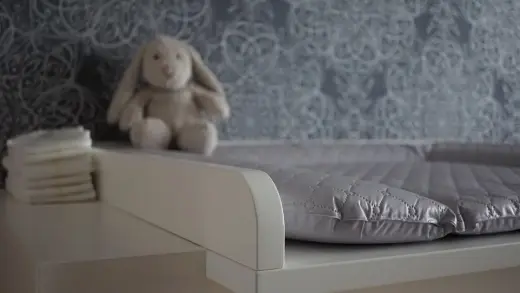
How to Choose a Safe Nappy Changing Pad for Your Baby

How to Set Up a Safe Hotel or Airbnb Sleep Space for Your Baby

Introducing Your Dog or Cat to a New Baby: Scent, Safe Zones, Body Language and Supervision
