













Pikler Triangle and Climbing Arch Safety: A Parent's Guide
How to choose and use a Pikler triangle and climbing arch safely at home. Simple tips on setup, floor mats, supervision, and toy safety rules.

On this page
- Key points
- What a Pikler triangle and climbing arch are
- How climbing builds balance and body awareness
- Pikler triangle vs climbing arch vs ramp
- What to check before you buy
- Safety standards in Australia, the UK, the US and Canada
- Safe setup at home
- Age stages: from baby to preschooler
- Common mistakes to avoid
- When to get medical help after a fall
- Frequently asked questions
- Sources
Short answer: A Pikler triangle and a climbing arch can help toddlers build balance and strength indoors. Put the frame on a soft mat, away from hard furniture and window cords. Check that all bolts and locks are tight before play. Let your child climb at their own pace, and always stay close by.
This guide uses safety advice from official groups in Australia (ACCC, Kidsafe, Raising Children Network), the UK (OPSS, RoSPA, NHS), the US (CPSC, American Academy of Pediatrics) and Canada (Health Canada).
Key points
- Placement: Set the frame on a firm play mat or carpet. Keep it well clear of walls, sharp table edges, stairs and blind cords.
- Supervision: Stay within arm's reach of babies and young toddlers. Falls are a leading cause of home injuries.
- Self-led climbing: Never lift a child onto a high rung they cannot reach alone.
- Footwear: Bare feet give the best grip on wooden rungs. Slippery socks increase the risk of falls.
- Locks and bolts: Check folding hinges and screws often. A loose bolt can cause a sudden collapse.
- Toy standards: Look for frames tested to national toy safety rules, with non-toxic finishes and no splintering wood.
What a Pikler triangle and climbing arch are
A Pikler triangle is a small wooden climbing frame shaped like an A-frame ladder. It is named after Dr Emmi Pikler, a Hungarian baby doctor. She studied how babies learn to move when adults give them safe space instead of propping them up.
The frame sits low to the floor. Babies can pull themselves up on the bottom rungs. Older toddlers can climb over the top and down the other side.
A climbing arch is a curved wooden ladder shaped like a half circle. When placed arch-side up, it works like a small bridge to climb over. When flipped upside down, it can rock gently like a boat or cradle.
Many sets also include a wooden ramp. One side of the ramp is usually smooth like a slide. The other side often has wooden cleats or climbing holds. A ramp hooks onto the rungs of the triangle or arch to join them together.
Unlike outdoor playground gear, these frames are made for indoor floors. They are smaller and lighter. Because they are light, they can tip or slide if they are set up poorly.
Montessori & Sensory Toys worth a look
Real products from our catalogue. We don't show star ratings or review counts; check the current price, stock and reviews on Amazon before you buy.
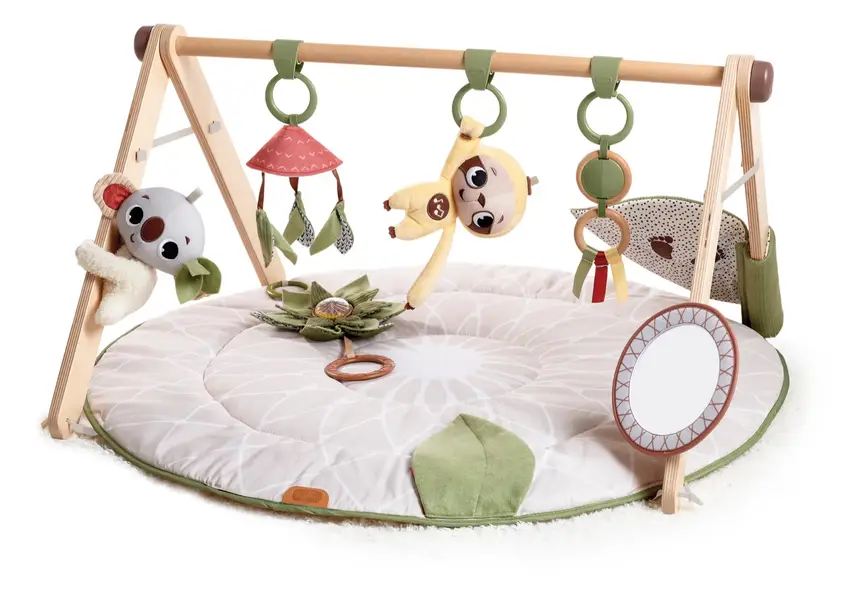


Tiny Love Boho Chic Luxe Gymini
A play gym with a wooden arch, a padded round mat and 20 activities.
Read our full review →

How climbing builds balance and body awareness
Toddlers love to climb on couches, chairs and low tables. A dedicated climbing frame gives them a safer place to practise that skill. Climbing also trains two key body senses.
Vestibular balance
The vestibular system is your child's balance sense. It sits inside the inner ear. It tells the brain which way is up, how fast the body is moving, and when the head tilts.
When a toddler climbs up a rung, peeks over the top, or rocks gently in an arch, fluid moves inside the inner ear. This sends signals to the brain. Over time, these small movements help your child feel steady on their feet. Better balance helps with walking, running and catching themselves if they trip.
Proprioception (body awareness)
Proprioception is a big word for a simple idea. It means knowing where your arms and legs are without looking at them. Sensors in the muscles and joints send this information to the brain.
Climbing asks a child to push with their legs and pull with their hands. They have to judge how far to reach for the next rung. They learn how much force to use to hold their own weight. This heavy work builds core strength, hand grip and coordination.
Confidence without rushing
Children learn best when they move at their own speed. If a toddler climbs two rungs and stops, that is enough. Their body is telling them what feels safe. When you let your child lead, they learn to judge risk for themselves.
Pikler triangle vs climbing arch vs ramp
Many families buy one piece first and add more later. Each piece suits a slightly different kind of play and floor space.
| Feature | Pikler triangle | Climbing arch | Reversible ramp |
|---|---|---|---|
| Main use | Pulling up, climbing over, fort building with a sheet | Climbing over, rocking when flipped, tunnel play | Sliding down, walking up a slope, bridging two frames |
| Stability | Steady when locked open; folding joints need checking | Steady arch-up; can tip or pinch fingers when flipped | Safe only when hooked tightly onto a rung |
| Floor space | Medium footprint; folding models store flat | Compact footprint; does not usually fold | Needs extra length in front of the frame |
| Best age range | Around 6 months to 4 years | Around 1 to 4 years | Around 1 to 4 years |
| Main risk | Falls from the top, unlocked hinges | Finger pinches under rocking edges, tipping | Ramp slipping off the rung during use |
If you have a small living room, a folding Pikler triangle is often the easiest place to start. You can fold it flat and slide it behind a sofa when play is over. A climbing arch takes up less height, but it does not fold away.
What to check before you buy
Wooden climbing frames look simple, but build quality varies a lot. A cheap frame with rough wood or weak hardware can break or hurt small fingers. Check these details before you buy.
Wood quality and smooth edges
- Solid wood or quality plywood: Look for strong timber such as beech, birch or ash. Soft pine can dent or split more easily under heavy use.
- Sanded surfaces: Run your hand along the rungs and side rails. Every edge should be rounded and smooth. There should be no splinters or rough patches.
- Fixed rungs: Try to twist the rungs if you can see the frame in person. Rungs must not spin in their holes. A spinning rung can make a child lose their grip.
Non-toxic paint and finishes
Babies and young toddlers put their mouths on everything. They will chew on rungs while pulling themselves up. Choose raw, sanded wood or frames coated with water-based, non-toxic paints and oils.
Avoid frames with a strong chemical smell out of the box. Never use a frame where paint is flaking or chipping off.
Hardware, hinges and pinch points
- Flush bolts: Screws and bolts should sit flat inside the wood. Protruding screw heads can scratch skin or catch clothing.
- Locking mechanisms: On a folding triangle, check how it locks open. It should have strong wooden or metal knobs that tighten firmly, or a solid locking pin. A frame must never fold shut while a child is on it.
- Finger gaps: Check the hinges and joints. Small gaps where two wooden parts scissor together can pinch tiny fingers.
- Rung spacing: Rungs should be spaced evenly. The gap between rungs must not be wide enough for a child's head to fit through and get stuck.
Stability and base grip
A Pikler triangle should sit flat on the floor without wobbling. Check the maker's weight limit. Some frames hold one small toddler, while stronger frames hold more weight. If your frame sits on timber or laminate floors, check whether it has non-slip pads on the feet. Even with pads, a heavy play mat underneath is still safer.
Safety standards in Australia, the UK, the US and Canada
Indoor climbing frames are usually sold as toys, not as outdoor playground equipment. There is no single worldwide law made only for Pikler triangles. Instead, regulators expect them to meet national toy safety rules.
Those rules check for sharp edges, small parts that could choke a child, finger traps, strength, and harmful chemicals in paints or coatings. Here is how the four countries compare.
| Country | Official safety bodies | Main toy safety standard or rule | Where to check recalls |
|---|---|---|---|
| Australia | ACCC (Product Safety Australia), Kidsafe Australia, Standards Australia | AS/NZS 8124 and AS/NZS ISO 8124 (toy safety) | Product Safety Australia recalls website |
| United Kingdom | Office for Product Safety and Standards (OPSS), RoSPA, NHS | BS EN 71 and EN 71 (toy safety) | UK Government product recalls list |
| United States | Consumer Product Safety Commission (CPSC), American Academy of Pediatrics (AAP) | ASTM F963 (toy safety) | CPSC recalls website |
| Canada | Health Canada, Canadian Paediatric Society, Parachute Canada | Federal toy safety rules under Canada's consumer product laws | Health Canada recalls and safety alerts |
Before you buy a new or second-hand frame, search the brand and model on your national recall list. Product Safety Australia, the UK OPSS, the US CPSC and Health Canada all post free recall alerts online. If a frame has been recalled for tipping, weak rungs, or lead paint, do not use it.
Also check the label for a clear maker name, contact details, and age guidance. Avoid unbranded frames from unknown online sellers that give no safety test details at all.
Side by side: more montessori & sensory toys to compare
Real products from our catalogue. We don't show star ratings or review counts; check the current price, stock and reviews on Amazon before you buy.
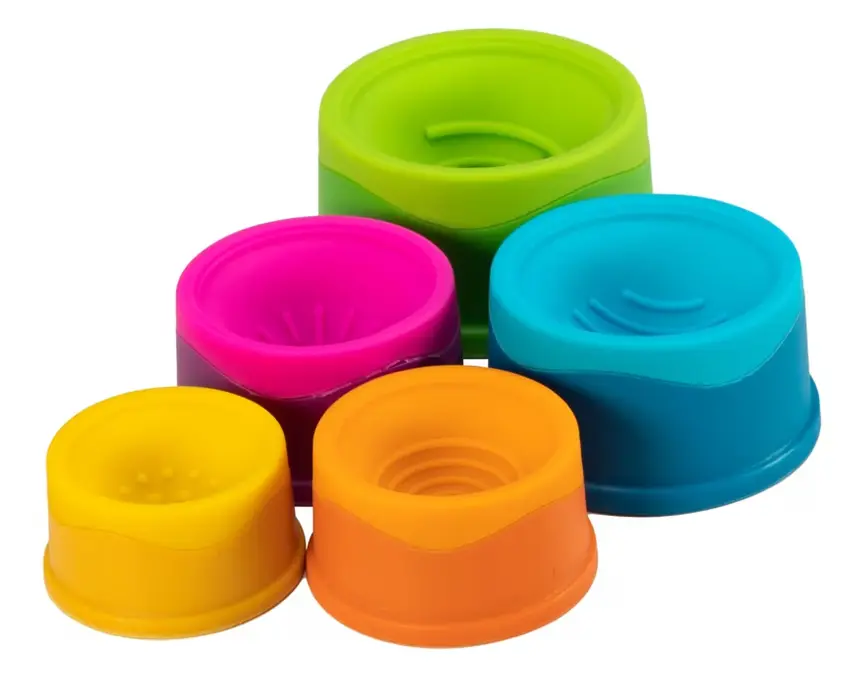
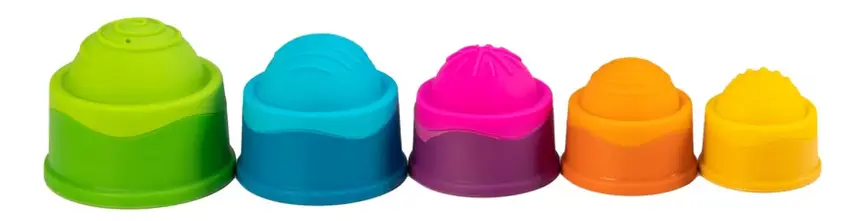


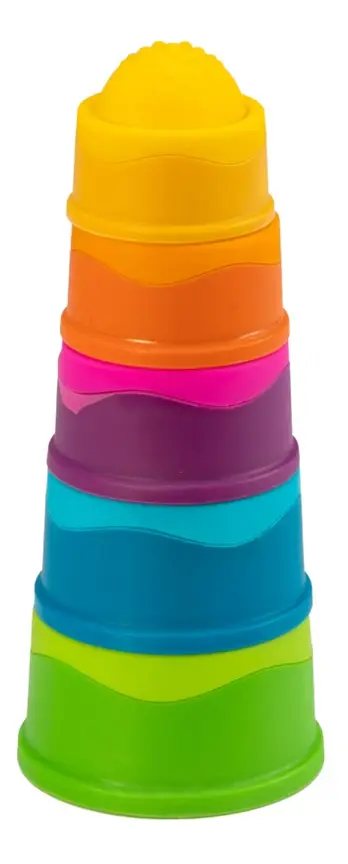
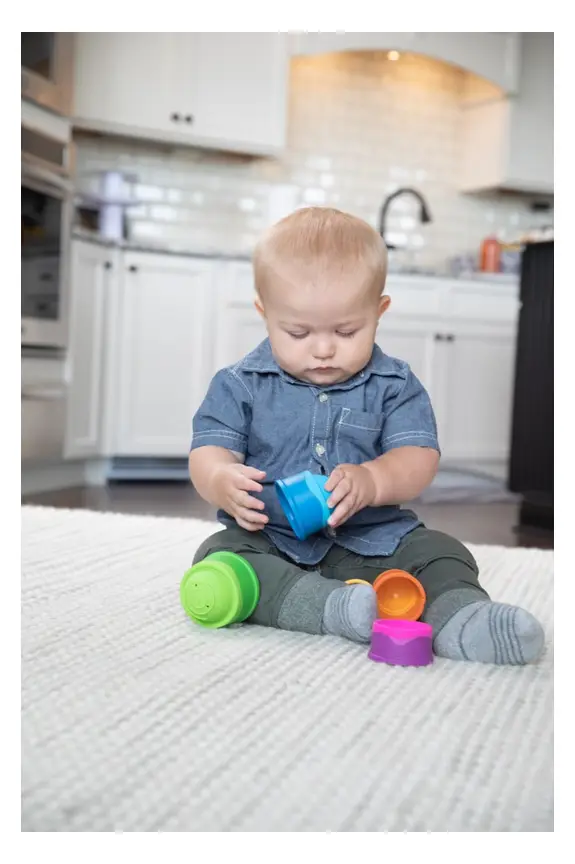
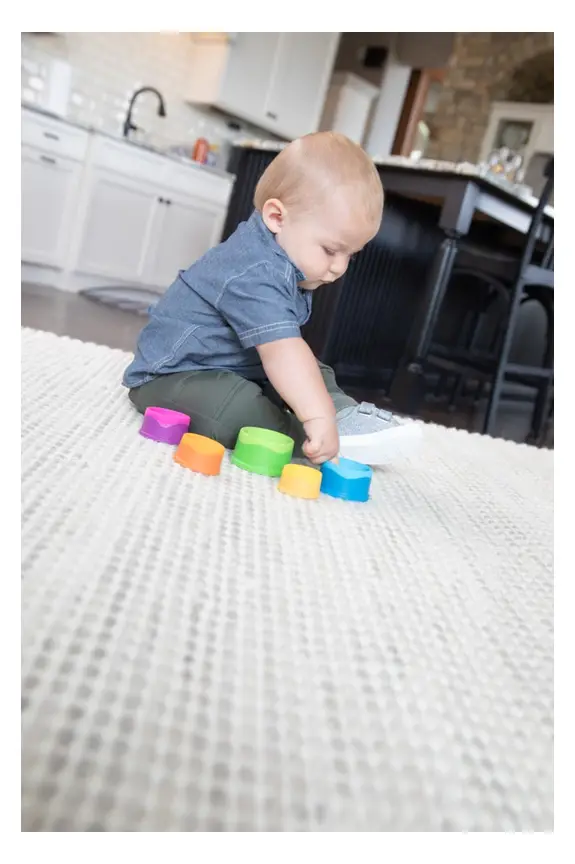
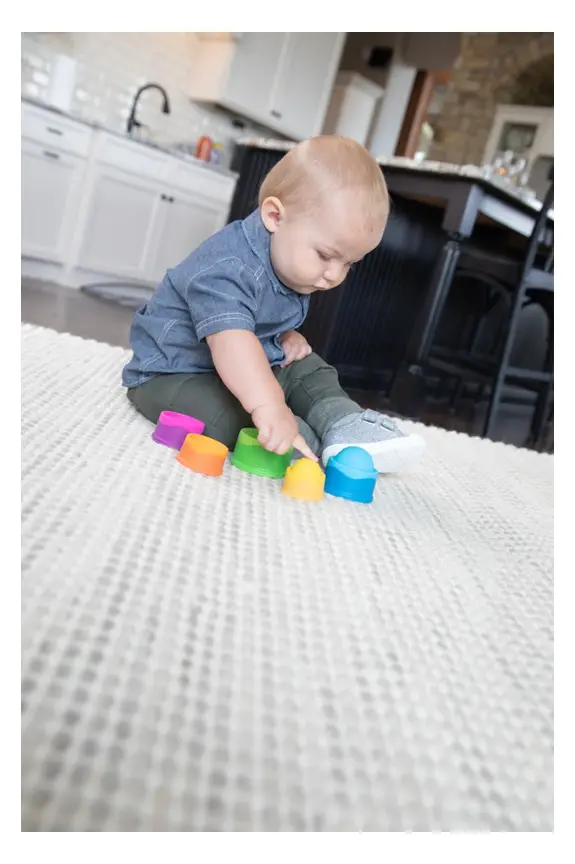
Fat Brain Dimpl Stack
Soft silicone stacking cups with poppable bubbles to push and feel.
Read our full review →

Fat Brain Playtab Essential Set
A set of activity tabs that click together into a busy board with things to spin, slide and press.
Read our full review →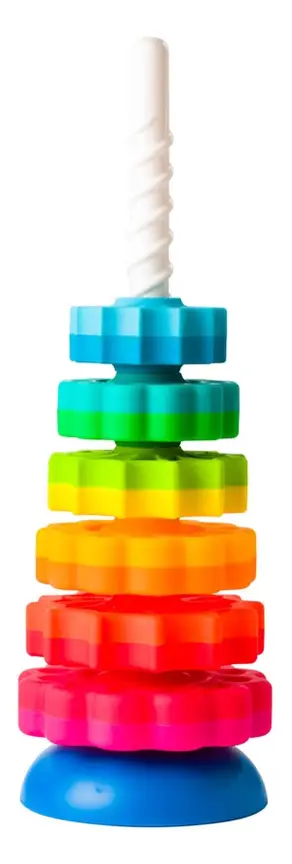
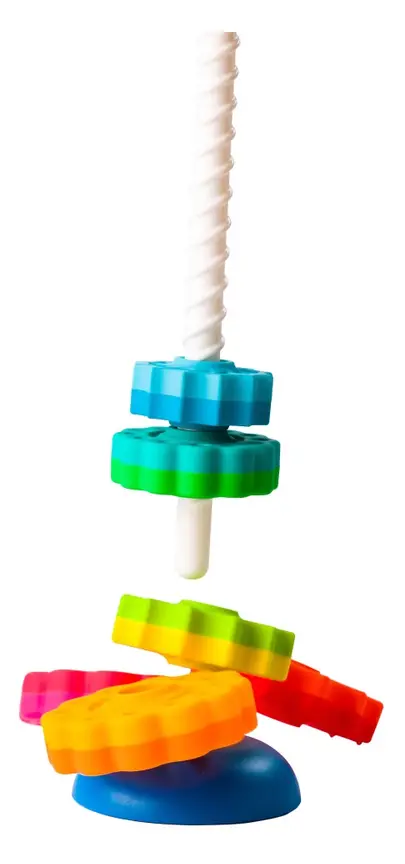


Fat Brain Spinagain
Coloured discs that spin down a pole. Babies stack them and watch them twirl.
Read our full review →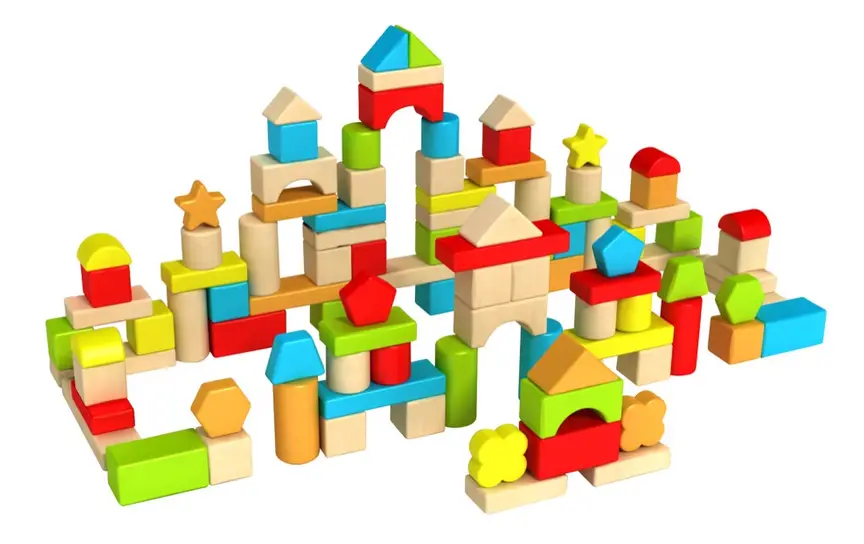


Fat Brain Wooden Timberblocks (100 pieces)
A 100-piece wooden block set for stacking and building.
Read our full review →Safe setup at home
Even the strongest climbing frame can cause an injury if it is in the wrong spot. Take five minutes to set up the play space properly.
1. Put a soft mat underneath
Falls happen when toddlers learn to climb. Raising Children Network and Kidsafe Australia warn that hard floors make falls much worse. Never put a Pikler triangle directly on tiles, concrete, stone or bare floorboards.
Place a firm, padded play mat under the whole frame. The mat should extend past the base on all sides, including in front of any ramp. Avoid stacking soft pillows or thick doonas under the frame. Soft bedding can twist ankles or become a suffocation hazard for younger babies nearby.
2. Clear the drop zone
Look around the frame as if your child might fall sideways or backwards. Move the frame well away from:
- coffee tables, TV units and other hard furniture corners;
- windows, glass doors and sliding doors;
- blind cords and curtain cords, which can strangle a child;
- stairs, balconies and open doorways;
- heaters, fireplaces and power cords.
3. Check locks and ramps every time
If you use a folding triangle, pull gently on the sides before your child climbs. Make sure both locking knobs are tight. If you attach a ramp, check that the hooks or cleats sit squarely over the rung. Give the ramp a firm tug so you know it will not slide off when your child steps on it.
4. Dress for safe climbing
- Bare feet are best: Skin grips smooth wood well. Bare toes also help children feel the rungs and build foot strength.
- No slippery socks: Ordinary cotton socks slide on wood and on play mats. Take socks off, or use socks with rubber grips on the soles.
- Skip loose clothes: Do not let children climb in long dresses, trailing blankets, or hoodies with drawstrings. Loose fabric can snag on the top rail or ramp corners.
5. Fold it away when unsupervised
If you have a toddler who climbs before you are awake, fold the triangle flat at night. You can also place it behind a closed door or safety gate when you cannot watch.
Age stages: from baby to preschooler
A Pikler triangle and climbing arch grow with your child. You do not need to change the frame much, just the way you support your child.
| Stage (roughly) | What your child may do | How to keep play safe |
|---|---|---|
| Around 6 to 12 months | Reaching for low rungs, rolling under the arch, pulling up to stand | Keep the triangle at its lowest setting if adjustable. Never stand a baby on a rung. |
| Around 12 to 18 months | Stepping onto the first or second rung, crawling up a gentle ramp | Stay right beside them. Let them climb down backwards on their tummy. |
| Around 18 months to 2.5 years | Climbing to the top, pausing at the peak, turning around to come down | Stand within arm's reach without grabbing them unless they slip. Keep the mat clear. |
| Around 2.5 to 4+ years | Walking across a low bridge ramp, using the arch as a rocker, building dens with a sheet | Set clear rules: one child on the frame at a time, feet first on slides. |
Teach feet-first climbing down
Young toddlers often climb up happily, then freeze at the top. Instead of lifting them straight off, gently guide their feet towards the rungs. Show them how to turn onto their tummy and step down feet first. With practice, this becomes automatic. It also builds safer habits for stairs and beds.
Common mistakes to avoid
Most climbing frame accidents come from simple setup errors. Watch out for these common mistakes:
- Lifting your child to the top: Putting a baby or toddler higher than they climbed themselves puts them in danger. They do not yet have the strength or balance to hold on there.
- Leaving the frame on bare tiles or timber: A slip on a hard floor can lead to a serious head bump. Always use a mat.
- Ignoring finger traps on a rocking arch: When an arch is flipped upside down to rock, the curved rails touch the floor. A child sitting on the edge, or a sibling kneeling nearby, can trap fingers or toes underneath. Only use the arch as a rocker when an adult is watching closely.
- Putting the frame near blind cords or windows: A climbing frame makes a child taller. It can help them reach window latches, curtain cords or high shelves they could not reach before.
- Letting two or three children crowd the frame: Most home frames are narrow. When two toddlers push past each other at the top, one can easily fall. Set a simple rule of one climber at a time.
- Skipping bolt checks: Wood shrinks and swells slightly with changes in room heat and humidity. Check screws and wingnuts once a week and tighten any that feel loose.
- Using a blanket over the frame without watching: Turning a Pikler triangle into a tent with a light sheet is fun for older toddlers. Just remember that you cannot see inside the tent. Never leave babies under loose sheets, and remove the sheet when active climbing starts again.
When to get medical help after a fall
Even with good care, toddlers sometimes tumble. Most small bumps heal quickly with a cuddle and a cold pack. Still, it helps to know the warning signs of a more serious injury.
The NHS, Raising Children Network, American Academy of Pediatrics and Caring for Kids advise getting urgent medical help if your child has a fall and shows any of these signs:
- they lose consciousness, even for a moment;
- they seem unusually sleepy, confused, or hard to wake up;
- they vomit more than once after a head bump;
- they cry non-stop or seem in severe pain;
- they refuse to use an arm, leg, or hand, or cannot bear weight;
- you see clear swelling, a dent on the head, or bleeding that does not stop with gentle pressure;
- they have a seizure or trouble breathing.
Trust your instincts. If your child does not seem right after a fall, call your local emergency number or national health helpline right away.
More options, from budget to premium
Real products from our catalogue. We don't show star ratings or review counts; check the current price, stock and reviews on Amazon before you buy.





Fat Brain Tobbles Neo
Wobbly round pieces that stack, spin and tip but do not fall over easily.
Read our full review →


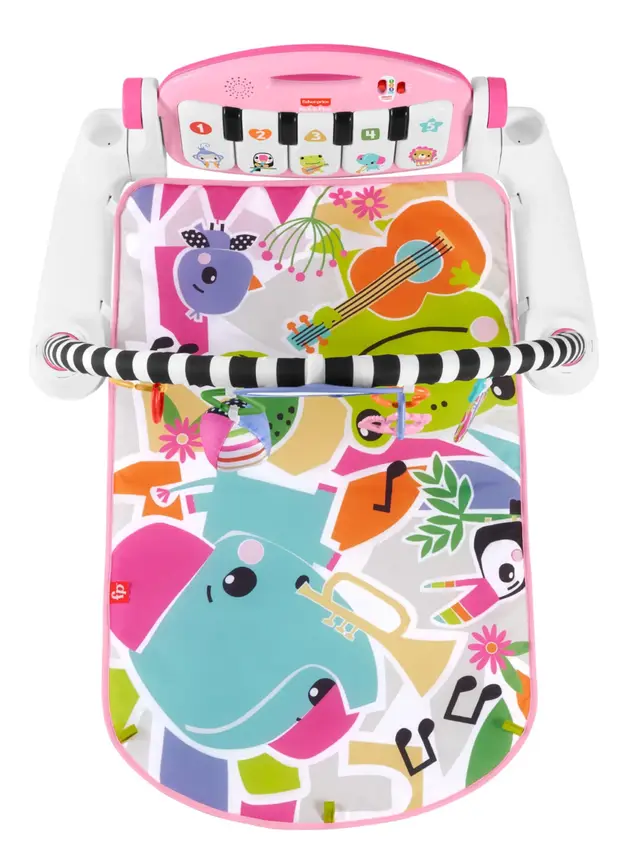
Fisher-Price Kick & Play Gym
A low-cost play gym with a small piano at the feet that plays when baby kicks.
Read our full review →Frequently asked questions
What age can a baby start using a Pikler triangle?
A baby can explore near a Pikler triangle once they can roll and reach, often around 6 months. At first, you can hang soft cloth toys from a low rung for them to look at and touch. Once they start pulling up to stand, they can hold the lower rungs themselves. Never place a baby who cannot sit or pull up onto the rungs.
Are climbing arches safe to use as rockers?
A climbing arch can be used as a rocker if an adult stays right beside it. The main risks are tipping too far backwards and pinching fingers or toes under the curved sides. Keep siblings' hands clear of the floor edge, and place the arch on a flat mat. Many families also buy a fitted cushion for rocking, but never let a baby sleep in a rocking arch.
Do I need a special mat under a Pikler triangle?
You do not need an expensive branded mat, as long as the surface is soft and firm. A thick foam play mat, gym mat, or dense rug over carpet works well. Avoid thin rugs over hard tiles, because they can slip and do not cushion a fall. Also avoid fluffy pillows or beanbags, which can make ankles twist or block a young child's airway.
Should my child wear shoes or socks on a climbing frame?
Bare feet are the safest choice indoors. Bare skin grips wooden rungs naturally, and toes can curl around the wood for balance. If your home is cold, choose socks with non-slip rubber dots on the soles. Take off ordinary smooth socks and bulky slippers before climbing.
How do I know if a wooden climbing frame is non-toxic?
Check the product details for compliance with a recognised toy safety standard, such as AS/NZS 8124 in Australia, BS EN 71 in the UK, ASTM F963 in the US, or Health Canada's toy rules. These standards limit lead and other heavy metals in paints and stains. Choose frames with water-based finishes or plain sanded hardwood, and avoid items with a strong chemical smell.
Can more than one child climb at the same time?
It is safest to allow only one child on the Pikler triangle or climbing arch at a time. Home frames are compact and can tip if weight shifts to one side. Having one child climb at a time also stops accidental kicks, pushes or head bumps at the top. If you have siblings, let one climb while the other waits on the mat or plays with the ramp on the floor.
Sources
- Kidsafe Australia – Falls
- Raising Children Network – Falls prevention: babies and young children
- Product Safety Australia – Recalls
- RoSPA – Preventing accidents to children
- NHS – Baby and toddler safety
- AAP HealthyChildren.org – Safety for your child: 2 to 4 years
- HealthyChildren.org (American Academy of Pediatrics) – Home safety: tips for families with young children
- Health Canada – Recalls and safety alerts
Related guides
More Parental Tips →
1,000 Hours Outside with Babies and Toddlers: Sleep, Eyes, Immunity, and Safety

Safe Fish and Omega-3 DHA for Babies: Low-Mercury Guide and Simple Finger Foods

Daylight Saving and Jet Lag for Babies: The 15-Minute Sleep Shift Guide
