














Healthy Toddler Snacks: Protein, Less Added Sugar, and Practical Ideas
Learn how to make filling toddler snacks with everyday foods, serve them safely, and build a calm routine without strict rules or sugar fears.
On this page
- What makes a useful toddler snack?
- Build a snack from familiar foods
- Snack ideas for different routines
- How often and when to offer snacks
- Let your child respond to hunger and fullness
- Food safety and choking prevention
- Allergies, special diets and feeding concerns
- Simple shopping and preparation
- Plan snacks for common situations
- Common mistakes to avoid
- Guidance across four countries
- When to ask for help
- Frequently asked questions
- Sources
Short answer: A toddler snack can include a filling food, such as plain yoghurt, egg, beans or cheese, alongside fruit or vegetables. Offer water, sit with your child, and let them decide how much to eat. Snacks can help bridge the time between meals. They cannot prevent every tired spell, tantrum or change in mood. There is no need to count protein grams or ban all sweet foods.
In Australia, NHMRC guidance informs infant feeding advice. In the UK, the NHS gives advice on feeding young children. In the US, the American Academy of Pediatrics (AAP) offers nutrition guidance. In Canada, the Canadian Paediatric Society (CPS) shares feeding advice. Your child's needs may differ, so ask a health professional if you have concerns.
What makes a useful toddler snack?
A snack is a small eating time between meals. Toddlers often have small stomachs and changing appetites. They may eat a lot at one meal and little at another. A snack can offer another chance to eat nourishing food.
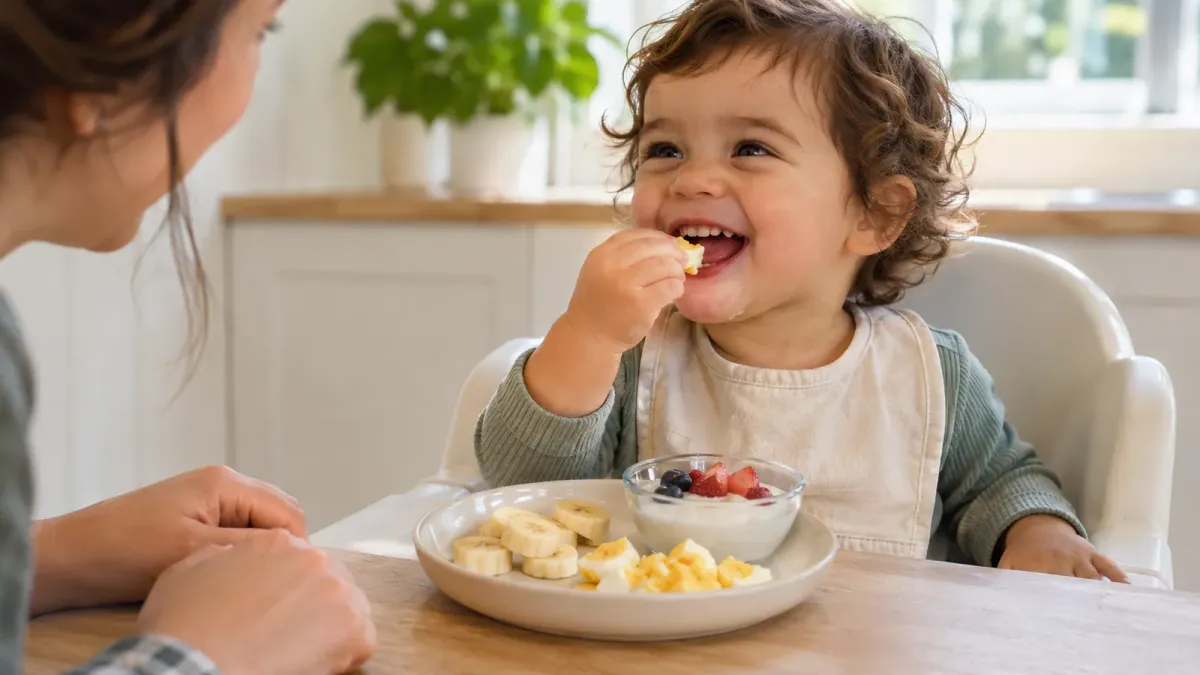
Try to include one or two familiar foods. A snack might pair fruit with yoghurt, or toast with egg. It does not need a special recipe. Everyday foods can work well.
Protein is found in foods such as eggs, beans, lentils, fish, meat, milk, yoghurt, cheese, tofu and nut pastes. Protein helps the body grow and repair itself. Toddlers usually get protein from a mix of foods across the day. Most families do not need special high-protein snack products.
Foods with less added sugar can be useful everyday choices. Added sugar is sugar put into food during making or cooking. Fruit and plain milk contain natural sugars. These are not the same as sugar added to sweets, sweet drinks or flavoured snacks.
Do not treat sugar as a cause of every tantrum. A child may be upset because they are tired, thirsty, unwell, overwhelmed or ready for a meal. Hunger can be one reason. It is only one possibility.
Build a snack from familiar foods
Use foods your child already knows, then add variety over time. A snack can be plain and still be useful. Try one food from each group when it suits your child:
- Fruit or vegetables: soft pear, banana, berries cut safely, cooked carrot, avocado or cucumber prepared for your child's chewing skills.
- Grain foods: toast fingers, soft pita, porridge, plain crackers or cooked pasta.
- Protein foods: egg, lentils, mashed beans, tofu, fish without bones, soft meat, plain yoghurt or cheese.
- Drinks: offer water with snacks. Milk may be part of the usual meal pattern. Follow local health advice about suitable drinks.
These groups are a guide, not a rule for every snack. Some days your child may eat only one item. Keep offering a range across meals and snacks. Avoid pressure, bargaining or making a child finish food.
Choose plain or unsweetened versions when available and affordable. Check labels if you want to compare added sugar. Ingredients are listed by amount, from most to least. A food can still fit your family's routine even if it contains some added sugar.
Snack ideas for different routines
Use the table as a starting point. Change the texture and shape to match your child's skills. Sit your child upright and watch them while they eat.
| Snack idea | What it offers | Simple preparation |
|---|---|---|
| Plain yoghurt with soft fruit | Dairy protein and fruit | Use a spoon, or let your child practise with a preloaded spoon. |
| Egg and toast | Protein and grain | Cook egg fully. Cut toast into a shape your child can manage. |
| Mashed beans on toast | Plant protein and grain | Mash beans well. Choose low-salt options where possible. |
| Cheese with soft pear | Dairy protein and fruit | Cut cheese and fruit into safe pieces for your child's age and chewing ability. |
| Hummus with soft cooked vegetables | Beans and vegetables | Serve a thin spread or dip. Prepare vegetables so they are soft enough. |
| Tofu with ripe avocado | Plant protein and soft texture | Offer small, manageable pieces while your child sits upright. |
| Oat porridge with yoghurt | Grain and dairy protein | Cool to a safe temperature. Keep the texture suitable for your child. |
| Leftover fish with potato | Protein and a filling grain or vegetable | Check carefully for bones. Keep leftovers chilled and handle safely. |
These are suggestions, not a meal plan. You can use leftovers when they have been stored safely. Keep foods that need chilling cold until serving. Follow local food safety advice for storage and reheating.
How often and when to offer snacks
There is no single snack timetable for every toddler. Family routines, childcare, sleep and appetite all matter. Many families offer meals and snacks at fairly regular times. This can help children know when food will be available.
Offer a snack when there is enough time before the next meal for your child to feel hungry again. Avoid constant grazing through the day. Grazing can make it harder to notice hunger and fullness cues. It can also affect teeth when food or drinks are offered often.
Keep the routine flexible. If your child is ill, travelling or having a difficult day, their usual pattern may change. Offer food without making them eat. A missed snack is not an emergency if your child is otherwise well and eating across the day.
Water is a good drink to offer between eating times. Sweet drinks can add sugar and may affect teeth. If you are unsure which drinks suit your child's age, ask a child health nurse, doctor or dietitian.
Let your child respond to hunger and fullness
Children can show hunger in different ways. They may ask for food, point to it, or become interested when others eat. They may also seem unsettled. These signs do not always mean hunger.
Fullness signs can include slowing down, turning away, closing the mouth or losing interest. Respect these signs where you can. Offer food and let your child choose whether, and how much, to eat from what is served.
Adults decide what food is offered and when. Children decide whether to eat and how much. This simple approach can lower mealtime pressure. It also helps children practise noticing their own appetite.
Do not use snacks to reward good behaviour or take them away as punishment. Food works best as care and nourishment. If your child eats little at one snack, the next meal is another chance.
Food safety and choking prevention
Young children can choke on food. Stay with your child while they eat. Have them sit upright, in a high chair or at a table. Do not let them run, lie down or play with food in their mouth.
Prepare food to match your child's development. Whole nuts, popcorn, hard sweets and chunks of hard food can be choking risks for young children. Round foods, such as grapes and cherry tomatoes, need careful preparation. Cut them lengthways into smaller pieces. Remove stones, bones and tough skins where needed.
Nut and seed pastes can be sticky. Spread them thinly instead of offering a spoonful. Do not give a child whole nuts unless a health professional confirms they are safe for that child and age.
Wash hands and clean surfaces before preparing food. Keep raw meat and fish separate from ready-to-eat food. Chill foods that need refrigeration. Do not leave perishable snacks sitting out for long periods. Follow food safety advice where you live.
Learn what to do if a child chokes. A child who cannot breathe, cough or make sound needs urgent help. Call your local emergency number and follow first aid instructions. First aid training can help caregivers feel prepared.
Allergies, special diets and feeding concerns
Common allergen foods can be part of a child's diet when introduced in an age-safe form. If your child has a known allergy, follow their care plan. Ask a doctor or dietitian before changing that plan.
For children with eczema, an existing food allergy, or a strong family history of allergy, ask a health professional for advice about introducing allergen foods. Do not delay foods for no reason, but do follow individual medical guidance.
Vegetarian and vegan toddlers can have a healthy diet with careful planning. Include suitable protein foods, such as beans, lentils, tofu, eggs or dairy where used. A vegan diet needs particular care for nutrients such as vitamin B12. Speak with a dietitian or doctor for advice about supplements and meal planning.
If your child has a medical condition, poor growth, a very limited diet or trouble chewing and swallowing, seek tailored advice. A speech pathologist may help with feeding skills. A paediatric dietitian can help plan food choices. Do not use protein powders or supplements unless a health professional recommends them.
Simple shopping and preparation
Keep a few easy foods ready. Wash fruit, cook eggs or beans, and portion leftovers when you have time. A small set of familiar options can reduce stress on busy days.
Convenience foods can be useful. Check salt, added sugar and choking risks when choosing them. There is no need to buy foods labelled for toddlers if ordinary foods suit your child.
Choose food within your budget and culture. Frozen vegetables, canned beans and plain yoghurt can be practical choices. Rinse canned beans if you want to reduce their salt. Make changes that fit your household, rather than aiming for a perfect snack every time.
Plan snacks for common situations
A little planning can help when the day changes. Keep a familiar option ready for outings, childcare or the time before dinner. You do not need a separate food for every setting.
For an outing, pack food that suits the weather and travel time. Use a clean container. Keep chilled foods cold with an insulated bag and ice pack. If you cannot keep food cold, choose a suitable shelf-stable option instead. Follow local food safety advice.
At childcare, ask how food is stored and served. Tell staff about allergies and share your child's care plan. Check the centre's rules about foods brought from home. Some centres limit foods that could cause a serious reaction in another child.
Before dinner, a small snack may help if the meal is still some time away. Keep it simple. If dinner is soon, you can offer water and wait for the meal. A child who is very hungry may find waiting hard, so adjust the routine when needed.
During illness, appetite can change. Offer familiar foods and fluids as advised by your health professional. Do not force food. Get medical advice if your child cannot keep fluids down, seems very unwell or shows signs of dehydration.
Common mistakes to avoid
- Calling every mood change a blood sugar crash. Hunger may be one cause, but so can tiredness, illness or frustration.
- Trying to maximise protein. A varied diet is usually more useful than focusing on one nutrient.
- Using sweet foods as a reward. This can make sweets feel more special and meals more stressful.
- Pressuring a child to finish. Let them respond to hunger and fullness.
- Serving risky shapes or textures. Prepare food for your child's chewing skills and supervise eating.
- Leaving food out for too long. Chill foods that need refrigeration and handle leftovers safely.
- Assuming a snack replaces a meal. Offer the next meal at the usual time, even if the snack was small.
- Using supplements without advice. Ask a health professional before giving protein powders or nutrient supplements.
- Making food rules too strict. A flexible pattern is easier to follow and leaves room for family foods.
Guidance across four countries
Nutrition advice shares many broad ideas, but local services and food rules differ. Ask your local health service for advice that fits your child's age and health.
| Country | Relevant official or expert body | Where families can seek guidance |
|---|---|---|
| Australia | NHMRC, the national health research council | Infant feeding guidance and Pregnancy, Birth and Baby can help with feeding questions. |
| United Kingdom | NHS | NHS advice covers young children's foods, drinks and food hygiene. |
| United States | American Academy of Pediatrics (AAP) | AAP advice covers starting solid foods and drinks for young children. |
| Canada | Canadian Paediatric Society (CPS) | Caring for Kids offers family guidance on feeding and child health. |
These bodies do not promise that a particular snack will prevent a tantrum or a blood sugar change. If your child has diabetes, a metabolic condition or another health need, follow their care team's plan. General toddler snack advice may not fit.
When to ask for help
Contact a health professional if your child often refuses food, loses weight, seems unusually tired, has ongoing vomiting or diarrhoea, or struggles to chew and swallow. Seek urgent care for severe symptoms or signs of dehydration.
For everyday questions, a child health nurse, family doctor or registered dietitian can review your child's growth and eating pattern. Bring a short list of foods your child eats and any concerns. You do not need to track every bite unless a clinician asks you to.
Frequently asked questions
Do toddlers need high-protein snacks?
Most toddlers do not need special high-protein snacks. Offer a mix of ordinary foods over the day. Eggs, beans, yoghurt, tofu, fish and meat can all provide protein.
Will protein stop afternoon tantrums?
No snack can promise that. Hunger can affect mood, but tiredness, frustration and other needs can also cause upset. Offer food at a steady routine and comfort your child when needed.
Should I avoid all sugar?
No. Focus on everyday foods with little added sugar. Whole fruit and plain milk contain natural sugars. Avoid making food choices feel like a test of good or bad parenting.
What is a quick snack with protein?
Plain yoghurt with soft fruit, egg with toast, or mashed beans on toast are simple options. Prepare each food in a safe shape and texture for your child.
Can I give my toddler protein powder?
Do not give protein powder unless your child's health professional recommends it. Ordinary foods are usually the right place to start. Supplements can be unsuitable for children.
How many snacks should my toddler eat?
There is no fixed number that suits every child. Consider your family routine, meals and your child's appetite. Ask a health professional if eating or growth worries you.
What if my child refuses the snack?
Stay calm and avoid pressure. Take the food away when the eating time ends, then offer the next meal or snack as planned. Keep including familiar foods.
Are fruit pouches a good snack?
They can be convenient, but offer whole or cut fruit when practical. Eating from a pouch may not give the same practice with texture and chewing. Check the label for added sugar.
What should my child drink with a snack?
Offer water. Milk may fit into the day's routine. Ask your local health service about suitable drinks for your child's age and needs.
How do I know if my child is choking?
A choking child may be unable to breathe, cough or make sound. Treat this as an emergency. Call your local emergency number and use first aid guidance.
Disclaimer: This article is general information, not medical advice. Every child is different. Speak with your doctor, child health nurse or dietitian about allergies, growth, feeding problems or medical conditions. BabyGearFinder may earn a commission from eligible purchases. This does not affect the price you pay.
Sources
- NHMRC – Infant Feeding Guidelines
- NHS – Drinks and cups for babies and young children
- AAP HealthyChildren.org – Recommended drinks for children age 5 and younger
- Caring for Kids (Canadian Paediatric Society) – Feeding your baby in the first year
- NHS – Children's food: safety and hygiene
- FoodSafety.gov (US) – Food safety for children under five
- American Academy of Pediatrics (US) – Choking prevention
- ASCIA – How to introduce solid foods to babies for allergy prevention
Related guides
More Parental Tips →
Toddler Picky Eating: Food Chaining and No-Pressure Meals

Toddler Climbing Out of the Cot? What to Do: Sleeping Bags, Floor Beds and a Safe Room

Split Nights: Why Your Baby or Toddler Is Awake for Hours at Night
