Flame-Retardant-Free Car Seats: What Merino Wool Covers Really Offer and How to Check the Claims
What "flame-retardant-free" means on a car seat, why some brands use merino wool covers, and how to check the claim while keeping crash safety first.

On this page
- Why car seats have fire rules at all
- What are flame retardants, and why do some parents avoid them?
- Why merino wool?
- Comparing cover types side by side
- How to check a "flame-retardant-free" claim
- Car seat rules for each age, whatever the fabric
- Other simple ways to cut chemical exposure in the car
- A simple buying checklist
- Common mistakes to avoid
- FAQ
- Sources
Short answer: every car seat has to pass fire safety rules, so the fabric and foam don't burn too fast. Many makers meet those rules by adding chemicals called flame retardants. Some brands now use merino wool covers instead. Wool is naturally slow to catch fire, so these seats can pass the test with fewer or no added flame retardant chemicals. That can be a good choice, but the claim needs checking. And the most important thing about any car seat is still the same: it must meet your country's crash standard, fit your child and fit your car properly.
Key points
- A flame retardant is a chemical added to a material to slow down how fast it burns.
- In the US, car seat materials must pass a burn test called FMVSS 302. Other countries have their own rules.
- The US Consumer Product Safety Commission (CPSC) has asked makers to remove one group of flame retardants, called organohalogens, from children's products. This is advice, not a ban.
- Merino wool resists fire by nature, which is why some brands use it to avoid added chemicals.
- "Flame-retardant-free" can mean different things. Ask whether it covers the fabric, the foam and every other part.
- Never swap a seat's cover for an aftermarket one, and never import a seat that isn't approved where you live.
Why car seats have fire rules at all
Cars can catch fire after a crash, or because of an electrical fault. Children in car seats can't get out by themselves. So the materials inside a car, including car seats, have to burn slowly. This gives people more time to get out.
In the US, the rule is Federal Motor Vehicle Safety Standard 302, often shortened to FMVSS 302. It tests how fast a strip of material burns when a small flame touches it. The material must not burn faster than 102 millimetres (4 inches) per minute. Child car seats sold in the US must pass this test as part of the main car seat standard, FMVSS 213.
Other countries have their own car seat standards:
- Australia: AS/NZS 1754. Every seat sold for use here must carry a sticker showing it meets this standard.
- UK and Europe: UN Regulation 44 or the newer UN Regulation 129 (often called i-Size). Approved seats carry an orange "E" label.
- Canada: seats must carry the National Safety Mark, which shows they meet the Canadian Motor Vehicle Safety Standards.
If you want to know how a seat meets any fire rules in your country, ask the maker. A good brand will tell you plainly.
What are flame retardants, and why do some parents avoid them?
Flame retardants are chemicals mixed into foam, fabric or plastic so it is harder to set on fire, or burns more slowly. They are used in many things: furniture, mattresses, electronics and car interiors.
There are many different flame retardant chemicals. Some older ones, such as a group called PBDEs, were phased out in many countries after studies found they built up in people's bodies and in the environment. Newer chemicals took their place. Scientists are still studying many of them.
In 2017, the US Consumer Product Safety Commission (CPSC) published guidance about one large group, called additive organohalogen flame retardants. "Additive" means the chemical is mixed in, not locked into the material, so it can slowly escape into dust. The CPSC guidance:
- urged makers to stop using these chemicals in children's products, mattresses, upholstered furniture and electronics cases
- advised consumers, especially pregnant people and parents of young children, to ask retailers for products without them
The CPSC has said this guidance is not a ban, and there is no rule yet that forbids these chemicals in those products. Car seats are mainly regulated by the US road safety agency, NHTSA, rather than the CPSC, but many families and brands have used the guidance as a reason to look for options without added chemicals.
The honest summary is this: some flame retardants have raised real health questions, research is still going on, and many parents prefer to limit their child's exposure where they can. That is a reasonable choice. It is not a reason to skip a car seat or use one that doesn't meet your country's standard. The risk of a crash is much greater than the risk from the chemicals in a seat cover.
Car Seats & Capsules worth a look
Real products from our catalogue. We don't show star ratings or review counts; check the current price, stock and reviews on Amazon before you buy.
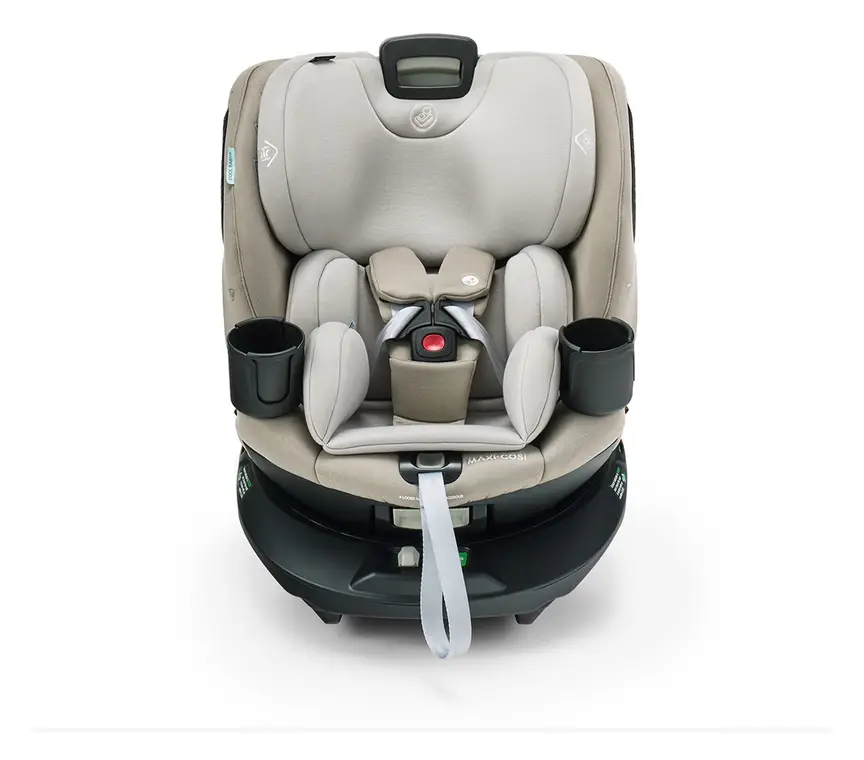

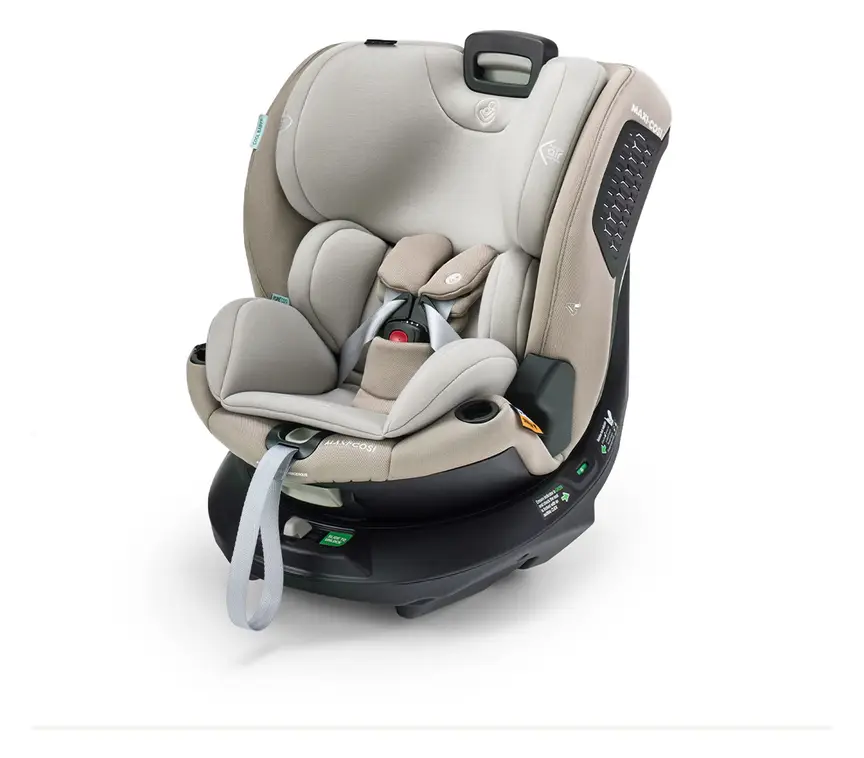

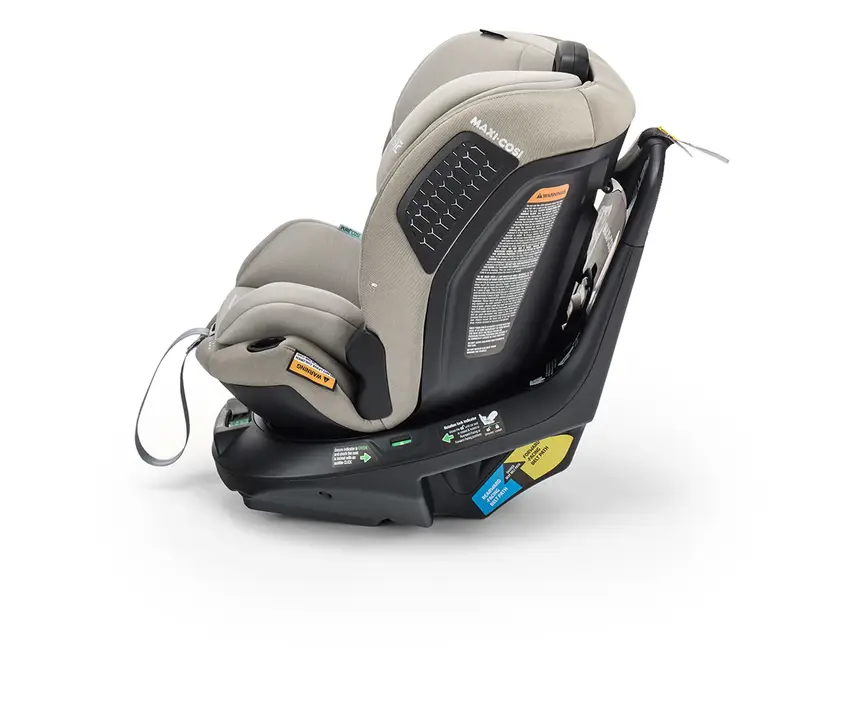
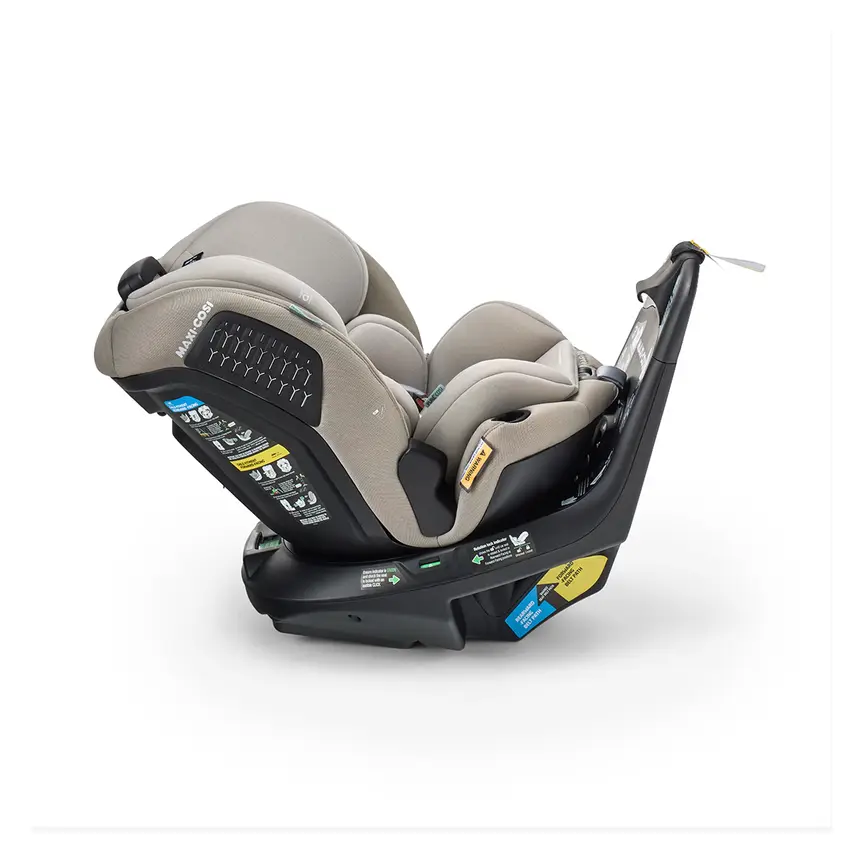

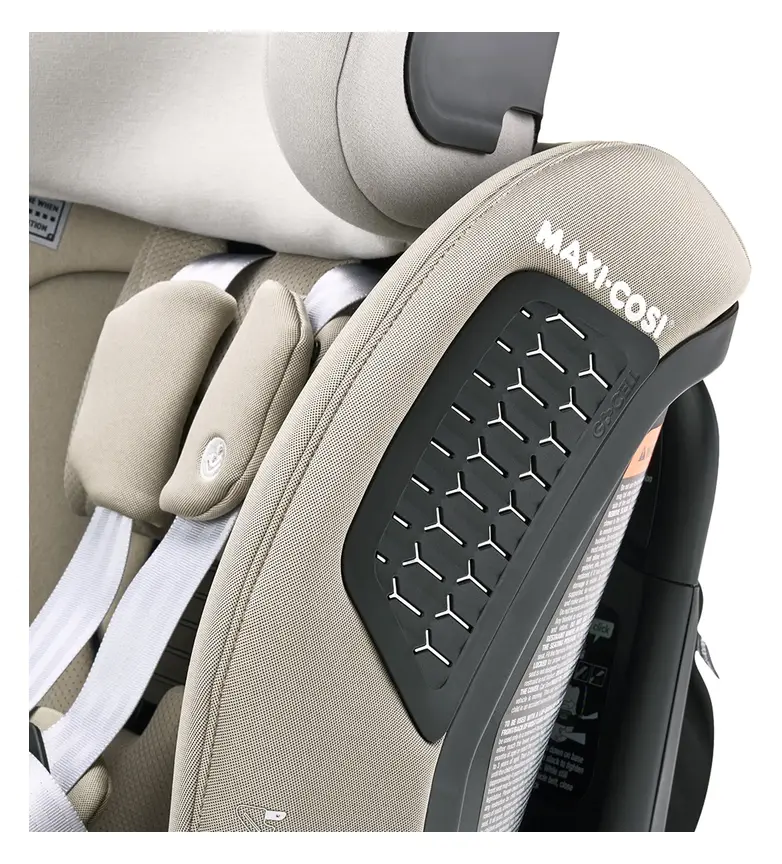
Maxi-Cosi Raia 360
A rotating seat with green check marks that show when the belt is tight enough.
Read our full review →
Babylove ezymove Booster
A very light, low-cost booster for about 4 to 8 years. It folds flat for storage.
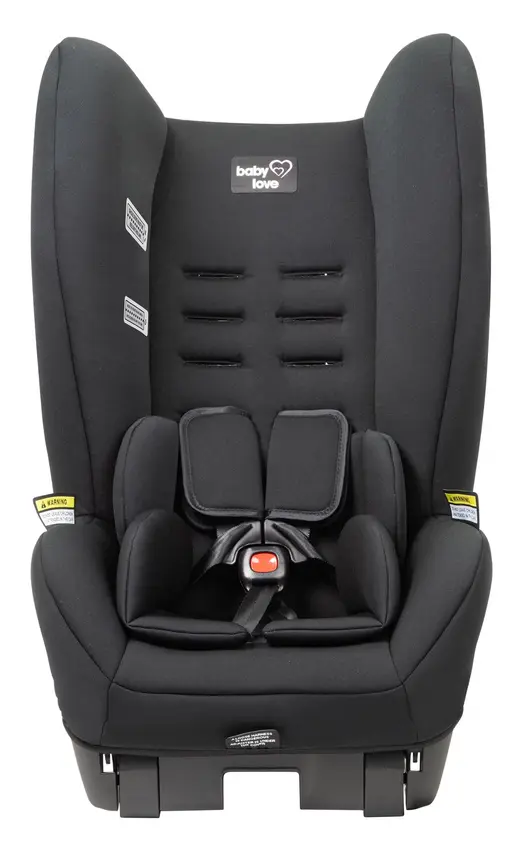
Babylove ezyone2
A very low-cost convertible seat. Rear-facing to about 12 months, then forward-facing to about 4 years.
 Reviewed
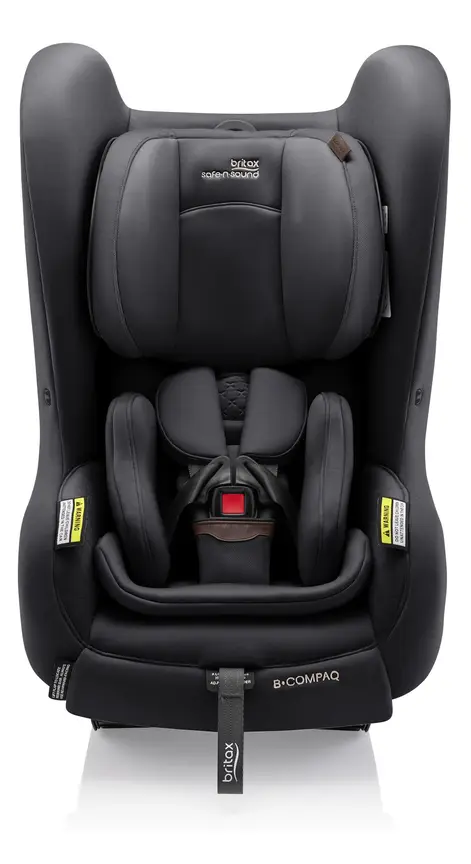
Britax Safe-n-Sound B-Compaq Lux
A convertible seat made for small cars with little room in the back.
Read our full review →Why merino wool?
Wool is naturally slow to burn. Compared with many synthetic fabrics such as polyester:
- it is harder to set alight
- it tends to char and go out by itself, rather than melting and dripping
- it holds some moisture in its fibres, which also helps it resist burning
Because of this, some brands use merino wool (a fine, soft wool from merino sheep) for the outer fabric of their car seats. That can help the seat pass the burn test without adding chemical flame retardants to the cover.
Merino has other features parents like:
- Breathes well. Wool lets air and moisture move, so children may get less sweaty on long or hot trips.
- Soft. Merino fibres are fine, so the fabric is less scratchy than ordinary wool.
- Resists smells. Wool tends to hold on to odours less than many synthetics.
There are some downsides:
- Wool covers usually cost more.
- They may need gentle washing (cool water, wool wash, air dry), and can shrink if washed wrongly.
- A few children have sensitive skin that reacts to wool, although fine merino is usually gentler.
- The cover is only one part of the seat. The foam inside, the harness pads and other parts must also pass fire rules.
Comparing cover types side by side
| Feature | Standard synthetic cover | Merino wool cover | "FR-free" synthetic cover |
|---|---|---|---|
| How it passes fire rules | Often with added flame retardant chemicals in fabric and/or foam | Wool's natural fire resistance, sometimes with other design changes | Fabric and foam chosen or made to pass without added chemicals |
| Added flame retardants | Usually yes (ask the maker) | Often none in the cover; check the foam | Claimed none; check what the claim covers |
| Breathability | Varies; some have mesh panels | Good | Varies |
| Washing | Usually easy machine wash | Gentle wash, air dry | Usually easy machine wash |
| Cost | Lowest | Usually highest | Middle to high |
| Crash protection | Depends on the seat design and approval, not the fabric. A cheap approved seat fitted well is safer than an expensive seat fitted badly. | ||
How to check a "flame-retardant-free" claim
"Flame-retardant-free", "FR-free" and "no added chemicals" are marketing words. They are not one official label. Here is how to find out what they really mean for the seat you're looking at.
1. Ask which parts the claim covers
A car seat has many parts: the outer fabric, the foam padding, the energy-absorbing foam in the shell, harness covers, the newborn insert, the canopy and sun shade. A brand might say the fabric has no added flame retardants while the foam still does. Ask: "Does this claim cover every part of the seat, including the foam and inserts?"
2. Ask what "no flame retardants" means
Some brands mean "no added flame retardant chemicals of any kind". Others mean "no organohalogen" or "no brominated" flame retardants, but may use different chemicals. Both can be honest, but they are not the same. Ask the brand to tell you in writing.
3. Look for independent testing
Some brands have their fabrics tested by an outside group for harmful substances. One well-known label is OEKO-TEX Standard 100, which tests textiles for a list of harmful chemicals. A label like this tells you the fabric was tested; it does not, by itself, tell you about the foam or the crash safety of the seat.
4. Check it is approved where you live
This is the step you must never skip. Look for:
- the AS/NZS 1754 sticker in Australia
- the orange "E" label for UN R44 or UN R129 in the UK and Europe
- the FMVSS 213 label in the US
- the National Safety Mark in Canada
A merino seat sold in another country may be a great seat, but if it isn't approved where you live, it may not be legal to use. In Australia, for example, child restraints used on the road must meet AS/NZS 1754.
5. Read the manual
The manual often explains what the cover is made of and how to clean it. It will also tell you which parts can be removed, which can be washed, and which must never be changed.
Car seat rules for each age, whatever the fabric
A natural cover is a nice extra. These rules matter much more, and they apply to every seat.
| Stage | What the rules and experts say |
|---|---|
| Newborn and baby | Rear-facing in every country. Australia: at least until 6 months. UK i-Size: at least until 15 months. US (AAP) and Canada (Transport Canada): keep rear-facing until the seat's rear-facing limits. |
| Toddler | Rear-facing as long as the seat allows is safest. Then a forward-facing seat with a built-in harness. |
| Preschool and school age | Forward-facing harness until the child outgrows it, then a booster seat, then an adult seatbelt only when it fits properly. |
At every stage:
- Fit the seat exactly as the manual says. Get it checked by a trained fitter if you're unsure. Kidsafe and many road authorities in Australia, councils in the UK, inspection stations in the US and car seat clinics in Canada offer this.
- Do the harness up firmly. You should not be able to pinch any slack in the strap at the shoulder.
- Keep thick coats and puffy jackets off under the harness.
- Replace a seat after a crash, or when it reaches the end of its useful life (check the date or the maker's advice).
Side by side: more car seats & capsules to compare
Real products from our catalogue. We don't show star ratings or review counts; check the current price, stock and reviews on Amazon before you buy.
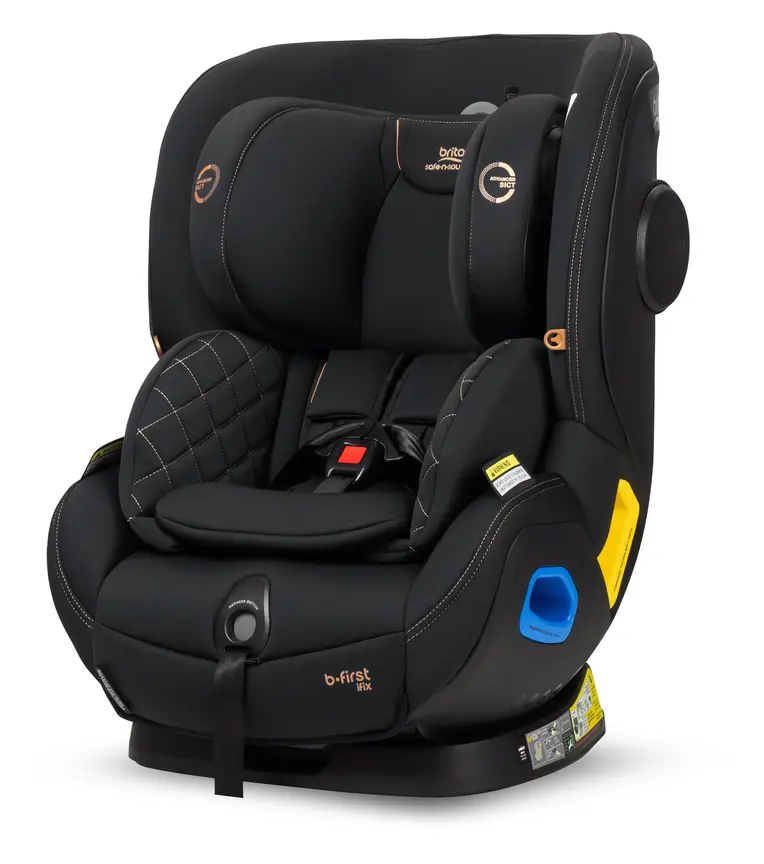
Britax Safe-n-Sound b-first+
Convertible seat from Britax's Australian Safe-n-Sound range with SICT deployable side-impact protection.

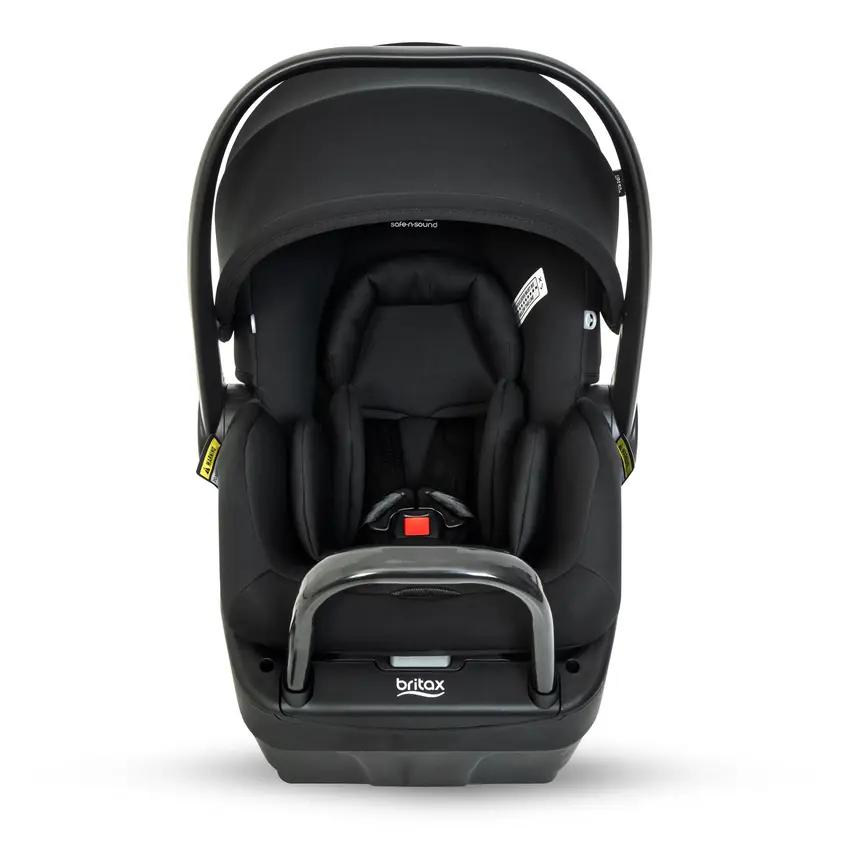
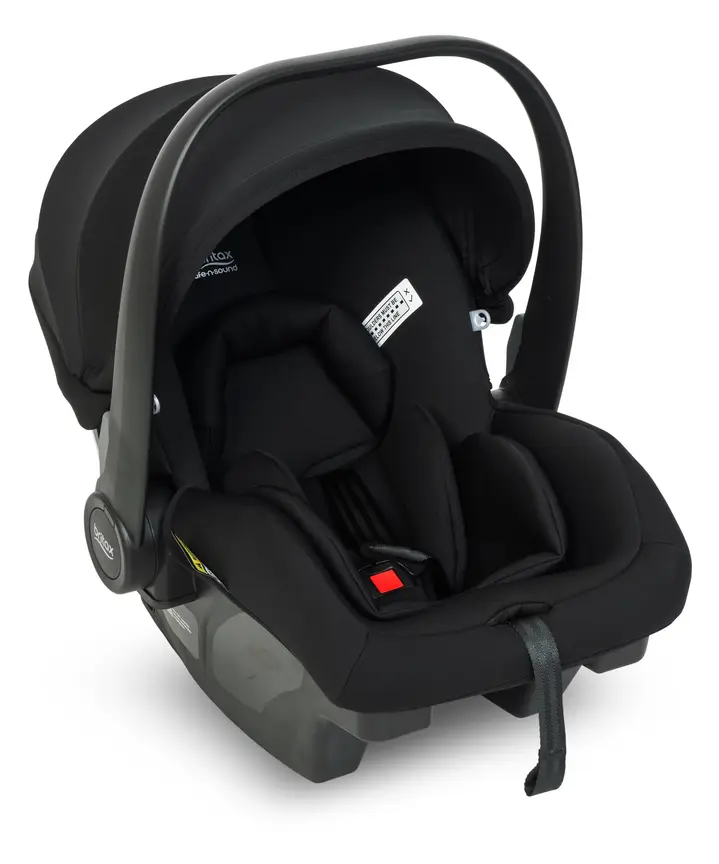
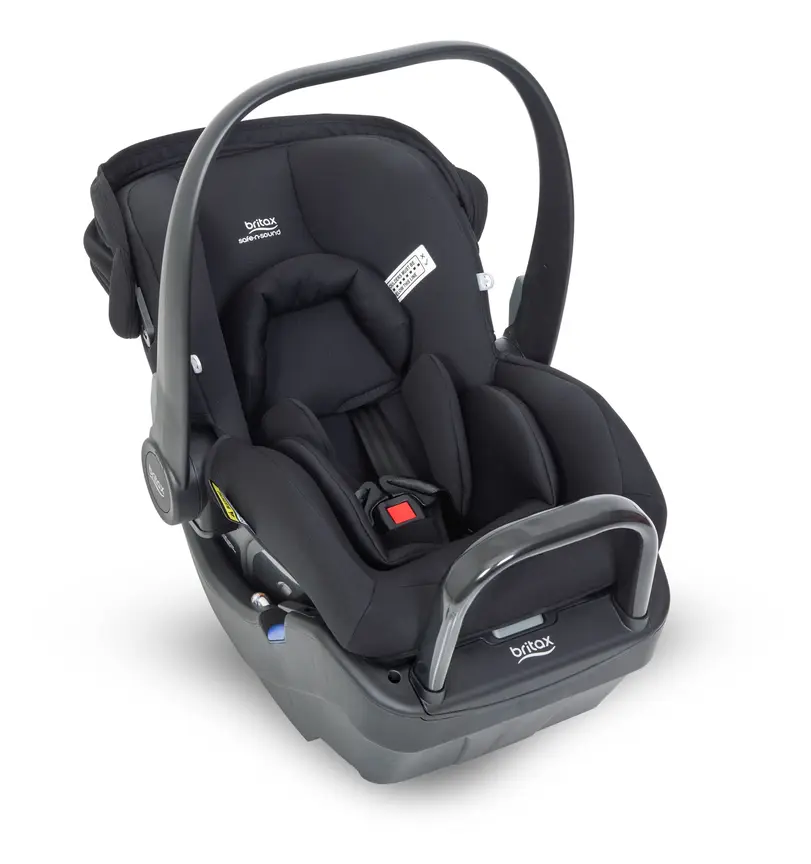
Britax B-Pod Lite
A newborn capsule with a ClickTight base, which makes a firm install simpler.
Read our full review →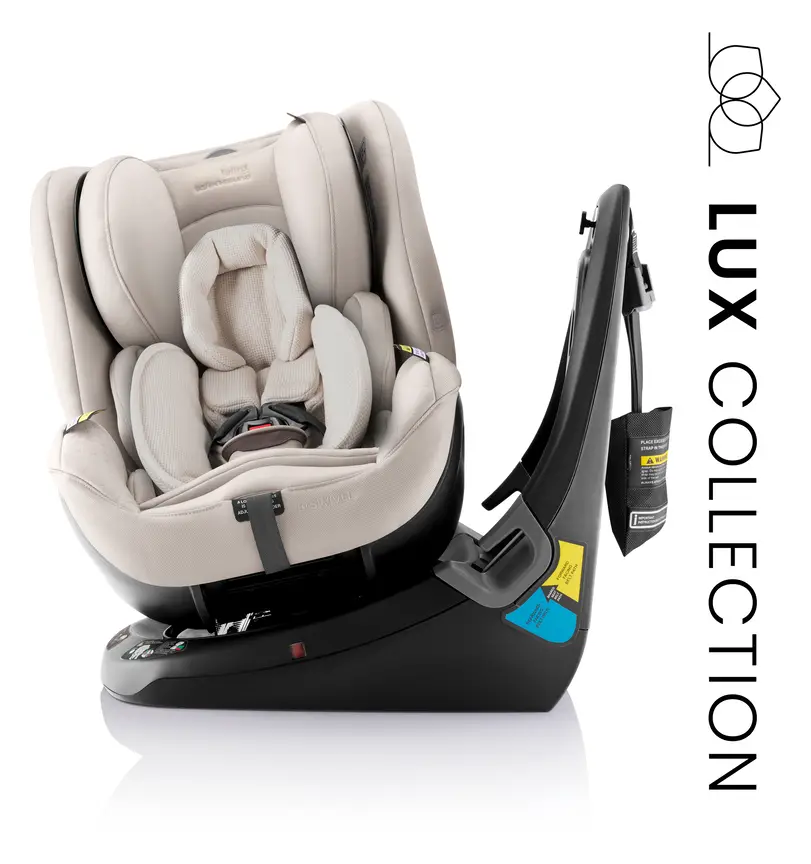
Other simple ways to cut chemical exposure in the car
If you want to reduce your child's contact with flame retardants and other chemicals, the cover is only one part of the picture. Some simple habits help:
- Air out new seats. Unpack a new seat and let it sit somewhere airy for a few days before using it. This helps with "new product" smells.
- Vacuum the car often. Many chemicals gather in dust. Regular vacuuming helps.
- Wash hands. Washing your child's hands before eating, especially after time in the car, cuts down how much dust they swallow.
- Keep the car cool. Heat can make some chemicals give off more vapour. Use sunshades and park in the shade when you can. Never leave a child alone in a car.
- Clean the cover the right way. Follow the manual. Wash fabric covers as directed. Most makers say harness straps should only be wiped clean, not soaked or machine washed, because it can weaken them.
A simple buying checklist
Use this list in the shop or when you email a brand. Tick each line before you pay.
- Approval: Does the seat carry the approval label for my country (AS/NZS 1754, UN R44 or R129, FMVSS 213 or the Canadian National Safety Mark)?
- Fit for my child: Is my child inside the seat's height and weight limits for the way I will use it (rear-facing or forward-facing)?
- Fit for my car: Can the seat be fitted in my car with ISOFIX or the seatbelt, plus the top tether if needed? Many shops and fitting services let you test it in your car first.
- Rear-facing room: Is there enough space for the seat to sit at the right angle without pushing hard against the front seat?
- The fabric claim: What does "flame-retardant-free" cover? Fabric only, or foam and inserts too?
- The chemicals: Does "free" mean no added flame retardants at all, or just no organohalogen ones?
- Testing: Has the fabric been tested by an outside group, and can the brand show you the result?
- Cleaning: How do I wash the cover? Can I buy a spare cover from the maker if the first one wears out?
- Useful life: How many years can the seat be used, and where is the date of manufacture printed?
- Help: Does the brand have a local phone line or email for questions about fitting and recalls?
Also register your seat with the maker after you buy it. That way, they can contact you if there is ever a recall. You can check recalls yourself too: Product Safety Australia, the UK Office for Product Safety and Standards, NHTSA in the US and Transport Canada all list car seat recalls online.
What about second-hand merino seats?
Merino seats cost more, so you may see them second-hand. The same rules apply as for any used seat. Only buy one if you know its full history: it has never been in a crash, it is within its useful life, all parts and the manual are there, and it is approved for your country. If you can't be sure, buy new. A wool cover that has been washed many times may also have shrunk, so check it still fits the seat snugly with no gaps around the harness slots.
Common mistakes to avoid
- Choosing a seat for its fabric over its fit. The best seat is the one that is approved, fits your child, fits your car and that you can fit correctly every time.
- Buying aftermarket covers. Covers, liners, padding and inserts that didn't come with the seat haven't been crash-tested or fire-tested with it. They can change how the seat works in a crash and how it burns.
- Importing a seat that isn't approved for your country. It may be illegal to use and may not be covered by insurance.
- Believing "natural" means "safer in a crash". Fabric has nothing to do with crash protection.
- Washing a wool cover in hot water or a dryer. It can shrink and no longer fit. A cover that doesn't fit can affect how the harness sits.
- Washing harness straps. Follow the manual. Soaking or bleaching straps can weaken them.
- Using a second-hand seat with an unknown history. A seat that has been in a crash, is past its useful life or is missing parts should not be used.
More options, from budget to premium
Real products from our catalogue. We don't show star ratings or review counts; check the current price, stock and reviews on Amazon before you buy.
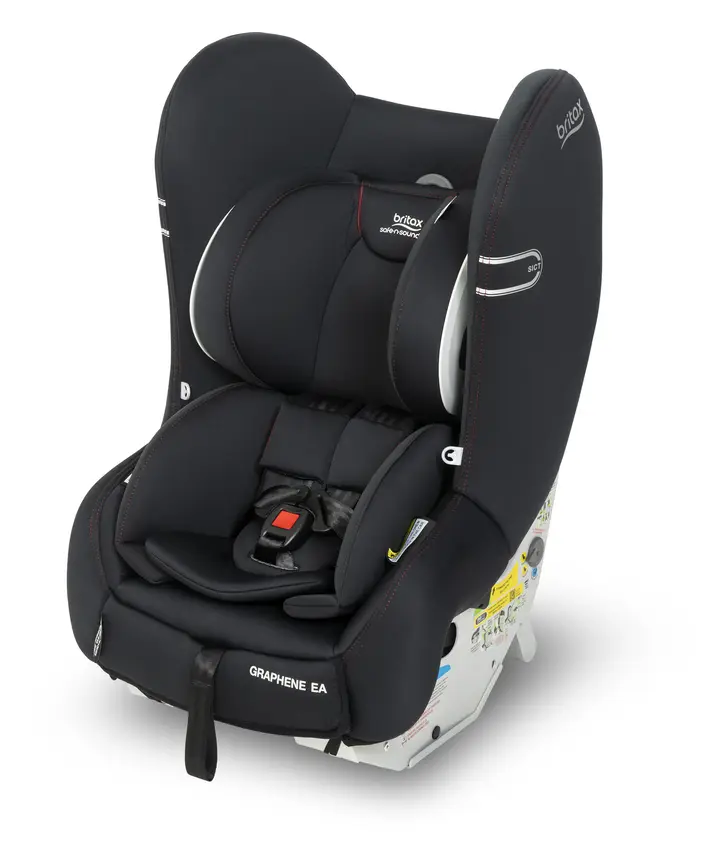
Britax Safe-n-Sound Graphene EA
Britax's Australian convertible seat with SICT side-impact technology, designed to reduce crash energy reaching your child's chest.

Britax Safe-n-Sound Hi Liner SG
A high-back booster for about 4 to 8 years. A clip keeps the seatbelt in the right place.

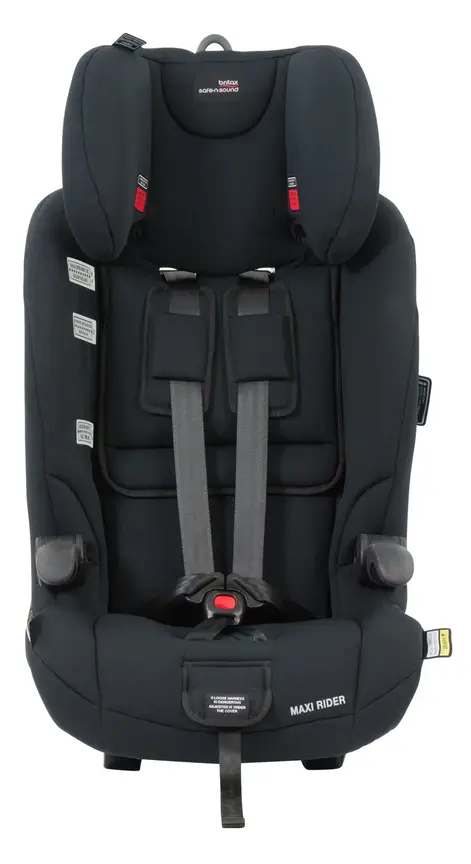
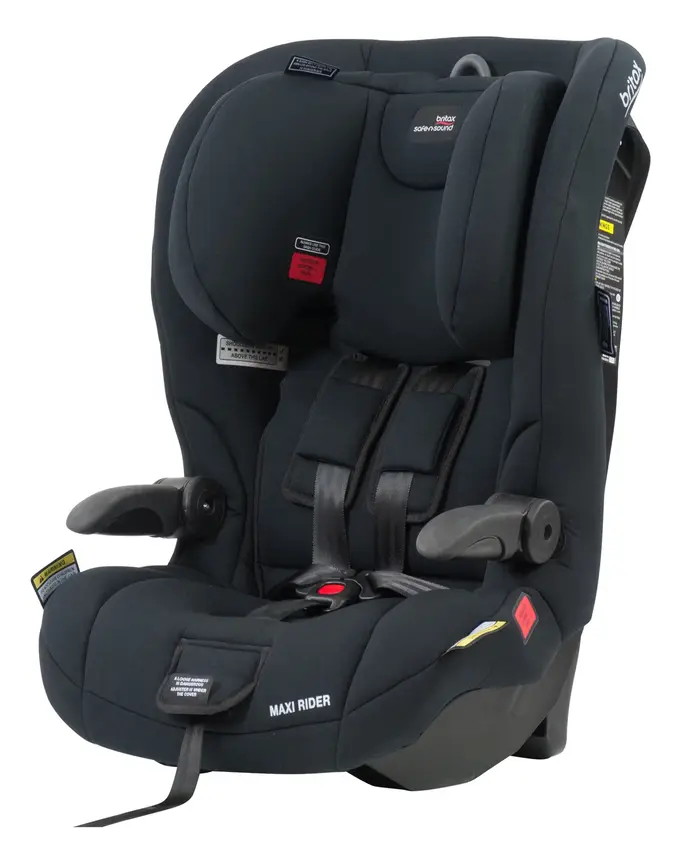
Britax Safe-n-Sound Maxi Rider
A seat with a harness from 12 months to about 4 years. Then it becomes a booster up to 6–8 years.
Read our full review →FAQ
Are flame-retardant-free car seats less safe in a fire?
No, as long as they are approved for your country. Every approved seat must pass the fire rules that apply. The difference is how the maker passes them: with chemicals, or with materials like wool that resist fire on their own.
Is merino wool safe for babies with eczema?
Many babies with eczema are fine with fine merino, which is soft and breathes well. Some children find wool itchy. If your child has very sensitive skin, ask your doctor, and keep a thin layer of clothing between the cover and their skin.
Can I buy a merino cover separately for my existing seat?
Only if it is the maker's own replacement cover made for that exact seat model. Other covers haven't been tested with your seat and shouldn't be used.
Do flame retardants come off on my child?
Some flame retardants that are mixed into materials can slowly move into dust over time. That's one reason the CPSC advised makers to stop using the organohalogen group in children's products. Washing hands and vacuuming help cut down exposure.
Are these seats legal in Australia?
Some brands that use merino covers sell seats that meet AS/NZS 1754 and are legal here. Many overseas models are not. Always check for the AS/NZS 1754 sticker before you buy.
Does it matter if the foam has flame retardants but the cover doesn't?
It depends on what you're trying to avoid. Foam is inside the seat and covered by fabric, so a child touches it less. But if your goal is to avoid added flame retardants completely, ask about every part, not just the cover.
Sources
- eCFR – FMVSS 302: Flammability of interior materials (US)
- U.S. CPSC – Flame retardants business guidance
- Product Safety Australia (ACCC) – Car seats guide
- Kidsafe – National best practice guidelines: safety of children in motor vehicles
- GOV.UK – Child car seats: the rules
- HealthyChildren.org (AAP) – Car seats: information for families
- Transport Canada – Child car seat safety
Related guides
More Parental Tips →
PFAS "Forever Chemicals" in Baby Gear: What They Are and How to Check Cot Mattresses, Prams and More

Baby Care Refresher for Grandparents: What's Changed in Safe Sleep, Feeding, Car Seats and More
Buying Used Baby Gear Safely: What to Buy, What to Skip, and What to Check