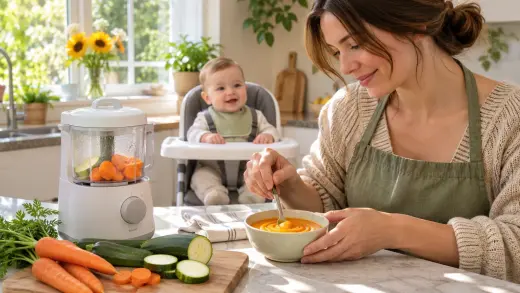
How to Freeze and Store Homemade Baby Food Safely
Learn how to cool, portion, label and freeze homemade baby food. Simple food safety steps for feeding babies in Australia, the UK, the US and Canada.
On this page
- What a freezer tray can do
- When homemade frozen portions may help
- Choose a tray that fits your routine
- Tray, container or fresh preparation?
- Prepare food with clean hands and surfaces
- Cool, portion and freeze
- Label every batch
- Thaw and reheat with care
- Age stages and changing portions
- Texture, allergens and choking safety
- Food guidance in Australia, the UK, the US and Canada
- Common mistakes to avoid
- Frequently asked questions
- Simple checklist
- Sources
Short answer: A freezer tray with a lid can help you freeze small portions of homemade baby food. It is optional. Clean hands, safe food handling and prompt cooling matter more than the tray. Freeze food in portions your baby can eat, label each batch with its name and date, then transfer frozen portions to a clean, sealed container if needed. Follow local guidance for storage and reheating.
Official food and health guidance comes from different bodies in each country. In Australia, use advice from Food Standards Australia New Zealand, the National Health and Medical Research Council, and Pregnancy, Birth and Baby. In the UK, use NHS and Food Standards Agency guidance. In the US, use the Food and Drug Administration and Centers for Disease Control and Prevention. In Canada, use Health Canada and the Canadian Paediatric Society.
What a freezer tray can do
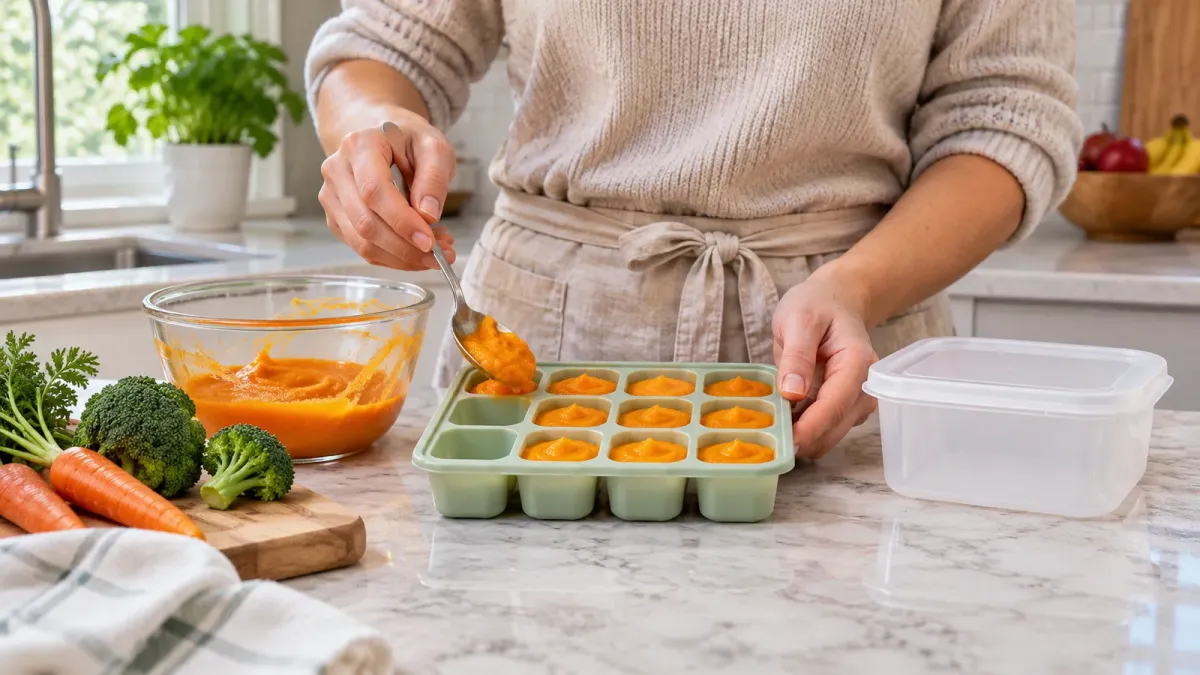
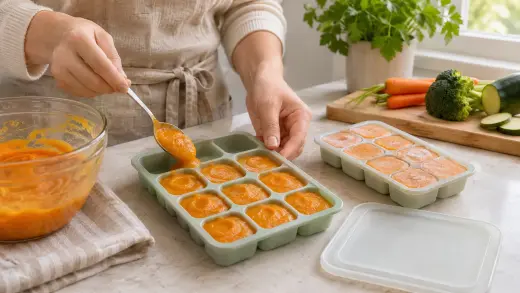
A freezer tray divides food into small sections. You can put a little food in each section, cover the tray, and freeze it. Later, you can take out only the amount you need.
This can help when your baby eats small servings. It may also make it easier to keep different foods apart. A lid can help protect food from spills and odours while it freezes. It can also help you stack trays if the design allows it.
A tray does not make food safe by itself. The food still needs clean preparation, quick cooling and steady cold storage. The lid must fit well, and the tray must be clean before use.
You do not need special baby-food equipment. A clean ice-cube tray or small freezer-safe container may work. Check that the item is made for food contact and can safely go in your freezer. Follow the maker's care instructions.
When homemade frozen portions may help
Freezing can be useful if you prepare more food than your baby will eat that day. It can reduce waste because you can thaw only a small serving. It can also make busy days easier.
Some families freeze plain cooked vegetables, fruit or other foods that suit their baby. You can also freeze a meal prepared from safe ingredients. Keep each food simple at first if you are tracking a possible reaction or introducing a new food.
Follow your local health guidance on when and how to introduce solid foods. Babies are usually ready around six months, but signs of readiness matter. Your baby should be able to sit upright with support, hold their head steady, and move food to swallow. Ask a health professional if you are unsure or your baby was born early or has feeding needs.
Frozen food is only one option. Freshly prepared food may be simpler for some families. Commercial baby food can also be useful. Choose safe products and follow their storage directions after opening.
Choose a tray that fits your routine
Start with the simplest design that meets your needs. You do not need a tray with many parts or special claims. A plain tray can be easier to fill and wash.
- Food contact: Choose a tray intended for food. Read its label and care directions.
- Lid: Look for a lid that stays in place during normal freezer use. A lid helps protect contents, but it does not replace a sealed storage container for longer storage.
- Portion size: Pick sections that suit the small servings your baby eats. No fixed portion size suits every baby.
- Easy release: Flexible sections may make portions easier to remove. Avoid twisting hard enough to crack or damage the tray.
- Cleaning: Choose a shape you can wash well by hand or in a dishwasher, if the label permits.
- Storage: Check that the tray fits your freezer and can sit flat while the food freezes.
- Durability: Check for cracks, sharp edges, loose parts or a damaged lid before each use.
Words such as “BPA-free” are not a complete food-safety check. Read the whole product label. Follow the stated use and temperature limits. Replace a damaged tray.
Baby Food Makers & Steamers worth a look
Real products from our catalogue. We don't show star ratings or review counts; check the current price, stock and reviews on Amazon before you buy.
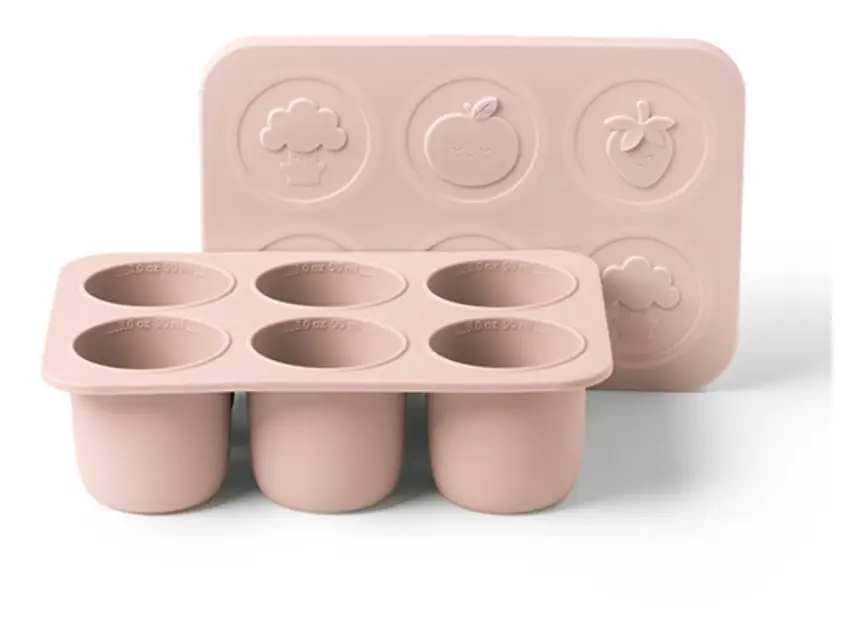
Annabel Karmel Silicone Freezer Food Tray
A silicone tray for freezing small portions of home-made baby food.

Little Rawr Glass Food Jars (3 pack)
Three glass jars with silicone sleeves for storing baby food in the fridge or freezer.

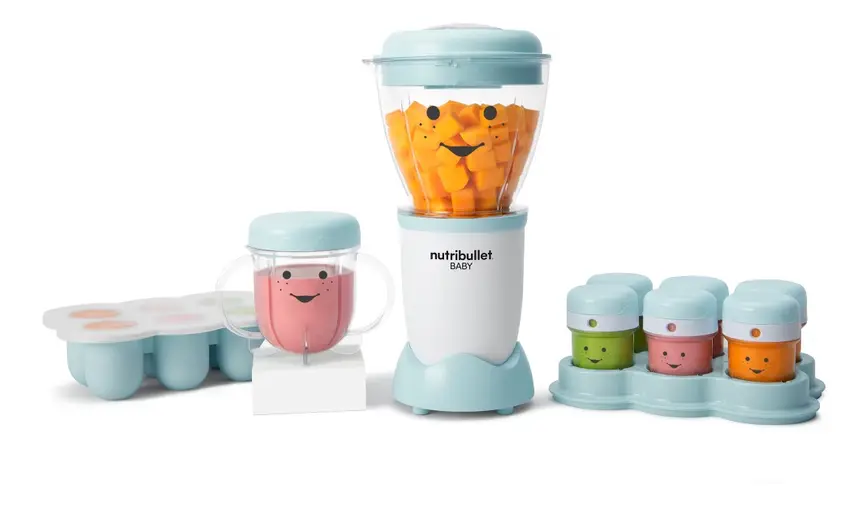
NutriBullet Baby Bullet
A small 200 W blender kit with date-dial cups and a freezer tray for batch cooking.
Read our full review →
Baby Brezza One Step Baby Food Maker Deluxe
Steam-and-blend baby food maker
Tray, container or fresh preparation?
Each method can work for different households. The best choice is the one you can keep clean and use safely.
| Method | Useful for | Things to check |
|---|---|---|
| Lidded freezer tray | Small separate portions | Food-safe use, a clean tray, a close-fitting lid and freezer-safe material |
| Small freezer-safe container | A larger serving or one complete meal | Leave space if the food expands; use a clean, sealed container |
| Freshly prepared food | Families who prefer not to freeze portions | Prepare, cool and serve safely; refrigerate or discard leftovers as advised locally |
| Commercial baby food | Convenience when home cooking is not practical | Check the label, seal, use-by date and storage directions |
Do not choose a method based only on claims about nutrition or convenience. A freezer tray does not make food more nutritious. Safe preparation and a varied diet matter more.
Prepare food with clean hands and surfaces
Wash your hands with soap and water before preparing food. Wash them again after handling raw meat, poultry, fish, eggs, rubbish or a nappy. Clean work surfaces, utensils and containers before use.
Wash fruit and vegetables under clean running water. Use separate boards and utensils for raw foods and ready-to-eat foods when possible. Keep raw meat and its juices away from cooked food.
Cook foods thoroughly. Do not serve a baby raw or undercooked animal foods. Let cooked food cool before filling the tray. Do not leave food sitting at room temperature for a long time.
Use a clean spoon to move food from a pot into the tray. Do not let a spoon that has been in your baby's mouth touch the batch. Saliva can transfer germs into food. Serve a small amount in a separate bowl instead.
Cool, portion and freeze
Prepare only as much food as you can cool and store safely. Divide a larger batch into small, shallow portions. Smaller portions cool more quickly than a deep pot.
- Cook the food. Follow a reliable recipe and cook it fully.
- Cool it promptly. Move food into shallow containers or portions. Do not leave it out while you wait for a large pot to cool.
- Fill the tray with clean utensils. Avoid touching the food with your hands.
- Cover and label the tray. Write the food name and date on a label or on the storage container.
- Place it flat in the freezer. Keep it away from raw foods that could leak onto it.
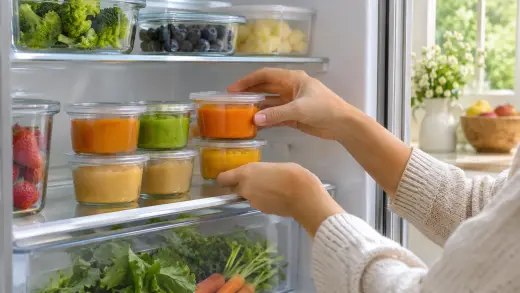
- Once frozen, transfer portions if useful. Use a clean, sealed freezer-safe container or bag. Keep the label with the food.
Follow local food-safety guidance for how long homemade food can be kept frozen. Advice can vary by food and by country. If you cannot find clear guidance for a particular food, make smaller batches and use them promptly.
Do not refreeze food that has thawed unless official local guidance says it is safe. When in doubt about how food was handled, discard it. Smell and appearance cannot always show whether food is safe.
Label every batch
A clear label helps you know what is in each portion and when it was made. Use a label that stays attached in the freezer.
- Write the food or recipe name.
- Add the date it was cooked and frozen.
- Note any ingredients that matter for your baby's food plan.
- Use older portions first, as long as they remain within local storage advice.
Do not rely on colour alone to identify food. Several foods can look alike once frozen. If a label has fallen off and you cannot identify the portion, discard it.
Thaw and reheat with care
Follow the food safety guidance where you live. NHS advice for baby food includes thawing in the fridge or using a microwave, then reheating until steaming hot throughout and cooling before serving. Stir food heated in a microwave well. Microwaves can leave hot spots that burn a baby's mouth.
Only thaw the amount you plan to use. Do not leave a portion to thaw on the bench. Do not reheat a serving more than once. Throw away food left in your baby's bowl after the meal.
Check the temperature before feeding. Stir thoroughly, then test a small amount yourself. It should feel warm, not hot. Keep your baby seated upright and supervise them while they eat.
If you are freezing expressed breast milk or preparing formula, use the separate official guidance for those foods. Do not treat milk like a cooked puree. Storage and handling instructions differ.
Side by side: more baby food makers & steamers to compare
Real products from our catalogue. We don't show star ratings or review counts; check the current price, stock and reviews on Amazon before you buy.

Babymoov Nutribaby(+) 6-in-1 Baby Food Processor
Steamer blender
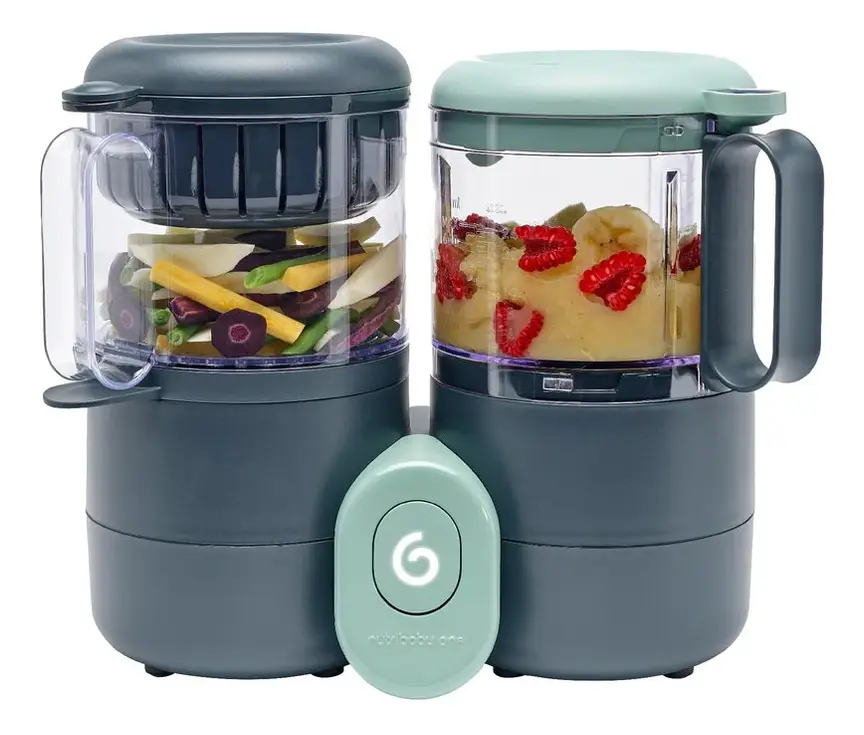
Babymoov Nutribaby One 4-in-1 Baby Food Maker
Steamer blender
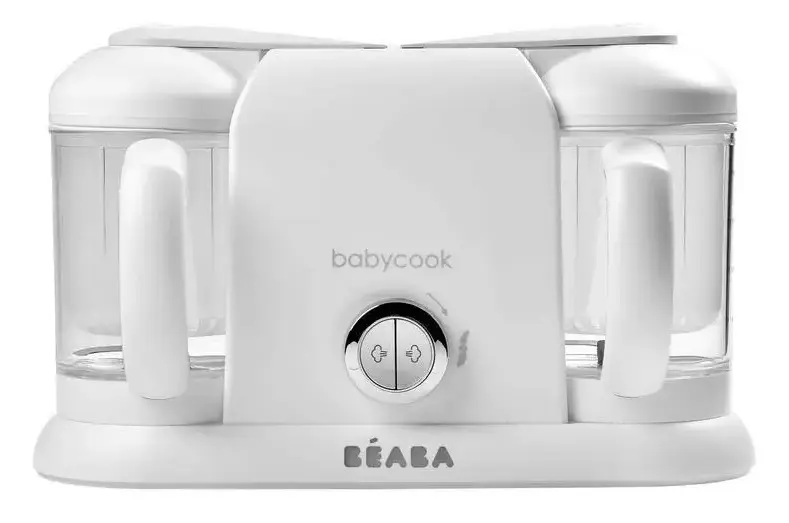

Beaba Babycook Neo
Steam-and-blend baby food maker with a glass bowl and stainless steel steam basket.
Age stages and changing portions
Your baby's appetite and skills change over time. Use portions as a convenience, not as a rule about how much your baby must eat.
| Stage | What may be changing | How portions can help |
|---|---|---|
| Before solids | Milk remains the main food. Your baby may not yet show readiness for solids. | You do not need frozen puree portions. Focus on milk feeding and readiness advice. |
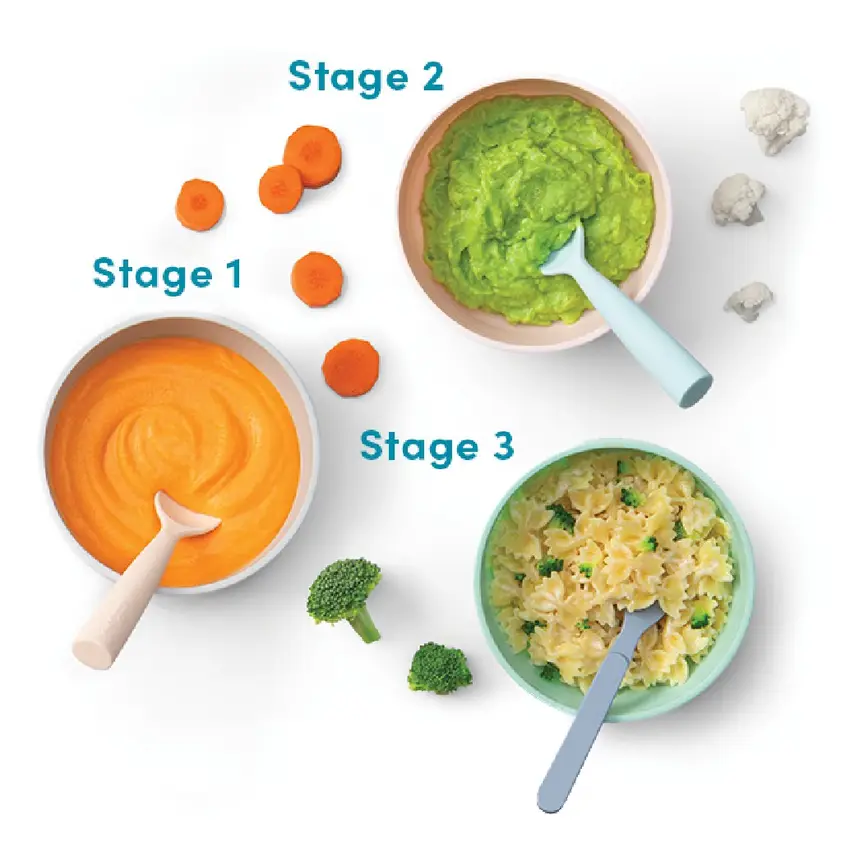
| Starting solids | Your baby may taste only a little at first and learn to swallow different textures. | Small portions can reduce waste. Offer safe textures and let your baby set the pace. |
| Learning to self-feed | Your baby may reach for soft pieces and practise eating with their hands. | Freeze separate foods if useful. Prepare each food in a safe shape and texture. |
| Older baby and toddler | Meals may become more varied and closer to family foods. | Larger containers may suit better. Keep choking hazards and food safety in mind. |
There is no need to force a finished portion. Babies can eat different amounts at different meals. Offer suitable foods and watch your baby's cues.
Texture, allergens and choking safety
Frozen puree is not the only useful texture. As your baby learns to eat, offer a range of textures that are safe for their age and skills. Follow local guidance on starting solids and introducing common allergens.
Do not offer whole nuts, hard raw pieces or other foods that can block a small airway. Cut round foods lengthways and into safe sizes. Keep your baby seated and stay close while they eat. An adult should be able to see and reach them.
Freezing does not remove choking risks. A thawed piece can still be too hard, round or sticky. Check its texture before serving. Ask a health professional for advice if your child has swallowing problems or a medical feeding plan.
If your baby has signs of an allergic reaction, seek medical help. For severe breathing trouble, collapse or other emergency signs, call your local emergency number. Follow a clinician's advice about known allergies.
Food guidance in Australia, the UK, the US and Canada
Official advice is not identical in every country. Use the current guidance for your location. These agencies provide useful starting points.
| Country | Official bodies | Relevant guidance |
|---|---|---|
| Australia | Food Standards Australia New Zealand; National Health and Medical Research Council; Pregnancy, Birth and Baby | Food safety, infant feeding and introducing solid food |
| United Kingdom | NHS; Food Standards Agency | Children's food hygiene, storing and reheating baby food, and first foods |
| United States | Food and Drug Administration; Centers for Disease Control and Prevention | Safe food handling, infant feeding and formula storage |
| Canada | Health Canada; Canadian Paediatric Society | Feeding guidance and food safety advice for families |
Food safety agencies may use different storage times and wording. Follow the advice for your country and the instructions for the food you prepared. Ask a health professional when your baby has a health condition or special feeding needs.
Common mistakes to avoid
- Leaving food out too long: cool and store food promptly. Do not leave it on the bench for hours.
- Filling a dirty tray: wash the tray and lid before use. Keep clean parts away from raw food.
- Using a damaged tray: cracks and broken edges can trap food or make cleaning harder.
- Forgetting labels: an unknown food or date is hard to manage safely.
- Thawing on the bench: thaw food using methods in official local guidance.
- Reheating repeatedly: warm only what you need and do not reheat a serving more than once.
- Saving bowl leftovers: discard food that has been in contact with your baby's spoon or mouth.
- Assuming frozen means safe: freezing does not fix food that was handled poorly before freezing.
- Using a fixed portion as a target: a compartment size is not a serving goal. Follow your baby's cues.
- Mixing milk rules with puree rules: breast milk and formula have their own handling instructions.
Frequently asked questions
Do I need a special baby food freezer tray?
No. A special tray is optional. A clean food-safe tray or small freezer-safe container may work. Check the label and use directions.
Can I freeze homemade baby food in an ice-cube tray?
You can use one if it is clean and intended for food. Cover it, freeze it flat, and label the stored portions. Transfer frozen portions to a clean sealed container if you need better protection.
How long can homemade baby food stay frozen?
Storage guidance can differ by food and country. Check an official food-safety source where you live. Label each portion with its date and use it within that guidance.
Can I thaw baby food on the kitchen bench?
Do not leave food out to thaw. Use the safe thawing method recommended by your local health or food-safety agency.
Can I refreeze baby food after it thaws?
Do not refreeze thawed food unless current official local advice says it is safe for that food. When unsure, discard it.
Can I put warm food straight into the freezer tray?
Cool food promptly first. Divide it into small portions so it cools faster. Do not leave it at room temperature for a long time.
Can I microwave frozen baby food in its tray?
Only if the tray label says it is safe for microwave use. Many trays are for freezing only. Stir reheated food well and check for hot spots.
Can I save food left in my baby's bowl?
It is safest to discard it. A used spoon can carry saliva and germs into the food.
Does freezing keep all nutrients in the food?
Freezing is a way to store food. Nutrient levels depend on the food and how it was prepared and stored. Do not rely on broad marketing claims.
Can I freeze breast milk or formula in the same tray?
Use specific official advice for breast milk or formula. Their storage and handling rules differ from cooked baby food.
What if I am not sure the food stayed cold?
If you cannot confirm it was stored safely, do not serve it to your baby. Discard it and prepare a fresh serving.
More options, from budget to premium
Real products from our catalogue. We don't show star ratings or review counts; check the current price, stock and reviews on Amazon before you buy.
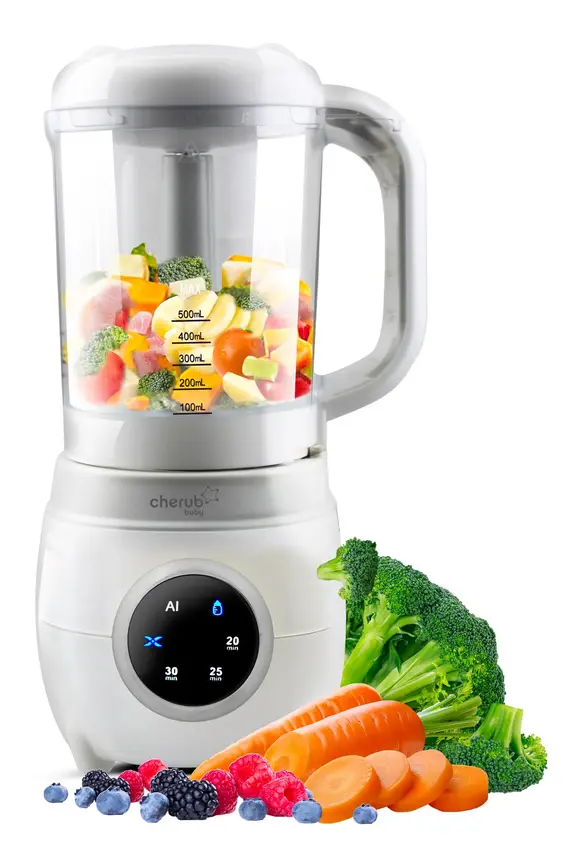 Reviewed
Cherub Baby Food Maker & Steriliser
Steams then blends food. It can also defrost, warm bottles and sterilise.
Read our full review →
Cherub Baby Food Pouch Spoons (2 pack)
Spoon tops that screw onto food pouches, so you can spoon-feed on the go.
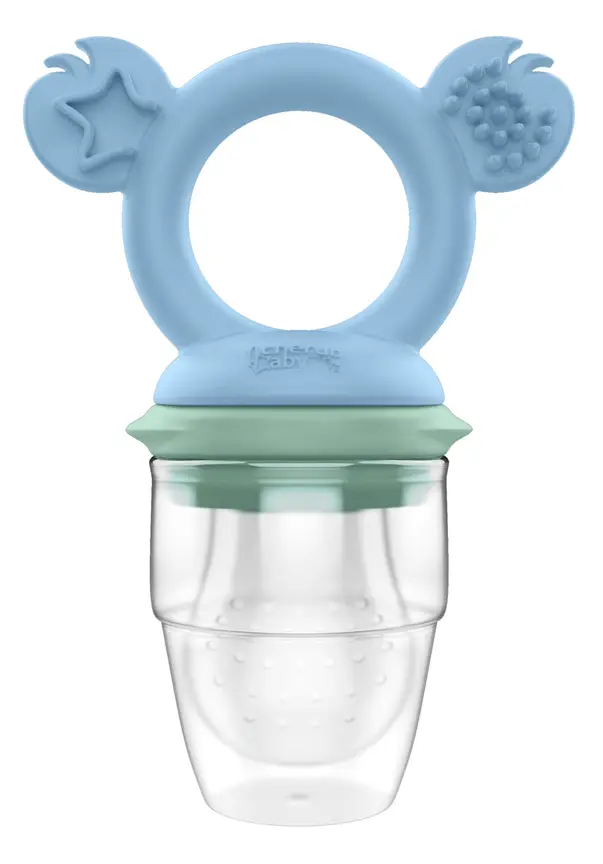


Cherub Baby Silicone Fresh Food Feeder
A silicone teat-style feeder. Babies can chew soft fruit or frozen breast milk through it.
Read our full review →Simple checklist
- Wash hands, surfaces, utensils, tray and lid.
- Cook food fully and cool it promptly in small portions.
- Cover, label and date each batch.
- Freeze the tray flat and keep food protected.
- Follow local advice for storage, thawing and reheating.
- Stir reheated food and check its temperature before serving.
- Discard food left in your baby's bowl.
- Serve your baby seated upright and supervise every meal.
A freezer tray is simply a handy storage tool. Safe handling, suitable foods and attentive feeding make the real difference. For advice about your baby's diet, allergies or feeding skills, speak with a doctor, nurse or dietitian.
This article is general information, not medical advice. Follow your local health and food-safety guidance and ask a qualified health professional about your child's needs. Some links may be affiliate links. If you buy through them, BabyGearFinder may earn a commission at no extra cost to you.
Sources
- Pregnancy, Birth and Baby – Food preparation and safety
- Pregnancy, Birth and Baby – Introducing solid food
- NHS – Children's food: safety and hygiene
- NHS Best Start in Life (UK) – Storing and reheating food
- CDC – Infant formula preparation and storage
- Caring for Kids (Canadian Paediatric Society) – Feeding your baby in the first year
Related guides
More Feeding & Baby Food →
Baby Food Makers: How to Choose, Prepare and Store Baby Food Safely
Freezer Trays for Homemade Baby Food: How to Choose and Use Them Safely
How to Store and Organise Your Baby’s Meals Safely