














Newborn Gadgets: What Helps, What Can Wait, and How to Choose Safely
A plain guide to newborn gadgets: what can help with sleep, feeding and care, what can wait, and how to choose and use baby gear safely.
On this page
- What counts as a newborn gadget?
- Start with the basics
- Monitors and health tracking devices
- Lights and sound machines
- Feeding gadgets and bottle warmers
- Carriers, bouncers and swings
- Choosing gadgets by age and stage
- How to compare common gadgets
- How to choose and use a gadget safely
- Safety guidance across four countries
- Common mistakes to avoid
- A simple buying plan
- Frequently asked questions
- Sources and further guidance
- Sources
Short answer: You do not need many gadgets to care for a newborn. Start with safe sleep space, a suitable car seat, nappies, feeding supplies and a few basic care items. A simple monitor, night light or carrier may help your family. These are choices, not needs. Smart monitors, sleep trackers and bottle warmers cannot replace care or medical advice. Pick each item for a clear job. Read its instructions and check local safety advice.
Australia's Product Safety Australia and Red Nose, the UK's Office for Product Safety and Standards and The Lullaby Trust, the US Consumer Product Safety Commission and American Academy of Pediatrics, and Canada's Health Canada and Canadian Paediatric Society all offer guidance. Product rules differ by country. Check your local regulator before buying or using baby gear.
What counts as a newborn gadget?
A newborn gadget is any device or accessory sold to make baby care easier. Some are simple, such as a night light. Others use a camera, phone app, sensor or motor. A product can feel useful without being essential. A high price or smart feature does not prove that it helps your baby.
It helps to sort items by the job they do. Care tools help with changing, bathing or grooming. Feeding tools include bottle brushes and sterilising equipment. Sleep tools include monitors and sound machines. Moving tools include carriers and prams. Some products fit more than one group.
Before buying, ask what problem you need to solve. Is it hard to see during night feeds? Would a dim lamp help? Do you need to carry your baby while walking? A clear answer can stop you buying items that add cleaning, charging or worry.
Newborns change quickly. A device that seems useful during the first weeks may not suit your baby's next stage. Some products need adult supervision every time. Others need careful cleaning or regular battery charging. Include that work in your decision.
Start with the basics
Begin with the items your family will use for daily care. A safe cot or bassinet, a firm flat mattress that fits, and a correctly fitted car seat are more useful than novelty gadgets. Keep the sleep space clear. Put your baby down on their back for sleep, following your local safe sleep advice.
For feeding, choose what fits your plan. Breastfeeding families may want a pump, milk storage containers or a nursing light. Bottle-feeding families may need bottles, teats, a brush and a safe way to prepare feeds. Ask a midwife, nurse or doctor if you need help choosing feeding equipment.
For changing, keep nappies, wipes or cloths, a safe changing surface and a container for used items nearby. You do not need a special electronic nappy bin. A regular bin can work if you empty and clean it as needed.
For bathing, a clean basin or baby bath can help. Never leave a baby alone in or near water, even for a moment. A bath seat does not make it safe to step away. Keep towels, clothing and supplies within reach before you start.
Monitors and health tracking devices
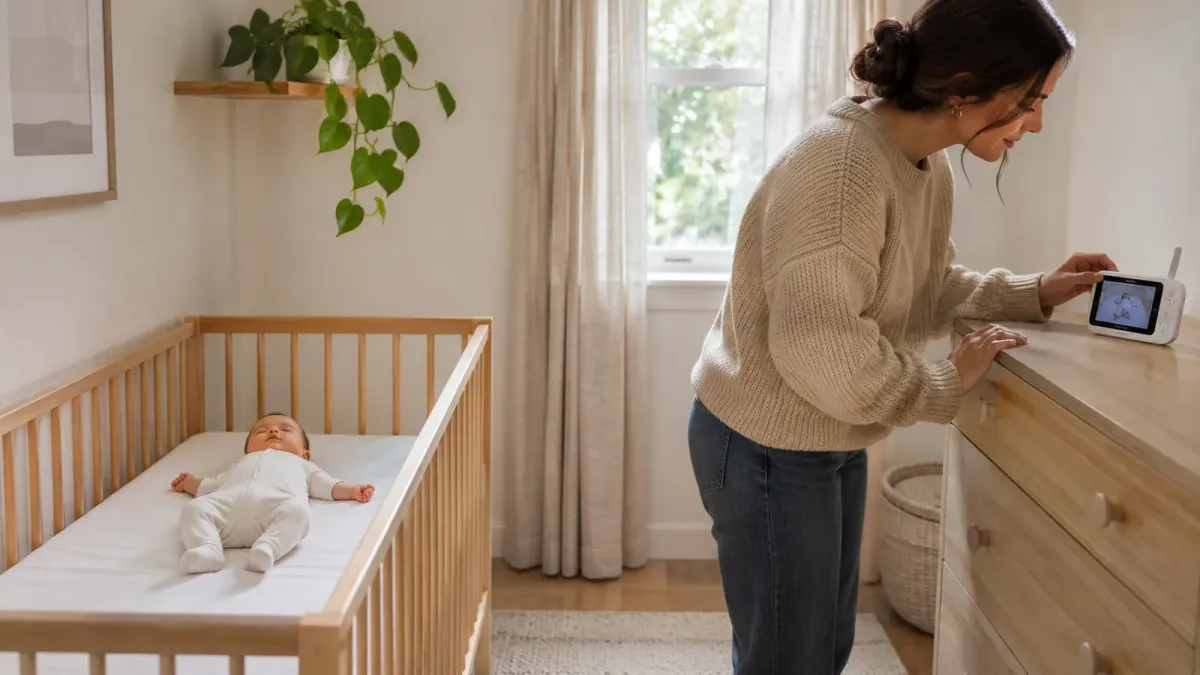
A baby monitor lets you hear or see your baby from another room. Some use sound only. Others show video. Smart models may connect to a phone or home network. These features can be convenient, but a monitor does not make a sleep space safe.
For healthy babies, consumer monitors have little proven benefit in preventing serious harm. The Lullaby Trust and Red Nose say monitors do not prevent sudden infant death. A monitor can also create false alarms or make a parent more anxious. Use one only if it helps your family, and keep following safe sleep advice.
Keep monitor cords and power leads well away from the cot. A baby may reach or become tangled in a cord as they grow. Mount devices as the maker directs. Do not place a camera, sensor or cable inside the cot.
Some devices claim to track breathing, heart rate or oxygen levels. Consumer products can give readings that are wrong or unclear. They are not a substitute for a clinician's advice or a medical monitor prescribed for a health need. If your baby has a health condition, ask their care team before using a tracking device.
If a monitor alarm sounds, check your baby directly. Do not rely on an app alone to decide whether your baby needs help. If your baby seems unwell, has trouble breathing or is difficult to wake, seek urgent local medical help.
Lights and sound machines
A dim light can make night feeds and nappy changes easier. Choose a light that is easy to switch on without shining into your baby's face. Keep cords out of reach. A small lamp may do the job without an app or special nursery system.
Some families use steady background sound to settle a baby. Sound machines are optional. Keep the device away from the cot and set it at a low volume. Do not place it beside your baby's head. If it seems loud to you, lower it or move it farther away.
Do not use a sound machine to cover signs that your baby needs you. Your baby may cry, stir or need a feed. Keep normal listening and checks in your routine. If sound seems to make your baby unsettled, stop using it.
Keep the room calm and comfortable. A gadget cannot create a safe sleep routine by itself. Lay your baby on their back, in their own clear sleep space, and follow local advice about clothing and room temperature.
Feeding gadgets and bottle warmers
Many feeding tools are optional. A bottle warmer may save a little time, but it is not required. Follow safe instructions for preparing and storing formula or expressed milk. Warm a feed only if your baby prefers it. Never use a microwave to heat a baby's bottle, because it can create hot spots.
After warming, mix the feed as directed and check its temperature before giving it. A bottle can feel cool on the outside while the liquid inside is too hot. Do not leave warmed milk sitting for long periods. Follow the storage advice from your health service or the product instructions.
A steriliser can help clean feeding items, depending on local health guidance and your baby's needs. Wash bottles and parts as directed. Let them dry safely. Keep clean items away from dirty dishes and hands. Ask your health professional whether extra steps are needed for a premature or unwell baby.
Breast pumps can help some families express milk. A hands-free bra is an accessory, not a medical need. Check that pump parts fit and are cleaned as the maker explains. If pumping hurts or milk supply worries you, seek support from a lactation professional or health service.
Smart bottles and feeding trackers may record amounts or times. They cannot tell whether your baby is getting enough without the full picture. Watch your baby, follow feeding cues and attend health checks. Ask a clinician if weight gain, wet nappies or feeding raises concern.
Carriers, bouncers and swings
A carrier or sling can keep your baby close while leaving your hands free. Choose one that supports your baby's size and age. Read the instructions and practise putting it on before carrying your baby. Check your baby's face often.
Your baby's face should remain visible, with the nose and mouth clear. The chin should not be pressed onto the chest. Support the head and neck as the instructions show. Stop and reposition your baby if breathing looks strained or the face is covered.
A swing or bouncer may soothe some babies while an adult stays close. It is not a cot or a safe place for routine sleep. If your baby falls asleep there, move them to a firm, flat sleep surface as soon as you can. Follow age, weight and use limits. Never place a swing on a table or raised surface.
Do not use a carrier, bouncer or swing as a way to leave your baby unattended. Keep straps fastened as directed. Check for loose parts or damage. Stop using the item when your child reaches its stated limit or can climb out.
Choosing gadgets by age and stage
Age labels are a starting point. Your baby's size, movement and health matter too. Read the product's age and weight limits before each use. A product that suited a newborn may become unsafe once your baby can roll, push up or sit.
| Stage | Items that may help | What to check |
|---|---|---|
| Newborn weeks | Dim light, basic feeding supplies, simple audio monitor if useful | Keep sleep space clear. Follow feeding and sleep advice. |
| Early months | Carrier, pump or bottle tools that match your routine | Check fit, cleaning steps and instructions each time. |
| Rolling signs | Simple floor play items and age-suited toys | Stop using products that restrict movement or exceed limits. |
| Sitting and eating | Suitable high chair and feeding tools | Use the harness and supervise every meal. |
These stages are broad. Babies develop at different speeds. If you are unsure whether a product suits your baby's ability, ask a health professional or check the maker's guidance.
How to compare common gadgets
Use this table as a starting point. It does not rate brands. It shows the main job, limits and checks for common items.
| Item | May help with | Limits | Safety checks |
|---|---|---|---|
| Audio monitor | Hearing a baby in another room | Does not prevent harm or replace checks | Keep cords away from the cot. |
| Video monitor | Seeing a baby from a distance | May add alerts and screen time for parents | Secure the camera and protect account access. |
| Health tracker | Recording a reading or trend | Readings may be wrong; not a diagnosis | Ask a clinician before relying on it. |
| Bottle warmer | Warming a feed | Optional; can overheat a feed | Follow instructions and check temperature. |
| Sound machine | Adding steady background sound | Not needed by every baby | Keep volume low and device away. |
| Carrier or sling | Keeping baby close while walking | Needs correct fit and attention | Keep face visible and airway clear. |
| Bouncer or swing | Short periods of supervised soothing | Not for routine sleep | Use on floor and follow limits. |
| Changing mat | Giving a wipeable changing surface | Does not stop falls | Keep one hand on baby. |
How to choose and use a gadget safely
Buy from a seller you can contact. Check the product name and model against recall notices. Look for missing parts, damage or signs of a poor repair. If buying second-hand, ask for the instructions and check that the item has not been recalled.
Read the manual before first use. Check the age, weight and use limits. Follow assembly steps in order. Keep small parts, packaging and batteries away from children. Stop using a product if a part breaks or a safety strap no longer works.
Think about cleaning before you buy. A device with many small parts may take longer to wash and dry. Follow the maker's cleaning directions. Do not use harsh cleaners unless the instructions allow them. Keep feeding parts clean and dry.
For connected gadgets, change default passwords if the maker allows it. Use a strong, unique password. Keep software updated. Share access only with people who need it. Check the privacy settings and learn how to turn off remote access.
Use products only for their stated purpose. Do not add pillows, positioners, toys or homemade attachments to sleep products. Do not alter a harness or remove parts. A clever online hack may make a product unsafe.
Safety guidance across four countries
Product rules and advice differ across borders. Check the local regulator and the product label where you live. A product sold online may not meet the rules in your country.
| Country | Official bodies to check | Useful focus |
|---|---|---|
| Australia | Product Safety Australia (ACCC), Red Nose, Pregnancy, Birth and Baby | Check recalls and mandatory product rules. Follow safe sleep and baby care advice. |
| United Kingdom | Office for Product Safety and Standards, NHS, The Lullaby Trust | Check product safety notices and safer sleep guidance. |
| United States | Consumer Product Safety Commission, American Academy of Pediatrics | Check recalls, safe sleep advice and product guidance. |
| Canada | Health Canada, Canadian Paediatric Society | Check recalls and safety advice for baby care and sleep. |
For sleep, each family should follow trusted local guidance. Do not assume a monitor, sleep gadget or special product lowers the risk of sudden infant death. The safest steps remain a clear sleep space, a firm flat surface and placing baby on their back.
Common mistakes to avoid
- Buying before you know the problem. Wait until you can name the job the gadget must do.
- Trusting marketing claims. Words such as “smart” or “medical grade” do not prove a product works.
- Using a tracker as a diagnosis. Ask a health professional about symptoms or worrying readings.
- Letting a monitor replace checks. Look at and care for your baby directly.
- Using a seat or swing for sleep. Move a sleeping baby to a safe, flat sleep space.
- Ignoring cords and batteries. Keep both out of reach and follow safe charging advice.
- Skipping the manual. Limits and cleaning steps differ between products.
- Keeping a product after damage. Stop using it until it is repaired safely or replaced.
- Adding accessories that do not belong. Avoid unapproved straps, cushions and attachments.
- Buying everything at once. Your needs may become clearer after your baby arrives.
A simple buying plan
Make a short list based on your home and routine. Start with sleep, travel, feeding and changing. Borrow or wait on optional items when possible. A friend or family member may have a suitable item, but check its condition, parts, instructions and recall status first.
For each item, write down its purpose. Add the space it needs, how often it needs cleaning, and how it gets power. If a device needs an app, see whether it still works without internet. Check whether you can use it safely during a power cut.
Try one new item at a time. That makes it easier to see whether it helps. If it adds stress or takes too much time, stop using it. You do not need to keep a gadget because it was expensive.
Ask your midwife, nurse, doctor or pharmacist when a gadget relates to health. They can help you decide whether a device fits your baby's needs. Seek urgent help for urgent symptoms rather than waiting for a gadget reading.
Frequently asked questions
Do newborns need a baby monitor?
No. A monitor is optional. It can help you hear or see your baby from another room, but it does not prevent sudden infant death or replace safe sleep practices and direct checks.
Are wearable breathing monitors reliable?
Consumer devices can give unclear or inaccurate readings. They cannot diagnose a health problem. If your baby has a medical need, ask their care team what equipment is suitable.
Can my baby sleep in a bouncer or swing?
These products are for supervised use, not routine sleep. If your baby falls asleep, move them to a firm, flat sleep surface as soon as possible. Follow local safe sleep advice.
Do I need a bottle warmer?
No. It is a convenience, not a requirement. Follow safe preparation and storage advice for expressed milk or formula. Never heat a bottle in a microwave.
Is a sound machine safe for a newborn?
It may be used if it helps, but keep the volume low and the device away from the cot. Stop if it seems to upset your baby. It should not hide your baby's cries.
What should I check before buying a second-hand gadget?
Check the model, recall status, condition, parts, instructions and age limits. Do not use an item with missing parts, damage or an unknown safety history.
Are smart baby gadgets private?
Connected devices can collect or share information. Read the privacy settings. Change default passwords, use a unique password and limit who can access the account.
How many gadgets should I buy before birth?
Buy only the basics your family needs. You can add optional items after you learn your routine. Many families find that a few simple tools are enough.
Sources and further guidance
- Red Nose Australia – Baby monitors
- The Lullaby Trust – Baby monitors
- Children's Hospital of Philadelphia – Consumer baby monitors have little proven benefit for healthy infants
- Product Safety Australia – Recalls
- Health Canada – Recalls and safety alerts
- Government of Canada – Cyber security tips for your baby gear
This article offers general information, not medical advice. Ask a qualified health professional about your baby's care. Product availability and safety rules vary by country. BabyGearFinder may earn a commission from qualifying purchases. This does not change the price you pay.
Sources
- Red Nose Australia – Baby monitors
- Product Safety Australia – Recalls
- UK Office for Product Safety and Standards
- Children's Hospital of Philadelphia – Consumer baby monitors have little proven benefit for healthy infants (2017)
- Health Canada – Recalls and safety alerts
- Get Cyber Safe (Government of Canada) – Cyber security tips for your baby gear
Related guides
More Bath, Nappies & Changing →
Nappy Bag Tech for Busy Parents: What Helps and What to Skip

Belly Bands and High-Waisted Leggings for Crawling Babies: What Helps and What to Skip

Smart Nappies and Baby Monitors: What Digital Nursery Tools Can and Cannot Do
