














Linen vs. Cotton Ring Slings for Quick Hip Carries: Rings, Threading, and Shoulder Comfort
Compare linen and cotton ring slings for quick hip carries. Learn how to thread aluminium rings, spread shoulder weight, and carry safely.
On this page
- Key points
- What a ring sling is and how it works
- Linen vs. cotton ring slings: how they compare
- Why aluminium rings matter for safety and threading
- How to thread aluminium rings step by step
- Shoulder weight distribution: gathered vs. pleated shoulders
- How to do a safe hip carry, step by step
- Age stages: from newborn to toddler
- The TICKS rule, hip health, and airway safety
- Safety rules in Australia, the UK, the US and Canada
- Common mistakes and how to fix them
- Frequently asked questions
- Sources
Short answer: A ring sling is one of the fastest ways to carry a baby on your hip. Single-layer linen is light, cool, and grippy in the rings. Woven cotton feels softer right away and cushions heavy toddlers better. Always pick solid, one-piece aluminium rings, thread the cloth flat, and spread the fabric wide over your shoulder. Keep your baby's face clear, their chin off their chest, and their knees higher than their bottom.
Safety groups in Australia (Product Safety Australia and Red Nose), the UK (The Lullaby Trust and the NHS), the US (the Consumer Product Safety Commission and the American Academy of Pediatrics), and Canada (Health Canada and the Canadian Paediatric Society) all share the same core safety rules for baby slings.
Key points
- Linen: light, airy, and strong. It starts stiff but softens with washing and use. Great for warm weather.
- Cotton: soft from day one and gentle on newborn skin. Thicker weaves or double layers hold heavy toddlers well.
- Rings: use solid, one-piece aluminium sling rings made for babywearing. Never use plastic rings or craft rings with a join.
- Hip carries: wait until your baby has steady head and neck control, usually around 4 to 6 months.
- Shoulder comfort: spread the fabric wide across the cap of your shoulder. Keep it away from your neck.
- Airway safety: follow the TICKS rule. Your baby must be upright, tight against you, and easy to see at all times.
What a ring sling is and how it works
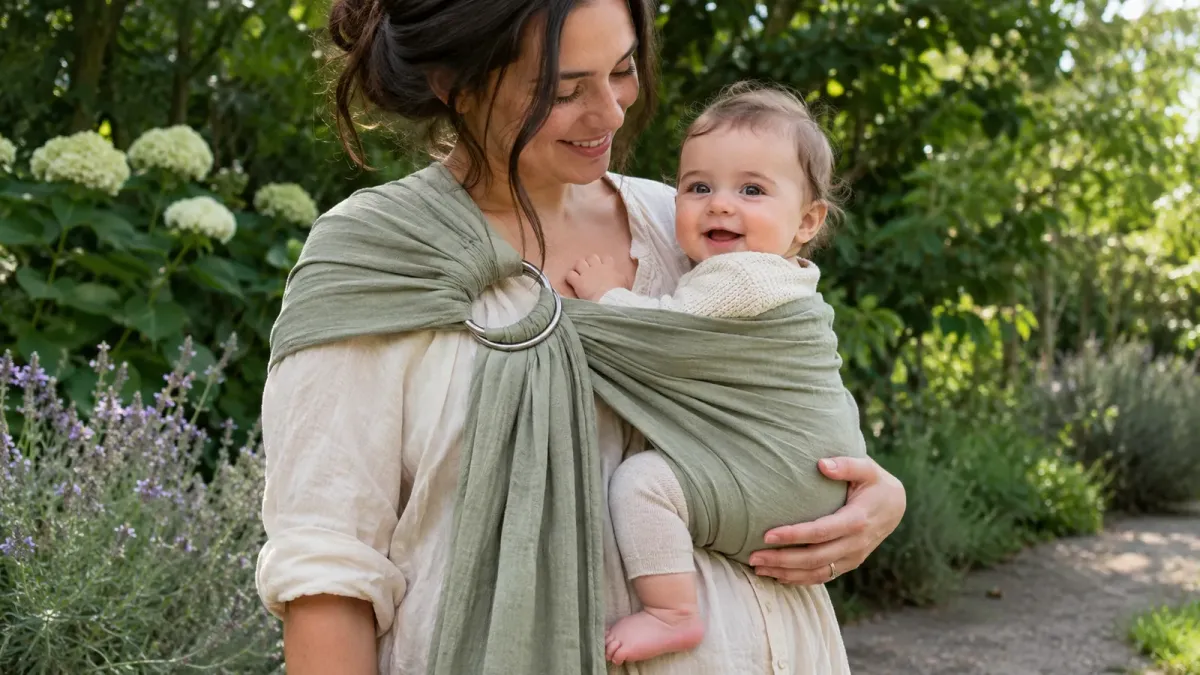
A ring sling is a long piece of strong woven cloth with two rings sewn onto one end. You loop the cloth over one shoulder and across your chest. Then you thread the loose end through the two rings to make a pouch for your baby.
When you pull the loose end, the rings lock the fabric in place. Your baby's weight pulls down on the cloth and presses the two rings together. That friction stops the sling from slipping.
Parents love ring slings for quick hip carries. There are no buckles to clip and no long straps dragging on the ground. You can slip a toddler in and out in seconds at the shops, in a car park, or while making dinner.
Unlike a two-shoulder buckled carrier, a ring sling puts all the weight on one shoulder and upper back. That makes it less ideal for long hikes with a heavy child. For short trips and quick ups and downs, though, it is hard to beat.
Linen vs. cotton ring slings: how they compare
The fabric you choose changes how the sling feels on your shoulder. It also changes how easy it is to pull through the aluminium rings.
100% linen ring slings
Linen comes from the flax plant. The fibres are strong, light, and hollow, which lets air pass through easily. In hot or humid weather, a single layer of linen helps stop you and your baby from getting sweaty.
New linen feels crisp and a bit stiff out of the box. You need to break it in by washing it, drying it, and pulling it through the rings a few times. Once broken in, linen gets very soft while staying strong.
Linen has a slightly textured surface. That texture gives it natural grip inside the rings, so it holds its position well. However, a very thin single layer of linen can dig into your shoulder if you carry a heavy toddler for a long time.
Double-layer linen ring slings
Some linen slings use two layers of linen sewn together. Double-layer linen feels thicker and gives more support for bigger babies and toddlers. It pads your shoulder better than a single layer.
The trade-off is bulk and warmth. Two layers trap more heat in summer. Extra thickness can also make the fabric harder to pull through the rings until it softens up.
Woven cotton ring slings
Woven cotton is the classic choice for babywearing. It feels soft and cosy straight away, with almost no break-in time. Many parents prefer cotton for newborns because it moulds gently around a tiny body.
Cotton comes in many weaves and weights. Light cotton works well in mild weather. Heavyweight woven cotton, often called wrap-conversion cotton, has a bit of bounce and cushion. It spreads a toddler's weight across your shoulder without digging in.
In very hot weather, thick cotton feels warmer than single-layer linen. Cotton also stays smooth, so a brand-new, very slick cotton sling can sometimes creep slightly in the rings until you wash it a few times.
Linen-cotton blends
Some slings mix linen and cotton threads together. A blend gives you a bit of both worlds. You get the cool airflow and strength of linen with the soft feel and cushion of cotton. It is a handy middle ground if you live somewhere with warm summers and cool winters.
| Feature | Single-layer linen | Double-layer linen | Woven cotton |
|---|---|---|---|
| Feel when new | Crisp and a bit stiff; needs breaking in | Firm and thick; takes longer to soften | Soft right away; little break-in needed |
| Airflow in heat | Very airy and cool | Warmer because of two layers | Light weaves breathe well; thick weaves hold heat |
| Grip in rings | High grip; holds steady once set | High grip; can feel snug in the rings | Smooth slide; easy to adjust |
| Support for toddlers | Good for short trips; can dig in | Very strong and supportive | Great support in medium to heavy weaves |
| Care and wrinkles | Wrinkles easily; softens with every wash | Wrinkles easily; takes longer to dry | Easy to machine wash; fewer sharp creases |
| Best use | Hot weather and quick hip carries | Heavier babies and toddlers | All-round daily use from newborn up |
Baby Carriers & Wraps worth a look
Real products from our catalogue. We don't show star ratings or review counts; check the current price, stock and reviews on Amazon before you buy.


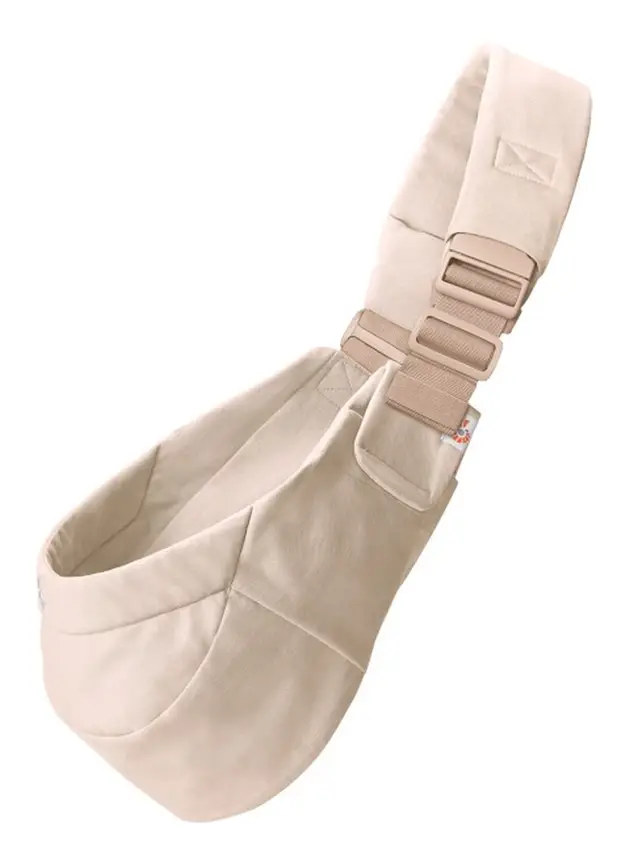

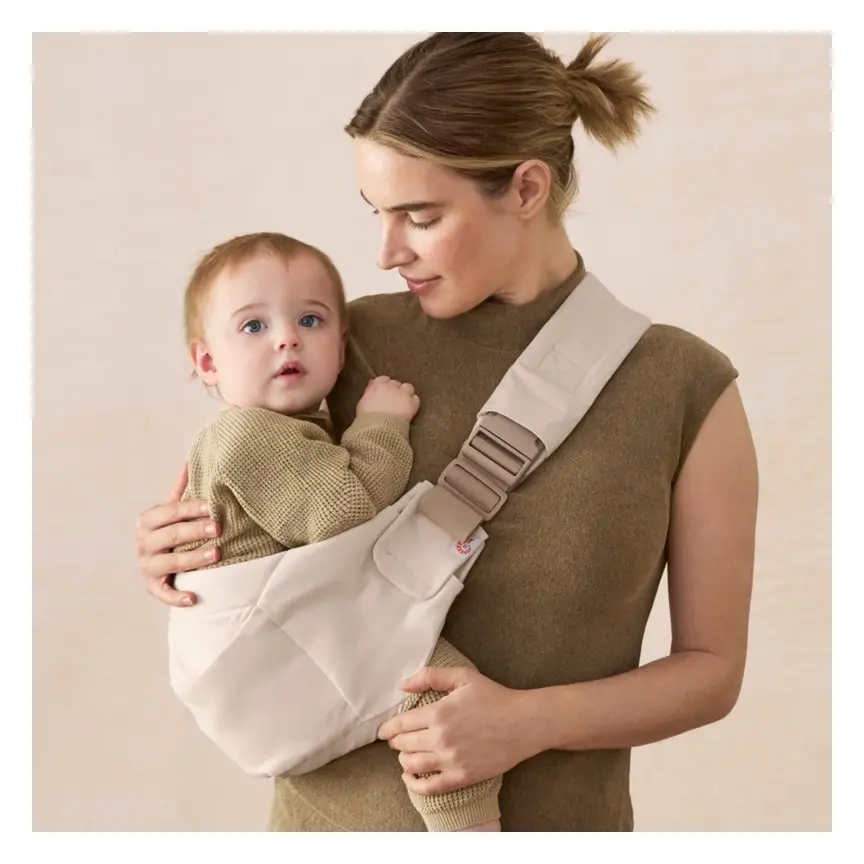

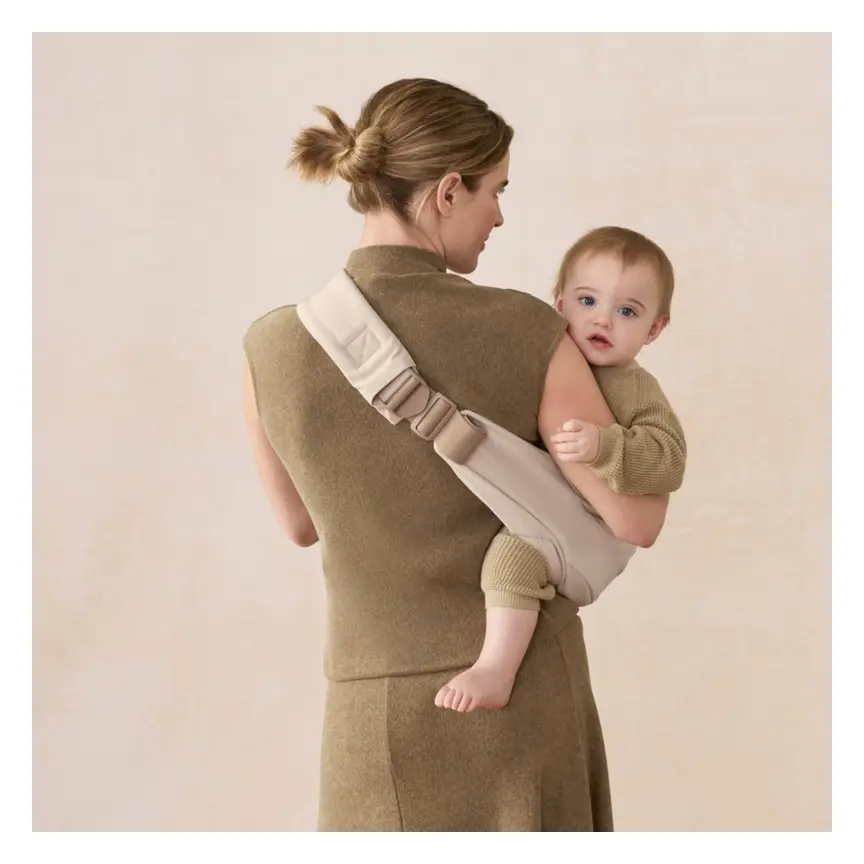
Ergobaby Upsie Sling Carrier
A quick hip sling for toddlers who want up and down a lot. It folds small.
Read our full review →
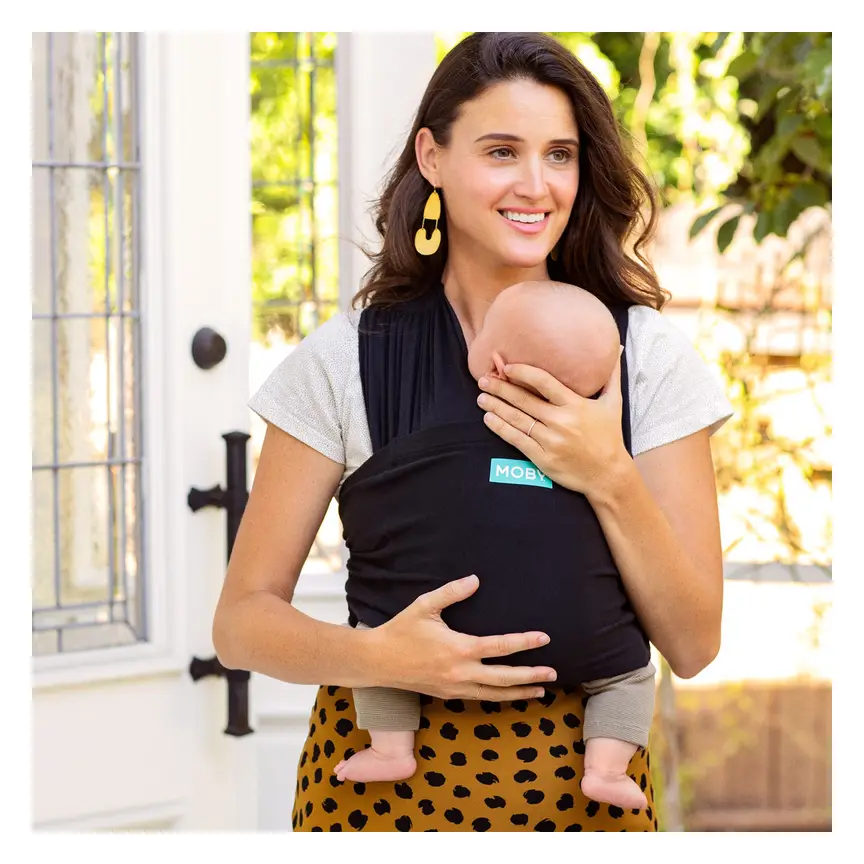
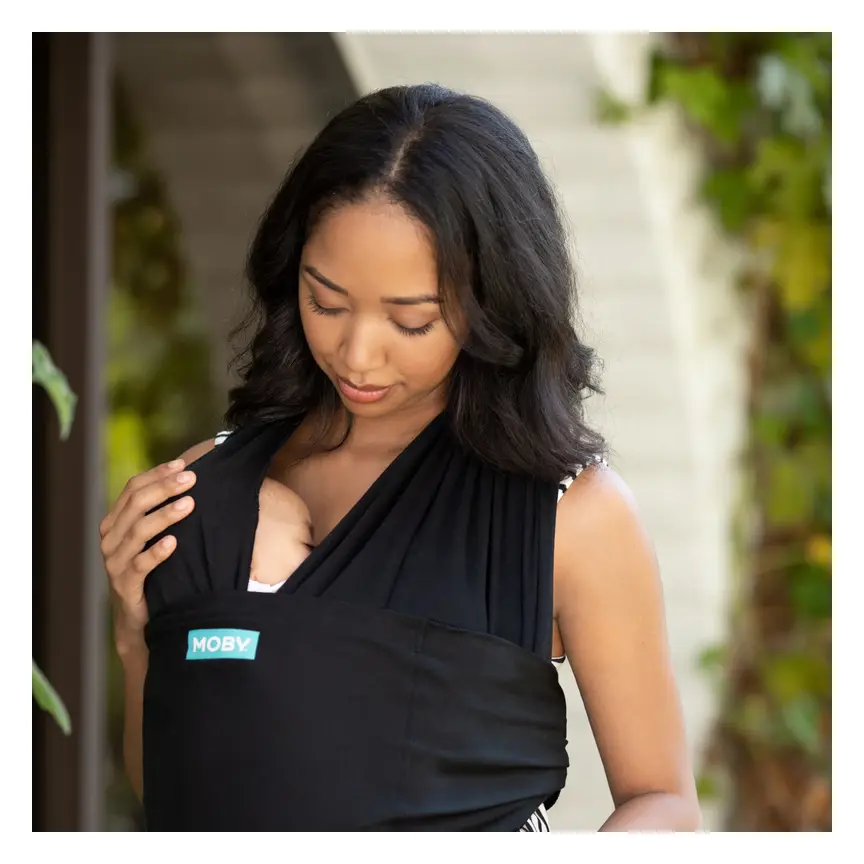
Moby Fit Carrier Wrap
A soft cotton knit wrap with some structure, for babies 3.6 to about 15 kg.
Read our full review →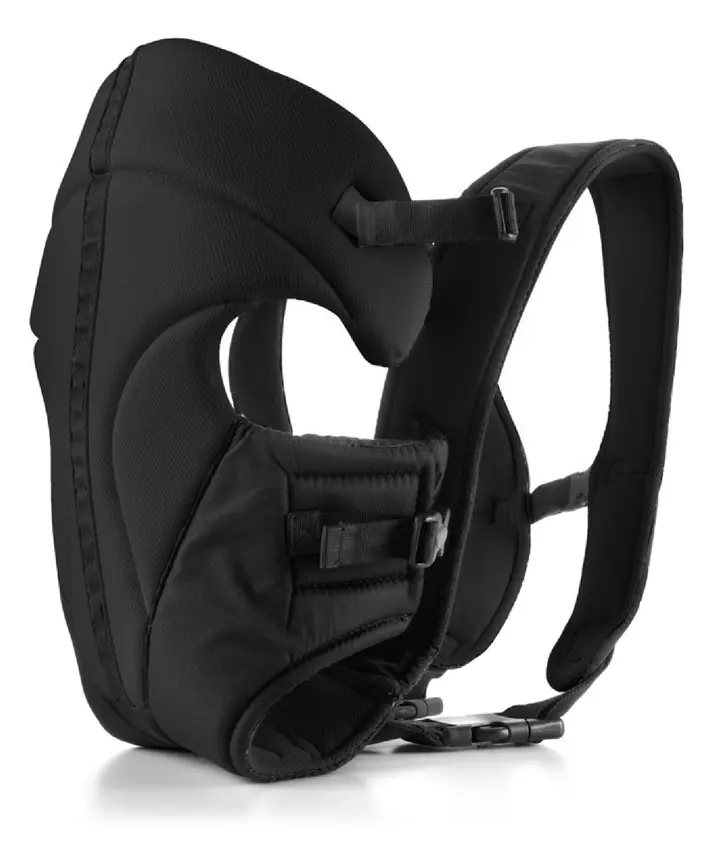 Reviewed
4baby 3 Way Baby Carrier
A very low-cost carrier with 3 positions, for babies 3.6 to 9 kg.
Read our full review →Why aluminium rings matter for safety and threading
The rings do all the heavy work in a ring sling. Every gram of your baby's weight pulls on those two loops of metal. That is why the material and build of the rings matter so much.
Always check that a ring sling uses solid, one-piece aluminium sling rings made for carrying babies. Good sling rings have no weld mark, no seam, and no gap where fabric can catch or tear. They are tested to hold far more weight than a toddler.
Avoid plastic rings, wooden rings, or cheap metal craft rings. Plastic can crack in the sun, in a hot car, or in cold weather. Welded rings with a join can snap open under sudden strain.
Ring size and fabric thickness
Sling makers usually use medium or large aluminium rings. Large rings give more room for thick cotton or double-layer linen to slide through. Medium rings often suit thin single-layer linen, because too much extra space lets thin fabric slip.
Check the rings before every carry. Look for bends, sharp scratches, or cracks in the metal. Run a finger around the inside edge to make sure nothing feels rough against the cloth.
How to thread aluminium rings step by step
Threading a ring sling looks tricky at first, but you can learn it in two minutes. Leave the sling threaded between uses so you do not have to start from scratch each time.
- Place the rings on your shoulder. Put the sling over your left or right shoulder, with the rings resting just below your collarbone. Let the long tail hang down in front of you.
- Pass the tail through both rings. Gather the loose end of the cloth neatly and push it up from underneath through both aluminium rings together.
- Split the rings. Pull the tail down over the top ring and tuck it back through the bottom ring. The rings now sit stacked like a belt buckle.
- Spread the fabric flat. Before you tighten, reach inside the rings with your fingers. Fan the cloth out across the rings so it lies flat, not bunched into a thick rope.
- Check the rails. The top edge of the cloth is the top rail. The bottom edge is the bottom rail. Make sure the fabric is not twisted anywhere from your back to the rings.
Keeping the fabric flat inside the rings is the secret to easy tightening. When the cloth lies neat and flat like an accordion, you can pull the top edge to tighten near your baby's shoulders, or pull the bottom edge to tighten under their knees.
Shoulder weight distribution: gathered vs. pleated shoulders
Because a ring sling sits on one shoulder, how the fabric is sewn to the rings makes a big difference to your comfort. Most slings use one of two styles: a gathered shoulder or a pleated shoulder.
Gathered shoulder
In a gathered shoulder, the full width of the cloth is folded neatly and sewn straight around the rings. There are no sewn-down pleats. When you put it on, you can fan the fabric out as wide as you like over your shoulder cap.
Many parents find a gathered shoulder the most comfortable option. It lets you spread the weight across your shoulder muscle and upper arm. It also works well for people with broad or narrow shoulders, because you control how wide it sits.
Pleated shoulder
In a pleated shoulder, the maker folds the fabric into small, neat pleats and sews them flat near the rings. The shoulder stays tidy and never slips into a big bundle. Some parents like the clean look, especially under a jacket.
The downside is that a pleated shoulder has a fixed width. If the pleats are too narrow for your frame, the weight sits on a smaller spot on your shoulder. That can feel sore sooner during a long carry.
How to spread the weight properly
No matter which shoulder style you choose, follow these habits to protect your neck and back:
- Cap your shoulder: pull the outer edge of the sling down over the curve of your shoulder joint, like a capped sleeve.
- Keep it off your neck: if the cloth creeps up against your neck, it will press on tender muscles and cause a headache.
- Fan the back: reach behind you and smooth the fabric wide across your upper and middle back. A wide spread acts like a wide backpack strap.
- Swap sides: switch which shoulder you wear the sling on from day to day so one side does not get tired.
How to do a safe hip carry, step by step
A hip carry lets your baby look around while staying close to you. Wait until your baby can hold their head steady and sit with a little support, which is usually around 4 to 6 months old. Never put a newborn in a hip carry.
- Set the pouch first. Thread the sling and place the rings high, right under your collarbone, on the opposite side to the hip you will use. Make a pouch just big enough for your baby's bottom, sitting near your waist.
- Lift your baby onto your shoulder. Hold your baby upright against the chest side without the rings. Guide both of their legs down inside the pouch, between you and the cloth.
- Slide your baby onto your hip. Gently shift your baby around to sit straddling your hip, with one leg in front of you and one leg behind your side.
- Build a deep seat. Pull the bottom rail of the cloth down behind your baby's knees, from one knee pit to the other. Tuck the extra fabric up between your baby's tummy and your side. Their knees must sit higher than their bottom.
- Bring the top rail up. Smooth the rest of the cloth up across your baby's back to their armpits, or up to the nape of their neck if they are sleepy.
- Lift and tighten. Use one hand to lift your baby's bottom slightly. Use your other hand to pull the tail straight across toward your baby, matching the direction the cloth comes out of the rings. Pull the top edge for the top rail, the middle for the back, and the bottom edge for the seat.
- Do a safety check. Let go slowly while keeping a hand ready. Your baby should stay snug against your body without leaning back or slumping.
Lifting your baby's weight with one hand before you pull the tail is the most important trick. If you pull against your baby's full weight, the fabric jams in the aluminium rings and drags the rings down toward your elbow.
Side by side: more baby carriers & wraps to compare
Real products from our catalogue. We don't show star ratings or review counts; check the current price, stock and reviews on Amazon before you buy.

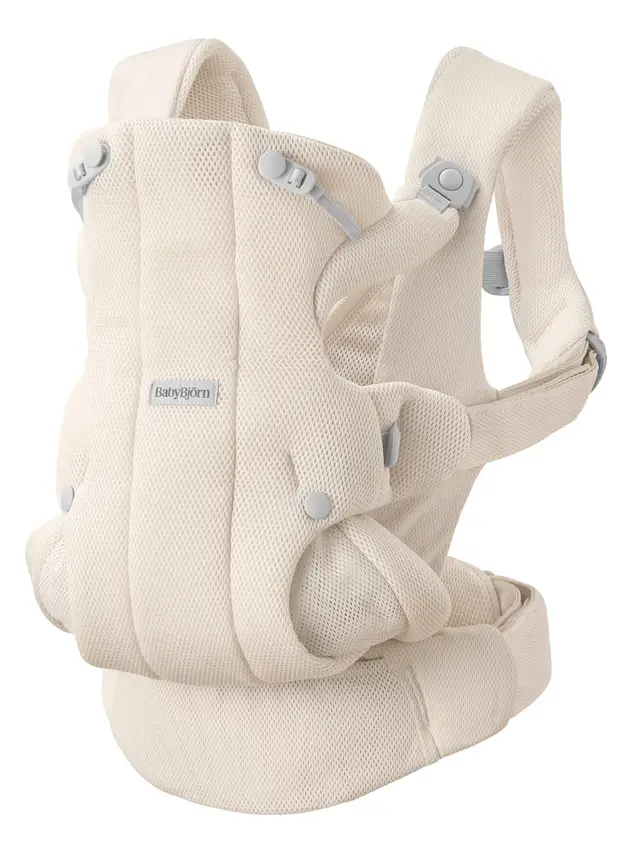
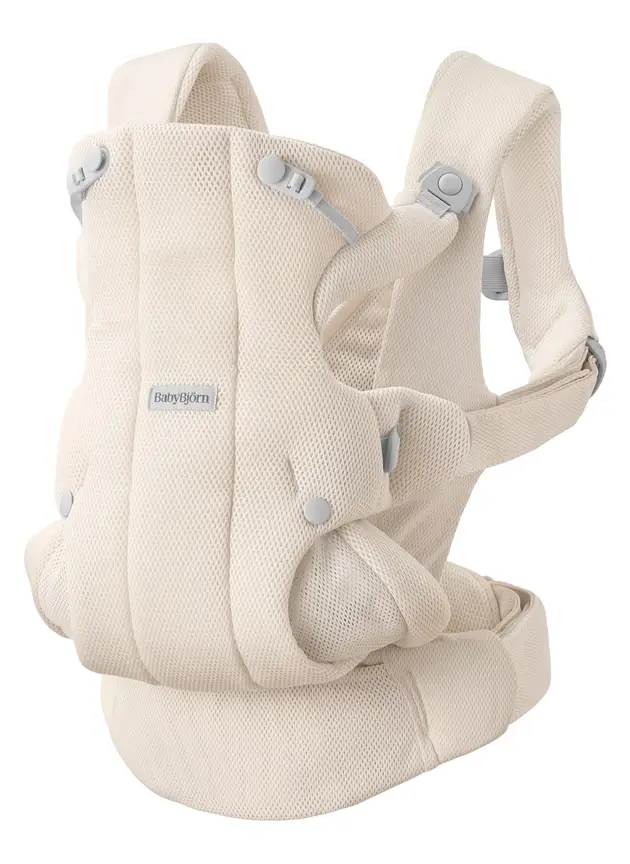
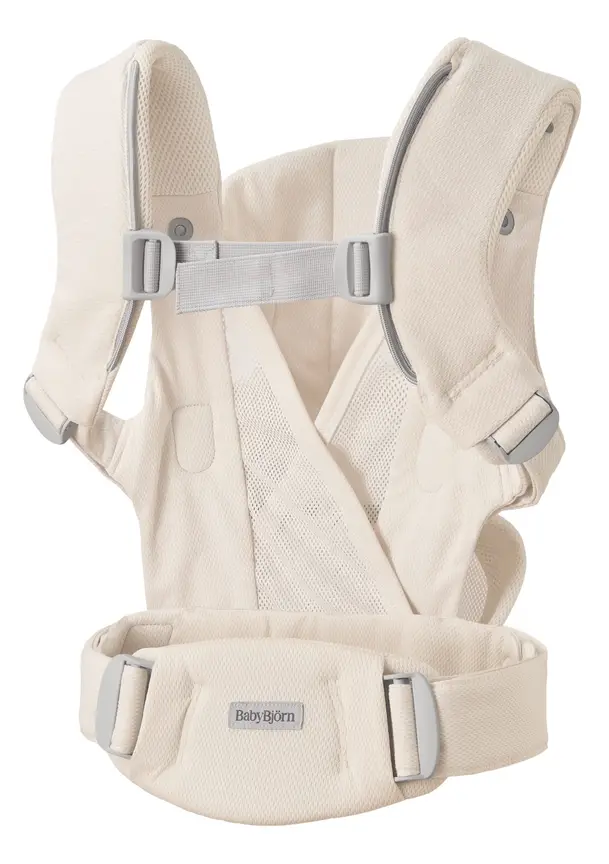
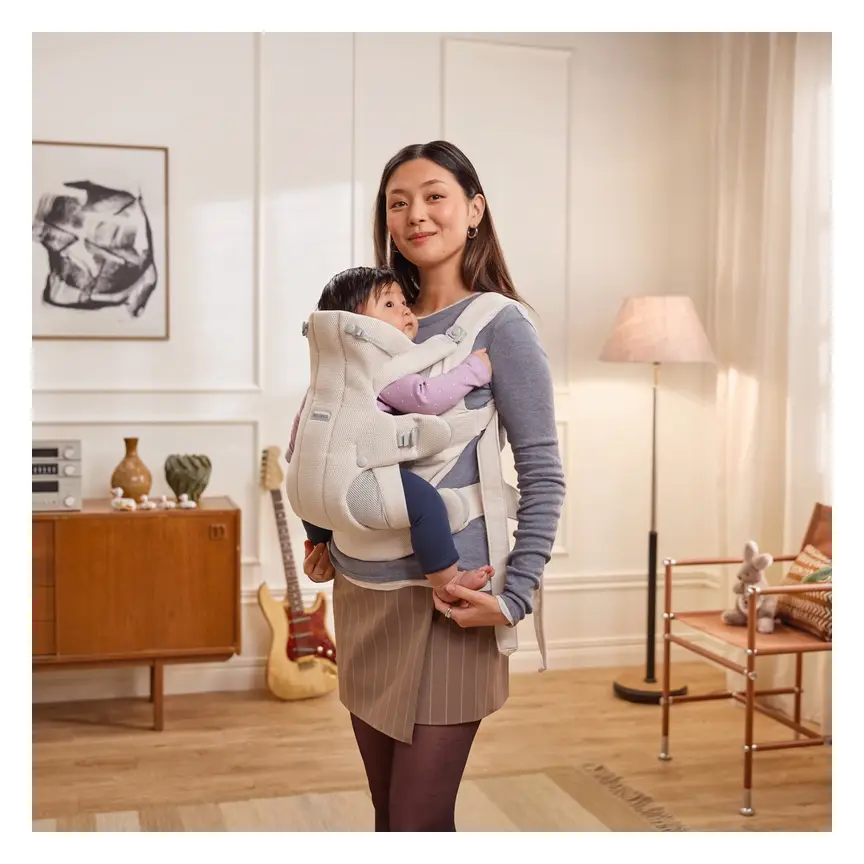
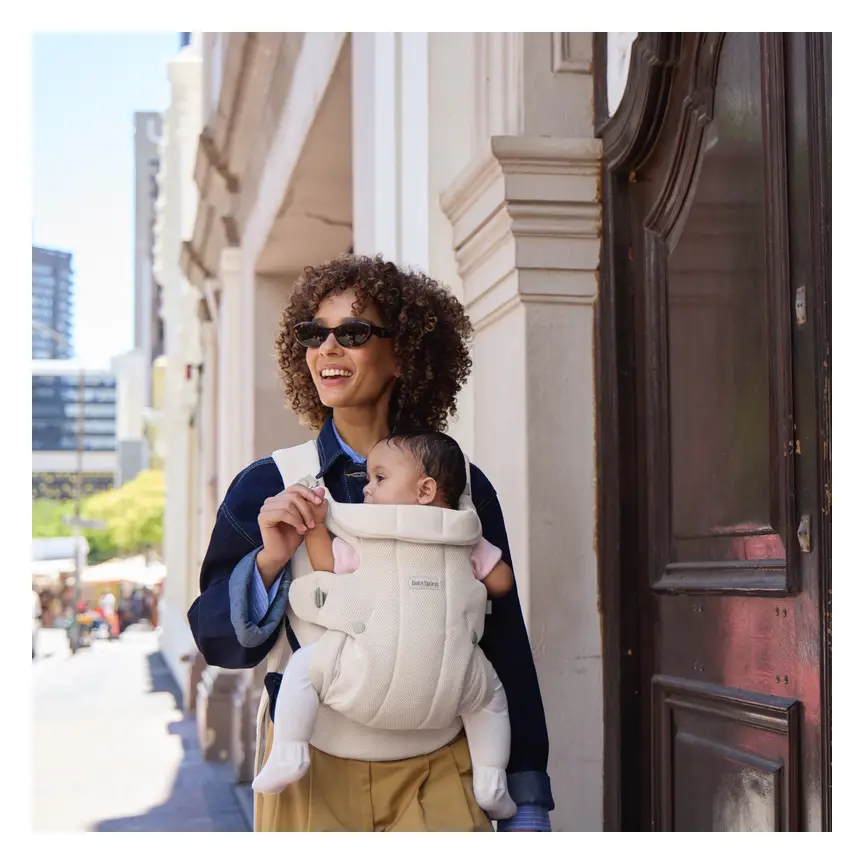
BabyBjörn Baby Carrier Mini 3D Jersey
Newborn baby carrier



BabyBjörn Baby Carrier Hold
A soft front carrier from newborn to 18 months that fits XS to XXL parents.
Read our full review →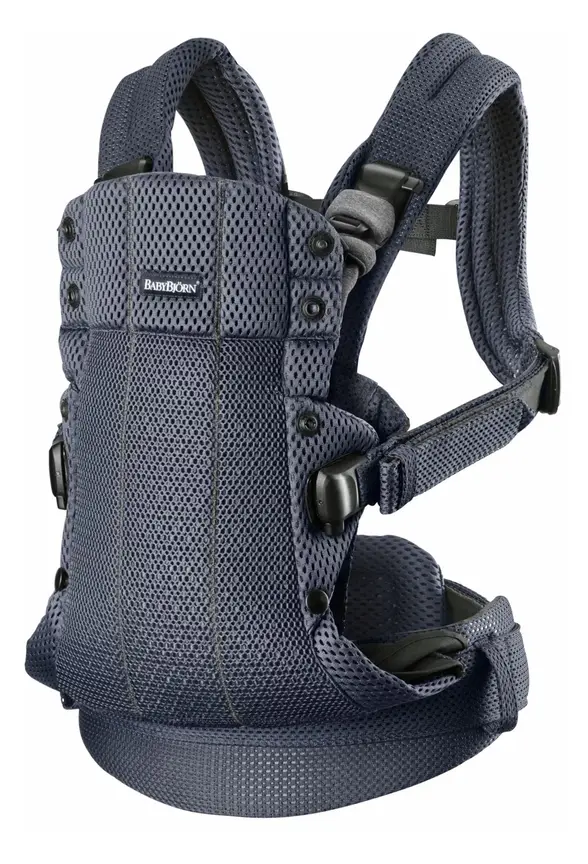 Reviewed
BabyBjörn Baby Carrier Harmony
A premium carrier with four positions, from 3.2 kg newborns to about 3 years.
Read our full review →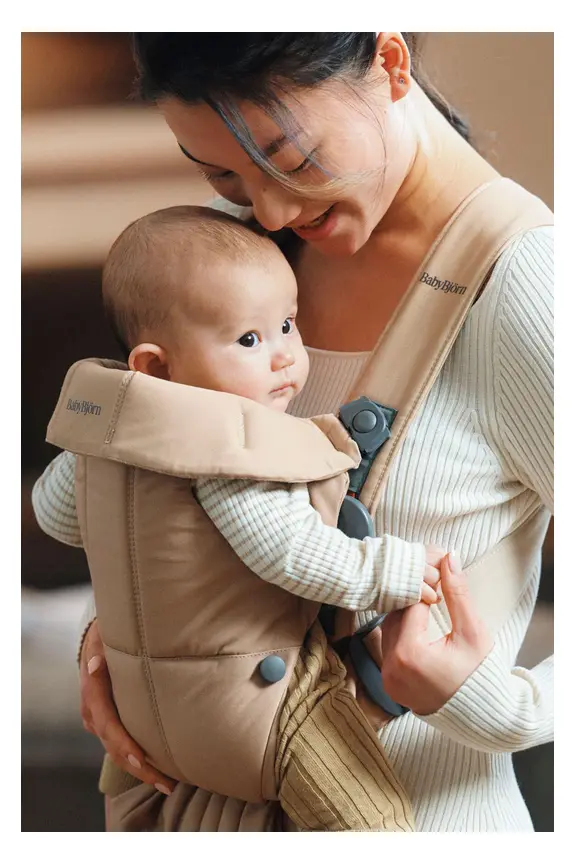


BabyBjörn Baby Carrier Mini
Simple, soft newborn carrier for roughly 0–12 months, with three carrying positions and an easy front opening.
Read our full review →Age stages: from newborn to toddler
A ring sling can grow with your child for years, as long as you change how you carry them as they grow. Always check the weight limit on your sling's sewn-in label.
| Stage | Best carry position | Fabric and fit notes |
|---|---|---|
| Newborn (0 to 3 months) | Upright front tummy-to-tummy carry only | Soft cotton or broken-in linen. Keep baby high on your chest, chin off chest, face clear. Never hip carry. |
| Head control stage (4 to 6 months) | Front carry or first hip carries | Start hip carries once head and neck stay steady. Keep fabric up to the shoulders if baby still wobbles. |
| Sitting and crawling (6 to 12 months) | Hip carry with arms in or out | Active babies like one or both arms free when awake. Pull fabric up to the neck if they fall asleep. |
| Toddler (12 months and up) | Quick hip carry for ups and downs | Double-layer linen or thicker woven cotton cushions weight best. Keep fabric knee-to-knee. |
When carrying a toddler who wants up and down every five minutes, leave the sling loose around your body when they walk. When they ask to be picked up, pop them into the pouch and give the tail a quick tug.
The TICKS rule, hip health, and airway safety
Small babies have weak neck muscles and soft airways. A baby's head is heavy for their body. If their head drops forward so their chin presses into their chest, their windpipe can bend like a kinked garden hose. They can stop breathing quietly, without crying or struggling.
Health groups in the UK, Australia, the US, and Canada teach the TICKS checklist for every sling carry:
- T – Tight: the sling must be tight enough to hug your baby close to your body. Loose fabric lets your baby slump down.
- I – In view at all times: you should always see your baby's face just by glancing down. Never pull the tail or a cloth over their head.
- C – Close enough to kiss: your baby's head should be high on your chest or near your collarbone, so you can easily tilt your head and kiss the top of their head.
- K – Keep chin off the chest: make sure there is always at least a two-finger gap between your baby's chin and their chest.
- S – Supported back: your baby's back should stay in a natural curve, held upright against you so they cannot curl into a tight ball.
Never use a cradle or bag position
Never lie a baby curled up in a C-shape across the bottom of a ring sling like a hammock. In a curved bag-style hold, fabric can press over the nose and mouth, or push the chin onto the chest. Keep your baby upright instead.
Protecting your baby's hips
The International Hip Dysplasia Institute recommends carrying babies in the M-position. In this position, the thighs are spread around your torso, the knees are bent, and the knees sit higher than the bottom. Looked at from behind, the bum and legs make an M shape.
In a ring sling, the fabric must reach from one knee pit to the other knee pit. Never let your baby's legs dangle straight down. Good knee-to-knee support keeps the hip joint sitting safely in its socket and also stops your baby from sliding out the bottom.
Safety rules in Australia, the UK, the US and Canada
Baby slings are watched closely by product safety regulators in all four countries. Even when a country uses voluntary rules instead of a law, official bodies agree on what safe babywearing looks like.
| Country | Official bodies | Key rules and advice |
|---|---|---|
| Australia | Product Safety Australia (ACCC), Raising Children Network, Red Nose | Follow TICKS, keep baby upright with face visible, check seams and rings often, and watch for recalls on the ACCC website. |
| UK | Office for Product Safety and Standards (OPSS), The Lullaby Trust, NHS | Follow TICKS, avoid bag-style cradle slings, check European and UK soft carrier safety labels, and keep airways clear. |
| US | Consumer Product Safety Commission (CPSC), American Academy of Pediatrics (AAP) | Slings must meet the US federal safety standard for infant sling carriers, with strong hardware, clear warnings, and safe airway design. |
| Canada | Health Canada, Canadian Paediatric Society (Caring for Kids) | Check Health Canada's recall database before buying, keep baby upright and visible, and avoid chin-to-chest slumping. |
No matter where you live, check the sewn-in label before you buy. Look for clear weight limits, washing steps, and safety warnings. Avoid unbranded slings sold online with no maker name or care label.
Common mistakes and how to fix them
Most ring sling problems have a simple fix. Here are the five issues new wearers run into most often.
1. The rings slide down to your chest
This happens when you start with the rings too low, or when you tighten without lifting your baby's weight first. Start with the rings sitting right on top of your shoulder, almost on your collarbone. As you tighten, they will naturally drop an inch or two into the sweet spot just below your collarbone.
2. The top edge feels loose and baby leans back
This means there is slack trapped behind your back. Reach behind you and sweep all loose fabric around to the front, toward the rings. Then lift your baby slightly and pull only the top edge of the tail across your chest.
3. The seat pops out from under baby
If your baby straightens their legs and the pouch slips up their back, the seat was not deep enough. Tuck plenty of fabric up between your baby's tummy and your hip before tightening. Make sure the bottom edge sits right in the bend of their knees.
4. The cloth hurts your neck
Fabric bunched near your neck pulls on sensitive muscles. Spread the cloth wide across your shoulder cap, away from your collarbone and neck. If it creeps back up, loosen the top rail slightly, shift the fabric outward, and re-tighten across your shoulder.
5. The fabric jams in the rings
If the tail will not budge, check inside the rings. The cloth has likely bunched or twisted on itself. Take your baby out, spread the fabric flat inside the rings, and start again. Never yank hard while your baby's weight is pulling down.
More options, from budget to premium
Real products from our catalogue. We don't show star ratings or review counts; check the current price, stock and reviews on Amazon before you buy.

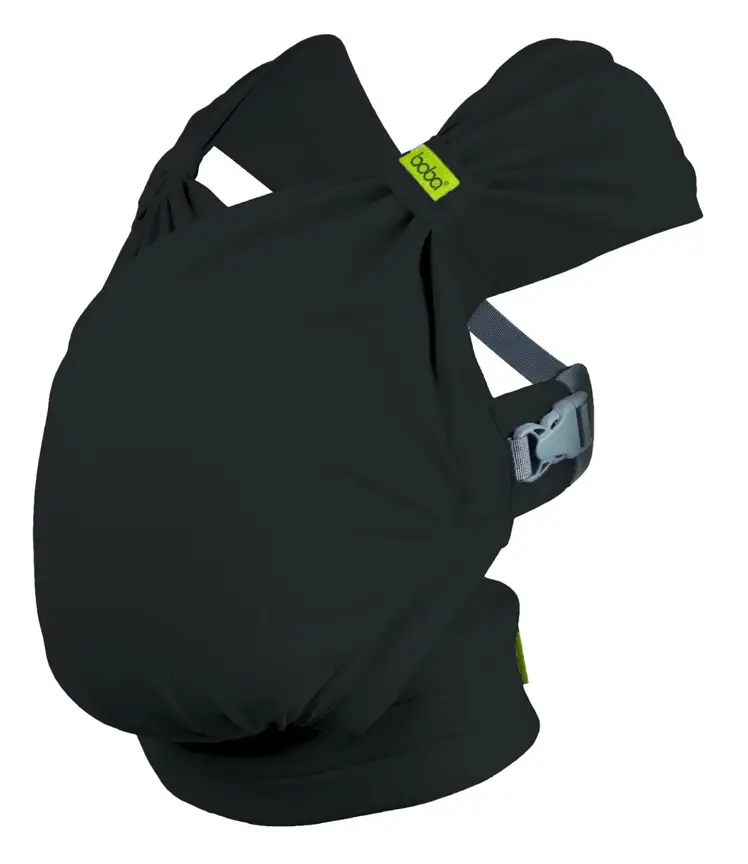
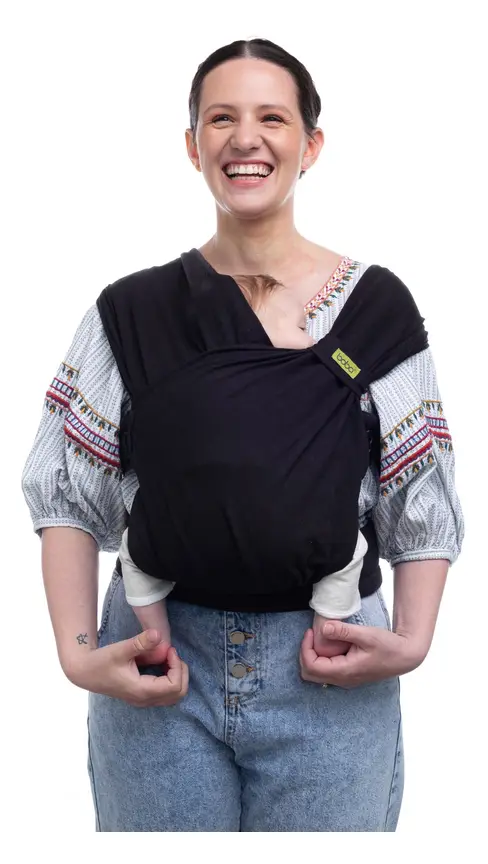
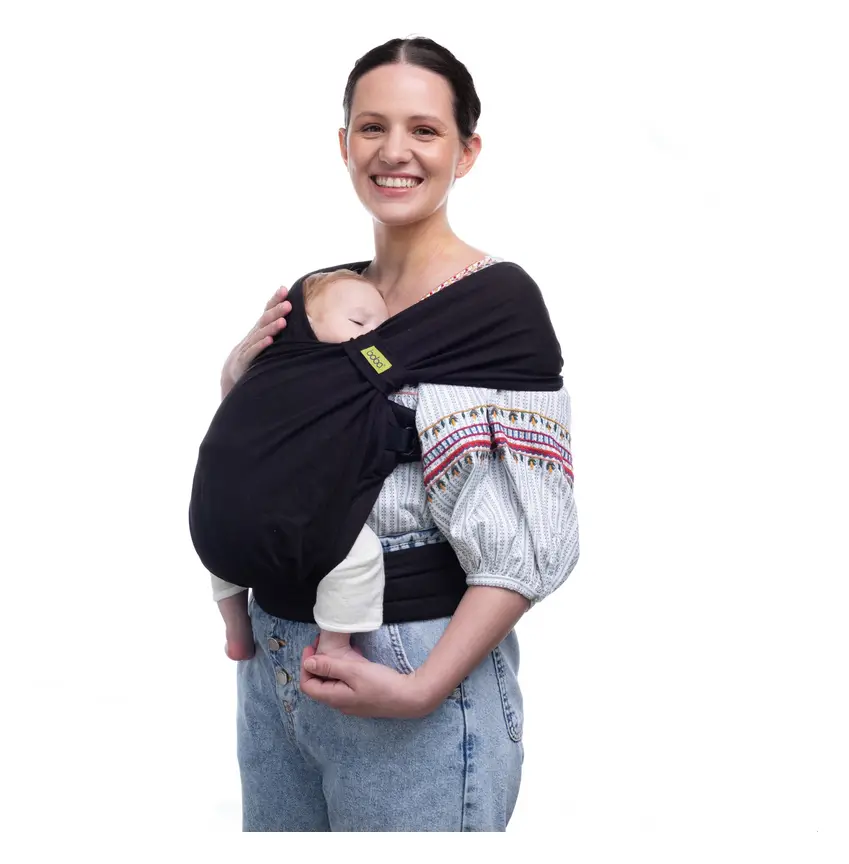
Boba Bliss
A stretchy carrier that clicks on like a buckle carrier. One size fits most parents.
Read our full review →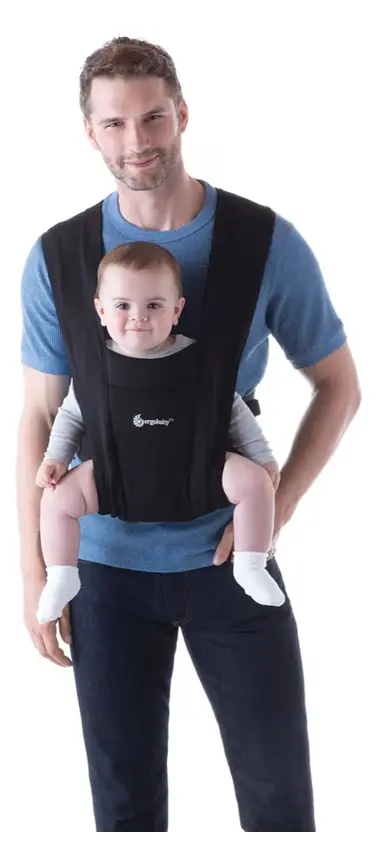


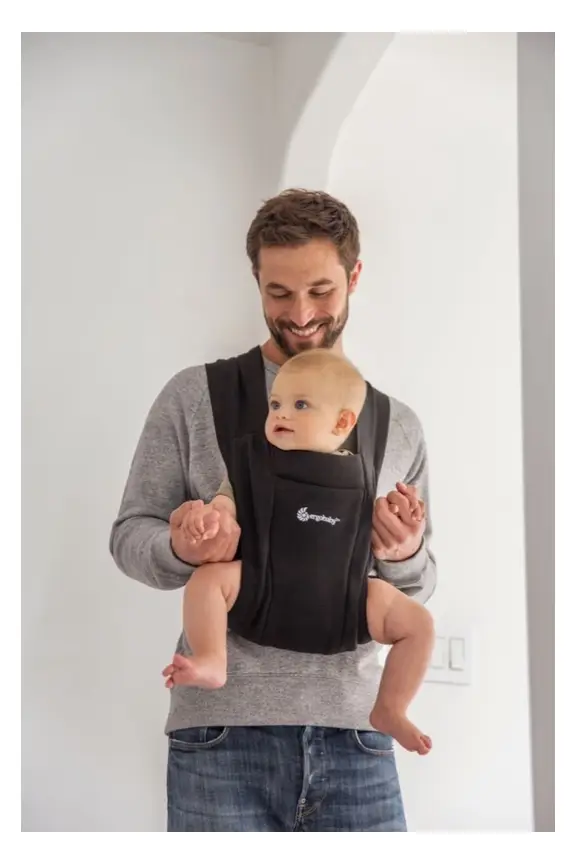


Ergobaby Embrace
A soft knit newborn carrier that buckles on, with no long wrapping.
Read our full review →Frequently asked questions
Can I use a ring sling for a newborn hip carry?
No. Newborns do not have the neck or trunk strength for a hip carry. Use an upright tummy-to-tummy front carry on your chest until your baby has steady head control, usually around 4 to 6 months.
Which is cooler in hot weather: linen or cotton?
Single-layer linen is usually cooler than cotton. Linen fibres let air flow through and dry sweat quickly. Dress your baby in light clothes, because the sling itself counts as an extra layer.
Why do my aluminium rings slip?
Rings usually slip if the fabric is twisted inside them, if the rings are too large for a very thin cloth, or if you used fabric softener when washing. Wash your sling with mild detergent and skip fabric softeners, which coat fibres and make them slick.
How long can I carry my baby in a ring sling?
There is no strict time limit, as long as your baby is comfortable, their airway is clear, and your shoulder feels fine. For young babies, take breaks every couple of hours for feeds, nappy changes, and floor time. Swap shoulders often so you do not strain your back.
Can a baby sleep in a ring sling?
A baby may fall asleep while you wear them, especially on a walk. If they do, check the TICKS rules right away. Keep their face clear, their chin off their chest, and their back supported. When you get home, move your sleeping baby onto a firm, flat mattress on their back in a clear cot or bassinet.
Are secondhand ring slings safe to buy?
Yes, as long as you inspect them carefully first. Check the sewn-in label for recalls on your national safety site. Look closely at the stitching around the rings, check the cloth for thin spots or tears, and make sure the aluminium rings are solid, smooth, and not bent.
Sources
- Product Safety Australia – Baby carriers, wraps and slings guide
- Raising Children Network – Baby carrier, sling and backpack safety
- Red Nose Australia – Slings and baby carriers
- The Lullaby Trust (UK) – Baby slings and carriers
- NHS Cheshire and Wirral Partnership – TICKS rule for safe babywearing (PDF)
- U.S. CPSC – New federal standard for infant sling carriers
- International Hip Dysplasia Institute – Baby wearing
- Health Canada – Recalls and safety alerts
Related guides
More Clothing & Accessories →
Twin Baby Carriers vs Dual Ring Slings: How to Carry Two Babies Safely

How to Choose a Baby Carrier: Wraps, Slings, Soft Carriers and Hiking Packs

Baby Headbands and Bows: Comfort, Fit and Safe Use
