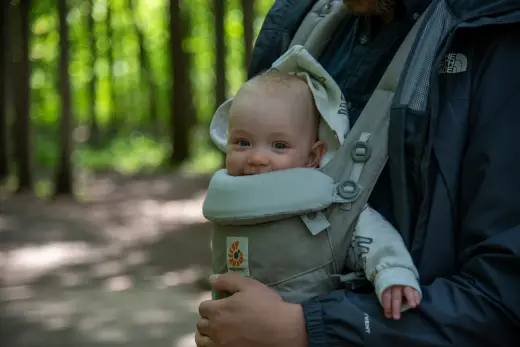
Mei Dai and Half-Buckle Baby Carriers: A Simple Guide to Choosing and Using One
Learn how mei dai and half-buckle baby carriers work, how to choose a safe fit, and how to follow the TICKS safety rules for babies and toddlers.
On this page
- Key points
- What is a mei dai or half-buckle carrier?
- How they compare to other baby carriers
- How to choose the right carrier for your family
- Safety rules: keeping your baby's airway and hips safe
- How carrier stages change as your baby grows
- Safety advice in Australia, the UK, the US and Canada
- How to put on and adjust a mei dai or half-buckle
- Common mistakes to avoid
- Frequently asked questions
- Sources
Short answer: A mei dai has a soft fabric body panel and four long tie straps. A half-buckle carrier has a buckle waistband and long wrap-style shoulder straps. Both styles sit in the middle between a stretchy wrap and a full-buckle carrier. They give your baby snug, custom support while staying easy for different carers to share.
Always check that any carrier keeps your baby's airway clear and hips in a healthy M-shape. Follow the TICKS safety rule every time you carry your child.
Key points
- Mei dai: You tie both the waist strap and the shoulder straps. It packs down small and moulds to your body.
- Half-buckle: You clip the waist with a buckle and tie the shoulder straps. The firm waistband helps carry heavier babies.
- Shared fit: Long tie straps fit tall, short, slim, and broad carers without changing buckle settings.
- Airway safety: Keep your baby high on your chest, face visible, and chin off their chest.
- Hip safety: The seat should reach from knee to knee, with knees higher than the bum.
- Carry positions: Most mei dais and half-buckles are made for front inward carries and back carries, not facing outward.
What is a mei dai or half-buckle carrier?
Many parents love the cosy feel of a baby wrap. Yet long pieces of fabric can feel tricky to tie at first. Other parents like the speed of a full-buckle carrier. Yet buckles can feel bulky or hard to adjust between two adults.
Mei dais and half-buckles bridge that gap. They give you a structured seat for your baby, plus soft straps you tie to fit your own shoulders.
How a mei dai works
A mei dai is based on traditional Asian baby carriers. You may also see it spelled "meh dai" or "mei tai". It has a rectangular or shaped fabric panel in the middle. Four long fabric straps extend from the corners of that panel.
Two shorter straps tie around your waist. Two longer straps go over your shoulders, cross on your back, and tie under your baby's bum or around your waist. There are no plastic buckles or rings at all.
How a half-buckle carrier works
A half-buckle carrier is a modern update on the mei dai. It keeps the soft body panel and the long wrap-style shoulder straps. However, it swaps the tie waist for a padded waistband with a safety buckle.
You clip the buckle around your waist just like a full-buckle carrier. Then you pull up the panel and tie the shoulder straps to fit your body. Many carers find the buckle waist faster to put on and more supportive as a baby grows heavier.
Baby Carriers & Wraps worth a look
Real products from our catalogue. We don't show star ratings or review counts; check the current price, stock and reviews on Amazon before you buy.
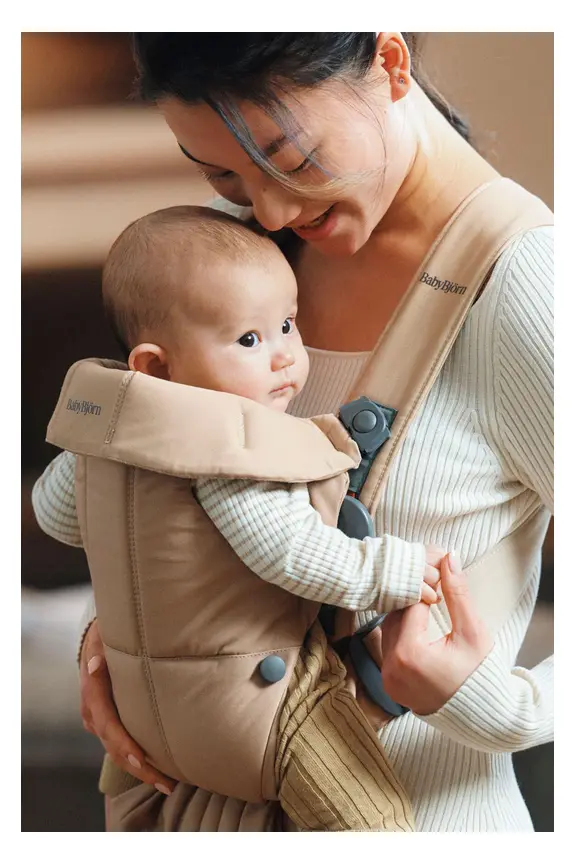


BabyBjörn Baby Carrier Mini
Simple, soft newborn carrier for roughly 0–12 months, with three carrying positions and an easy front opening.
Read our full review →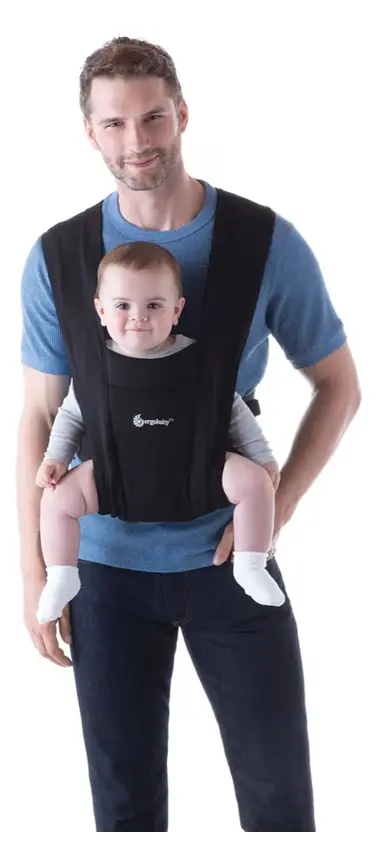


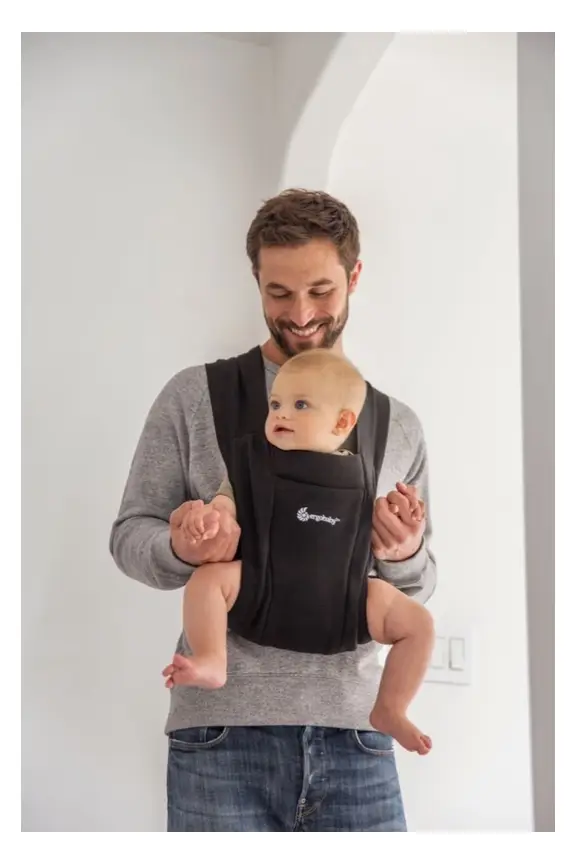


Ergobaby Embrace
A soft knit newborn carrier that buckles on, with no long wrapping.
Read our full review →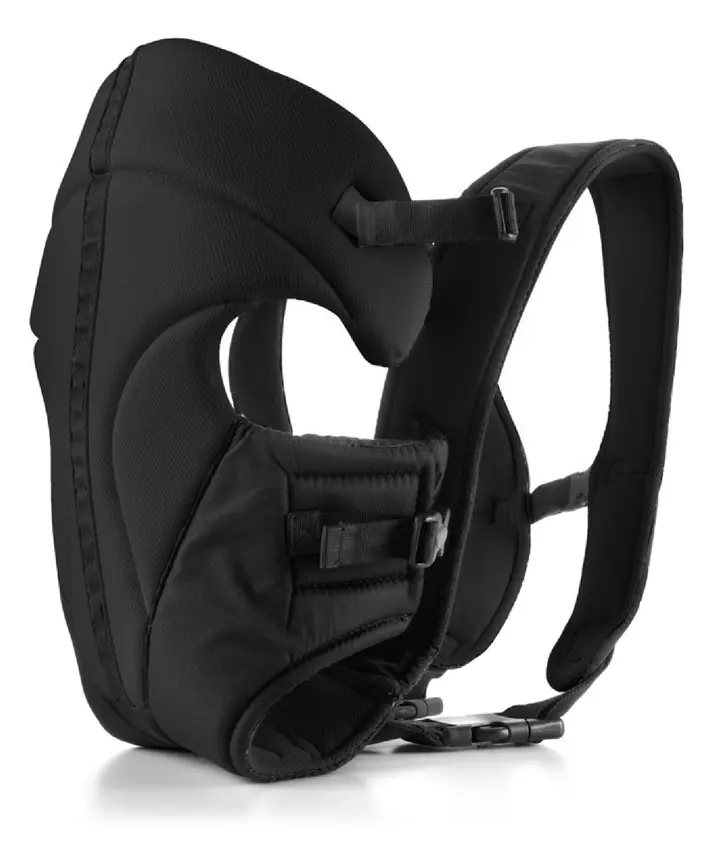 Reviewed
4baby 3 Way Baby Carrier
A very low-cost carrier with 3 positions, for babies 3.6 to 9 kg.
Read our full review →
BabyBjörn Baby Carrier Mini 3D Jersey
Newborn baby carrier
How they compare to other baby carriers
Every carrier style has pros and cons. No single style suits every family or every stage. The table below compares the four main types of soft carriers side by side.
| Feature | Wrap (stretchy or woven) | Mei dai (all-tie) | Half-buckle | Full-buckle |
|---|---|---|---|---|
| Waistband | None, fabric wraps around you | Soft fabric strap that you tie | Padded band with a safety buckle | Padded band with a safety buckle |
| Shoulder straps | Long wrap fabric you spread wide | Padded or wide wrap straps you tie | Padded or wide wrap straps you tie | Padded straps with buckles |
| Sharing between carers | Very easy, ties fresh each time | Very easy, ties fresh each time | Easy, only adjust the waist buckle | Needs strap and buckle adjustments |
| Learning curve | Takes practice to wrap evenly | Moderate, easier than a long wrap | Low to moderate, quick waist setup | Low, clips on like a backpack |
| Packing size | Folds flat like a scarf | Packs very small in a nappy bag | Medium, waist buckle adds bulk | Bulkier due to foam and buckles |
| Newborn fit | Very snug and custom | Good if the panel adjusts small | Good if the panel adjusts small | Needs newborn insert or cinch seat |
| Toddler support | Woven wraps work well; stretchy wraps sag | Good for short trips; waist tie may dig in | Very good, firm waist holds weight | Very good, firm waist and padded straps |
If you want zero plastic hardware and a tiny fold, a mei dai is hard to beat. If you want firm waist support for a heavy baby without fussy shoulder buckles, a half-buckle often feels best.
How to choose the right carrier for your family
Look past colours and patterns when you shop. Focus on how the carrier fits both your baby and the people who will wear it.
Seat width and panel height
Your baby grows fast in the first year. A carrier with a fixed panel may fit badly at first or become too narrow later. Look for an adjustable base and panel.
- Adjustable seat width: Many modern mei dais and half-buckles have Velcro, snaps, or a drawstring at the waist. This lets you narrow the seat for a newborn and widen it for a toddler.
- Adjustable panel height: Look for side cinch straps or a fold-down waistband. The top of the panel should sit no higher than the nape of your baby's neck or their earlobes.
- Head support: Many models include a roll-up neck cushion or a clip-on sleep hood. Never pull a hood fully over a baby's face or block airflow.
Waistband style: tie or buckle
Think about how your body feels after birth and how heavy your baby is. A tie waistband sits softly on your tummy. You can tie it high under your ribs for a tiny newborn without hard plastic pressing on a tender belly or caesarean scar.
A buckle waistband gives a firmer shelf for your baby's weight. It helps transfer load onto your hips instead of your shoulders. This makes a big difference once your baby reaches around eight or nine kilograms.
Shoulder strap style: padded or wrap-style
Mei dais and half-buckles come with two main types of shoulder straps. Each feels different on your body.
- Padded straps: These have foam inside the shoulder section, then narrow into fabric ties. They feel like backpack straps and are fast to pull tight.
- Wrap-style (spreadable) straps: These are wide bands of woven wrap fabric with little or no foam. You can fan the fabric across your shoulders and over your baby's bum for extra weight support.
- Hybrid straps: Some carriers have light padding at the shoulder top and wide fabric tails below. This gives you cushion without losing the ability to spread the passes.
Fabric and weather
Carriers add an extra layer of warmth around both you and your baby. Heavy canvas or thick twill can feel hot in warm weather or humid summers.
Look for breathable natural fibres like lightweight cotton, linen, or cotton-linen blends. Woven wrap fabrics mould well to tiny bodies because they have gentle diagonal stretch. If you live in a warm climate, look for single-layer panels without thick fleece or heavy padding.
Sharing between carers
If two parents or grandparents share the carrier, half-buckles and mei dais shine. With a full-buckle carrier, you have to loosen or tighten multiple sliders every time you swap. With tie shoulder straps, each person ties the straps to match their own body in seconds.
Safety rules: keeping your baby's airway and hips safe
Baby carriers are wonderful tools for bonding and hands-free care. Yet poor positioning can put a young baby at risk. Babies under four months, babies born early, and babies with low birth weight face the highest risk of breathing trouble in slings and carriers.
The TICKS rule for safe babywearing
Health groups across the UK, Australia, the US, and Canada share a simple checklist called TICKS. Check all five points every time you put your baby in a carrier.
- T – Tight: The carrier should be snug enough to hug your baby close to your body. Loose fabric lets your baby slump down, which can restrict breathing.
- I – In view at all times: You should always be able to see your baby's face simply by glancing down. Never let fabric, coats, or hoods cover their nose and mouth.
- C – Close enough to kiss: Your baby's head should sit high on your chest. You should be able to tip your head down and kiss the top of their head or forehead easily.
- K – Keep chin off the chest: A baby's chin must never press down onto their own chest. Leave at least one or two adult fingers of space under their chin.
- S – Supported back: Your baby's back should rest in its natural gentle curve, supported firmly against your chest. Their tummy and chest should face you, not slump into a tight C-curl.
Why chin-to-chest is dangerous
A newborn's head is large and heavy compared with their body. Their neck muscles are still weak and cannot hold that weight upright for long. If a carrier is too loose or too low, the baby's head can flop forward.
When a baby's chin drops onto their chest, their soft windpipe bends like a kinked drinking straw. This can block airflow quietly without any noise or struggle. Health experts call this positional asphyxiation. Keeping the carrier tight and high prevents this slump.
Healthy hip position (the M-shape)
A baby's hip joints are soft cartilage at birth. They slowly harden into bone over the first year. The International Hip Dysplasia Institute recommends carrying babies in a spread-squat position.
Look for the M-shape from behind. Your baby's thighs should be supported all the way to the backs of their knees. Their knees should sit higher than their bottom, with legs spread gently around your torso. Avoid narrow seats that let your baby's legs dangle straight down.
Checking seams, buckles, and fabric
Do a quick gear check once a month, and before using any second-hand carrier. Check these parts carefully:
- Look at all stitching where the shoulder straps and waistband join the body panel.
- Check tie straps for frayed edges, tears, or thin worn spots.
- On a half-buckle, click the waist buckle shut and tug hard to make sure it does not slip or pop open.
- Check that any elastic safety loops on the waist buckle are intact. Thread the waist strap through that loop if your manual shows it.
- Read the weight limits on the care label and never exceed them.
Weather, clothing, and daily activities
Your body heat warms your baby inside a carrier. Dress your baby in one fewer layer than you might put on them in a pram. Skip heavy snowsuits or thick footed sleepers inside a carrier. Tight footed suits can pull on your baby's toes when their legs bend into the M-shape.
Check the back of your baby's neck often. If it feels hot or sweaty, remove a layer or move to a cooler spot. Keep your baby's head uncovered indoors, and use a sun hat with plenty of shade outdoors.
Use common sense during daily tasks. Never drink hot tea or coffee, or cook over a hot stove, while wearing your baby. A sudden splash or grab can cause serious burns. Never use a baby carrier as a car restraint or while riding a bicycle. Also watch your step on stairs and uneven paths, as the carrier blocks your view of the ground near your feet.
How carrier stages change as your baby grows
You will adjust how you wear a mei dai or half-buckle as your child gains head control and weight. Always check your specific carrier manual for weight minimums and maximums.
| Stage (roughly) | Baby's milestones | Best carry positions | Key fit checks |
|---|---|---|---|
| Newborn (birth to 3–4 months) | Weak neck control; natural curled spine | Front carry, facing inward | Cinch seat narrow; fold or lower panel below earlobes; keep airway clear |
| Young baby (4 to 6 months) | Steadier head control; starting to look around | Front carry, facing inward; some carers try a hip carry | Widen seat as legs grow; arms can stay inside or rest out if comfortable |
| Older baby (6 to 12 months) | Sitting unaided; stronger core and back | Front inward carry, hip carry, or back carry | Back carry only once baby sits unaided; use mirror to check position |
| Toddler (12 months and up) | Walking; heavier weight; wants up and down | Back carry or quick front inward carry | Spread wrap straps wide across bum for extra seat support |
Notice that front outward-facing carries are rarely listed for mei dais or half-buckles. Most carriers in this group are not shaped for facing out. If your baby wants to see the world, a hip carry or a back carry (once they can sit unaided) gives them a clear view while keeping their hips and spine well supported.
Side by side: more baby carriers & wraps to compare
Real products from our catalogue. We don't show star ratings or review counts; check the current price, stock and reviews on Amazon before you buy.

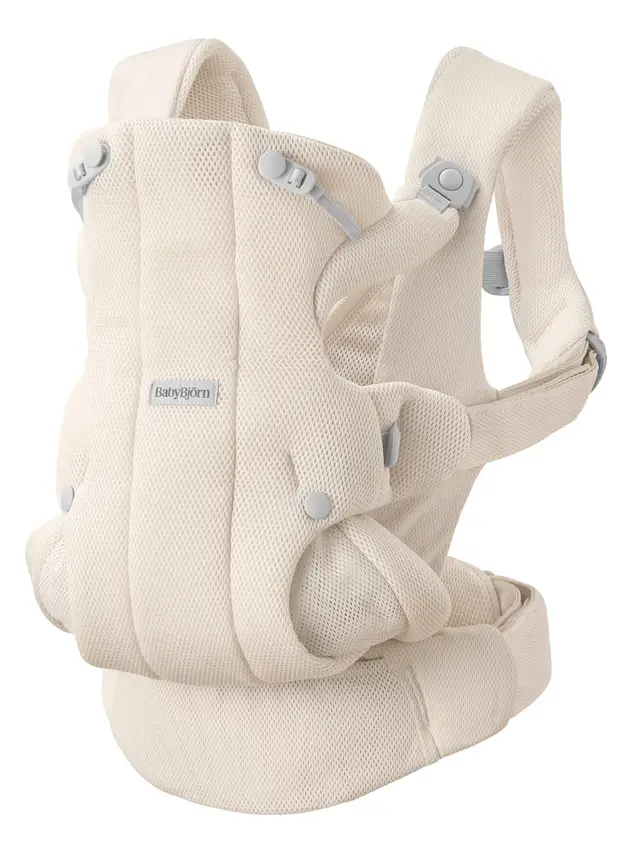
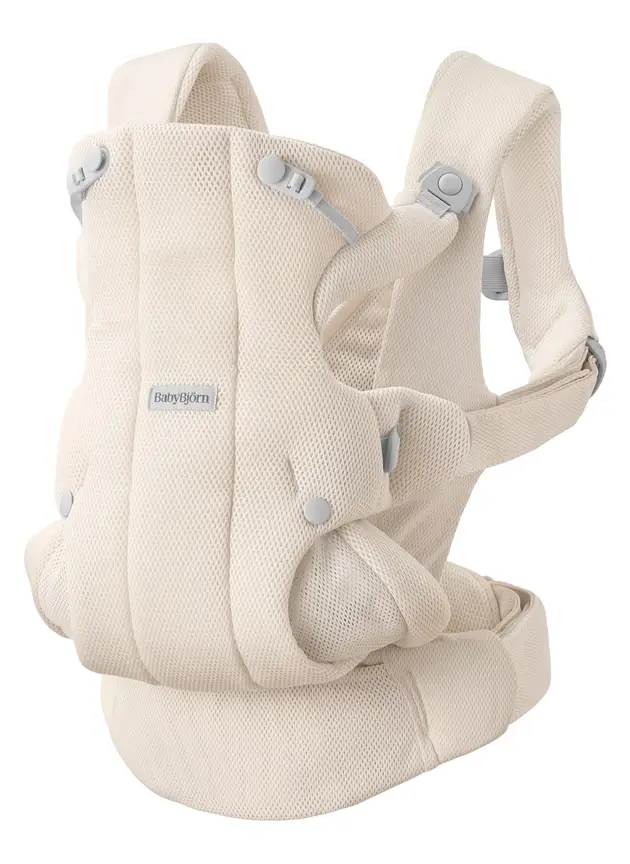
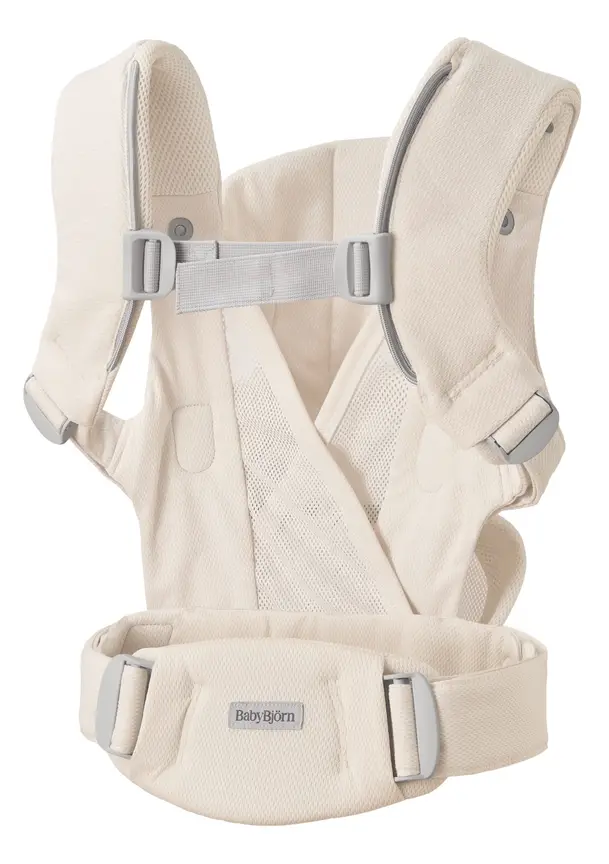
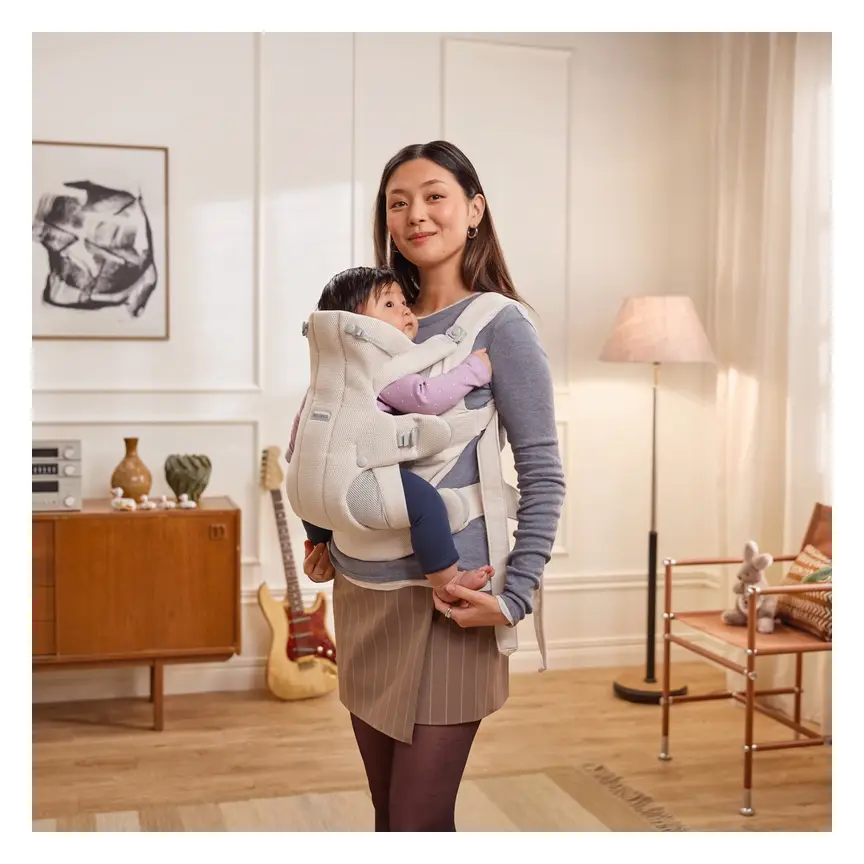


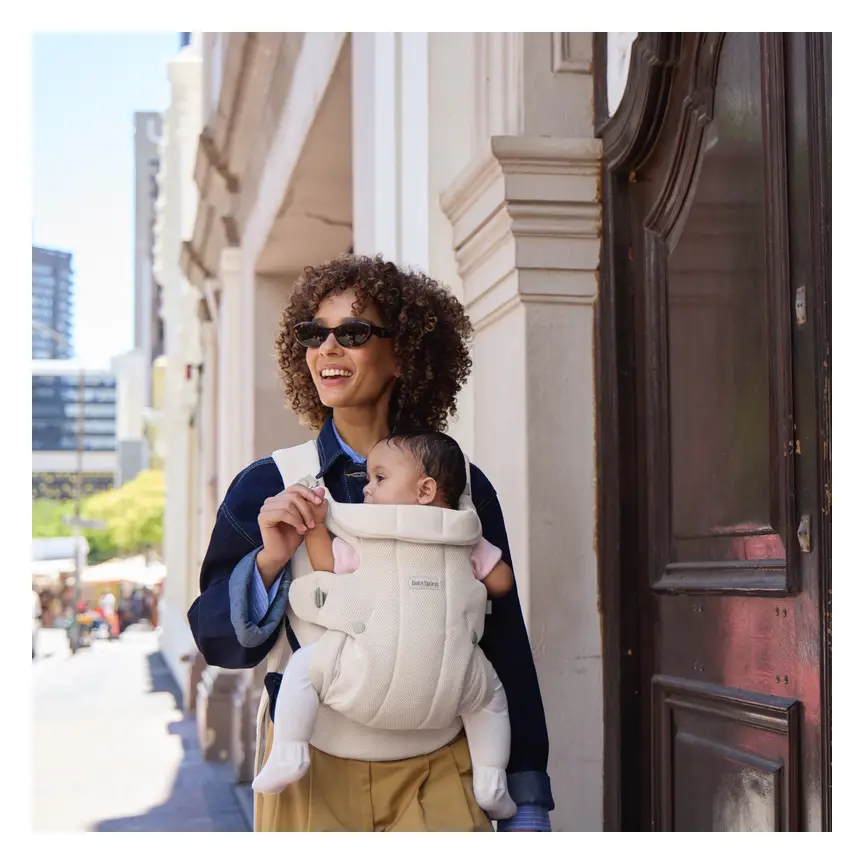
BabyBjörn Baby Carrier Hold
A soft front carrier from newborn to 18 months that fits XS to XXL parents.
Read our full review →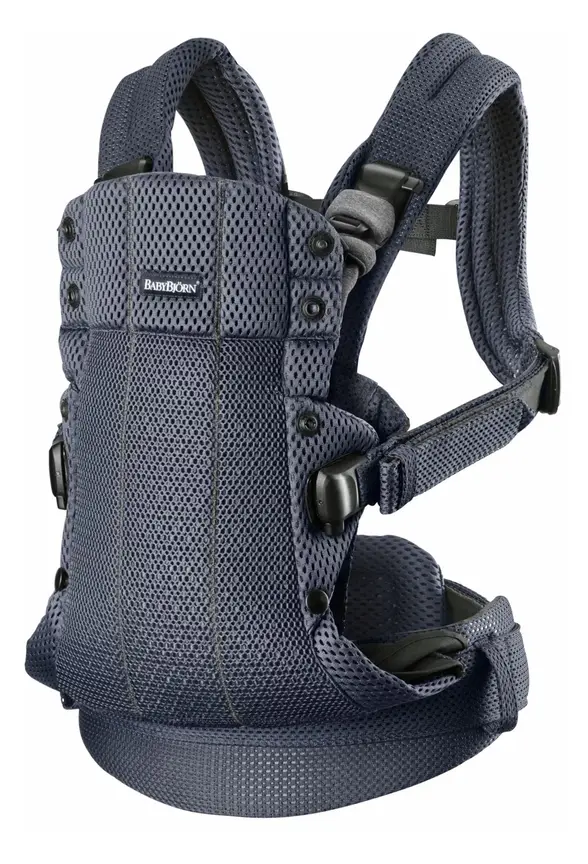 Reviewed
BabyBjörn Baby Carrier Harmony
A premium carrier with four positions, from 3.2 kg newborns to about 3 years.
Read our full review →
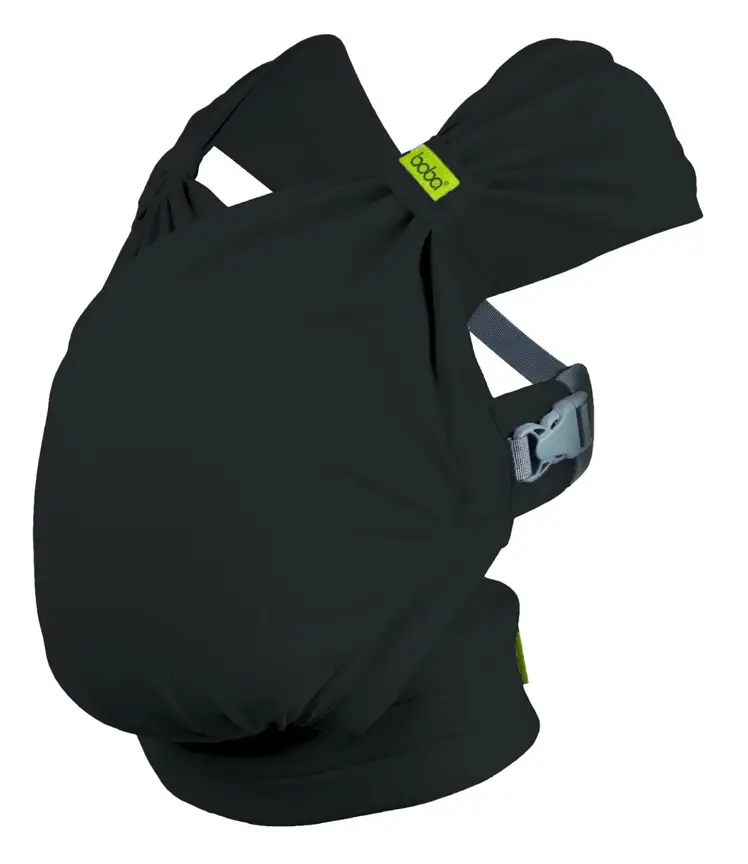
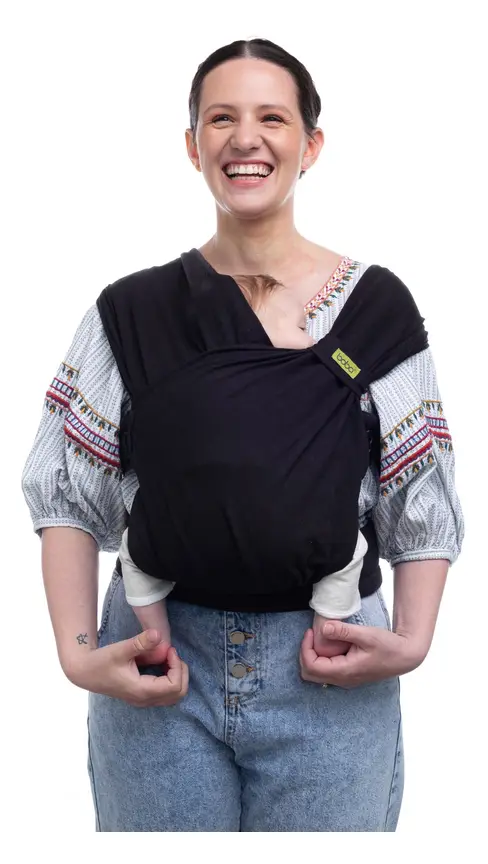
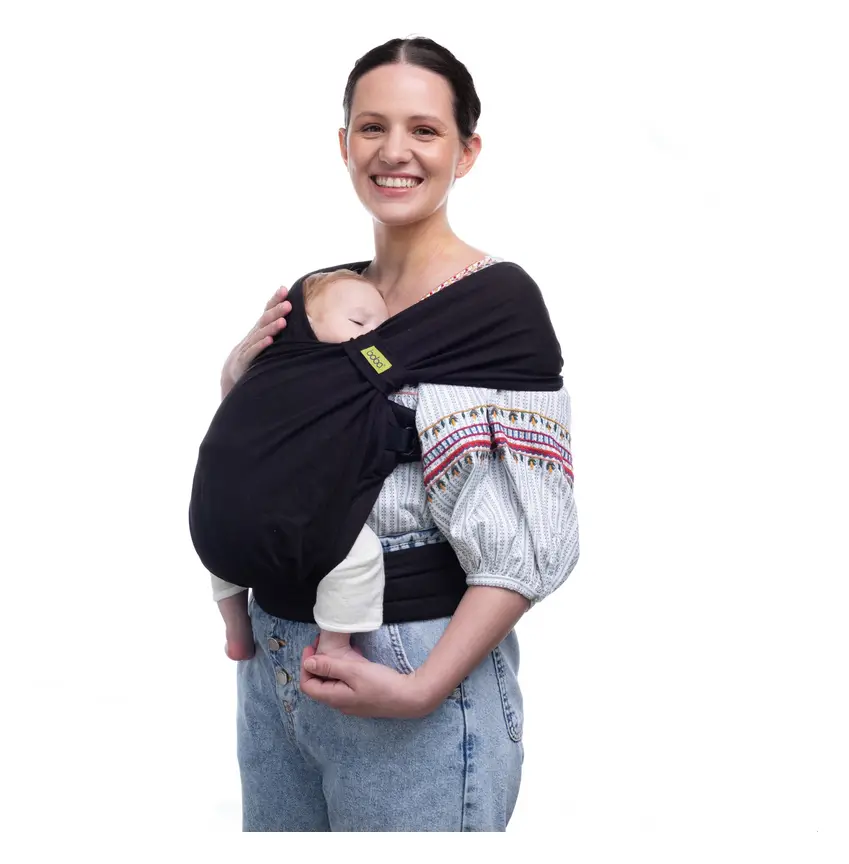
Boba Bliss
A stretchy carrier that clicks on like a buckle carrier. One size fits most parents.
Read our full review →Safety advice in Australia, the UK, the US and Canada
Official safety agencies in all four countries give very similar advice on baby carriers. None of them recommend pouch-style bag slings where a baby lies curled in a C-shape with their face pressed into fabric. Structured upright carriers like mei dais and half-buckles are much safer when fitted properly.
| Country | Key safety and health bodies | Main guidance for baby carriers |
|---|---|---|
| Australia | Product Safety Australia (ACCC), Red Nose Australia, Raising Children Network | Follow the TICKS rule; keep baby upright and visible; avoid curved bag slings; check national product recalls before buying used gear |
| United Kingdom | Office for Product Safety and Standards (OPSS), The Lullaby Trust, NHS | Follow the TICKS rule; keep face clear and chin off chest; buy from trusted sellers; check safety alerts for faulty buckles or stitching |
| United States | Consumer Product Safety Commission (CPSC), American Academy of Pediatrics (AAP), IHDI | Infant sling carriers must meet the US federal safety standard for strength and clear warnings; keep airway open and hips in an M-shape |
| Canada | Health Canada, Caring for Kids (Canadian Paediatric Society) | Check Health Canada recalls; ensure face is always visible and above the fabric edge; watch for strangulation hazards on loose cords |
Always buy from a trusted brand or reputable retailer. Counterfeit carriers sold through unverified online marketplaces can have weak buckles, poor stitching, or toxic dyes. Before buying any second-hand carrier, search the recall database in your country to make sure the model has not been recalled.
How to put on and adjust a mei dai or half-buckle
Practise over a soft bed or couch, or with another adult nearby, the first few times you tie on your carrier. A mirror helps you check your baby's position until your hands learn the steps.
- Set the seat width first. Before you put the carrier on, adjust the bottom of the panel so it fits from the back of one knee to the other on your baby.
- Fasten the waist high and snug. For a newborn, place the waistband high on your natural waist, right under your ribs. Clip the buckle (half-buckle) or tie a firm double knot (mei dai). The waist should sit level and not sag down when you pull on it.
- Hold your baby against your chest. Support your baby high on your chest, tummy to tummy, in the kissable spot.
- Bring the panel up. Smooth the body panel up over your baby's back, making sure the fabric sits flat without big wrinkles. Keep the top edge below their earlobes.
- Toss the shoulder straps over. Place one strap over each shoulder, keeping one hand supporting your baby's back and bum at all times.
- Cross the straps behind your back. Reach behind you with one hand to grab the opposite strap. Pull it snug down and across your back, then repeat with the other side so they form an X.
- Bring the straps forward under your arms. Pass each strap over your baby's thighs, cross them under your baby's bum, and pass them back under their legs. (Check your manual, as tiny newborns sometimes need the straps tied under the bum without crossing over the thighs.)
- Tie a secure double knot. Pull the slack out of both straps so your baby feels snug against you. Tie a firm double knot under their bum or behind your back.
- Do a pelvic tuck and final TICKS check. Slide your hands inside the panel under your baby's bum and gently tilt their hips toward you so their knees lift slightly higher than their bottom. Check your mirror for TICKS.
If your long straps touch the ground while you put the carrier on in a car park, tuck the ends into your pockets or waistband until you need them. You can also wrap the waist strap around your waist twice if the tails feel too long.
Common mistakes to avoid
Even experienced parents make small mistakes when rushing out the door. Watch out for these common issues:
- Wearing the waistband too low: If you clip or tie the waist down on your hips like jeans, your baby will sink too low on your chest. Tie it higher so their head stays close enough to kiss.
- Leaving slack in the shoulder straps: If you do not pull the slack out along your back before tying the knot, your baby will sag away from your chest. Always pull each strap tight one at a time.
- Letting the panel cover the baby's head: A newborn's head should always stay completely out of the carrier panel. Roll the waistband or use the height adjuster if the fabric comes past their neck.
- Bunching the seat fabric: If the fabric gathers into a narrow strip between the legs, your baby's weight rests on their crotch instead of their thighs. Smooth the fabric knee to knee.
- Tying a single knot or bow: A single knot can slip loose as you walk. Always finish with a tight double knot.
- Letting a baby sleep face-covered: Babies often fall asleep in carriers. That is fine as long as you keep checking that their face is uncovered, their chin is off their chest, and you stay awake.
More options, from budget to premium
Real products from our catalogue. We don't show star ratings or review counts; check the current price, stock and reviews on Amazon before you buy.

Ergobaby Omni 360 Cool Air Mesh Baby Carrier
All-position carrier
 Reviewed
Ergobaby Omni Classic Mesh
An all-position mesh carrier from newborn to toddler with no insert needed.
Read our full review → Reviewed
Ergobaby Omni Deluxe Mesh
The top Omni carrier, with 6 storage spots and strap markers that make it easy to swap between parents.
Read our full review →Frequently asked questions
Can I use a mei dai or half-buckle with a newborn?
Yes, as long as the carrier is rated for your baby's weight and the panel adjusts small enough. The seat must narrow to fit knee to knee without forcing their legs apart. The panel height must also sit below their earlobes so their face stays fully clear. Always check your carrier's manual for the minimum weight.
What is the difference between a mei dai and a half-buckle carrier?
A mei dai has tie straps for both the waist and the shoulders, with no buckles at all. A half-buckle carrier has a padded waistband that closes with a plastic buckle, paired with long tie straps for the shoulders. A half-buckle is quicker to put on and gives firmer waist support for heavier babies, while a mei dai folds smaller and has no hard plastic parts.
Can my baby face forward in a mei dai or half-buckle?
Usually no. Most mei dais and half-buckles are designed only for front inward carries, hip carries, and back carries. Facing a baby outward in a carrier not built for it can push their spine flat and leave their legs dangling. If your curious older baby wants to look around, try a hip carry or wait until they can sit unaided for a high back carry.
When can I carry my baby on my back?
Wait until your baby has strong head and neck control and can sit up on their own without support. This usually happens around six months, though every baby is different. Always follow your carrier manual's rules for back carries, and practise over a bed with a spotter before trying it alone.
How do I stop the long straps from dragging on the ground?
Before you lift your baby into the carrier, tuck the loose ends of the shoulder straps into your front pockets, waistband, or belt. Once the panel is up, pull one strap out at a time. If the tied ends still hang low after you knot them, loop the extra fabric around your waist once more before tying.
Are mei dais and half-buckles safe for my baby's hips?
Yes, when fitted properly. Because the soft panel adjusts around your baby's bum and thighs, it supports their legs from knee to knee in a healthy M-shape. Just check that the seat is not too wide for a newborn or too narrow for a growing baby. If your baby has been diagnosed with hip dysplasia, ask your doctor or physiotherapist before choosing any carrier.
Sources
- Product Safety Australia – Baby carriers, wraps and slings guide
- Red Nose Australia – Slings and baby carriers
- Raising Children Network – Baby carrier, sling and backpack safety
- The Lullaby Trust (UK) – Baby slings and carriers
- NHS Cheshire and Wirral Partnership – TICKS rule for safe babywearing (PDF)
- U.S. CPSC – New federal standard for infant sling carriers
- International Hip Dysplasia Institute – Baby wearing
- Health Canada – Recalls and safety alerts
Related guides
More Clothing & Accessories →
Baby Carriers in Hot Weather: Choosing Mesh and Keeping Your Baby Cool

Twin Baby Carriers vs Dual Ring Slings: How to Carry Two Babies Safely

How to Wash and Sanitise Second-Hand Baby Clothes and Carriers