














Newborn Hats: When a Baby Needs One and How to Choose
Learn when a newborn needs a hat, how to choose a safe fit, and when to take it off. Get clear advice for sleep, travel and changing weather.
On this page
- Key points
- What newborn hats do
- When a baby may need a hat
- When to take the hat off
- Wool, cotton and other fabrics
- How to choose a safe fit
- Age and stage: how hat needs change
- Hats and safe sleep
- Hats in a car seat or carrier
- Choosing between common hat types
- How to check if your baby is too warm or too cold
- How to wash and care for a wool hat
- Common mistakes to avoid
- Official advice in Australia, the UK, the US and Canada
- Frequently asked questions
- Simple checklist before putting on a hat
- Sources
Short answer: A newborn may need a hat outdoors in cold weather. Most healthy babies do not need one indoors once they are warm and settled. Take hats off for sleep indoors. A hat can make a baby too hot or slip over the face. Check your baby's chest or back to see if they feel warm. Hands and feet can feel cool even when your baby is comfortable.
This guide covers newborn hats, including wool and other fabrics. It explains fit, warmth, washing, and safe use. Advice from Australia, the UK, the US and Canada supports keeping a sleeping baby's head uncovered indoors. Follow your maternity team's advice if your baby was born early, is unwell, or needs special care.
Key points
- A hat can help outdoors in cold, windy weather.
- Take an indoor hat off when you come inside.
- Do not put a hat on your baby for indoor sleep.
- Choose a soft hat that fits without covering the eyes or face.
- Wool can be warm, but it is not right for every baby or every weather.
- Check your baby's chest or back for warmth. Do not judge by hands alone.
- Follow your clinician's advice for a premature baby or a baby with health needs.
What newborn hats do
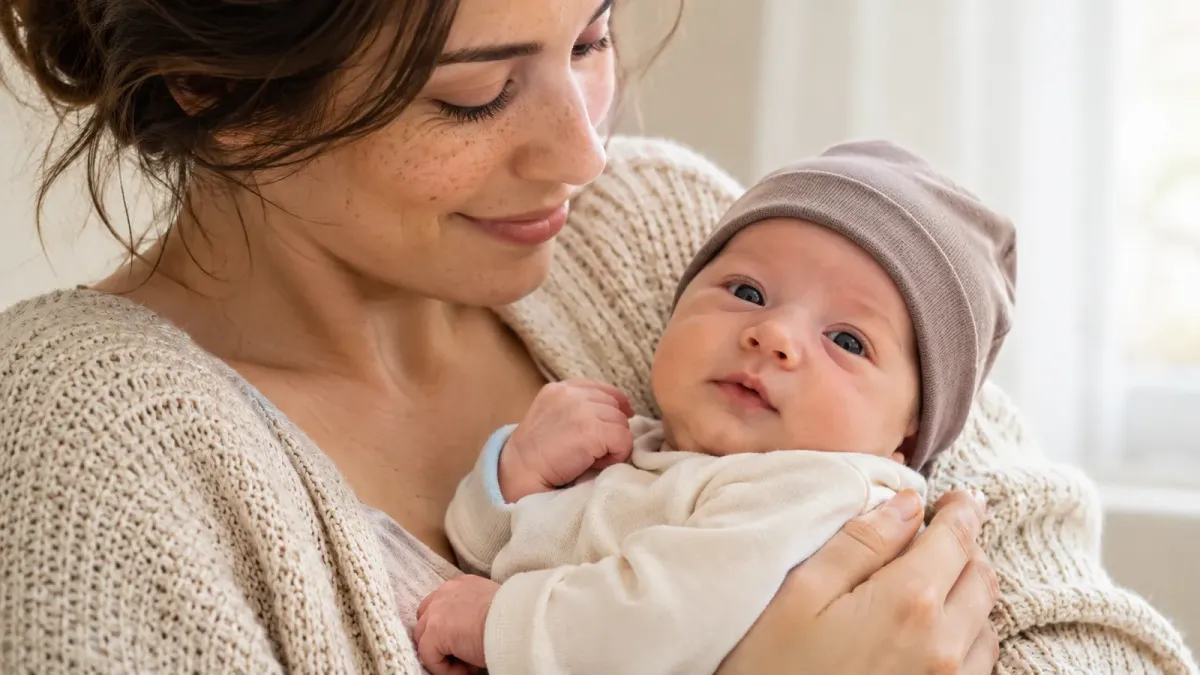
A hat covers a baby's head and can reduce heat loss in cold air. Babies can lose warmth through an uncovered head. This can matter outdoors in cool or windy weather, especially soon after birth.
A hat does not replace warm clothing, a blanket used safely while awake and supervised, or a suitable place to sleep. It also does not make a cold room safe. Warm your baby with sensible layers and keep checking how they feel.
Newborn hats are also often part of hospital routines shortly after birth. Staff may use one while a baby adjusts after delivery. That short-term care does not mean a baby must wear a hat all day at home. Ask your midwife or doctor when to remove it.
Some families like hats for photos or outfits. That is a choice for awake, supervised moments. Take the hat off when your baby is warm indoors, resting, or going to sleep.
When a baby may need a hat
Think about the weather, the room, your baby's clothing, and the advice from your care team. A hat may help during a short trip outdoors in cold weather. It may also be useful while a newborn is being checked or cared for after birth.
Outside in cold weather
For a walk in cold air, dress your baby in layers. A soft hat can cover the head and ears without covering the face. Check your baby during the trip. Move indoors or add a layer if they feel cold.
Wind can make outdoor air feel colder. A hat may help, but do not cover a pram with a blanket. That can reduce airflow and make it hard to see your baby. Use the pram's intended weather cover as directed, and keep your baby's face visible.
After birth or during medical care
Your birth team may suggest a hat for a short time after delivery. A baby who is premature, small, unwell, or receiving treatment may need a different plan. Ask staff what to use and when to take it off.
Do not use general online advice to change a care plan for a baby with special needs. The team caring for your baby can explain the right clothing and temperature checks.
In a cool home
If your home feels cold, first consider the room and your baby's clothing. Add a suitable layer to the body. Do not assume a hat is the best way to warm a sleeping baby. Safe sleep advice says to keep the head uncovered indoors.
If you are unsure whether your baby is warm enough, feel the chest or back. If the skin feels hot or sweaty, remove a layer. If your baby seems unusually cold, unwell, or hard to wake, seek medical advice.
When to take the hat off
Take a hat off when you come inside from cold weather. This matters in shops, cars, warm homes, and other heated spaces. Babies can overheat when they wear too many layers in a warm room.
Take the hat off before indoor sleep. Put your baby down on their back in a clear, safe sleep space. Keep the head and face uncovered. Do not use a hat to help a baby sleep longer or to keep them settled.
Remove a hat if it slips towards the eyes, ears, or face. Also remove it if your baby is sweating, flushed, or feels hot on the chest or back. A hat should never have loose ties, cords, or decorations that could come free.
Wool, cotton and other fabrics
Wool can feel warm and soft. It can suit a cold outdoor walk. But some wool feels scratchy against sensitive skin. Some hats also trap more warmth than the weather calls for. The fabric name alone cannot tell you whether a hat is right for your baby.
Cotton is often lighter and easier to wash. A cotton hat may suit mild weather better than a thick wool one. Other soft fabrics may also work. Check the care label and feel the inside against your own skin. Skip fabric that feels rough, sheds fibres, or makes your baby uncomfortable.
Choose the hat for the conditions and the time your baby will wear it. A thick knit hat may be too warm in a heated room. A thin cotton hat may not be enough for a cold, windy outing. Use layers you can add or remove as needed.
Skin comfort and sensitivity
Babies can have sensitive skin. Watch for redness, marks, itching, or fussing where the hat touches. Take the hat off if the skin looks sore or your baby seems uncomfortable. Try a softer material after checking with your health professional if irritation continues.
Wash a new hat before use, following its label. Use a gentle detergent if your baby reacts to scented products. Rinse well. Do not use a hat that has stretched, become rough, or lost its shape.
How to choose a safe fit
A hat should stay in place without squeezing. It should cover the head comfortably and leave the face clear. Do not choose a hat that is so large it slides over the eyes or nose.
- Check the size: use the maker's size guide when available. Babies grow quickly, so recheck the fit often.
- Check the edge: the band should not leave a deep mark on the skin.
- Keep the face clear: the hat must not cover the eyes, nose, or mouth.
- Avoid loose parts: skip long ties, cords, pom-poms, buttons, beads, and other small pieces.
- Check the seams: inside seams should not scratch or press into the skin.
- Watch for stretching: replace a hat that slips down or no longer stays put.
A simple beanie or bonnet without loose ties is usually easier to check. Avoid hats that fasten under the chin with a long cord. A cord can catch on objects. If a hat needs a fastener, follow its instructions and supervise your baby while it is worn.
Age and stage: how hat needs change
There is no single hat rule for every baby and every climate. Use age as one part of the picture. Weather, indoor temperature, clothing, and health all matter.
| Stage | What may help | What to watch |
|---|---|---|
| First hours after birth | Your care team may use a hat while your baby adjusts. | Ask when it should come off. Follow the care team's plan. |
| Newborn at home | A hat may help outdoors in cold weather. | Remove it indoors and before sleep. |
| Young baby on a cool outing | Use a suitable hat with comfortable layers. | Check warmth and keep the face clear. |
| Baby in warm weather | Use shade and light clothing. | A thick wool hat can trap heat. Follow local sun advice. |
| Baby with health needs | Use the plan from the baby's clinician. | Do not rely on general clothing advice alone. |
As babies grow, their head size changes. A hat that fitted last week may become tight. Check for marks after taking it off. Do not keep using a hat that squeezes or slips.
Hats and safe sleep
For sleep at home, keep your baby's head uncovered. A hat can come off and move over the face. It can also add warmth when your baby does not need it. Remove indoor hats before placing your baby in a cot, bassinet, or other approved sleep space.
Put your baby on their back for every sleep. Use a firm, flat sleep surface with no loose bedding, pillows, toys, or soft items around the baby. Dress your baby for the room. The Lullaby Trust gives UK guidance on room temperature and clothing. The American Academy of Pediatrics gives US safe sleep advice. The Canadian Paediatric Society also advises safe sleep practices.
Do not use a hat as a substitute for checking your baby. Do not cover the cot or pram to keep heat in. If your baby is cold, adjust clothing and the room in a safe way. Ask a health professional if you are not sure what to do.
Hats in a car seat or carrier
In a car, check that clothing does not interfere with the car seat harness. Thick clothing under the harness can stop it fitting close to the body. A thin hat may be useful before or after the trip in cold weather. Take it off if the car becomes warm.
Do not place a blanket or other loose item over your baby's face. Keep your baby visible. Follow the car seat maker's instructions and your local road safety advice.
When carrying your baby in a sling or carrier, keep the face visible and the airway clear. A hat must not cover the nose or mouth. Check your baby often, especially in warm weather or when the carrier holds them close to your body.
Choosing between common hat types
Different hats suit different conditions. The safest choice is one that fits well, has no loose parts, and matches the weather. This table gives general differences. It does not rank brands or make claims about particular products.
| Hat type | Possible use | Things to check |
|---|---|---|
| Light cotton hat | Mild weather or a short outdoor trip | Fit, soft seams, and whether it stays in place |
| Wool or knitted hat | Cool outdoor weather | Warmth, skin feel, loose fibres, and fit |
| Bonnet | Keeping the head covered outdoors | Avoid long ties and check that the face stays clear |
| Hat with a brim | Shade when outdoors, if suited to the baby and setting | Keep it secure and use shade as well |
| Thick fleece hat | Very cold outdoor conditions, if needed | Can be too warm indoors; remove it promptly |
A hat cannot replace shade, suitable clothing, or careful checks. For sun protection, follow advice from your national health or cancer body. Babies need extra care in strong sun. Avoid relying on a hat alone.
How to check if your baby is too warm or too cold
Touch your baby's chest or upper back. These areas give a better guide than hands or feet. Hands and feet often feel cooler than the body. That alone does not mean your baby needs another layer.
If the chest or back feels hot, or the skin is sweaty, take off a layer. Remove the hat if your baby is wearing one. Move to a cooler place if needed. If the baby seems unwell, contact a health professional.
If the body feels cool, add a layer or move to a warmer place. Check again after a short while. Do not pile on clothing without checking. Too many layers can make a baby too warm.
Seek urgent help if your baby is difficult to wake, has trouble breathing, looks very unwell, or you are worried about their condition. For a newborn, contact your local health service promptly when something seems wrong.
How to wash and care for a wool hat
Check the care label before washing. Some wool needs hand washing. Some can go in a machine on a gentle setting. Use the instructions for that hat, since wool types and blends differ.
- Wash a new hat before the first wear.
- Use a mild detergent that suits the care label.
- Rinse out soap well.
- Dry it fully before storing or using it.
- Do not stretch the hat while it is wet.
- Stop using it if it sheds fibres, has loose threads, or is damaged.
Store hats in a clean, dry place. Check for loose parts before each use. If a pom-pom or decoration is coming loose, do not put the hat on your baby.
Common mistakes to avoid
- Leaving a hat on indoors: take it off when your baby comes inside or enters a warm space.
- Using a hat for sleep: keep the head uncovered during indoor sleep.
- Judging warmth by the hands: check the chest or back instead.
- Choosing a loose fit: a hat that slides can cover the eyes or face.
- Choosing a tight fit: pressure marks mean the hat may be too small.
- Using a thick hat in warm weather: match the fabric and layers to the conditions.
- Covering the pram: a blanket over the opening can reduce airflow and hide your baby.
- Ignoring special care advice: ask your baby's clinician when health needs affect warmth.
- Assuming wool is always best: comfort, fit, and weather matter more than the fibre name.
Official advice in Australia, the UK, the US and Canada
Official guidance in these countries points to the same simple sleep approach: keep a baby's head uncovered indoors and avoid overheating. The exact advice for clothing can depend on climate, season, and the baby's health.
| Country | Relevant body | Useful guidance |
|---|---|---|
| Australia | Pregnancy, Birth and Baby; Red Nose Australia; Product Safety Australia | Use local health advice for newborn care, heat, and safe sleep. Ask your care team about special needs. |
| United Kingdom | NHS; The Lullaby Trust; Office for Product Safety and Standards | Keep the baby's head uncovered for sleep. Dress for the room and check for overheating. |
| United States | American Academy of Pediatrics; U.S. Consumer Product Safety Commission | Follow safe sleep advice and keep soft or loose items away from the sleep space. |
| Canada | Canadian Paediatric Society; Health Canada | Use safe sleep guidance and dress the baby to avoid overheating. |
These organisations do not say that every newborn needs a wool hat. A hat may help in cold outdoor conditions. Indoor sleep is different. Keep the head uncovered, and follow advice from the team caring for your baby.
Frequently asked questions
Should a newborn wear a hat indoors?
Usually, no. Take a hat off when you come inside and your baby is warm. Keep the head uncovered during indoor sleep. Follow your care team's instructions if your baby needs special care.
Should my baby wear a wool hat to sleep?
No. Remove hats before indoor sleep. Put your baby down on their back in a clear sleep space. Dress them for the room instead.
Is wool too warm for a newborn?
It depends on the hat and the weather. Thick wool can be too warm in a heated room or mild weather. Use it only when conditions call for it. Check your baby's chest or back for warmth.
How do I know if the hat fits?
It should stay in place without squeezing. It must not cover the eyes or face. Take it off and check for deep marks. Replace it when it becomes tight or slips down.
Can my baby wear a hat in the car?
A thin hat may help before or after a cold-weather trip. Check the car does not become too warm. Make sure clothing does not stop the harness from fitting closely. Follow the car seat instructions.
Do babies need hats in summer?
Not always. Avoid overheating, seek shade, and follow local sun advice. A thick wool hat is usually a poor choice in hot weather. If you use a sun hat, keep your baby's face clear and check them often.
Why do newborns sometimes wear hats at the hospital?
Care teams may use a hat shortly after birth while a baby adjusts. Ask your midwife or doctor when to take it off. Hospital practice does not mean a baby needs a hat all day at home.
What if my baby's hands feel cold?
Hands and feet can feel cool even when your baby is comfortable. Check the chest or upper back. Add a layer only if the body feels cool. Remove a layer if the skin feels hot or sweaty.
Are hats with ties safe?
Avoid long ties and cords. They can catch on things. Choose a hat that stays on without loose parts. Keep the face clear and supervise your baby while they wear it.
What should I do if my baby has a rash under the hat?
Take the hat off and let the skin cool. Check that the hat is clean and fits well. If the rash persists, worsens, or worries you, ask a health professional.
Simple checklist before putting on a hat
- Is the weather cool enough to need a hat?
- Will your baby stay outdoors, or are you going inside soon?
- Does the hat fit without squeezing or slipping?
- Are the face and airway completely clear?
- Are there any loose cords, buttons, or decorations?
- Will you remove the hat before indoor sleep?
- Have you checked your baby's chest or back for warmth?
- Does your baby's care team have special advice for them?
A newborn hat can be useful in cold outdoor weather. Choose one that fits well and feels comfortable. Take it off indoors when your baby is warm, and always remove it before sleep. When your baby has special health needs, ask their care team for a personal plan.
This article provides general information only. It does not replace medical advice. Ask a doctor, midwife, or child health nurse about your baby's care. Some links may be affiliate links. BabyGearFinder may earn a commission if you buy through them, at no extra cost to you.
Sources
Related guides
More Clothing & Accessories →
Newborn Baby Mittens: When They Help and How to Use Them Safely
Adjustable Baby Carriers: How to Choose and Use One From Newborn to Toddler

Baby Hair Ties for Thin Hair: How to Choose Safe, Gentle Ties
