Grow-With-Me Baby Rompers: How to Check the Fit, Fabric and Safety
Learn how to choose a grow-with-me baby romper, check its fit and cuffs, wash it safely, and dress your baby for sleep and changing weather.
On this page
- What a grow-with-me romper is
- What the “one size across six months” claim means
- How to choose a comfortable fit
- Fold-over cuffs: useful, with limits
- Fabric, seams and fasteners
- Age stages and changing needs
- Dressing for sleep and room temperature
- Washing and caring for the romper
- Comparison: grow-with-me and other baby clothes
- Safety guidance in Australia, the UK, the US and Canada
- Common mistakes to avoid
- Frequently asked questions
- Sources
Short answer: A grow-with-me romper is baby clothing with extra fabric at the cuffs or hems. You can fold the cuffs over when they are long, then fold them back as your baby grows. This may make one garment fit for longer. It cannot guarantee a fit for six months. Babies grow at different rates, and a romper must fit safely today.
Check the neck, sleeves, legs, fasteners and fabric. The romper should not cover your baby's face or restrict movement. Follow its care label. For sleep, use safe sleep advice from your country. Clothes are not a substitute for a clear, safe cot.
What a grow-with-me romper is
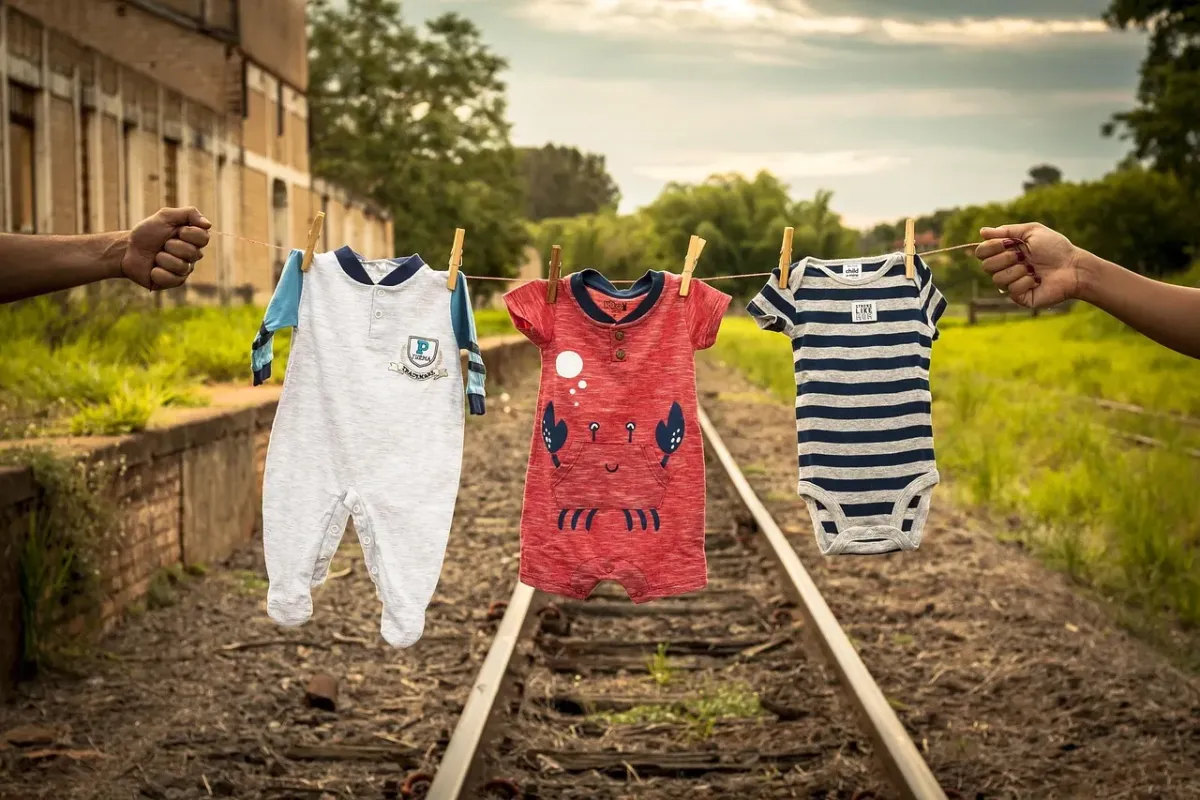
A romper is a one-piece outfit. It usually covers the body and legs. Some styles have feet. Others leave the feet open. A grow-with-me romper adds fabric that can fold over at the wrists or ankles.
When the garment is long, the folded cuffs cover some of the hands or feet. As your baby gets longer, you can unfold them. The extra fabric can give the garment more usable length. It does not change the width, torso length or shape of the garment.
Ribbing is knitted fabric with raised lines. It can stretch across the body and return towards its first shape. The amount of stretch depends on the fabric and how it is made. A label saying “stretchy” does not tell you how well it will fit your baby.
These clothes are ordinary garments. They are not safety equipment. The name does not prove that a romper fits every baby, lasts for a set number of months or meets a special standard. Check the actual garment and its label.
What the “one size across six months” claim means
A seller may say a garment fits across a period of months. Treat that as a sizing claim, not a promise. Babies differ in body length, chest size, thigh shape and how they like clothes to fit. Two babies of the same age may need different sizes.
A baby may outgrow the body of the romper before the cuffs are fully unfolded. Another baby may need more room around the chest or thighs while the sleeves still fit. A clothing size printed on a tag is only a guide. Use your baby's measurements and the maker's size chart.
Ask what the claim covers. Does it refer to the cuff length, the whole garment, or a model's age range? Is the size chart based on height, weight or both? If the seller does not explain the claim, do not rely on it when choosing a size.
Do not buy a too-large romper on the assumption that your baby will grow into it soon. Loose or bunched fabric can get in the way. A garment should fit comfortably now, with room to move, but should not cover the face or drag under the feet.
How to choose a comfortable fit
Start with the maker's size chart. Measure your baby's length and, when asked, chest or weight. Measure while your baby is calm, on a safe flat surface, with another adult helping if needed. Do not pull a tape tightly around the body.
Check the garment while your baby is wearing it. Your baby should be able to bend their arms and legs. The fabric should not pull hard across the shoulders, chest, nappy or crotch. Seams should not leave deep marks on the skin.
- Neck: The opening should let the head pass without force. It should not sit tightly against the throat.
- Shoulders: The seams should sit near the shoulders. Fabric should not pull when your baby moves their arms.
- Torso: The body should cover the nappy without stretching tight between the shoulders and crotch.
- Legs: Your baby should bend and kick freely. Check that the fabric does not twist around a leg.
- Cuffs: They should stay in place without squeezing the wrist or ankle. Fold them so they do not cover the hands or feet during active play.
- Fasteners: Press-studs or zips should close without pulling the fabric hard. Check that no sharp or loose parts touch skin.
Take the romper off and check the skin if your baby seems uncomfortable. Red lines that stay, swelling, rubbing or a trapped finger are reasons to stop using that size. Change to a roomier garment or a different cut.
Fold-over cuffs: useful, with limits
Fold-over cuffs can cover small hands or feet when the garment is long. They may also reduce the need for separate socks or mittens in some situations. They are simple fabric folds. They do not keep a baby warm in every room or weather.
Check how the cuff is made. It should fold smoothly without a hard seam, button or tie pressing on the skin. The cuff should not be so tight that it leaves a mark. It should not hide a hand during play if your baby needs free fingers to explore.
Open cuffs allow hands and feet to stay uncovered. This may suit a warmer room or a baby who dislikes covered hands. Footed rompers cover the feet, but the feet must fit inside without the toes being bent. If your baby has grown beyond the foot section, choose a larger size or an open-foot style.
Do not pin, tie or sew cuffs in place while your baby wears the garment. Added parts can come loose or press against the skin. If a cuff will not stay folded as designed, use another outfit.
Fabric, seams and fasteners
Read the fibre and care labels. Cotton is common in baby clothes. Some garments blend cotton with stretchy fibres. The label tells you what the maker says is in the fabric. It does not tell you whether the garment will suit your baby's skin.
Choose a fabric that feels comfortable to you and suits the room. A thick, warm garment may be uncomfortable in a warm room. A thin garment may not be enough in a cold room. Add or remove layers based on the room and your baby's comfort.
Look over the garment before the first wear and during laundry. Check seams, cuffs, zip guards and any decoration. Stop using it if a seam opens, a fastener breaks or a small part comes loose. Keep loose parts away from babies and young children.
Some rompers close with a zip. Others use press-studs. A zip can make dressing quick, but its pull should not scratch the chin. A fabric guard may sit between the zip and skin. Press-studs can make nappy changes easier if they open along the legs. Check that each one closes firmly and does not pull fabric into a gap.
Do not assume a natural fibre is always cooler or safer for every baby. Heat depends on the room, layers and the garment's thickness. If your baby has a skin condition or reacts to a fabric, ask a health professional for advice.
Age stages and changing needs
Age ranges on clothing labels are rough guides. Fit and movement matter more. Check the garment each time you dress your baby, especially after a growth spurt or when the weather changes.
| Stage | What to check | Useful choice |
|---|---|---|
| Newborn | Neck opening, easy changes, no tight fabric at the chest or nappy | A simple outfit that fits now and opens easily |
| Early months | Room to stretch and kick; cuffs do not squeeze hands or feet | Fold-over cuffs if they fit comfortably and stay in place |
| Rolling and floor play | Free movement; no loose fabric covering the face | An outfit with sleeves and legs that stay out of the way |
| Crawling and standing | Fabric does not bunch under knees or feet | Open feet or a close-fitting foot section that still fits |
| Older baby or toddler | Easy changes, comfortable waist and enough room to move | A size based on current measurements, not an old age label |
For newborns, frequent nappy changes can make easy openings helpful. During floor play, check that cuffs do not cover the hands or collect dirt. When your baby begins crawling or pulling up, clothes must not trip them or catch on nearby objects.
For babies who wear nappies, leave enough room around the nappy. A tight crotch can pull when the baby bends. A very loose body can bunch. After a change, check that all fasteners are closed and the garment sits smoothly.
Dressing for sleep and room temperature
A romper may be part of your baby's sleep clothing. It is not a sleeping surface or a sleep product. Follow safe sleep advice from your local health service. Place your baby on their back in a clear, safe cot or approved sleep space. Keep loose items away from the sleep space.
Choose sleep clothes for the room, not just the season. Babies can become too warm if they wear many layers. Check your baby for signs of being too hot, such as a hot chest or sweating. Hands and feet can feel cooler than the body, so do not judge warmth by them alone.
Do not cover your baby's head indoors for sleep. Do not add a hooded layer to the sleep space. If you use a sleeping bag, follow its size and clothing guidance. Do not use a garment that restricts your baby's movement as a substitute for a safe sleep routine.
The Lullaby Trust in the UK gives guidance on dressing babies for sleep. The American Academy of Pediatrics shares safe sleep advice in the US. Red Nose provides safe sleep guidance in Australia. The Canadian Paediatric Society gives advice in Canada. Their recommendations focus on a safe sleep space and avoiding overheating.
Washing and caring for the romper
Follow the care label. It gives the maker's washing and drying instructions. Wash a new garment before first use if the label allows. Use a detergent that suits your household and rinse well. If your baby has sensitive skin, ask a health professional about suitable laundry products.
Fasten zips and press-studs before washing. This can help prevent them catching on other clothes. Turn the garment inside out if the care label allows. Avoid high heat if the label warns that it may shrink or damage the stretch.
Check the romper after each wash. Look for stretched cuffs, split seams, loose threads and broken fasteners. Ribbing may stretch with wear. If it no longer returns to a comfortable fit, replace the garment.
Do not keep using a garment that has become too small because its cuffs still fold. The body may be too short or tight even when the sleeves and legs look long enough. Pass it on only if it is clean, in good shape and safe to wear.
Comparison: grow-with-me and other baby clothes
Different styles suit different routines. The best choice is the one that fits your baby, opens easily and suits the weather.
| Style | What it offers | What to check | May suit |
|---|---|---|---|
| Grow-with-me romper | Fold-over cuffs can add usable sleeve or leg length | Body length, cuff pressure, fabric stretch and current fit | Families who want cuffs that can unfold as baby grows |
| Standard romper | One-piece outfit with a fixed sleeve and leg length | Size chart, opening style and room around the nappy | Families who prefer a simple, familiar cut |
| Footed sleepsuit | One piece with feet covered | Toes must lie flat; feet must not be tight | Cooler rooms, when the foot section fits well |
| Open-foot sleepsuit | Leaves feet uncovered and allows room for growth | Legs should not drag or bunch under feet | Babies whose feet outgrow footed styles quickly |
| Separate top and trousers | Pieces can be changed separately | Waistband comfort and no loose, trailing fabric | Older babies and toddlers who need quick changes |
No style is right for every baby. Compare the actual shape and fabric. A well-fitting standard romper may work better than a grow-with-me garment that pulls at the body.
Safety guidance in Australia, the UK, the US and Canada
Ordinary baby clothing is different from cots, car seats and other regulated equipment. Do not assume a romper has passed a special safety test because its label says “grow-with-me”. Read the care and fibre labels. Check for loose parts and follow local product recall advice.
| Country | Relevant official bodies | What families can do |
|---|---|---|
| Australia | Product Safety Australia (ACCC), Red Nose and Pregnancy, Birth and Baby | Check recalls and follow local safe sleep and clothing advice |
| United Kingdom | Office for Product Safety and Standards (OPSS), NHS and The Lullaby Trust | Check product safety notices and follow NHS or Lullaby Trust sleep guidance |
| United States | U.S. Consumer Product Safety Commission (CPSC) and American Academy of Pediatrics (AAP) | Check CPSC recalls and follow AAP safe sleep advice |
| Canada | Health Canada and the Canadian Paediatric Society | Check Health Canada recalls and follow paediatric sleep advice |
These bodies have roles that differ. Product safety agencies handle product alerts and recalls. Health services give care advice. Use the guidance for the country where you live and shop.
There is no single fit rule that makes a romper safe for every baby. A garment should fit the child wearing it. Stop using it if it becomes tight, damaged or uncomfortable.
Common mistakes to avoid
- Trusting the age label alone. Check your baby's current measurements and the maker's chart.
- Treating six months as a guarantee. Cuffs can add length, but they cannot change the whole garment's shape.
- Buying too large. Excess fabric can bunch and get in the way. Choose a fit for now.
- Folding cuffs too tightly. A cuff should not squeeze or leave a lasting mark on skin.
- Ignoring the torso. Long sleeves do not help if the body pulls across the crotch or shoulders.
- Using footed clothing after the feet outgrow it. Bent toes and tight feet mean it is time for another size.
- Assuming fabric names prove safety. Read the actual fibre and care labels. Check the garment itself.
- Leaving damaged fasteners in use. Stop using a garment with loose parts, broken studs or open seams.
- Dressing by the calendar. Room temperature and the baby's comfort matter more than the season name.
- Using sleep clothes as sleep equipment. A romper does not replace a safe cot or safe sleep guidance.
Frequently asked questions
Will one grow-with-me romper fit for six months?
It may fit for longer than a fixed-length garment. No one can promise it will fit every baby for six months. Babies grow at different rates. Check the fit often and follow the maker's size chart.
Are fold-over cuffs safe for a newborn?
They can be comfortable if they fit without squeezing. Check that they do not cover the face or pull tightly around wrists or ankles. Keep hands free when your baby needs to move them.
Should my baby's hands or feet be covered?
That depends on the room, the garment and your baby's comfort. For sleep, follow local guidance and avoid overheating. Do not use mittens or cuffs that are tight or loose enough to come off easily.
How do I know when the romper is too small?
Look for pulling at the shoulders, chest, crotch or thighs. Check for marks that stay after removing it. Your baby should bend and kick freely. If the feet or hands are squeezed, choose another size or style.
Can I use a grow-with-me romper as sleepwear?
It may be used as clothing if it fits and suits the room. It does not make a sleep space safe by itself. Follow your country's safe sleep advice. Keep the cot clear and dress your baby so they do not get too warm.
Are ribbed fabrics better than smooth fabrics?
Not always. Ribbing can stretch, but the garment's cut and fibre matter too. Choose fabric your baby tolerates and that you can wash as directed. Stop using it if it rubs or causes discomfort.
Can I put the romper in a hot dryer?
Check the care label first. Heat can shrink some fabrics or affect stretch. Use the dryer only when the label allows it.
What should I do if a fastener breaks?
Stop using the garment until it is safely repaired, if repair is allowed and secure. Keep any loose part away from children. Replace the romper if you cannot make it safe.
Do I need a special clothing safety certification?
Do not assume a certification is required or proves a perfect fit. Check the garment label, local product alerts and the seller's clear information. Ask the relevant product safety body if you have a specific concern.
Disclaimer: This article shares general information, not medical advice. Ask your doctor, child health nurse or local health service about your baby's needs. BabyGearFinder may earn a commission from qualifying purchases. This does not change our advice.
Sources
- Product Safety Australia – Recalls
- UK Office for Product Safety and Standards
- American Academy of Pediatrics (US) – A parent's guide to safe sleep
- Caring for Kids (Canadian Paediatric Society) – Safe sleep for babies
- The Lullaby Trust – How to dress your baby for sleep
- Red Nose Australia – What is a safe sleeping environment
Related guides
More Clothing & Accessories →
How to Choose Fleece Baby Booties with Velcro Ankle Straps
Backseat Baby Car Mirrors: Acrylic Optics, Headrest Straps, and Crash Safety
How to Choose a Baby Carrier That Grows with Your Baby