












Quick answer
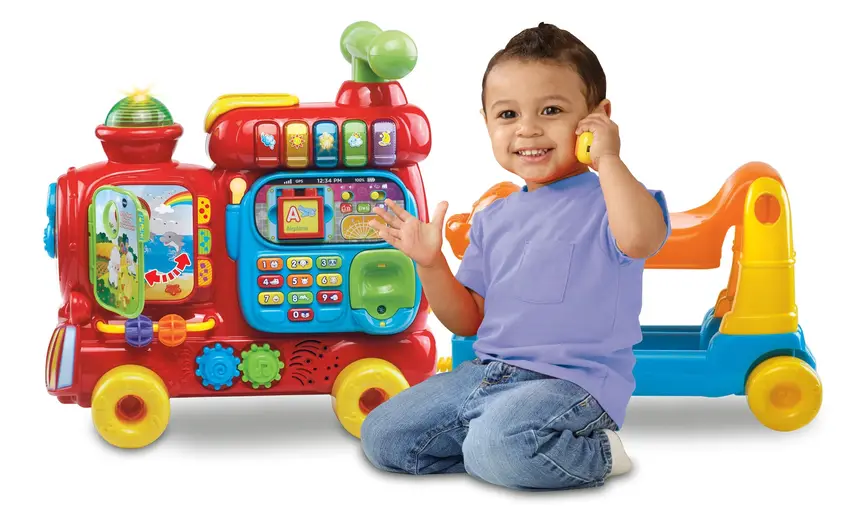
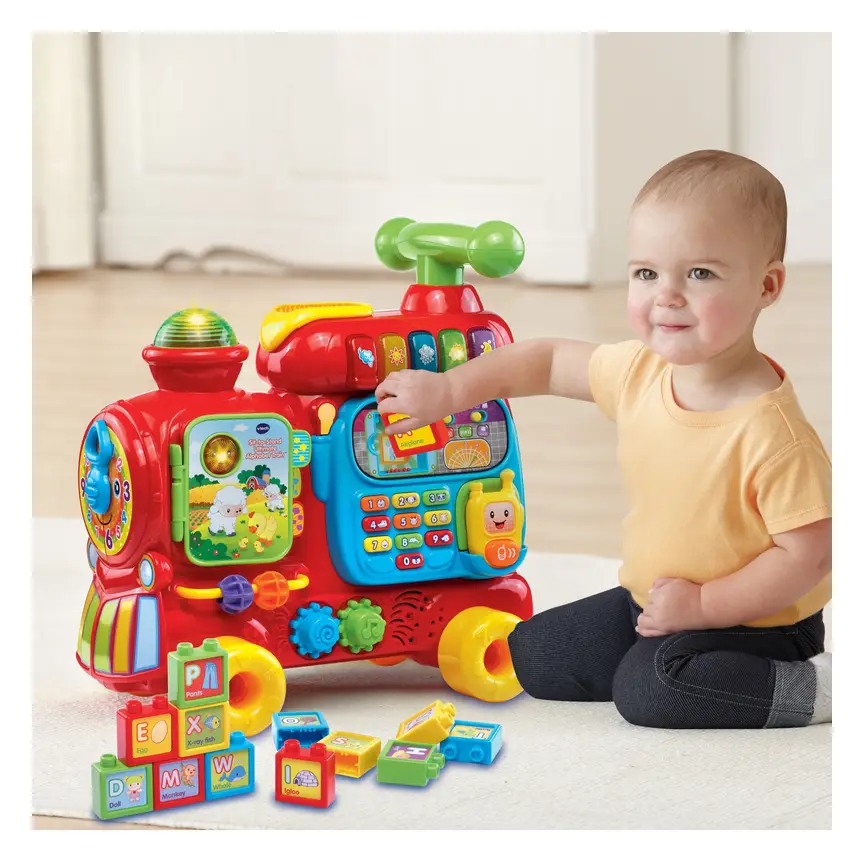
The VTech Push & Ride Alphabet Train suits families wanting varied toddler play. It offers seated play, a walker, a pull-along wagon and ride-on use. Baby Bunting lists 12 to 36 months and a 20 kg limit. It includes 13 double-sided letter blocks, piano keys and other activities. Typical price about A$80 (checked Nov 2026). Choose it for shared play, rather than promised walking or reading gains. We cannot judge grip, noise or assembly from these facts. Use it only under direct adult supervision. Check its locks and follow the instructions for each mode.
Buy it if
- Families wanting several play choices in one train
- Toddlers within the listed age and weight limits
- Parents who want blocks, music and pretend play
- Homes with a clear, supervised play space
Skip it if
- Your child falls outside the listed limits
- You need confirmed assembled measurements before buying
- You need checked details about sound controls
- You mainly want a simple push-along toy
- You expect proof of faster walking or reading
What this train offers
This is a train with several ways to play. Your child can explore it while sitting on the floor. It also has walker, pull-along wagon and ride-on modes. That mix is the main reason to consider it.
The supplied research gives no launch date or model history. It does not explain changes from an older train. We cannot call it a new design or an upgrade. This review covers the named model in the linked listing.
Baby Bunting lists letter blocks, music and moving play parts. These give you several starting points for shared play. You might name a letter or turn a book page. Your child can also explore without a lesson.
The price belongs in that buying decision. Typical price about A$80 (checked Nov 2026). Think about the modes your child may actually use. Extra features offer little value if they stay untouched.
Some key facts remain missing. We do not have the assembled size or toy weight. The listed measurements and weight describe the package. Do not use them to judge hallway fit or carrying ease.
Our scores are editorial views of the supplied facts. They are not customer ratings or measured test results. We have no checked owner feedback in this research. That limits what we can say about daily use.
Product details come from the linked Baby Bunting listing. Price comes from the supplied manually checked catalogue entry. Package measurements are not assembled measurements.
Who should consider the train
This train may suit a child who enjoys different activities. They can explore blocks, keys, pages and moving parts. The train shape also gives you a pretend-play theme. You can make up a trip together.
It may suit parents who prefer a shared play toy. Sit nearby and follow your child's interest. Name an animal, then wait for their response. There is no need to quiz them about every block.
The listed age range is 12 to 36 months. The maximum child weight is 20 kg. Both limits matter when deciding whether it fits your child. Being under the weight limit does not cancel the age warning.
Age alone does not tell you which mode to choose. Read the instructions for the mode you plan to use. Stay close and watch how your child manages it. Do not push them towards riding because that feature exists.
Skip it if you need firm answers about floor grip. Those details are absent from the supplied facts. The same applies to sound levels and assembled size. Ask for those answers before buying if they matter.
A simpler toy may also fit your family better. Think about what already gets used at home. If your child mainly likes pushing, start with that need. You do not have to buy every play style together.
How to think about the different modes
The modes are the train's main selling point. They offer different ways to use the same toy. They do not promise equal use in every home. Your child's interests may favour just part of the design.
Seated play gives you a place to begin exploring. Look at the blocks and other parts together. Let your child choose what catches their eye. You can leave the rest for another day.
The walker mode adds movement to the play choices. However, we lack checked facts about speed or wheel resistance. We also lack floor-by-floor guidance from the supplied research. We cannot say it rolls well on carpet or tiles.
The pull-along wagon offers another type of train play. Read the manual before changing the setup. The supplied facts do not explain each joining step. Do not guess how parts should lock together.
Ride-on use needs the same care with instructions and limits. Do not treat the toy like transport for outdoor trips. Keep play within a safe area under direct supervision. Stop if a part feels loose or looks damaged.
Ask to see the instructions before buying when possible. Check whether the changes between modes seem clear to you. The research gives no assembly time or tool list. We cannot promise that swapping modes is quick or easy.
Most importantly, walker mode is a play option. These facts do not show faster walking or better balance. Choose the train for play your child enjoys. Do not buy it to meet a walking deadline.
Blocks, letters and shared play
The train includes 13 double-sided letter blocks. The listing also names a magic tunnel. We do not have checked details explaining how it works. We cannot promise block reading or automatic letter recognition.
The listed topics include objects, animals, letters and colours. Weather and numbers are included too. Phonics means linking letters with their sounds. That is a listed topic, rather than proof of learning gains.
You can keep play much simpler than a lesson. Pick a block and talk about what you see. Give your child time to look and respond. Put it down if they want something else.
The removable walkie-talkie can prompt pretend conversations. You might ask where the train is going. Your child can answer with sounds, words or gestures. There is no right story to follow.
The turning book, beads and spinning cogs add other choices. These may appeal when your child ignores the letters. That still counts as enjoying the toy. They do not need to use every feature as intended.
Keep expectations modest when reading learning claims. The supplied facts describe topics and play parts. They contain no measured reading or speech results. We cannot say this train teaches more than another toy.
Think of the activities as prompts for time together. Follow your child's pace and change games when needed. You can stop before all the blocks come out. Shared play does not need a finished task.
Sound, space and everyday fit
Baby Bunting lists 4 sing-along songs and 10 melodies. It also lists light-up piano keys. That confirms music and lights are part of the toy. It does not tell us how loud it sounds.
The supplied facts do not describe volume settings or mute controls. They also omit battery type and battery inclusion. Check the instructions or ask the retailer about these points. Do not assume another VTech toy uses the same setup.
If sound is a concern, try hearing the exact model. A shop display may help when one is present. Ask which controls are available on that version. We cannot fill those gaps from the feature list.
Space needs the same careful check. Package dimensions tell you about the box. They do not show the train's size in each mode. Ask for assembled measurements before planning a storage spot.
Think about the floor area during play as well. A toy needs more room than its parking space. Clear a route away from furniture edges and steps. Keep bags, cords and loose toys out of that route.
The blocks and removable parts also need a home. A simple place to put them may ease pack-up. We have no checked details about built-in storage. Do not assume the train holds every loose part.
This is where a feature list has limits. It cannot show whether the toy suits your lounge room. Check space, sound and setup before focusing on extra activities. Those answers may matter more in daily use.
The strongest points and main gaps
The train's clearest strength is its range of play choices. Blocks, music and moving modes share the same theme. That may appeal more than a toy with one purpose. Whether it helps your family depends on actual use.
The main weakness in this review is missing detail. We cannot judge rolling feel, sound controls or assembly. We also lack checked reports about long-term wear. These gaps matter when choosing a moving toddler toy.
Our verdict weighs the listed features against those unknowns. It does not award points for claimed learning results. It also makes no claim about lasting through several children. Keep those limits in mind when reading the score.
What we love
- Seated play, walker, wagon and ride-on modes
- 13 double-sided letter blocks included
- Several play parts beyond the blocks
- Clear listed age and child weight limits
- Simple wiping advice is supplied
What to weigh up
- Assembled dimensions are not supplied
- Floor grip and wheel resistance are not described
- Sound controls and battery details are not supplied
- Mode-change steps need checking in the manual
- No supplied evidence of faster walking or reading
Other VTech play options
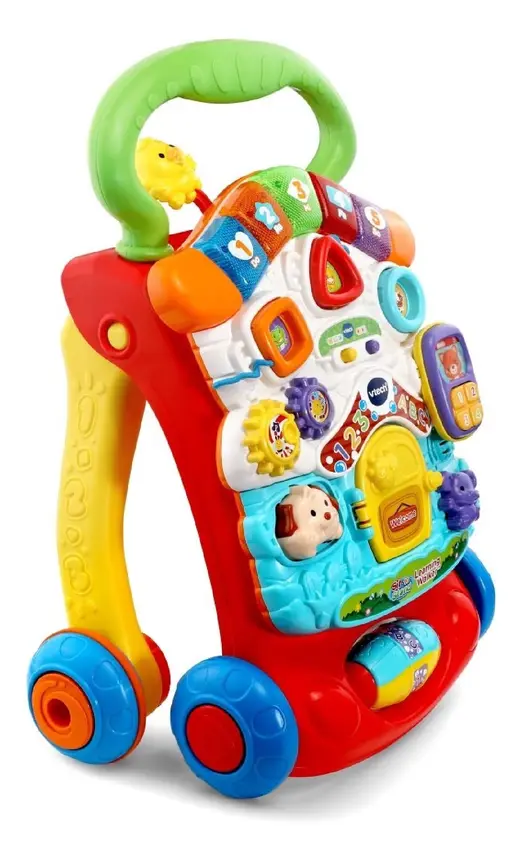
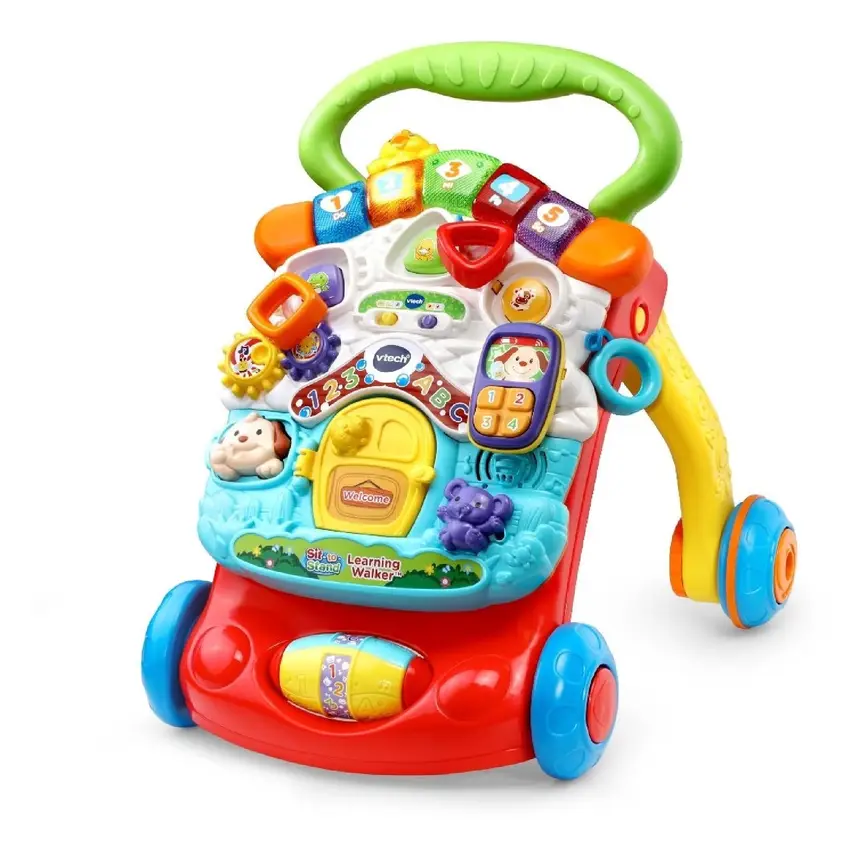
The supplied catalogue includes other VTech play products. The First Steps Baby Walker focuses on pushing. Its play panel sits on the front. That makes it worth comparing if pushing is your main aim.
The Play & Learn Activity Table offers a different setup. The catalogue describes lights, sounds and buttons. It is for babies who can stand while holding on. Check its own instructions and limits before choosing it.
These are different choices within the same brand. We cannot rank their grip, volume or build quality here. The supplied descriptions do not support those claims. Pick the type of play first, then check missing details.
We have left prices and detailed limits out of these cards. The supplied facts contain no source URLs for these products. Their short descriptions come from the supplied catalogue. They do not establish local stock or approval.

VTech First Steps Baby Walker
Best for: Families mainly comparing push-along play
The supplied catalogue describes a push-along walker with a front play panel.
Read our full review →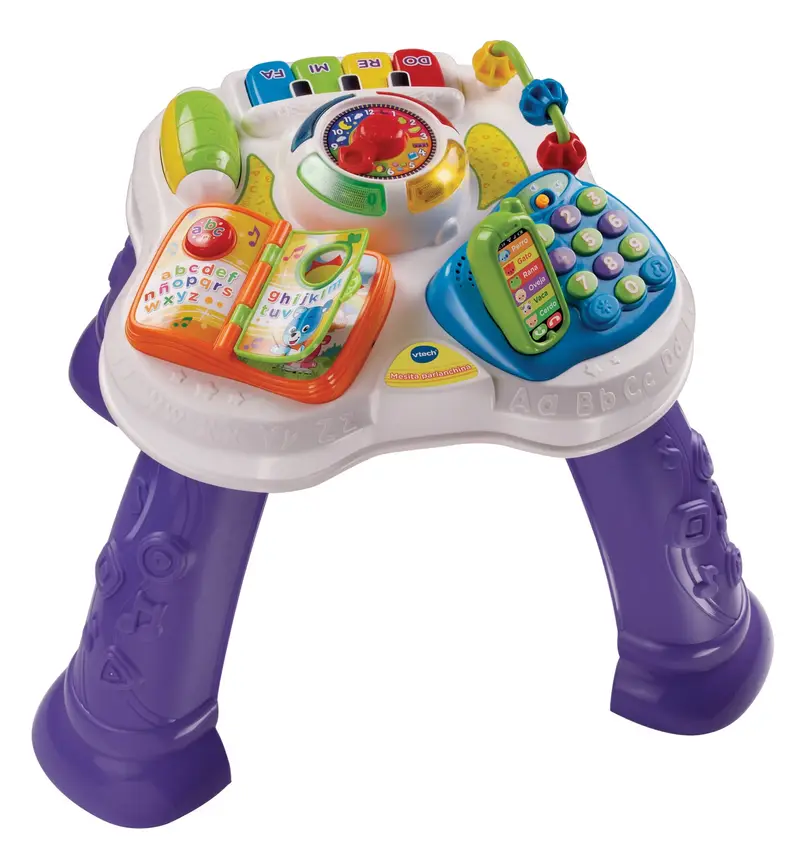
VTech Play & Learn Activity Table
Best for: Families considering table-based activities
The supplied catalogue describes lights, sounds and buttons for babies standing while holding on.
Train, push walker or activity table?
These comparisons start with the type of play offered. The train combines several modes around a train theme. The rival walkers focus on pushing. The Bright Starts table offers ball-based activities instead.
The Fisher-Price Turtle Walker is described as a turtle-shaped push walker. The VTech First Steps model adds a front play panel. Bright Starts Having A Ball has balls that roll and pop out. Those are catalogue descriptions, rather than performance findings.
No supplied evidence tells us which moves most smoothly. We also cannot compare stability, noise or cleaning effort. Blank information should stay blank until it is checked. It should not become a guess in a buying table.
Start by asking what your child already likes doing. Then ask what your home has room to use. A different play format may matter more than extra features. Check each product's own age limits and local instructions.
| Play choice | VTech Push & Ride Alphabet Train | VTech First Steps Baby Walker | Fisher-Price Turtle Walker | Bright Starts Having A Ball Activity Table |
|---|---|---|---|---|
| Type | Ride-on train with several play modes | Push-along walker | Push-along walker | Activity table |
| Listed play idea | Seated play, walker, pull-along wagon and ride-on | Pushing with a front play panel | Turtle-shaped pushing toy | Balls that roll and pop out |
| Assembled size | Not supplied | Not supplied | Not supplied | Not supplied |
| Checked floor performance | Not supplied | Not supplied | Not supplied | Not supplied |
| What to check next | Mode instructions and space | Local instructions and limits | Local instructions and limits | Local instructions and limits |
Hero details have a linked retailer source. Rival descriptions come from the supplied catalogue. Rival source URLs were not supplied, so prices, limits and performance claims are omitted.
Simpler, premium and different options
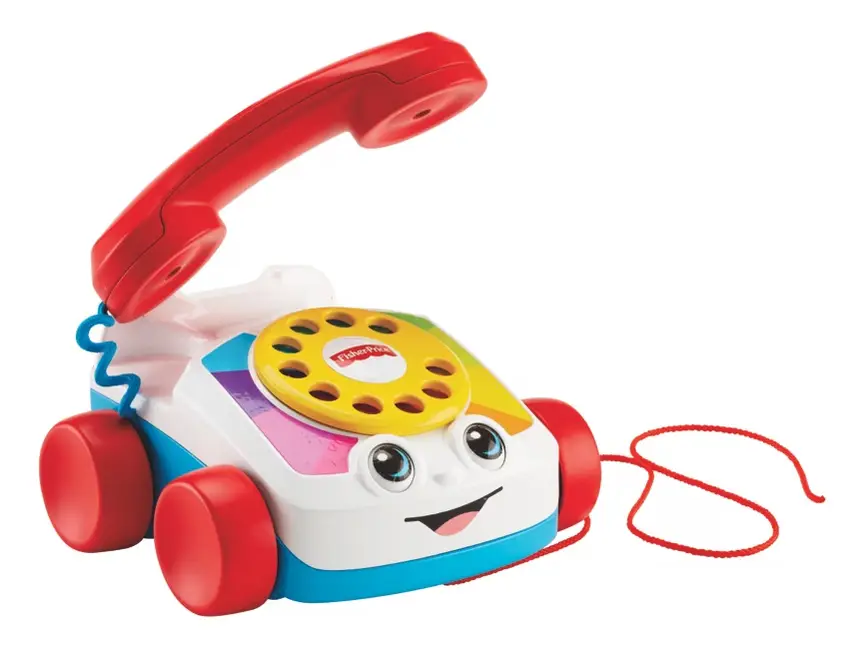
You may want a smaller buying decision than this train. The supplied catalogue places the Chatter Telephone below it in price. It offers a pull-along phone theme with moving eyes. We omit the amount because its source URL was not supplied.
The Ingenuity Step & Sprout sits in the catalogue's premium tier. It is described as a sit-in activity walker. It later becomes a push-behind walker. That is a different design, so check local rules before considering it.
The Classic Xylophone offers musical pull-along play. It may be worth considering if music interests your child. We cannot claim it is quieter or easier to store. Neither point is established by the supplied facts.
These cards are starting points for further checks. A cheaper product is useful only if it fits your needs. A premium label does not prove better results. Read each product's own age, safety and care instructions.
Fisher-Price Chatter Telephone
Best for: A lower-cost pull-along option to investigate
The supplied catalogue describes a pull-along phone with moving eyes. Its source URL was not supplied.


Ingenuity Step & Sprout 3-in-1 Activity Walker
Best for: Comparing a different walker design
The catalogue's premium option is a sit-in walker that becomes a push-behind walker. Check local rules and instructions.
Read our full review →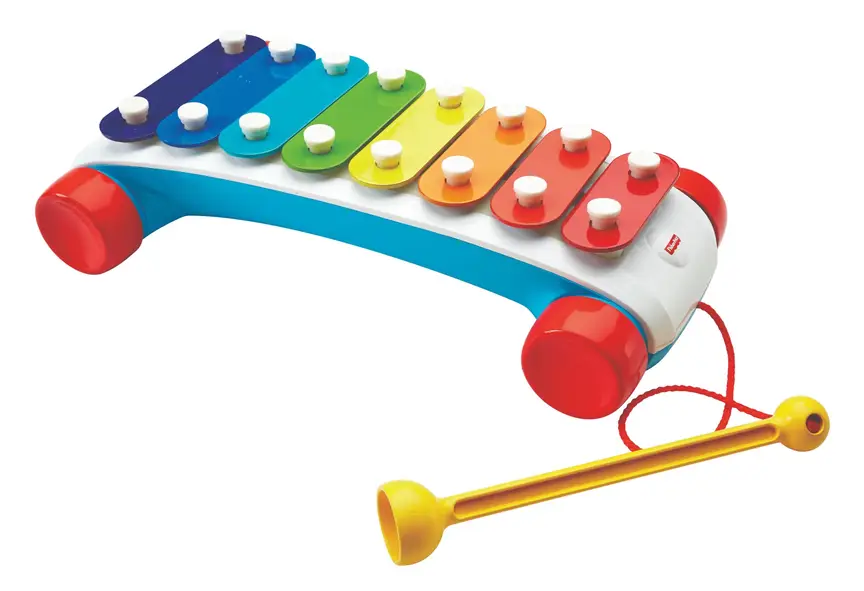
Fisher-Price Classic Xylophone
Best for: Musical pull-along play
The supplied catalogue describes a wheeled xylophone for striking and pulling.
Safety checks for your country
The supplied train entry does not name a safety standard. We therefore cannot claim certification for Australia or elsewhere. A retailer listing is not enough to fill that gap. Ask for the instructions and product labels when needed.
Australia is the market covered by the linked retailer page. Its details should guide this review of that listing. They do not prove that an overseas version is identical. Names and pictures alone cannot settle that question.
Readers in the UK, US and Canada should check locally. Confirm the exact model, warnings and support before buying. We do not have verified local listings for those countries. We cannot promise availability or approval there.
The train's push mode should not be confused with a sit-in walker. The designs differ, and their rules may differ too. Check the exact product rather than relying on the word walker. This also matters when considering the Ingenuity alternative.
For this train, direct adult supervision is a listed requirement. Regular checks of snap-in or locking devices are also required. Look for wear or damage before continued use. Stop and seek advice if a lock does not hold.
Keep moving play away from stairs and other drops. Keep cords away from the play area. Supervision means watching and being ready to help. The toy is for play while awake, not sleep.
Checks to make before buying
Work through the practical questions before choosing the train. Start with your child's fit and the space at home. Then check the parts of the listing left unclear. A useful answer should name this exact model.
Ask the retailer for instructions if they are not shown. Use them to check modes, locks and battery needs. Keep a copy with your purchase details. Those documents will also help if you need support later.
Do not feel rushed by a long feature list. Think about which activities your child would enjoy now. Then consider whether the other modes add useful choice. It is fine to choose a simpler toy instead.
- Check both limits
The listed range is 12 to 36 months. Maximum child weight is 20 kg. Do not use it over the listed maximum age.
- Ask for assembled measurements
The supplied measurements describe the package. Ask how much room each mode needs.
- Read the mode instructions
Check how parts attach and locks engage. The supplied research does not explain those steps.
- Check sound and power details
Ask about volume controls and batteries. These details were not supplied.
- Plan a safe play space
Keep away from stairs, drops and cords. Clear loose objects before moving play.
- Check local support
Confirm the exact version and warranty process. This matters especially when buying across borders.
Common buying and use mistakes
The easiest mistake is reading more into the listing. A learning topic does not prove a learning result. A walker label does not promise faster first steps. Several modes do not promise years of use.
Another mistake is borrowing facts from a similar train. Shared branding does not confirm shared controls or parts. Check the exact model when reading advice or buying spares. Follow its own instructions when changing the setup.
Keep limits in mind after the excitement of opening it. Stop using it when the listed limits no longer fit. Check parts as part of normal pack-up. Do not keep playing around a damaged lock.
Package measurements cannot confirm assembled fit. Ask for the right measurements before planning storage.
The supplied facts contain no walking or reading results. Buy for play rather than promised progress.
Use the instructions for each mode. Check snap-in and locking devices for wear or damage.
Keep away from stairs, roads and drops. Keep blind cords and power cords out of reach.
Check the exact local model and documents. Local availability and approval are not established here.
Cleaning, keeping parts and passing it on
The supplied cleaning advice is simple. Wipe the train with a slightly damp cloth. The listed material is plastic. That does not mean every part can be soaked.
We have no checked instructions for washing removable pieces separately. Follow the manual before trying another cleaning method. Do not assume a dishwasher or bath is suitable. The supplied facts do not support either method.
Keep the blocks and removable parts together after play. Before changing modes, check that the needed pieces are present. Missing parts may affect the setup shown in the manual. Ask the retailer about replacements rather than making your own.
The listing gives a 1 year warranty. We do not have the full terms or claim process. Keep your receipt and any product documents. Ask the seller what support applies to your purchase.
For a second-hand train, ask for the original instructions. Check the locks and look for wear or damage. Confirm that the model matches the documents supplied. Do not rely on another train's manual.
Before passing it on, describe any missing or damaged parts. Include the instructions and the listed age and weight limits. We have no checked resale prices or lifespan evidence. We cannot promise a resale return or years of service.
The best reason to choose this train is its play mix. It gives you letters, music and several moving modes. Check the missing practical details before committing. Then use it within its limits, with an adult close.
Questions parents ask
What age is the VTech Push & Ride Alphabet Train for?
Baby Bunting lists it for 12 to 36 months. The listing says not to use it over 36 months. Check the instructions for the mode you plan to use. The age range alone does not explain each setup.
What is the train's maximum child weight?
The listed maximum child weight is 20 kg. The age warning still applies below that weight. Do not treat the weight limit as permission for older children. Keep both limits with the instructions for future reference.
What are the different play modes?
The listed modes are sit-down play, walker, pull-along wagon and ride-on. The supplied facts do not explain how to change them. Follow the model's instructions and check the locks. Do not guess how the pieces should join.
Does it help toddlers learn to walk or read?
The supplied facts do not show faster walking or reading. They list walker play and topics such as letters and phonics. Phonics means linking letters with sounds. Treat these as play features, rather than promised results.
How many blocks and songs are included?
The listing includes 13 double-sided letter blocks. It also lists 4 sing-along songs and 10 melodies. Other parts include piano keys and a turning book. The supplied facts do not explain every response or control.
Can you turn down the sound, and are batteries included?
Those details are not in the supplied facts. We cannot confirm volume controls, battery type or battery inclusion. Ask the retailer or check the exact model's instructions. Do not use another VTech product's details as a guide.
How much space does the assembled train need?
Assembled measurements were not supplied. The listed 40.6 × 49.1 × 59.5 cm measurements describe the package. The listed 3.81 kg is also package weight. Ask for assembled dimensions before judging storage or play space.
How should I clean the train?
Baby Bunting says to use a slightly damp cloth. The supplied facts do not permit soaking or dishwasher cleaning. Follow the manual for any extra care steps. Check snap-in and locking devices for wear or damage regularly.
Is it better than the VTech First Steps Baby Walker?
That depends on the play style you want. The train offers seated play, wagon and ride-on choices alongside pushing. The supplied catalogue describes First Steps as a push-along walker. We lack checked evidence comparing grip, noise or durability.
Can families in the UK, US or Canada use this review?
They can use it to form questions before buying. The linked source covers an Australian retailer's listing. We have no verified local listings or certification details elsewhere. Check your exact version, local instructions and support before buying.
More in-depth reviews
 🪑 Highchairs & Booster Seats4baby Flat Fold Highchair Review7.5/10
 🪑 Highchairs & Booster Seats4baby Grow With Me Wooden Highchair Review7.8/10
 🚼 Prams & StrollersBaby Jogger City Tour 2 Review8.4/10
 🎠 Bouncers, Rockers & SwingsBabyBjörn Bouncer Balance Soft Review8.2/10
 🎠 Bouncers, Rockers & SwingsBabyBjörn Bouncer Bliss Review8.6/10
 🤱 Baby Carriers & WrapsBabyBjörn Carrier Hold Review8.0/10
Sources & how we checked
Specifications are taken from the manufacturer and major retailers and cross-checked; prices are typical RRPs and change often — the buttons show today's price. We do not invent star ratings or review counts.
BabyGearFinder earns a commission from qualifying purchases through retailer links, at no extra cost to you. It never changes our verdict.