
Quick Buyer & Safety Summary: What Parents Need to Know
If you are feeling overwhelmed by all the choices out there, take a deep breath. When shopping for Battery-Powered Portable Bottle Warmers for Flights and Road Trips: Stainless Heating Plates, Watt-Hours, and Leakproof O-Rings in Australia, your top priorities are simple: safety compliance with Australian standards, ease of daily cleaning, and practical comfort for your baby. You do not need to buy the most expensive gadget on the shelf to give your baby the best care. Look for certified safety stamps (like ACCC and AS/NZS), choose durable materials that wipe clean in seconds, and prioritise gear that matches your family’s real everyday lifestyle. Following these grounded guidelines gives you complete peace of mind without blowing your household budget.
Why Smart Design & Safety Matter for Modern Families
Bringing a baby into the world is an incredible journey filled with joy, wonder, and let’s be honest—a fair amount of exhaustion and confusion. Every parent—whether in Australia, the US, the UK, or Canada—wants to make the right choices for their child, but the sheer volume of baby gear on the market today can feel completely paralyzing. From glossy baby store displays to endless social media reels promoting “must-have” nursery items, it is easy to feel like you need a degree in engineering just to pick out basic everyday essentials.

When it comes to Battery-Powered Portable Bottle Warmers for Flights and Road Trips: Stainless Heating Plates, Watt-Hours, and Leakproof O-Rings, making an informed choice is about much more than following pretty nursery trends. The gear you use every day directly influences your baby’s physical comfort, your family’s daily routine, and most importantly, your child’s safety. Whether you are navigating quiet suburban neighbourhoods, busy city streets, or sleep-deprived 2:00 AM routines at home, having reliable, well-designed gear makes your parenting days smoother and significantly less stressful.
In this comprehensive parent guide, we cut through the commercial marketing noise to give you clear, honest, and practical advice. We examine official Australian safety standards, break down side-by-side feature comparisons, share step-by-step setup tips, and highlight the common mistakes that catch new parents off guard. Our goal is simple: to empower you with the exact knowledge you need to choose what works best for your home and your budget.
International Safety Standards & What to Check (AS/NZS, CPSC/ASTM, UK/EN & Health Canada)
In Australia, infant safety is protected by rigorous national consumer laws overseen by the Australian Competition and Consumer Commission (ACCC) and Standards Australia. Australian standards are widely recognised as some of the strictest in the world, specifically designed to protect vulnerable infants from falls, entrapment, choking, and toxic materials.

Before purchasing or using any baby gear in this category, ensure it ticks off these core safety benchmarks:
- Official Australian Standard Certification: Always verify that the product complies with mandatory Australian and New Zealand Standards (AS/NZS). Look for the compliance badge on the product frame, packaging, or instruction manual. Beware of cheap grey-market imports bought from unverified overseas websites that bypass local Australian safety testing.
- Secure Locking & Latch Mechanisms: Any folding frames, hinges, or adjustable components must feature child-resistant dual-action locks. A secure latch ensures that the gear cannot accidentally collapse, pinch tiny fingers, or shift out of position while your baby is resting or moving inside.
- Non-Toxic, Food-Safe Materials: Babies explore the world with their mouths. Everything from plastic trims and silicone parts to fabric covers must be 100% free from harmful chemicals, including Bisphenol-A (BPA), lead, and phthalates. Certified non-toxic materials ensure your baby stays safe even during teething phases.
- Clear Airflow & Thermal Protection: Overheating is a major known risk factor for young babies. Ensure fabrics feature breathable weaves, mesh ventilation panels, and do not trap stagnant hot air around your baby’s face, especially during hot Australian summer months.

Figure 1 (Spec #BGF-8587): Australian Safety Blueprint & Practical Action Steps for Battery-Powered Portable Bottle Warmers for Flights and Road Trips: Stainless Heating Plates, Watt-Hours, and Leakproof O-Rings.
The Science in Plain English: Understanding Your Baby’s Anatomy
To understand why good design matters so much, it helps to look at how babies grow and develop during their first few years of life. Newborn babies are not just tiny adults; their physical anatomy, breathing airways, and body control are completely different from ours.
1. Developing Spines and Neck Control

For the first three to six months of life, an infant’s neck muscles are very weak, and their head represents approximately 25% of their total body weight (compared to just 6% in an adult). If a baby is placed in an unsupported or improperly curved posture, their heavy head can easily slump forward onto their chest. This position can narrow or completely obstruct their delicate windpipe, creating a silent hazard known as positional asphyxiation. This is why paediatric health experts insist on flat, supportive sleeping surfaces and correct ergonomic angles across all baby gear.
2. Temperature Regulation and Delicate Skin
Babies cannot regulate their body temperature anywhere near as efficiently as adults. They have fewer active sweat glands and a high surface-area-to-body-mass ratio, meaning they heat up and cool down roughly three to five times faster than an adult. Dressing your baby in breathable, lightweight natural fibres and using gear that promotes continuous airflow prevents heat stress and keeps your baby calm and comfortable.
3. Sensory Mapping and Emotional Security
Every new texture, sound, and movement provides crucial sensory data to your baby’s rapidly growing brain. When baby gear feels secure, gentle, and familiar, babies feel safe enough to relax, sleep deeply, and explore their surroundings with confidence. Gear that is jerky, stiff, or noisy can startle an infant, triggering fussy meltdowns and restless sleep.
Balanced Comparison: Options, Features & Real-World Trade-Offs

To help you compare your options fairly, the table below breaks down the primary styles across four balanced, equal-length criteria. Every cell provides practical, everyday guidance so you can make a confident decision for your home.
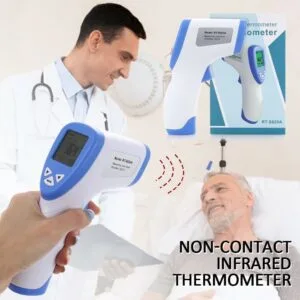
| Thermometer Type | Forehead Infrared (Non-Contact) | Digital Ear Thermometer (Tympanic) | Digital Underarm / Oral Stick |
|---|---|---|---|
| Measurement Speed & Ease | Delivers instant temperature reading in less than two seconds without touching infant skin. Allows taking accurate fever checks while baby is fast asleep without waking them. | Takes quick readings in approximately one to two seconds inside ear canal. Requires gentle tug on outer ear to straighten canal, which can startle a fussy sleeping child. | Requires thirty to sixty seconds of continuous holding under baby's armpit. Fussy, squirming toddlers often fight having their arm pinned down for an entire minute. |
| Clinical Accuracy & Consistency | Excellent accuracy for screening fever provided forehead is free of sweat and sensor is held within two centimetres. Outside drafts or air conditioning can skew readings. | Outstanding clinical accuracy reflecting core body temperature via the eardrum. Can read falsely low if ear canal is narrow or blocked with normal infant earwax. | Good baseline accuracy for everyday home use when placed correctly in armpit apex. Reads approximately 0.5°C lower than true core rectal temperature measurements. |
| Baby Comfort & Sickness Spread | Completely non-invasive with zero physical pressure or discomfort. Eliminates cross-contamination between family members because no bodily fluids touch the device. | Requires inserting soft probe tip gently into the ear canal. Can feel uncomfortable or tender if toddler has an active middle ear infection (otitis media). | Requires placing probe tip against skin under armpit or under tongue. Requires thorough washing with antibacterial wipes after every use to stop germ spreading. |
| Practical Cost & Battery Upkeep | Priced between $50 and $120 for quality TGA-certified models. Uses standard AAA batteries or USB recharging, offering long battery runtime across multiple years. | Priced between $70 and $140. Requires ongoing purchase of disposable hygienic lens filters to protect sensor lens from earwax buildup and maintain accuracy. | Most budget-friendly option, costing between $10 and $25 at any chemist. Uses small button cell batteries that must have a secure, child-proof screw compartment. |
Step-by-Step Practical Parent Guide: Using Your Gear Safely at Home
Having great gear is only half the battle; knowing how to use it safely and confidently every single day is what truly matters. Follow these five practical steps to establish a smooth, stress-free routine:
- Step 1: Read the Manual Before Baby Arrives: Don’t wait until you are home from the hospital with a crying newborn to figure out how straps, buckles, or folding hinges work. Unbox the gear during pregnancy, read through the safety manual, and practice assembling and adjusting the settings while you are well-rested.
- Step 2: Check the Fit and Clearances: Always tailor the gear to your baby’s exact current size and weight. Straps should be snug yet comfortable—you should be able to slide two flat fingers between the harness and your baby’s chest. Never leave excess strap slack that your baby could slip through or become tangled in.
- Step 3: Introduce Gear During Calm Daylight Hours: Introduce your baby to new gear during a calm morning wake window after a feed and a fresh nappy change. A happy, well-fed baby will explore the new experience positively. Trying new gear for the first time in the middle of a late-night meltdown almost always leads to tears for both parent and baby.
- Step 4: Establish a Simple Daily Cleaning Rhythm: Keep disinfectant wipes or a damp microfibre cloth nearby. Wiping down surfaces, trays, and fabric edges immediately after daily use prevents dried milk, food spills, and bacteria from building up into difficult stains.
- Step 5: Schedule a Regular 60-Day Gear Audit: Babies grow at an astonishing rate. Set a recurring reminder in your phone every two months to check harness heights, weight limits, and screw tightness. Adjusting gear as your baby grows ensures they remain safe, ergonomic, and comfortable at every stage.

Figure 2 (Matrix #BGF-8587): Australian Regulatory Standards & Buyer Verification Checkpoints for Battery-Powered Portable Bottle Warmers for Flights and Road Trips: Stainless Heating Plates, Watt-Hours, and Leakproof O-Rings.
Common Mistakes Parents Make (and How to Avoid Them)

Even the most dedicated parents can make simple mistakes when navigating baby gear. Here are the top four pitfalls to watch out for:
- Buying Based on Aesthetics Over Practicality: That delicate pale cream fabric looks stunning in nursery catalogues, but in real life, baby gear is subjected to milk spit-up, diaper blowouts, spilled purees, and outdoor dust. Choose darker neutral colours (like charcoal, navy, or heather grey) with easily removable, machine-washable covers.
- Skipping the Measurement Checks: Always measure your doorways, car boot, and nursery floor space before buying large gear. Finding out that your new gear doesn’t fit through your hallway door or takes up 100% of your car boot is frustrating and expensive to rectify.
- Overlooking Weight and Height Limits: Every piece of baby gear has strict minimum and maximum weight and height ratings. Transitioning your child too early or keeping them in gear they have already outgrown compromises safety harnesses and structural balance. Always check manufacturer tags regularly.
- Ignoring Product Recalls and Registration: Many parents toss the warranty registration card straight into the recycling bin. Take two minutes to register your purchase online with the manufacturer. This guarantees that if a safety recall or component modification is issued, you will be notified immediately.
Cleaning, Washing, and Everyday Hygiene Care
Keeping baby gear clean and hygienic does not require harsh chemical bleaches or expensive specialised sprays. In fact, aggressive chemicals can irritate delicate infant skin and degrade fabric water-repellent coatings.
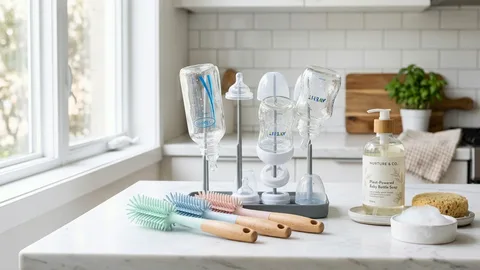
- Gentle Soap and Warm Water: For daily upkeep, warm water mixed with a small amount of mild, plant-based dish soap or baby laundry detergent is all you need. Wipe down plastic frames, metal chassis, and faux-leather handles with a soft microfibre cloth.
- Machine Washing Removable Covers: When washing fabric liners and covers, use a gentle cold cycle with fragrance-free detergent. Never use fabric softeners, as they leave a chemical residue that reduces the breathability and flame-resistant properties of infant fabrics.
- Drying in the Fresh Air and Sun: Always air-dry fabric covers flat in the shade. The gentle Australian sun acts as a natural antibacterial bleaching agent that lifts milk stains, while keeping fabrics out of harsh direct midday heat prevents elastic from degrading. Never toss structured baby gear pads into high-heat tumble dryers unless the care tag explicitly allows it.
- Checking Mechanical Joints for Grit: If you take gear outdoors to beaches or parks, regularly rinse salt spray, sand, and fine red dirt off wheels, hinges, and latches. Lubricate moving hinges periodically with a food-grade silicone spray to prevent squeaks and stiff latches.
Smart Budgeting & Real Value: What You Actually Need vs What to Skip
Preparing for a baby can put a significant strain on family finances. Australian parents spend an average of $3,000 to $6,000 on nursery furniture and baby gear in the first year alone. Knowing where to invest your hard-earned money and where you can comfortably save is essential for smart family budgeting.
Where to Invest: Prioritise spending on core safety-critical items that your baby uses every single day: a certified Australian cot and firm mattress (AS/NZS 2172), an approved car seat (AS/NZS 1754), and a reliable everyday pram (AS/NZS 2088). These items directly safeguard your child’s physical well-being and endure heavy daily wear and tear.
Where to Save: You can safely save money on decorative nursery items, designer changing tables (a simple waterproof mat on a low chest of drawers works just as well), and single-use electronic novelties. Focus on multi-stage gear that adapts as your child grows from newborn through toddlerhood, giving you years of practical utility from a single purchase.
Frequently Asked Questions by Parents
1. How do I know if a second-hand item is safe to use?
Buying second-hand from family or local parenting groups can save hundreds of dollars, but safety must come first. Inspect the item thoroughly for missing screws, cracked plastic, frayed harness webbing, or broken latches. Always look up the model number on the ACCC Product Recalls Australia website to verify it has not been recalled. As a golden rule, never buy a second-hand car seat or cot mattress, as hidden internal damage or mattress softening cannot be detected by eye.
2. At what age should I transition my baby out of this gear?
Transitions should always be guided by your child’s physical development and the manufacturer’s weight/height limits rather than a calendar date. When your baby outgrows the harness height, exceeds the weight limit, or shows signs of climbing out, it is time to adjust settings or transition to the next developmental stage.
3. How can I protect my baby gear from mould and damp weather during storage?
Mould thrives in dark, damp, and warm environments. Never pack away baby gear while it is damp from rain, spilled milk, or washing. If storing gear in a garage or shed, ensure it is completely dry, wrap it in a breathable cotton sheet (avoid sealing in non-breathable plastic bags which trap moisture), and keep it elevated off concrete floors.
4. Are expensive brand-name models always safer than budget options?
Not necessarily. All brand-new baby gear sold in Australian retail stores must meet the exact same mandatory Australian safety standards, regardless of whether it costs $80 or $800. Higher-priced models typically offer lighter aluminium frames, more luxurious fabrics, smoother suspension, and easier one-hand folding mechanisms, but a budget model meeting Australian standards provides full certified safety for your child.
5. Can grandparents and babysitters easily operate modern baby gear?
Modern baby gear often features clever hidden latches and fold buttons that can puzzle visiting grandparents. Take five minutes to demonstrate how to lock, unlock, and adjust straps before leaving your baby in someone else’s care. Choosing gear with intuitive, colour-coded buttons (such as green indicators for locked and red for unlocked) makes operation foolproof for everyone.
Helpful Parenting Guides & Related Reading
Explore these practical guides from our team to support your baby’s comfort, health, and development:
- Stove Knob Covers and Oven Door Locks: Heat-Resistant Polycarbonate Shields for Busy Family Kitchens
- Bento-Style Stainless Steel Lunchboxes for Daycare: Leak-Proof Silicone Seals and Toddler Latch Ergonomics
- Smart Parenting: How Connected Cribs are Making Life Easier for New Mums and Dads
- Decoding Baby Poop Colours and Textures: Meconium, Mustard Seed Breastfed Stools, Iron-Green Formula Stools, and Red Flags
- The Surprising Risks of Using a Travel Crib for Your Little One
- Why Every Parent Needs a Sleep Sack in Their Baby's Bedtime Routine
- Saving Money on Baby Gear: The Ultimate Top 10 List for Budget-Friendly Parents
- Nursing Covers with Rigid Boning Necklines vs. Stretchy Multi-Use Car Seat Ponchos: Airflow and Eye Contact
- Rear-Seat Child Reminder Car Alarms (Weight Pad + OBD-II + App Alerts): Preventing Hot-Car Tragedies During Routine Changes
- Teaching Toddlers to Clean Up Toys Without Power Struggles: Picture Labels on Bins, Category Sorting, and 3-Minute Cleanup Songs

Other Articles

Aanya Doing Invisible Ink Prank with Tom and Jerry