







Travelling with a Baby: Practical Gear and Tips for a Smoother Journey
Plan a smoother trip with your baby: choose safe travel gear, pack for feeds and changes, and manage car rides, flights, sleep and unexpected delays.
On this page
- Plan the trip around your baby
- Choose gear for the journey
- Car journeys and car seats
- Flights, trains and other public transport
- Feeding away from home
- Nappies, clothes and a useful day bag
- Sleep safely at your destination
- Travel by age and stage
- Safety guidance across four countries
- Common travel mistakes
- Frequently asked questions
- Sources and country guidance
- Sources
Short answer: A baby trip needs less gear than many adverts suggest. Start with a safe car seat when travelling by car, supplies for feeding and nappies, spare clothes, and a safe place to sleep. Check your airline, transport provider and destination before leaving. Plan breaks around your baby’s needs, and allow extra time. A stroller or carrier can help, but neither replaces a car seat or a safe sleep space.
Advice comes from official bodies in each country: Product Safety Australia and Red Nose in Australia; the Office for Product Safety and Standards, NHS and Lullaby Trust in the UK; the Consumer Product Safety Commission and American Academy of Pediatrics in the US; and Health Canada and the Canadian Paediatric Society in Canada. Check the rules where you travel, since transport and product rules can differ.
Plan the trip around your baby
Think first about the journey, not the packing list. A short car ride, a long flight and a train trip need different plans. Write down how you will get there, where you will feed and change your baby, and where your baby will sleep. Check whether each stop has a clean changing area and a place to sit.
Babies do not follow a clock just because a trip is planned. Leave room for feeds, changes, settling and delays. If your baby is unwell, was born early, or has a health condition, ask their health professional whether your travel plan needs changes. Keep their regular medicines and care instructions with you.
Before booking, check the travel provider’s current rules for babies, car seats, pushchairs, bags, breastmilk and formula. Rules can vary by airline, route and country. Ask what can go in the cabin, what must be checked in, and whether a car seat can be used in your booked seat. Save the provider’s answer where you can find it.
Make a simple travel plan
- Note the journey time, likely stops and a backup route.
- Check how you will reach your accommodation from the station or airport.
- Ask whether your accommodation has a safe cot or travel cot. Confirm its condition and mattress.
- Pack enough food, nappies and essential medicines for delays.
- Keep booking details and important phone numbers easy to reach.
- Tell another adult where the key items are, if you are travelling together.
A detailed timetable can become stressful when one delay changes the day. Use a loose plan with a few must-do steps. Leave optional outings for later. This gives you room to respond to your baby.
Choose gear for the journey
Buy or borrow only what solves a real problem. A large bag full of gear can be hard to carry through a station or airport. Start with what you already use at home. Then check whether it fits the route and destination.
| Item | May help when | Check before you go |
|---|---|---|
| Car seat | You will travel in a car or taxi. | It fits the vehicle, suits your child, and meets the rules where you travel. |
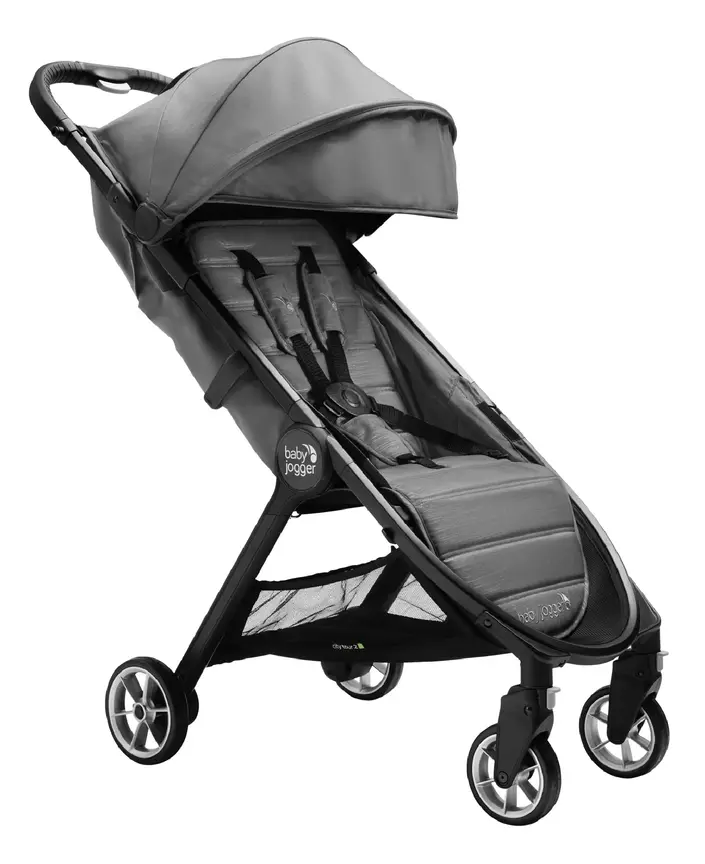
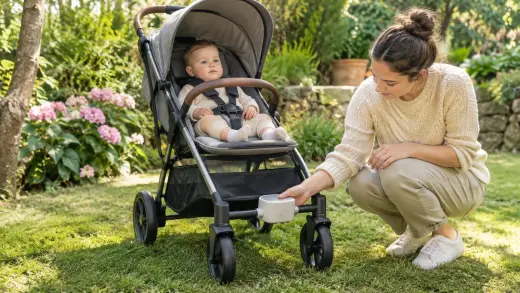
| Stroller or pram | You will walk longer distances or need a place to carry supplies. | It fits lifts, doorways and your transport provider’s size rules. Use the harness. |
| Baby carrier or sling | You need both hands free, or the route has stairs or crowds. | Your baby’s face stays visible, with a clear airway. Follow the maker’s fit guide. |
| Travel cot | Your destination cannot provide a suitable cot. | It is complete, set up as directed, and used with its supplied mattress. |
| Changing mat | You may need to change your baby away from a changing room. | It wipes clean and can be used on a stable surface. Keep a hand on your baby. |
| Insulated food bag | You need to carry expressed milk or prepared feeds. | Follow safe storage advice for that food. Check airport rules before packing liquids. |
A product labelled “travel” is not automatically safe for every use. Follow its instructions and limits. Do not add cushions, head supports or other items unless the maker says they are approved for that product. Do not modify a car seat, cot or stroller.
Stroller or carrier?
A stroller can carry your baby and some supplies. It may be awkward on steps, rough paths or crowded transport. A carrier can be easier in those places, but it needs a careful fit and can feel hot. You may prefer to bring one, both, or neither. Choose based on your route and your own comfort.
When using a sling or carrier, keep your baby’s face uncovered and visible. Their chin should not be pressed down onto their chest. Check often that they are breathing freely and are not too warm. Follow the carrier’s age, weight and fit instructions. If your baby falls asleep, move them to a safe, flat sleep space when you can.
Car journeys and car seats
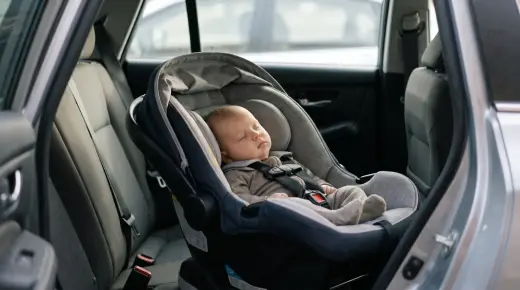
Use a suitable, correctly installed child car seat for every car trip. A stroller, carrier or adult’s arms cannot protect a baby in a crash. Read the seat and vehicle manuals. If you are unsure about installation, seek help from a qualified local fitting service where available.
Car seat rules differ between countries. A seat sold for one market may not be approved for use in another. Check the rules at your destination before taking or hiring a seat. Confirm that a hired seat is suitable for your child and vehicle, has all its parts, and comes with clear instructions.
Keep your baby rear-facing for as long as the seat’s limits and local rules allow. Fit the harness snugly, with no bulky coat underneath. In cold weather, buckle your baby first, then place a blanket over the harness. Do not add padding that was not supplied or approved for the seat.
Plan safe stops
Plan places to stop for feeds, nappy changes and a stretch. Never leave a baby alone in a parked car. Cars can become dangerously hot, even when the weather seems mild. Keep the car seat clear of loose objects that could move during sudden braking.
A car seat is made for travel, not routine sleep. When you reach your stop, take your baby out of the seat. If they are asleep, move them to a firm, flat sleep surface as soon as it is practical. Keep the harness fitted correctly during each car trip.
Ask another adult to sit near your baby if you can. This can help with comfort and allow someone to notice a problem. It does not replace safe installation or proper stops. If you are driving alone, pull over somewhere safe before tending to your baby.
Flights, trains and other public transport
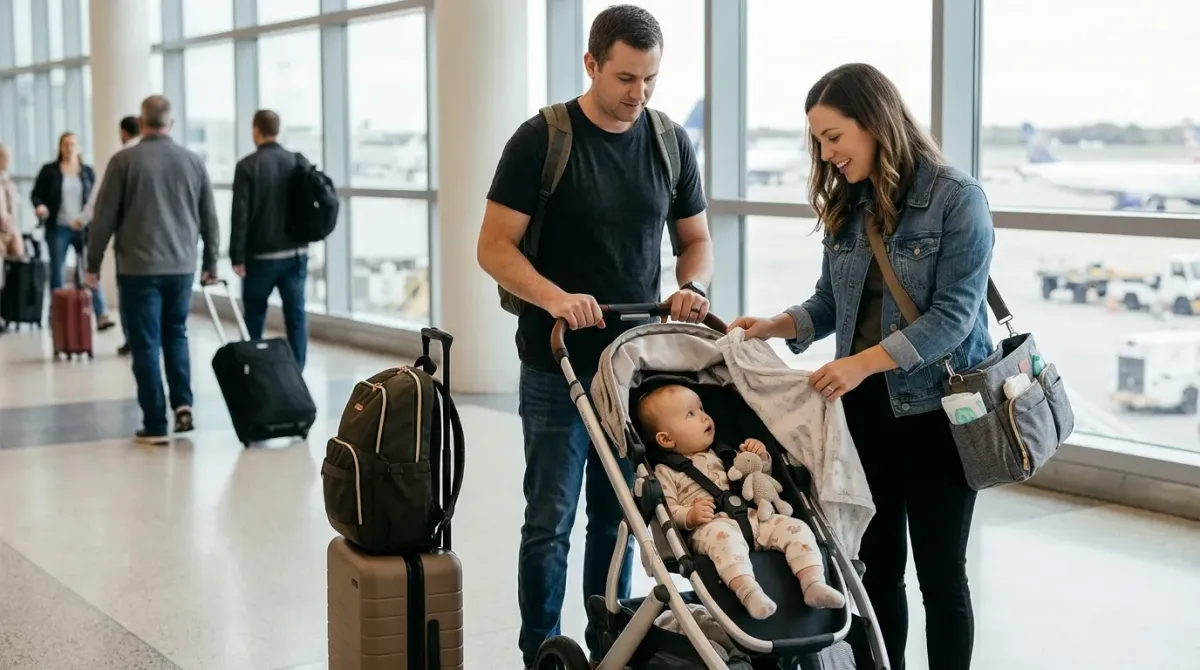
Contact your airline or transport provider before travel. Ask about booking a seat for your baby, using an approved car seat, checking a stroller, and carrying milk or baby food. Rules can change by route and security checkpoint. Do not assume one country’s rules apply to your return journey.
For a flight, keep essential items in your cabin bag. Include nappies, wipes, a change of clothes for your baby and you, feeding supplies, and needed medicines. Keep a spare outfit in a separate bag if space allows. Pack a few familiar comfort items that are safe for your baby’s age.
During take-off and landing, feeding or offering a dummy may help some babies with ear pressure. Follow the crew’s instructions. If your baby has a health condition that affects flying, ask their clinician before booking. For a long journey, ask the airline how it handles a baby’s sleep and seating.
On trains and buses, use the seat belt or restraint provided when required. Keep the aisle clear and hold your baby securely when moving through the vehicle. Do not leave a baby unattended on a seat or stroller. If you use a carrier, check your baby’s position often.
Feeding away from home
Make a feeding plan that matches how your baby is fed. Breastfeeding can usually continue during travel. Choose a place where you feel comfortable. A shawl or cover is optional. You do not need special feeding clothes unless they help you.
If you express milk, follow safe storage and transport guidance. Use clean containers and keep milk at the recommended temperature. Take only what you expect to need, plus some extra for delays. Ask your destination about a fridge or freezer before you rely on one.
For formula, follow the instructions on the product and advice from a trusted health service. Carry clean feeding equipment and enough formula for delays. Do not prepare feeds with water of uncertain safety. If you need to make feeds during travel, plan where you can do this safely. Ready-to-feed formula may be an option, but check its storage instructions and local availability.
For babies who eat solids, bring familiar foods that are easy to serve safely. Keep foods at safe temperatures. Avoid foods that are choking hazards for your child. Sit your baby upright and watch them while they eat. Do not feed a baby while a vehicle is moving.
Nappies, clothes and a useful day bag
Pack a small day bag you can reach without unpacking everything. Put the items you will need first near the top. Keep used nappies in a separate bag until you can dispose of them. Bring hand-cleaning supplies if soap and water may not be nearby.
- Nappies and wipes, based on the trip and possible delays.
- A clean changing mat or other wipe-clean surface.
- At least one spare outfit for your baby, and a spare top for you.
- Feeding supplies and a clean cloth for spills.
- Any prescribed medicine and its instructions.
- A small bag for wet or soiled clothes.
- A hat and clothing suited to the weather.
- Booking details and a list of important contacts.
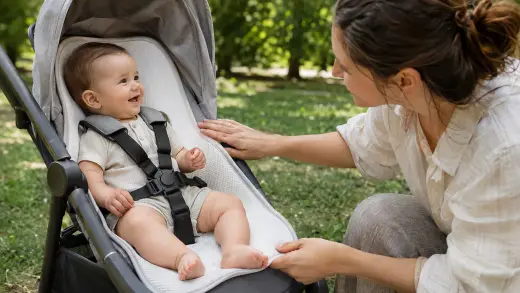
Dress your baby in layers you can add or remove. Feel their chest or back to judge whether they are too warm or cool. Hands and feet can feel cool even when a baby is comfortable. Protect them from direct sun, wind and rain. Never cover a stroller so fully that air cannot move around your baby.
Sleep safely at your destination
Ask where your baby will sleep before you travel. A cot or travel cot should be set up exactly as its instructions say. Use only the mattress designed for it. Keep the sleep space firm, flat and clear. Put your baby on their back for every sleep.
Do not use an adult bed, sofa, car seat or stroller as a planned sleep space. A folded towel or spare mattress can create gaps or soft areas. Do not add pillows, loose blankets, toys or padded cot liners. If you are staying with family, explain the sleep plan before bedtime.
Check a borrowed or hired cot before use. Look for damage, missing parts, loose fittings and the correct mattress. Check product recalls in the country where you are staying. If you cannot confirm the sleep space is safe, make another plan.
Try to keep familiar parts of bedtime, such as a feed, song or quiet routine. A new room can be distracting. A familiar routine may help your baby settle, but it cannot guarantee sleep. Do not use products that claim to prevent sudden infant death.
Travel by age and stage
| Stage | What may help | What to watch |
|---|---|---|
| Newborn | Short outings, feeds close at hand, a safe sleep plan, and a well-fitted carrier if you use one. | Newborns need frequent feeds and close attention. Ask a clinician about long trips if your baby was born early or has health needs. |
| Young baby | Flexible stops, spare clothes, and a familiar settling routine. | Check the car seat harness and carrier position each time. Move your baby from a seat to a safe sleep space after travel. |
| Older baby starting solids | Familiar safe foods, a spoon and bib, and time to sit and eat. | Keep your baby upright and watched during meals. Do not feed while moving in a vehicle. |
| Mobile baby or toddler | Safe floor play at stops, a change of clothes, and a few quiet toys. | Watch closely near roads, stairs, water and unfamiliar furniture. Small toys can be choking hazards. |
Age alone does not show what your baby can safely use. Follow the product’s size and stage limits. Your baby’s health, skills and comfort matter too.
Safety guidance across four countries
Core safety steps are similar across countries, but product rules and travel laws can differ. Check official local advice before buying, borrowing or using gear. A standard name or label from one country does not prove that an item is approved elsewhere.
| Country | Official bodies and useful guidance | What to check |
|---|---|---|
| Australia | Product Safety Australia (ACCC), Red Nose and Pregnancy, Birth and Baby. | Check child car seat and stroller advice, product recalls, safe sleep guidance and airline security rules. |
| United Kingdom | Office for Product Safety and Standards, NHS and The Lullaby Trust. | Check car seat rules, safe sleep advice, baby milk hand luggage rules and the transport provider’s policy. |
| United States | Consumer Product Safety Commission and American Academy of Pediatrics. | Check car seat guidance, safe sleep advice, flight rules and product recalls. |
| Canada | Health Canada, Transport Canada and the Canadian Paediatric Society. | Check car seat rules, product recalls, airline screening rules and safe sleep advice. |
For car seats, use a seat approved for the place where it will be used. Follow local rules and the seat instructions. For sleep, place your baby on their back in a firm, flat, clear space. For travel by air, check the current liquids and food rules with the airport and airline.
Common travel mistakes
- Packing every possible item: Too much gear can make transfers harder. Pack for the route and destination.
- Assuming a stroller is a sleep space: Use a safe cot or other suitable flat sleep surface for sleep.
- Leaving a baby in a car seat after arrival: Take your baby out and move them to a safe sleep space.
- Using a borrowed seat without checking it: Confirm it fits, is complete, and is approved where you are travelling.
- Relying on a strict timetable: Delays happen. Leave time for feeds, changes and rest.
- Preparing feeds without a safe plan: Check storage, water and preparation advice before leaving.
- Covering a stroller with a blanket: This can trap heat and reduce airflow. Use the stroller’s sun shade instead.
- Leaving a baby alone near a change surface: Keep one hand on your baby during changes.
- Forgetting the return trip: Check the rules for every airport and border on your route.
Frequently asked questions
What should I pack for a day out with my baby?
Pack nappies, wipes, a changing mat, spare clothes, feeding supplies and needed medicines. Add a weather layer and a safe way to carry your baby. The amount depends on the trip and possible delays.
Can my baby sleep in a car seat during a long trip?
Use the car seat for travel and fit the harness correctly. When you stop, take your baby out. Move them to a firm, flat sleep space when practical. Do not use the seat as a planned sleep space.
Should I take a stroller or a baby carrier?
Choose based on your route, your baby’s needs and what you can carry. A stroller can help over long distances. A carrier may work better on stairs or crowded paths. Check fit and safety instructions before use.
Can I take breastmilk or formula through airport security?
Rules vary by country, airport and airline. Check the current official rules for each part of your journey. Contact the airline if the published guidance does not answer your question.
How can I help my baby sleep in a hotel?
Bring a familiar sleep cue, such as a song or routine. Set up a safe cot with a firm, flat, clear surface. Put your baby on their back. A new place may change sleep for a while.
Do I need to buy special travel gear?
No. Use safe items you already own when they suit the trip. Buy or borrow something only if it solves a clear need. Check its instructions, condition and local approval.
What if my baby becomes sick during the trip?
Know how to reach a local health service and keep essential medicines with you. Ask a clinician before travel if your baby has a health condition or seems unwell. Seek urgent local care for serious symptoms.
Sources and country guidance
- Pregnancy, Birth and Baby – Car travel with babies and children
- Product Safety Australia (ACCC) – Car seats guide
- The Lullaby Trust – Safer sleep on holiday
- UK Government – Baby food and baby milk in hand luggage
- American Academy of Pediatrics – Flying with baby
- Transport Canada – What you can’t bring on a plane
- CATSA – Families
Disclaimer: This article gives general information, not medical advice. Ask a qualified health professional about your baby’s needs. Follow local laws and the instructions for each product. BabyGearFinder may earn a commission from qualifying purchases. This does not change the price you pay.
Sources
- Pregnancy, Birth and Baby – Car travel with babies and children
- Product Safety Australia (ACCC) – Car seats guide
- The Lullaby Trust (UK) – Safer sleep on holiday
- GOV.UK – Hand luggage restrictions: baby food and baby milk
- AAP HealthyChildren.org – Flying with baby
- Transport Canada – What you can't bring on a plane
- CATSA (Canada) – Families
Related guides
More Parental Tips →
Flying with a Baby or Toddler for the First Time: Ear Pressure, Gate-Checking Gear, and Airport Tips

Travelling with a Baby: Can Luggage Straps Make the Journey Easier?

Stylish and Safe Baby Gear: A Practical Guide for Modern Mums and Dads
