









Interactive Toys for Toddlers: How to Choose and Use Them
Choose toddler toys that invite talking, building and pretend play. Learn what to check for safety, screen use, age fit and lasting value.
On this page
- What counts as an interactive toy?
- What toddlers can practise through play
- Types of interactive toys to consider
- How to choose a toy that suits your toddler
- Comparison: common toy types
- Age stages and changing interests
- Screen use and electronic features
- Safety checks for toys with batteries or small parts
- Cleaning, storage and everyday use
- Common mistakes to avoid
- Official guidance in Australia, the UK, the US and Canada
- Frequently asked questions
- Sources and further reading
- Sources
Short answer: Toddlers do not need special gadgets to learn. Everyday play can help them practise words, movement, problem-solving and pretend play. Choose toys your child can use safely and in more than one way. Join in when you can. A screen or talking toy may be fun, but it cannot replace play with people.
Interactive toys respond when a child presses, turns, stacks or speaks to them. Some are simple toys, such as shape sorters. Others use lights, sounds or screens. The best choice depends on your child’s age, interests, skills and your home.
What counts as an interactive toy?
An interactive toy gives a child something to do. It may respond with a sound, movement, light or change in shape. A simple toy can be interactive too. A ball rolls when pushed. Blocks can be stacked, knocked down and used to build again.
Some toys use batteries or connect to an app. These may play songs, name colours or ask a child to press a button. Others have no electronics at all. Both kinds can invite active play.
For toddlers, active play matters more than a long list of features. A toy should give your child a chance to try something, notice what happens and try again. That can happen with a wooden puzzle or an electronic toy.
The old article named tablets and branded products as good choices. It did not give evidence that those products improve development. This guide focuses on ways to choose and use toys. It does not rank products or make claims about a toy’s effect on learning.
What toddlers can practise through play
Play gives children chances to explore. A toddler may learn that a block falls when pushed. They may notice that a large shape will not fit a small hole. They may use a toy phone to copy a family call.
These moments can support different skills. No toy can promise a particular result. A child’s interests, practice and time with caring adults all matter.
- Thinking: stacking, sorting and trying different ways to solve a small problem.
- Hand control: turning pages, placing large pieces and pushing easy-to-use buttons.
- Movement: reaching, carrying, dancing and rolling a ball across the floor.
- Language: naming objects, taking turns in a conversation and hearing new words.
- Imagination: feeding a doll, building a pretend shop or making a toy animal talk.
- Social play: waiting for a turn, sharing space and copying another person’s actions.
You do not need to teach during every play session. Follow your child’s lead. You can describe what they are doing, answer a sound or join their pretend game. A short, warm exchange can make play more social.
Types of interactive toys to consider
There is no single best type. A small mix of toys can offer different ways to play. You can also use safe household objects, such as a cardboard box, wooden spoon or plastic cup. Stay close and check that an object is suitable for your child.
Blocks and stacking toys
Large blocks invite children to stack, line up and knock down. They can be used for simple building or pretend play. Choose pieces that are too large to swallow and have no loose parts.
Let your toddler decide what to build. You can add a block beside theirs or describe the tower. There is no need to make a perfect shape or follow a set plan.
Shape sorters and simple puzzles
A sorter lets a child try to match a shape to a space. A simple puzzle gives them a chance to turn and place large pieces. Start with an easy task. Offer help if your child asks or seems upset.
Check that pieces are large, sturdy and free from sharp edges. Keep small puzzle parts away from younger children who visit or share the home.
Books with flaps, textures or buttons
Books can be interactive when a child points, turns a page or lifts a flap. Some electronic books add music or spoken words. Sit together and talk about the pictures. Your child can enjoy a book even if they do not sit still or follow every page.
Look for pages that turn easily and parts that stay attached. Small flaps can tear, so supervise a toddler who is still mouthing objects.
Pretend-play toys
Dolls, toy food, play tools and toy animals can help children copy familiar routines. A toddler may pretend to wash a toy or serve a meal. You can join the game without taking it over.
Check pretend food and accessories for small parts. Avoid toys that look like real food if a child might confuse them. Keep real tools, medicines and household chemicals out of reach.
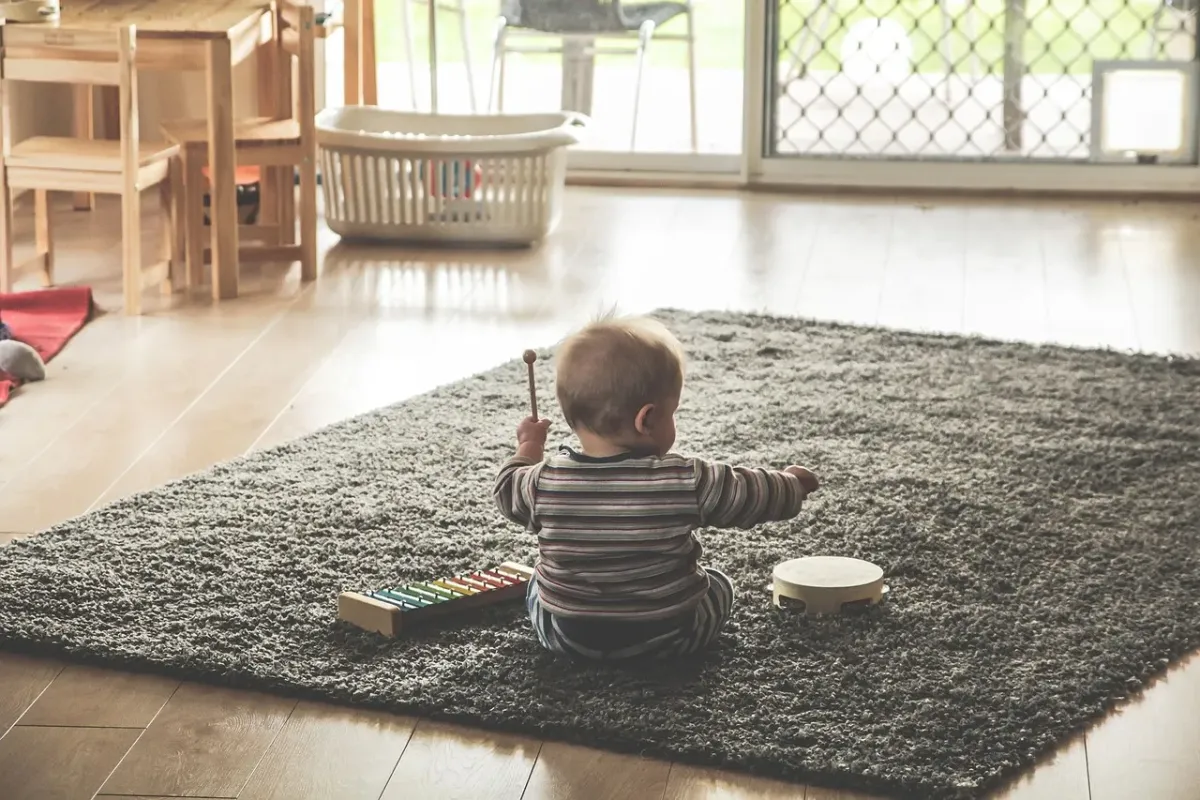
Musical toys and sound makers
Simple instruments can invite tapping, shaking and dancing. A toy may play music when a button is pressed. Keep the volume comfortable. If a sound seems loud to you, move the toy away or stop using it.
Try singing or clapping together. A child can enjoy rhythm without a screen or recorded lesson.
Push, pull and ride-on toys
Some toddlers enjoy toys they can push or pull. These can encourage movement around a clear space. Check the age guidance, stability and intended use. Use them away from stairs, roads, pools and other hazards. Stay close while your child plays.
A toy that moves under a child’s own power is different from a baby walker. Do not use a toy outside its instructions or as a way to leave a child unattended.
Electronic toys and tablets
Electronic toys can play songs, ask questions or respond to touch. A tablet can show books, songs or games. These features may interest a child, but a flashy screen does not prove that a toy teaches well.
If you choose a screen activity, sit with your toddler when possible. Talk about what you see and connect it to real play. Keep screens from replacing sleep, movement, reading or time with people. Australia’s Raising Children Network gives advice on screen use for babies and toddlers.
How to choose a toy that suits your toddler
Start with your child, not the product description. Think about what they already enjoy. A child who likes music may enjoy a simple shaker. A child who likes carrying things may enjoy a sturdy basket and large blocks.
- Check the age label. Use the maker’s age guidance as a starting point. It can point out parts or play features that may not suit younger children.
- Look for clear instructions. Know how the toy should be used, cleaned and stored. Check whether it needs batteries or an app.
- Choose a safe size. Parts should not be small enough to swallow. Keep toys with small pieces away from children who still put objects in their mouths.
- Check the build. Look for broken seams, sharp edges, loose parts and doors that open easily.
- Think about sound and light. A toy should not make your child uncomfortable. You should be able to turn sounds off or lower them when needed.
- Ask what the child does. Does the toy invite them to move, speak, build or pretend? A toy that only plays while a child watches may offer less active play.
- Consider your home. Pick toys that fit your available space and are easy for you to store and clean.
- Check recalls. Look at official recall notices in your country, especially for second-hand toys or products bought online.
Simple toys can be used in many ways. A set of blocks may become a bridge, a tower or a pretend meal. A toy with one fixed action may be fun too, but your child may move on from it sooner.
Comparison: common toy types
This table compares play options. It does not rate brands or claim that one toy makes children smarter. Choose based on the child and the safety checks.
| Toy type | What a toddler can do | What to check | Adult role |
|---|---|---|---|
| Blocks | Stack, sort, build and knock down | Large pieces; no cracks or sharp edges | Join the building or let the child lead |
| Shape sorter | Turn shapes and try matching holes | Pieces are large and easy to hold | Name shapes or offer a hint |
| Picture book | Point, turn pages and name pictures | Pages and flaps suit the child’s handling | Read, pause and talk about pictures |
| Pretend-play set | Copy routines and make up a story | No small parts or unsafe look-alike items | Follow the child’s story |
| Musical toy | Tap, shake, sing and move | Sound is comfortable; parts stay attached | Sing or make a rhythm together |
| Electronic toy | Press controls and hear or see a response | Battery door is secure; toy is not damaged | Play together and switch it off when done |
| Tablet activity | Watch, listen, tap or respond to a story | Privacy settings, app access and screen time | Stay nearby and connect it to real play |
Age stages and changing interests
Children do not all gain skills on the same day. Age labels are guides, not deadlines. Watch how your child uses a toy and adjust the play to their needs.
Around one year
Many children at this stage enjoy dropping, banging, carrying and exploring objects. Choose sturdy toys with large parts. Stay close because mouthing is common. Offer one or two toys at a time so the child can focus.
Try a ball, a board book, large stacking cups or a container with large objects. Check every object before play. Do not use items that can break into small pieces.
Around eighteen months
Your child may enjoy copying everyday actions. They may put a toy in a box, feed a doll or push a toy along the floor. Offer simple choices and give them time to try.
Some toddlers become frustrated when a task is hard. You can show one step, then let them try. Praise effort with plain words, such as “You turned it around.”
Around two years
Many children enjoy pretend games, simple matching and songs with actions. They may start to use a toy in a new way. A cardboard box can become a bus or a shop.
Keep play areas clear. Watch for climbing or throwing when using toys with hard parts. Put away any toy that is broken or no longer suitable.
Around three years
Some children enjoy longer pretend games, puzzles with more pieces or building a scene. Follow your child’s interests. Offer help without doing the whole task for them.
Keep checking labels and small parts. A toy that suits an older child may still be unsafe around a younger sibling.
Screen use and electronic features
Parents may wonder whether an educational app or talking toy is worth buying. The answer depends on how it fits into family life. A toy does not need a screen to be educational, and a screen does not guarantee learning.
Australia’s Raising Children Network advises families to keep screen use low for children under two, apart from video calls. For older toddlers, families can choose limited, age-suited use and watch together. The Canadian Paediatric Society also has guidance on screen time and preschool children. Follow current advice from your local health service.
When using a screen with a toddler:
- Choose a calm activity that suits your child’s age.
- Stay with your child and talk about what is happening.
- Stop when your child loses interest or becomes upset.
- Keep screens away during meals and before sleep if they disrupt family routines.
- Make room each day for talking, active play, books and rest.
Some connected toys use a camera, microphone, app or internet connection. Read what information the toy collects. Check who can access it and how to switch off recording. Use a strong password if an account is needed. The Australian Government, UK Government and Government of Canada offer advice on smart device security.
Safety checks for toys with batteries or small parts
Interactive toys may contain button batteries, magnets or small parts. These can cause serious harm if a child swallows them. Check the toy before each play session, especially if it has been dropped or handled roughly.
- Make sure the battery compartment closes securely. Follow the toy’s instructions.
- Keep spare batteries out of reach. Store them in their packaging.
- Stop using a toy if its battery door is missing, loose or damaged.
- Keep loose magnets and toys with damaged magnets away from children.
- Pick up small pieces after play, including pieces that rolled under furniture.
- Do not let a child play with a toy near food if small parts could fall into it.
Product Safety Australia has guidance on button batteries and toys with magnets. Check its recall page before buying a toy from an unfamiliar seller. Canada’s recall database and the US Consumer Product Safety Commission also publish product safety notices.
If you think a child has swallowed a battery or magnet, seek urgent medical help. Do not wait for symptoms. Contact your local emergency service or poison centre.
Cleaning, storage and everyday use
Follow the maker’s cleaning instructions. Some toys can be wiped. Others can be washed by hand. Electronic parts should not be soaked unless the instructions say they can be.
Before cleaning, remove batteries if the instructions allow it. Let washed toys dry fully before returning them to your child. Throw away or repair toys with cracked surfaces, frayed cords or loose parts.
Store toys where your child can reach safe options. Keep toys with small parts, cords or batteries in a closed container away from younger children. A simple basket can make tidy-up part of play.
You do not need to rotate toys on a strict schedule. If your child seems bored, put a few toys away and bring them back later. You can also change the play without buying anything new. Blocks can become a road, and a book can become a guessing game.
Common mistakes to avoid
- Buying by feature count. More lights and sounds do not prove a toy helps a child learn.
- Expecting a toy to teach alone. A child may enjoy a toy more when an adult talks or plays nearby.
- Choosing a toy that is too hard. A very difficult toy can frustrate a toddler. Make the task easier or try again later.
- Leaving a child alone with a toy. Supervision matters, especially with batteries, cords, water or small pieces.
- Using a screen as a babysitter for long periods. Keep time for sleep, movement and face-to-face play.
- Ignoring wear and tear. Check toys often and remove damaged ones.
- Assuming a second-hand toy is safe. Check recalls, age guidance and missing parts before use.
- Buying too many toys at once. A few toys can offer plenty of play. Household routines and shared attention matter too.
Official guidance in Australia, the UK, the US and Canada
Each country has official bodies that share product safety advice and recall notices. Their roles differ. A toy’s label and safety rules can also vary by market. Check the official source for the country where you live or buy.
| Country | Product safety body | Health or child guidance | Useful check |
|---|---|---|---|
| Australia | Product Safety Australia, part of the Australian Competition and Consumer Commission (ACCC) | Raising Children Network; Australian Government health services | Check toy safety advice, button battery guidance and recalls |
| United Kingdom | Office for Product Safety and Standards (OPSS) | NHS and other public health services | Check buy-safe guidance and current product notices |
| United States | U.S. Consumer Product Safety Commission (CPSC) | American Academy of Pediatrics (AAP) | Check recalls and age-related safety guidance |
| Canada | Health Canada | Canadian Paediatric Society | Search recalls and review toy safety information |
Do not assume that a toy sold in one country follows the rules where you live. When in doubt, ask the local product safety body or a health professional. A toy’s packaging cannot replace close adult supervision.
Frequently asked questions
Do toddlers need electronic toys to learn?
No. Toddlers can explore through blocks, books, pretend play, songs and safe household objects. Electronic toys are one option. Choose them only if they suit your child and home.
Are educational tablets good for toddlers?
A tablet may offer stories or games, but it is not required for learning. Keep screen use in line with local health advice. When your child uses one, sit nearby and talk together.
How many toys should a toddler have out?
There is no set number. A few choices can be easier for a toddler to focus on. You can store other toys and bring them out another day.
What should I do if a toy has a button battery?
Check that the battery compartment is secure and follow the maker’s instructions. Store spare batteries away from children. Stop using the toy if the compartment is damaged or loose.
Can a toddler play with toys meant for older children?
Check the age label and look for small parts, magnets or other hazards. Keep toys for older children away from toddlers who may put objects in their mouths.
Should I help my child solve a puzzle?
Offer a small hint or show one step if your child wants help. Let them try the next part. If they become frustrated, choose an easier task or take a break.
How can I tell if a toy is too loud?
If the sound feels uncomfortable, lower it, move the toy away or stop using it. Choose toys with a volume control when possible. Do not hold a loud toy close to your child’s ears.
Where can I check whether a toy has been recalled?
Use the official recall service for your country. Product Safety Australia, the UK’s OPSS, the US CPSC and Health Canada publish safety notices.
Sources and further reading
- Raising Children Network – Screen time: babies and toddlers
- Canadian Paediatric Society – Screen time and preschool children
- Product Safety Australia – Button batteries guide
- Product Safety Australia – Toys that have magnets guide
- UK Government – Buy safe, be safe
- U.S. Consumer Product Safety Commission – Safe sleep: cribs and infant products
- Health Canada – Recalls and safety alerts
This article is general information, not medical advice. Ask your child’s health professional about concerns with development, play or screen use. Some links may be affiliate links. If you buy through them, BabyGearFinder may earn a commission at no extra cost to you.
Sources
- Raising Children Network – Screen time: babies and toddlers
- Canadian Paediatric Society – Screen time and preschool children
- Product Safety Australia – Button batteries guide
- Product Safety Australia – Toys that have magnets guide
- UK Government – Buy safe, be safe
- CPSC (US) – Safe sleep: cribs and infant products
- Health Canada – Recalls and safety alerts
Related guides
More Gadgets & Electronics →
Power Adapters for Baby Gear: How to Choose and Use Them Safely

Smart Baby Monitors: How They Work, What Experts Say, and How to Use Them Safely

Useful Gadgets for New Parents: What Helps, What Can Wait, and How to Choose
